REVIEW · BRUSSELS
Private Tour: Ghent and Bruges From Brussels Full Day
Book on GetYourGuide →Operated by BRUSSELS PRIVATE TOURS · Bookable on GetYourGuide
Two medieval cities, one well-planned day. On this private tour, you get a local guide who explains how Bruges and Ghent grew, not just what to photograph, and you’ll spend time walking along canals and medieval quays at an unhurried pace. The only catch: lunch isn’t included, so your mid-day break needs a little planning.
I especially like how the guide ties big stops to the stories behind them, including Saint Bavo’s Cathedral and the Mystic Lamb Altarpiece. Names like Henrik, Luc, and Andrea come up for a reason: they’re good at connecting architecture to the drama of real life, not reciting dates.
Because you’re doing two cities in one day, the schedule can feel full if you want long, slow museum time or add-ons. Also, a boat trip isn’t included, so if that’s your must-do in Bruges, you’ll need to plan it separately.
In This Review
- Key things to love about this Bruges and Ghent private day
- Price and what you actually get for $647 per person
- Getting from Brussels: private vehicle, less stress, better timing
- Entering Bruges: canals, cobblestones, and the Belfry view
- Church of Our Lady and the Madonna detail you’ll remember
- Bruges’ quieter corners: Minnewater Lake and the Beguinage
- Bruges lunch break: free time that lets you choose the type of meal
- The drive to Ghent: switching from fairy tale to working medieval city
- Saint Bavo’s Cathedral and the Mystic Lamb Altarpiece
- Graslei and Korenlei quays: where the view explains the history
- Gravensteen Castle: walking into a real medieval fortress
- The Three Towers: getting your classic Ghent skyline photo
- Lunch, tickets, and what’s not included (so you aren’t surprised)
- Accessibility and comfort: bring comfortable shoes
- Is it worth the price? Value for different kinds of travelers
- Who this Bruges and Ghent private tour suits best
- Should you book this private tour of Ghent and Bruges?
- FAQ
- How long is the private tour?
- Where can I be picked up and dropped off?
- Is lunch included?
- Are entrance fees included?
- Is a boat trip included in Bruges?
- What languages is the live guide available in?
- Is the tour wheelchair accessible?
Key things to love about this Bruges and Ghent private day
- Private transport from Brussels (or Ghent) so you spend less time worrying and more time sightseeing
- Bruges canal and medieval quay walks with stops at Market Square and Belfry Tower views
- Ghent’s headline sights like Saint Bavo’s Cathedral, Gravensteen Castle, and the Three Towers viewpoint
- A guide who adjusts to what you care about and keeps the day moving at your pace
- Real free time in Bruges for lunch so you can eat where you want
- A few clear gaps (no lunch, entrance fees not included, and no boat trip)
Price and what you actually get for $647 per person
At $647 per person, this isn’t a budget hop-on bus day. You’re paying for the parts that are hardest to DIY smoothly: private guide time, door-to-door pickup and drop-off, and travel by air-conditioned vehicle between two separate medieval cities.
If you’re the type who likes context while walking (not standing in one place), a guided day like this can feel like good value. When the guide’s storytelling clicks, it turns Bruges and Ghent from pretty postcards into places you understand. You also get flexibility: the tour is designed to adapt to your interests rather than marching you like a stopwatch.
One thing to keep expectations realistic: you’re still limited by an 8-hour window. If your idea of a great day is slow wandering plus lots of indoor stops, you’ll want to prioritize what matters most in each city.
You can also read our reviews of more private tours in Brussels


Getting from Brussels: private vehicle, less stress, better timing
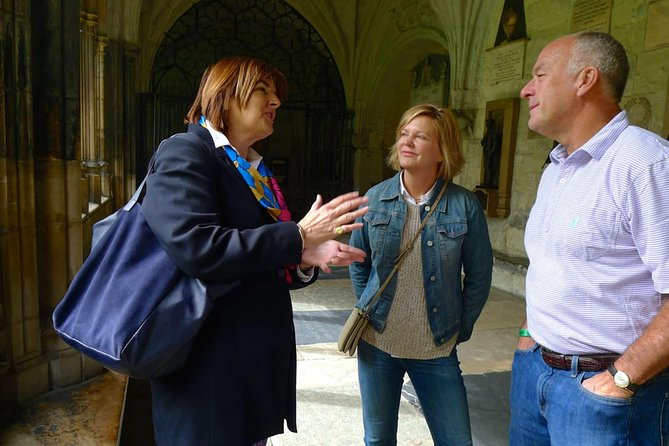
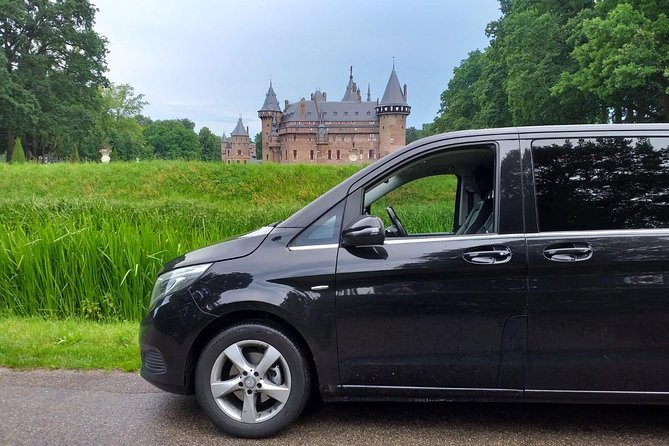
The best part of a private day trip from Brussels is what you don’t have to think about. You choose a pickup option (Brussels or Ghent), and you’re transported in a private, air-conditioned minivan/vehicle for the day. That means less navigating, fewer train connections, and more consistent pacing for the stops that matter.
Departure timing is flexible, but it’s preferable to start between 9:00am and 10:00am. Earlier starts usually help you get into the cities before the most crowded waves. And since Bruges and Ghent each have their own flow of streets, having a set route reduces the chance you lose time threading between sights.
Two quick practical cautions. First, confirm your pickup point clearly so the day doesn’t depend on guesswork. Second, remember that vehicle comfort can vary; one report mentioned a disappointing car condition, so it’s smart to request what to expect from the provider (especially if you’re sensitive to cleanliness or comfort).
Entering Bruges: canals, cobblestones, and the Belfry view
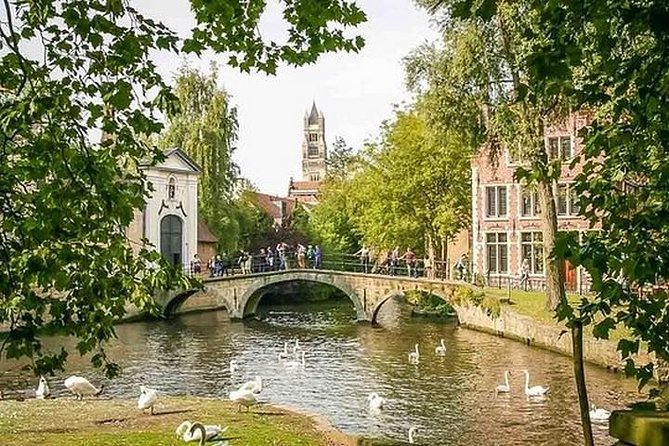
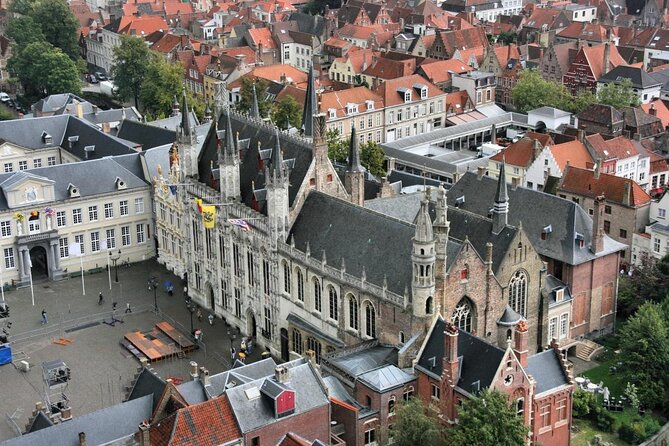
Bruges is the kind of city where the scenery hits immediately. You’ll spend time in the historic core with guide-led stops that focus on the city’s most recognizable medieval features, including Market Square and the Belfry Tower.
The Belfry is a great anchor because it gives you a sense of Bruges’ “old heart.” Even if you don’t climb, the area around it helps you orient fast. Then the guide can point out how the street grid and canal lines relate to where power and trade moved through town.
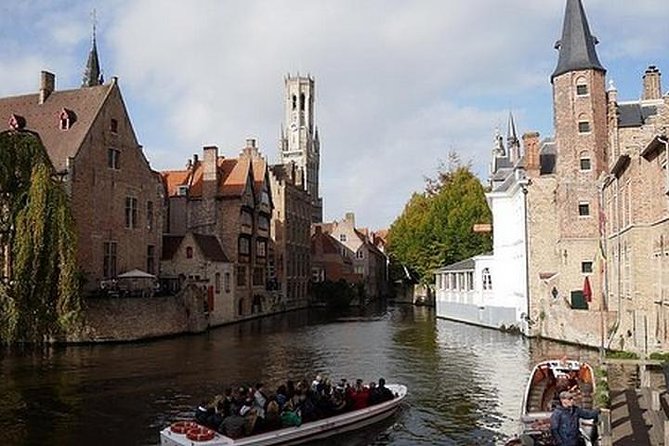
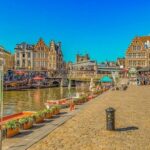
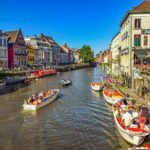
From there, you’ll shift to Bruges’ canal life. Expect walkable sections along historic bridges and waterfront views. This is one of the strongest reasons to choose a guided private day: the guide can explain what you’re looking at while you’re still in position to enjoy the view, rather than having to figure it out later.
You’ll also have time to adjust your pace. Some people want photos at every bridge; others want fewer stops but more time near the water. This tour is designed to let you land somewhere comfortable instead of rushing past everything.
Church of Our Lady and the Madonna detail you’ll remember
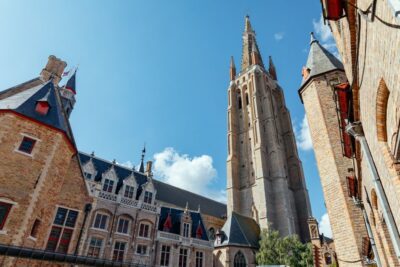
Bruges’ Church of Our Lady is one of those stops that changes the way you see the city. The highlight here is Michelangelo’s Madonna and Child, a famous artwork tied to the church’s story and Bruges’ cultural reach.
The value of having a guide is simple: without context, it’s easy to treat the stop like a checklist item. With context, you start noticing how Bruges cared about art, faith, and prestige at the same time.
If you’re traveling with someone who loves art history, this stop tends to land well. If you’re more into architecture, the church setting still gives you a satisfying change of pace from the open-air canals and Market Square scenes.
Bruges’ quieter corners: Minnewater Lake and the Beguinage
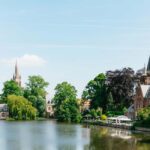
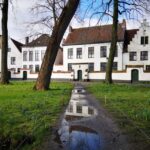
Not every moment in Bruges needs to be postcard-perfect crowds. Minnewater Lake (the Lake of Love) and the Beguinage area offer a calmer side of the city, where you can slow down and actually hear yourself think.
This part of the day is also a smart reset. After the louder, more central streets, these quieter areas help you recharge for the next city. Even if you only spend a short window here, the contrast between water serenity and medieval bustle is worth it.
If your ideal day includes breathing room, make sure you don’t rush this section just to “keep up.” In a private tour, your guide can help you decide what to prioritize rather than forcing a one-size-fits-all pace.
You can also read our reviews of more tours and experiences in Brussels
Bruges lunch break: free time that lets you choose the type of meal
Lunch isn’t included, but you do get free time for lunch in Bruges. That’s a blessing, because you can match the meal to your day: quick and casual, sit-down and relaxed, or something centered on Belgian classics like chocolate, waffles, or beer.
This is also where you control energy. After a morning of canals and landmarks, you’ll probably want a meal that’s filling enough to keep you going through Ghent. If you tend to get hungry fast, don’t treat lunch like an optional stop—plan it early in your free time window.
One small consideration: if you’re traveling on a weekend, Bruges can feel more crowded with tour groups. You don’t need to cancel the trip, but you should expect more people around the most famous photo areas and plan lunch accordingly.
The drive to Ghent: switching from fairy tale to working medieval city
Moving from Bruges to Ghent feels like shifting gears. Bruges can feel like a preserved storybook. Ghent has that same medieval depth, but it also feels more active and layered, with modern life woven into the historic core.
Having private transport matters here, because travel time becomes part of the day’s pacing. You arrive ready rather than frazzled, and your guide can transition you from canal charm into a more fortress-and-cathedral style of sightseeing.
If you’re the kind of traveler who likes variety, this is where the all-day format pays off. You get two different flavors of Flanders without spending a night packing and rebooking.
Saint Bavo’s Cathedral and the Mystic Lamb Altarpiece
In Ghent, the spotlight stop is Saint Bavo’s Cathedral and its world-famous Mystic Lamb Altarpiece. This is the kind of artwork that can overwhelm you if you only see it as a name.
With a guide, you’re more likely to understand why it’s famous and how it fits into Ghent’s identity. The strongest guided moments here are when the guide connects the artwork to the city’s past and helps you look at details while you’re standing in the right place.
This is also a good stop for pairs and families because it breaks the day into a structured moment. After walking canals and bridges in Bruges, a cathedral stop gives your feet a rest and your brain something solid to focus on.
Graslei and Korenlei quays: where the view explains the history
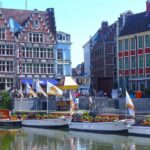
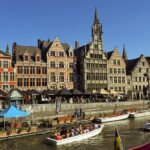
The Graslei & Korenlei canals are Ghent’s signature “look at this city from the water” areas. The medieval quays are built to impress, but they’re also built for a purpose: trade, power, and movement across time.
This is where you’ll start noticing the differences between Ghent and Bruges. Both have water beauty, but Ghent’s waterfront feels more like it’s tied to daily civic life. Your guide can point out what parts of the quay architecture suggest about where influence lived.
If you love architecture, this is a great time to take photos and then ask questions. A guide can help you interpret what you’re seeing, which makes the quays more than just a pretty backdrop.
Gravensteen Castle: walking into a real medieval fortress
Ghent’s Gravensteen Castle is one of the day’s most satisfying experiences because it’s tangible. You’re not only viewing medieval forms; you’re stepping into a fortress designed to defend.
A castle stop works well on a guided tour because the guide can explain how the space functioned and why certain defensive choices made sense. That kind of interpretation turns the visit from “cool stone building” into “I understand what this was built to do.”
This is also a strong choice for travelers who like hands-on history. If you’re less interested in art and more into fortifications, the castle often becomes the day’s favorite part.
The Three Towers: getting your classic Ghent skyline photo
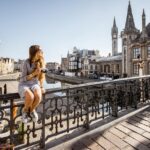
No Ghent day feels complete without the Three Towers view. This is the kind of viewpoint that helps you wrap your mind around the city’s scale and layout.
Since this tour is private, you can time your view moment to match your pace. Some people want quick photos; others want to stay a bit longer to watch how the light changes along rooftops. Either way, the guide can help you find the best angle and explain what makes the towers such an iconic symbol.
It’s also a useful endpoint before heading back toward Brussels, since it gives you that final “okay, I get Ghent now” feeling.
Lunch, tickets, and what’s not included (so you aren’t surprised)
A few things are intentionally not covered, and it matters for budgeting and planning:
- Lunch is not included. You’ll have free time in Bruges to eat.
- Entrance fees are not included. Plan on paying for paid admissions as you go.
- A boat trip is not included. If you want one in Bruges, you’ll need to book separately.
The trade-off for not including these is that you keep control over what you add. If you love museums and want more indoor time, entrance fees are something you’ll likely pay anyway. If you prefer more outdoor walking and photos, you might spend less.
And yes, there’s bottled water during the day, which is one of those small logistics upgrades that makes a big difference when you’re on your feet.
Accessibility and comfort: bring comfortable shoes
This tour is wheelchair accessible, which is an important baseline when you’re dealing with historic city streets. Still, you’ll be walking in old-city areas, so it’s smart to wear comfortable shoes even if you’re mostly using accessible routes.
Also remember: the day is long enough that comfort affects enjoyment. If you’re planning to do a lot of photos and small detours, good footwear will pay you back quickly.
Is it worth the price? Value for different kinds of travelers
This private day trip makes the most sense if you want:
- Two major cities in one day without the stress of transit and navigation
- A guide who can explain what you’re seeing while you’re actively looking
- Custom pacing, rather than a rigid group schedule
If you’re traveling as a couple, you might find this is a reasonable way to avoid wasting half the day coordinating logistics on your own. If you’re traveling solo and want less museum-drafting and more guided clarity, it can also be a good fit.
On the flip side, if you’re very price-driven or you’re happy doing self-guided walking with a map, you may prefer another approach. And if you’re picky about vehicle comfort or you need a very clear, timed breakdown of free time versus included sights, you should double-check expectations before you go.
Who this Bruges and Ghent private tour suits best
This experience is ideal for travelers who:
- Want history plus architecture explained in plain language
- Prefer a private format where you can slow down, speed up, or adjust priorities
- Are short on time in Belgium and still want standout sights in both cities
It’s also a good match for visitors who like a confident guide presence. Guides like Henrik, Luc, and Andrea are repeatedly mentioned for making the city stories feel connected, not separate.
If you’re traveling with mobility limitations, confirm the route and what portions can be navigated comfortably. The tour is wheelchair accessible, but older streets can still affect how smooth the day feels in practice.
Should you book this private tour of Ghent and Bruges?
Book this tour if you want a straightforward, guided way to see Bruges’ canals and Ghent’s cathedral-and-castle highlights without spending your day solving logistics. For many people, the best value comes from having a guide who can connect the view in front of you to the reason it exists.
Skip or rethink it if any of these are true for your trip: you need lunch included, you have a must-do boat trip, you want extremely long stays with no schedule pressure, or you don’t want to pay separate entrance fees.
If you do book, I’d make two practical moves. First, confirm pickup details clearly so the start is smooth. Second, decide in advance what you’d rather prioritize: canal views in Bruges or the cathedral-and-castle focus in Ghent. Then ask your guide to tune the day around that choice.
FAQ
How long is the private tour?
The tour duration is 8 hours.
Where can I be picked up and dropped off?
You can choose between pickup/drop-off locations in Brussels or Ghent.
Is lunch included?
No. Lunch is not included, but you’ll have free time in Bruges to eat.
Are entrance fees included?
No. Entrance fees are not included.
Is a boat trip included in Bruges?
No. A boat trip is not included.
What languages is the live guide available in?
The guide is available in English, Dutch, French, Italian, Portuguese, and Spanish.
Is the tour wheelchair accessible?
Yes, the tour is wheelchair accessible.