REVIEW · BRUSSELS
Excursion to Antwerp and Ghent by bus from Brussels with stop at the Atomium
Book on Viator →Operated by Buendía · Bookable on Viator
Two cities in one long bus day. This trip strings together guided Antwerp and guided Ghent with a Spanish-speaking guide, plus a quick stop at the Atomium so you get bearings fast. I like that the day includes real chances to wander on your own in both cities, not just museum time. The trade-off: it’s a full 10-hour day, and road traffic can shuffle the exact timing of transfers.
If you’re starting from Brussels, the meeting point is simple and public-transport friendly at Carrefour de l’Europe (8:30am). You’ll ride in an air-conditioned coach, get city maps and pointers for what to do next, and then return to the same meeting point when the day wraps.
In This Review
- Key things to notice before you go
- Antwerp and Ghent in a Single Day: the Real Value
- Atomium Photo Stop: a Brussels Icon Without the Commitment
- Plantinkaai and Steenplein: Getting Oriented in Antwerp
- Steen Castle (Het Steen): Why the River Fortress Matters
- Vleeshuisstraat and the Old Meat House: How Antwerp Worked
- Grote Markt and Brabo: Square Drama You Can Actually See
- Carolus Borromeus Church and Rubens: Art in a Real Setting
- The Cathedral of Our Lady (Onze-Lieve-Vrouwekathedraal) and Political Context
- Groenplaats and Meir Avenue: From Cathedral History to Shopping Street Icons
- Antwerp Free Time: How to Use Your 1.5 Hours
- Ghent Town Hall, Belfry, and Medieval Scale
- St. Bavo’s Cathedral and the Mystic Lamb: Art That Actually Has a Legend
- Saint Nicholas Church: Churches as Living Venues
- Masons’ Guild Hall and Korenmarkt: The City Built by Trades
- St. Michael’s Bridge and the River Photography Loop
- OOOST and Kleine Vismarkt: Medieval Markets and Sweet Stops
- St. Veerleplein and Your Ghent Setup for Free Time
- Logistics, Timing, and What Can Affect Your Day
- Price and Value: Why This Day Trip Usually Wins
- Who This Tour Fits Best (And Who Might Prefer DIY)
- Should You Book? My Practical Take
- FAQ
- How long is the trip?
- What time does the tour start?
- Where is the meeting point in Brussels?
- Does the tour include hotel pickup or drop-off?
- Is the guide Spanish-speaking?
- Is food included?
- How much free time do I get in Antwerp and in Ghent?
- Are admission tickets included?
- What is the maximum group size?
- What should I know about children on the bus?
- Is it weather dependent?
- When can I cancel for a full refund?
Key things to notice before you go
- Spanish-speaking guide with a structured route and local stories
- Atomium stop on the way out of Brussels for photos
- Guided walks in Antwerp and Ghent with iconic squares, churches, and river views
- Good free time windows in both cities (about 1.5 hours each)
- Small-ish group size with a maximum of 45 travelers
- A day that runs on timing more than you may expect, since transfers depend on traffic
Antwerp and Ghent in a Single Day: the Real Value
An Antwerp and Ghent day trip from Brussels is one of those smart moves if you only have a short stay. Instead of planning two separate logistics days, you get one round-trip bus, one meeting point, and a route that hits the main sights in walking-friendly chunks.
What makes this one feel practical is the way it balances “guided understanding” with “you time.” In Antwerp, you’ll get a guided walk through the old core and key art and architecture moments, then you get roughly 1.5 hours to roam and choose your own pace. In Ghent, the same idea repeats: a structured guided segment through medieval highlights, then more free time to snack, shop, and photograph without feeling rushed.
The biggest reason I think this works for most people: you’re not just collecting stamps. You’re learning what to look for—guild houses, major paintings and churches, and why certain landmarks became famous. Even if you later DIY a neighborhood on your next trip, this day helps you understand the city logic fast.
You can also read our reviews of more tours and experiences in Brussels.

Atomium Photo Stop: a Brussels Icon Without the Commitment
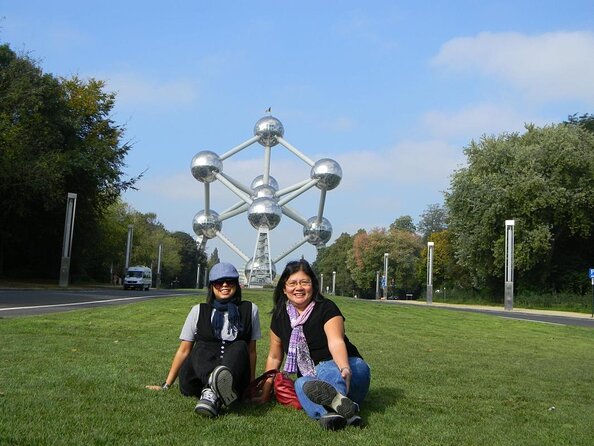
Right after departure, you’ll stop at the Atomium for about 15 minutes. The monument is treated as a symbol of Brussels and Belgium, so it’s a classic “set the mood” stop even if you don’t plan a full visit.
This part is mainly about getting a few photos and a quick sense of scale. The stop is listed as free for admissions, which keeps it from turning into an extra cost or a long detour. My advice: treat it as a photo sprint—camera ready, jacket on, and don’t plan to linger.
If the weather is messy, keep your expectations flexible. It’s a short stop, but still outdoors. Come prepared for Belgium’s changeable conditions.
Plantinkaai and Steenplein: Getting Oriented in Antwerp
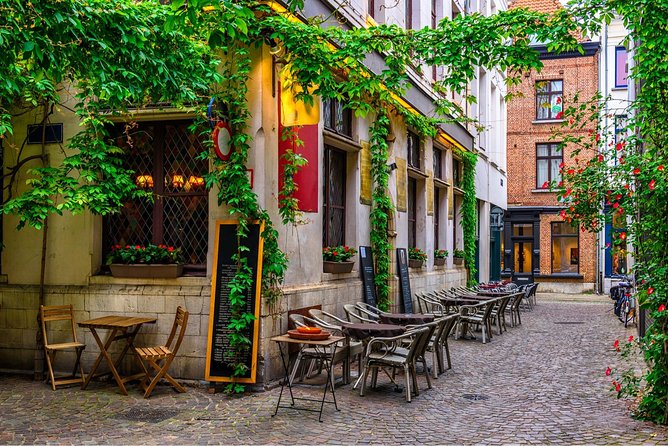
After the bus drops you near the city bus station, you’ll have a brief moment at Plantinkaai, then the walk begins toward the center along the river path. At Steenplein, the guide adds a short history primer while you see Antwerp’s river setting and the towering city background.
You also get a small logistics beat here: a bathroom stop and a clear plan for where to meet later to return to Brussels. In a day like this, that matters more than people think. Antwerp’s center can be easy to get turned around in, especially if you wander during free time later.
This “bridge and river” approach is a good match for how Antwerp is built—part historic port city, part modern commercial center.
Steen Castle (Het Steen): Why the River Fortress Matters
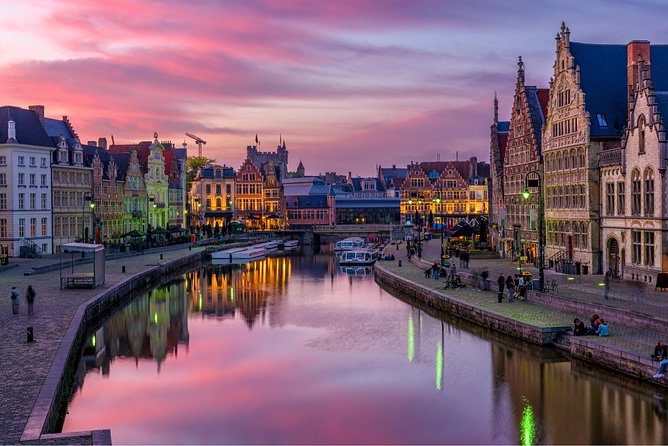
The first major stop is Het Steen, the castle at the riverfront. The guide explains the building’s history and also ties it to an architectural detail seen in both Holland and Belgium: the roof shape you notice on related structures.
If you like architecture but don’t want a long museum detour, this is the sweet spot. You get a reason for what you’re seeing, not just a location. It also sets up the river as a character in the story of Antwerp, not just a pretty backdrop.
Vleeshuisstraat and the Old Meat House: How Antwerp Worked
Next is Vleeshuisstraat, connected to the old meat trade and the old meat house. You’ll look at the building and get a sense of how commerce worked and how the city organized daily life in earlier times.
This stop is useful because it reframes the town center. Antwerp isn’t only guild halls and grand churches. A lot of its history was practical: markets, deliveries, and regulated trade.



Grote Markt and Brabo: Square Drama You Can Actually See
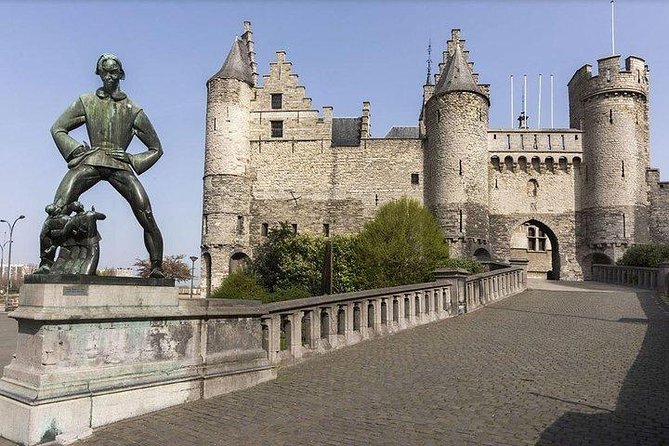
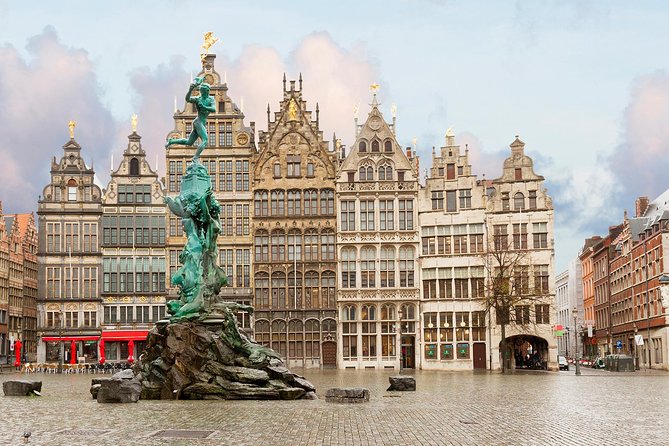
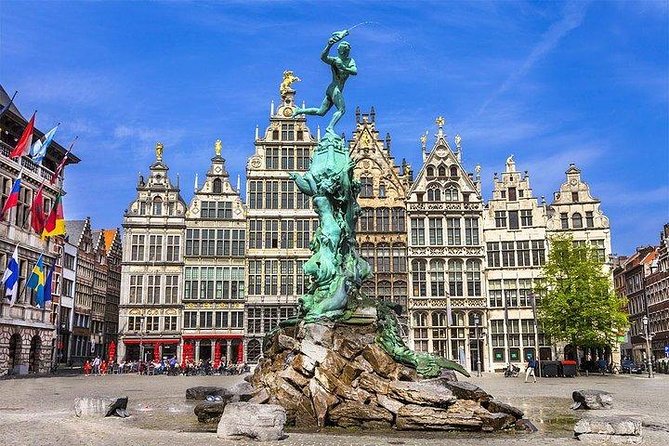
At Grote Markt, you’ll stand in one of the iconic squares of Antwerp and see the town hall area, the guild houses, and the legend linked to the Standbeeld van Brabo sculpture.
Legends can sound like trivia until you see them in place. Here, it helps you understand why people care about the square and why certain statues are treated like local shorthand for identity.
Photo tip: if you’re traveling in peak season, squares fill fast. The earlier you’re there, the easier it is to get clean shots without constant crowd interruptions.
Carolus Borromeus Church and Rubens: Art in a Real Setting
In Carolus Borromeus Church, you’ll step inside and enjoy a painting by Rubens in context. The key detail here is context—seeing art framed by the space and the story the guide tells.
Even if you’re not a hardcore art person, Rubens is a strong anchor for Antwerp. It also makes the later stops make more sense, because the day repeatedly connects Antwerp to major art works and to church interiors.
The Cathedral of Our Lady (Onze-Lieve-Vrouwekathedraal) and Political Context
The route continues toward the cathedral, and on the way the guide explains how Belgian politics works. That’s not what you expect on a sightseeing schedule, but it can actually help you make sense of why Belgium is structured the way it is.
At the Cathedral of Our Lady, you learn about architectural styles that shape the building and you’ll see Rubens works preserved inside. Outside, there’s also a sculpture that adds an emotional layer to the area’s history, so the cathedral becomes more than an exterior photo spot.
Then you’re pushed onward to the next neighborhood landmarks without getting stuck. That flow is a strength of this format.
Groenplaats and Meir Avenue: From Cathedral History to Shopping Street Icons
At Groenplaats, the guide explains how an old cathedral cemetery became the current green square. You’ll also have photo time around the cathedral and the Rubens sculpture found in the square area.
Next, you approach Meir Avenue, which is described as Antwerp’s quintessential shopping street. In the middle you’ll find a giant hand sculpture, and the guide connects it to why Antwerp and Belgium are linked with that symbol.
This is a good pairing: history at the church squares, then the city’s modern identity in Meir. It reminds you Antwerp is still a working capital of sorts—trade, fashion, and public art all in one day.
Antwerp Free Time: How to Use Your 1.5 Hours
Once you reach the main free time block in Antwerp (about 1.5 hours, depending on traffic and the group’s pace), the best plan is to pick a theme and stay on it.
Here are three easy choices you can make without overthinking it:
- Old streets + architecture: stay near the core so you can pop into smaller lanes without stress.
- Photo run: focus on riverfront angles and square facades before crowds build.
- Food and coffee: your guide will point you toward good spots, and this is the time to act on it.
Keep one eye on the meeting timing. In a multi-city day, even a 20-minute detour can feel like an hour if the group is already tracking the schedule.
Ghent Town Hall, Belfry, and Medieval Scale
After Antwerp, the bus heads to Ghent, with a transfer stop at Plantinkaai before you arrive. In Ghent, you walk to the center and begin the guided tour.
The first guided stop is Ghent Town Hall (Stadhuis). The guide explains different architectural styles of the building, which is helpful because Ghent’s medieval vibe can blur together if you only look for one style.
Then you get Het Belfort van Gent (the Belfry tower). The guide highlights the tower and the history around its dragon. In Ghent, towers are not just skyline markers—they’re symbols of civic identity and power.
St. Bavo’s Cathedral and the Mystic Lamb: Art That Actually Has a Legend
At St. Bavo’s Cathedral, you’ll see both the exterior and interior. The highlight is the famous painting by the Van Eyck brothers, The Adoration of the Mystic Lamb. The tour also notes that it’s the most stolen painting in history.
That detail changes how you experience the cathedral. You’re not just looking at a grand interior. You’re hearing a story that adds tension, survival, and significance to what’s preserved.
If you care about art but don’t want to spend your whole trip reading plaques, this stop gives you a strong anchor in a short time.
Saint Nicholas Church: Churches as Living Venues
You’ll also pass by Saint Nicholas Church, where the guide points out that Belgian churches organize concerts and other events.
This is a small stop, but it’s a useful mindset shift: churches aren’t only for daytime viewing. In many Belgian cities, they’re active cultural rooms.
Masons’ Guild Hall and Korenmarkt: The City Built by Trades
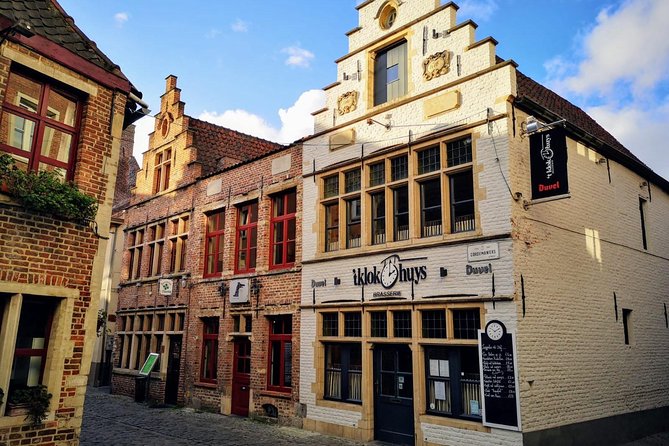
At Masons’ Guild Hall, you’ll see the original facade and get an explanation of what guild houses are and why their features are distinctive.
Then at Korenmarkt, you learn the history behind the building that used to be a post office. It’s one of those “now it’s X, but it used to be Y” stories that makes a city feel lived-in instead of frozen in time.
St. Michael’s Bridge and the River Photography Loop
Next is St. Michael’s Bridge. This is described as a fantastic place for photos, plus you’ll hear about the tower history of St. Michael’s Church from this point.
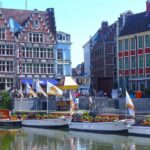
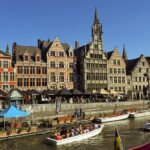
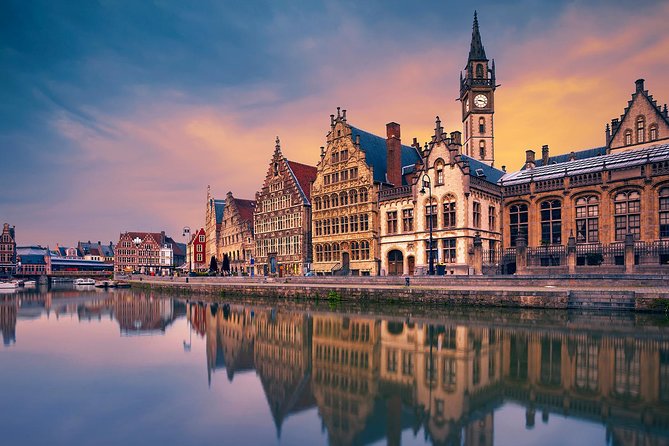
Then the tour follows the riverbanks around Graslei and Korenlei. You’ll learn about the buildings facing the water, like grain houses and how modern landmarks fit into the same waterfront story. This is also your chance to take photos.
One practical tip for this part: wear shoes that handle uneven stone. The river area looks simple, but it can be slippery or textured depending on weather.
OOOST and Kleine Vismarkt: Medieval Markets and Sweet Stops
You’ll stop at OOOST, described as the meat house dating back to the 15th century and originally a covered market. Nearby, at Kleine Vismarkt, the guide brings you to a traditional street stall where you can learn about a famous Ghent sweet called cuberdon.
This is the kind of stop I like on structured tours: it’s short, it teaches you a local food term, and you’re not forced to buy anything on the spot. If you do want it, this is the moment.
St. Veerleplein and Your Ghent Setup for Free Time
The guided tour ends at Sint-Veerleplein square. The guide explains the history of the square and the buildings around it, then gives practical tips on where to eat and which souvenir shops are good. You’ll also be told when and where to be for the bus back to Brussels.
After that, you get another free time window in Ghent of about 1.5 hours (again, timing can vary with traffic and group pace).
If you want to use it well, focus on one loop:
- riverfront photos,
- a wander through lanes near the center,
- and one planned stop for food.
Don’t try to “finish Ghent” in 90 minutes. That’s how you end up stressed instead of charmed.
Logistics, Timing, and What Can Affect Your Day
This tour runs about 10 hours, starting at 8:30am and ending back at the meeting point. You’ll be moving by bus between major areas and walking segments inside each city.
Two timing realities to accept:
- Traffic can alter exact transfer moments. Your free time windows are described as depending on traffic and the group’s pace.
- The day is structured but not rigid. The route may shift a bit based on what the guide thinks fits the group best.
Group size matters too. With a maximum of 45 travelers, it’s still large enough that you’ll hear the guide through a mic or close-group listening, but small enough to keep the pacing manageable.
Also, it’s a Spanish-speaking guided experience. If you don’t speak Spanish well, you’ll still enjoy the sights, but you might miss some of the story connections that make the day work.
Price and Value: Why This Day Trip Usually Wins
At $55.73 per person, this is built around the assumption that you want value in logistics and interpretation, not just transportation.
Here’s what you’re effectively paying for:
- round-trip bus transfer from Brussels,
- a Spanish-speaking guide,
- guided walking tours in Antwerp and Ghent,
- city maps and recommendations,
- and time-saving access to key stops without figuring out your own route between cities.
Food isn’t included, and there’s no hotel pickup. So if you have to add taxis or extra transit to reach the meeting point at Carrefour de l’Europe, your real cost may rise.
Still, for many people, the value is in skipping the “how do we get there” headache and getting a coherent plan for two cities in one day.
Who This Tour Fits Best (And Who Might Prefer DIY)
Book this if:
- you want an easy, guided Antwerp + Ghent combo without extra research,
- you like walking routes with story explanations (especially around Rubens and the Van Eycks),
- you can handle a long day on public streets and in churches,
- and you’re okay with free time being planned into blocks rather than completely open-ended.
You might skip this if:
- you strongly prefer independent pacing with no group timing,
- you don’t speak Spanish and want full narration in your language,
- or you’re visiting with someone who needs a lot of downtime, because the schedule has several quick stops in sequence.
Should You Book? My Practical Take
If you’re looking at Brussels and want two medieval-by-way-of-great-art cities without a second travel day, this is a smart booking. The combination of guided Antwerp core, Ghent’s cathedral and waterfront highlights, and mapped recommendations makes the day feel designed rather than random.
My only caution is the one you already know you can’t ignore: it’s a long day, and transfers can slow down. Go with comfortable shoes, a plan for snacks, and a flexible attitude. If you do, you’ll leave with strong mental pictures of Antwerp’s squares and Ghent’s towers—and a better sense of how both cities work.
FAQ
How long is the trip?
It runs about 10 hours.
What time does the tour start?
The start time is 8:30am.
Where is the meeting point in Brussels?
You meet at Carrefour de l’Europe, 1000 Bruxelles, Belgium.
Does the tour include hotel pickup or drop-off?
No. Pick up and return to the hotel are not included, and the tour ends back at the meeting point.
Is the guide Spanish-speaking?
Yes, the tour includes a professional guide in Spanish.
Is food included?
No. Meals and drinks are not included, but the guide can point you to good places to eat.
How much free time do I get in Antwerp and in Ghent?
You get about 1.5 hours of free time in Antwerp and about 1.5 hours of free time in Ghent, depending on traffic and the group pace.
Are admission tickets included?
The itinerary lists admission ticket free for each stop described, so you should not need separate entry tickets for those items on the route.
What is the maximum group size?
The tour has a maximum of 45 travelers.
What should I know about children on the bus?
All children from 0 to 3 years must travel in an approved safety chair when traveling by bus.
Is it weather dependent?
Yes. The experience requires good weather.
When can I cancel for a full refund?
You can cancel up to 24 hours in advance for a full refund.