REVIEW · BRUSSELS
Bruges and Ghent – Belgium’s Fairytale Cities – from Brussels
Book on Viator →Operated by Brussels City Tours - Keolis Travel · Bookable on Viator
Ghent and Bruges feel like fairytales. This day trip pulls off two UNESCO cities with one comfy coach ride. You get guided walking time in Ghent and Bruges, plus radios so you’re not stuck craning your neck. The schedule is tight enough to cover the big sights, but flexible enough to still enjoy wandering.
What I like most is the focus on standout places with real context: St. Bavo’s Cathedral in Ghent (where the Mystic Lamb is sometimes part of the experience) and the Bruges classics like Minnewater and the Basilica of the Holy Blood. The other big win is the logistics: air-conditioned transport, organized stops, and a guide who keeps you moving without turning the day into a sprint. The main drawback to plan for is pace and limited free time in a packed itinerary, plus the tour can run in more than one language, which may slow you down if you want everything in one tongue.
In This Review
- Key Points at a Glance
- From Brussels Morning Departures to Ghent’s Medieval Towers
- St. Bavo’s Cathedral and the Ghent Altarpiece Story You Can Actually Follow
- Gravensteen and Graslei: Where Medieval Power Meets Daily Life
- The Ghent Belfry Views and St. Nicholas Clockwork Streets
- Bruges on Arrival: Minnewater Lake of Love to Start Your Walking Loop
- Basilica of the Holy Blood, Our Lady’s Tower, and Market-Square Architecture
- Beguinage Ten Wijngaarde and the Value of One Quiet Stop
- Canal Tour Option: The Best Pay-Extra Moment in Bruges
- Price and Comfort: When $59.13 Is Good Value
- Language Switching and Timing: The Two Things That Can Make or Break Your Day
- Should You Book This Bruges and Ghent Day Trip From Brussels?
- FAQ
- What time does the tour start from Brussels?
- Where does the tour end?
- How long is the day trip?
- Is lunch included?
- When is lunch scheduled?
- Will I have time to explore on my own?
- Can I book the Bruges canal tour in advance?
- What languages are offered?
- What if I’m late to the meeting point?
- Is Mystic Lamb access at St. Bavo’s Cathedral available every day?
Key Points at a Glance
- Radio + earphones help you hear the guide even when you’re off to the side taking photos
- UNESCO hits both cities: Ghent’s medieval core and Bruges’ historic center
- St. Bavo’s Cathedral is a major anchor stop, with note about Mystic Lamb on Sundays
- Minnewater (Lake of Love) gives you a calm, scenic break right inside Bruges
- Optional canal tour lets you see Bruges from the water without committing during the main walking loop
- Your footwear matters: cobblestones plus long walking time in two towns
From Brussels Morning Departures to Ghent’s Medieval Towers
You start in Brussels at Bd de Berlaimont 18 at 9:00am, then settle in for the drive to Ghent. The coach is air-conditioned, and the setup is built for group travel: you’re not hopping between train stations or timing local buses while trying to read maps. You also get radios/earphones, which is a quiet lifesaver once you hit narrow lanes and small squares where the group naturally stretches out.
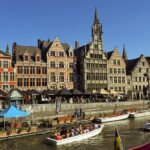
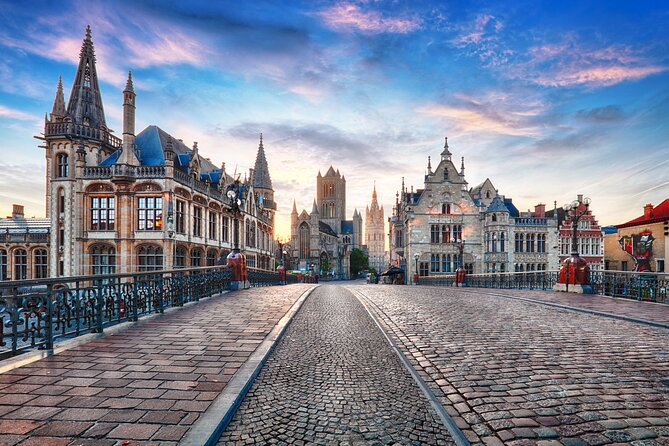
Ghent is where the day starts to feel characterful in a hurry. You’ll see why this city earns “medieval center” status fast: the skyline of towers, the river quays, and the dense, old-stone streets that make the walking tour feel like it’s happening inside a living museum. One early visual marker is the Ghent belfry area, with the Belfry of Ghent rising to 91 meters and forming part of the classic tower set that also includes St. Bavo’s Cathedral and St. Nicholas’ Church.
If you’re sensitive to walking volume, this is the moment to mentally prepare. The tour calls for moderate physical fitness, and you’ll be on your feet for long stretches on uneven surfaces.
You can also read our reviews of more tours and experiences in Brussels.

St. Bavo’s Cathedral and the Ghent Altarpiece Story You Can Actually Follow
The first major stop is St. Bavo’s Cathedral, a towering Gothic church in Ghent. It’s known for housing the Ghent Altarpiece (one of those famous “only in this place” artworks you’ll want to understand before you stare at it). Entrance for the Mystic Lamb at St. Bavo’s Cathedral is noted as not possible on Sundays, and even when it is offered, access can be limited—so don’t build your whole mental plan around one single item.
Here’s why this stop works on a day trip: even if you don’t go full museum-mode, the cathedral’s sheer scale and the guide’s commentary help you connect details you’d otherwise miss. St. Bavo’s also gives you an easy “anchor” point in Ghent—once you’ve oriented around the cathedral, the rest of the medieval landmarks make more sense as parts of a single urban story.
Admission is listed as free for this stop, which matters because it’s one less thing pulling time away from the walking portion. Still, treat the cathedral visit as part of a guided route, not a leisurely self-guided afternoon. If you prefer slow, museum-style pacing, you may find yourself wanting more time here.
Gravensteen and Graslei: Where Medieval Power Meets Daily Life
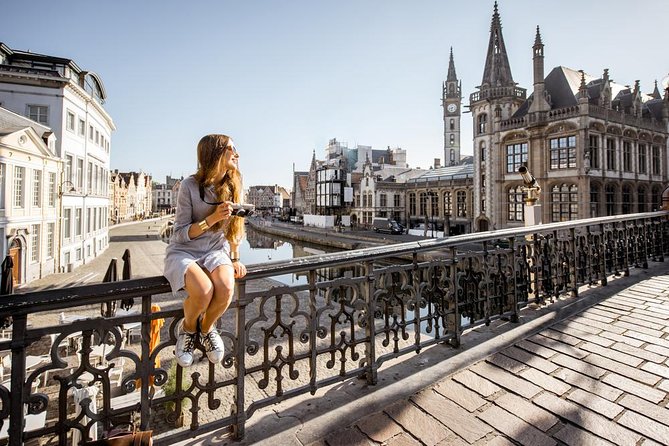
After St. Bavo’s, the tour moves through Ghent’s legendary medieval core. One of the main hits is the Castle of the Counts of Flanders (Gravensteen). The dates on the castle are old-school impressive, with the current structure dating to 1180. It wasn’t just “a castle.” Over time it served as a residence, then later a court, prison, mint, and even a cotton factory—proof that Ghent’s power structures evolved instead of freezing in time.
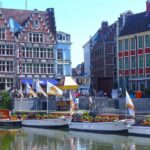
From there, you’ll spend time around Graslei, the historic port area along the Leie river. This is one of those places where you can feel the city’s trading past: quays, classic buildings, and a river that gives Ghent its calm rhythm even when you’re moving with a group. The guide typically ties these spots together with local legends and anecdotes, which is exactly what you want on a one-day run. Otherwise, medieval landmarks can blur together into “pretty old buildings.”
You’ll also pass through or near St. Nicholas’ Church, one of the oldest prominent Ghent landmarks. The early-13th-century church is built as a replacement for an earlier Romanesque building, so it’s another layer in the story of how Ghent kept rebuilding and upgrading its identity over centuries. Admission is also listed as free here, so you’re not paying extra just to check the boxes.
The Ghent Belfry Views and St. Nicholas Clockwork Streets
One detail that’s worth paying attention to as you walk is the tower geometry of Ghent. The Belfry of Ghent is one of three medieval towers overseeing the old city center, and you’ll see the lineup conceptually even if you don’t climb anything. That matters because it helps you orient yourself without needing constant directions. Once you know what you’re looking for—tower-to-quay-to-cathedral—you can take photos that feel intentional instead of random.
The tour’s structure is also designed to keep you from feeling lost. You’re not just dropped into Ghent with a vague suggestion to explore. You get a guided route through the main stops, then time to breathe. That mix is a major part of why this type of day trip is popular: you get the “what is this and why does it matter” part from the guide, then you choose where to slow down.
The tradeoff is that you’re still moving as part of a group. Cobblestones and uneven pavement can make slower wandering harder than you might expect, especially if your travel style is more “stroll and linger” than “see and move.”
Bruges on Arrival: Minnewater Lake of Love to Start Your Walking Loop
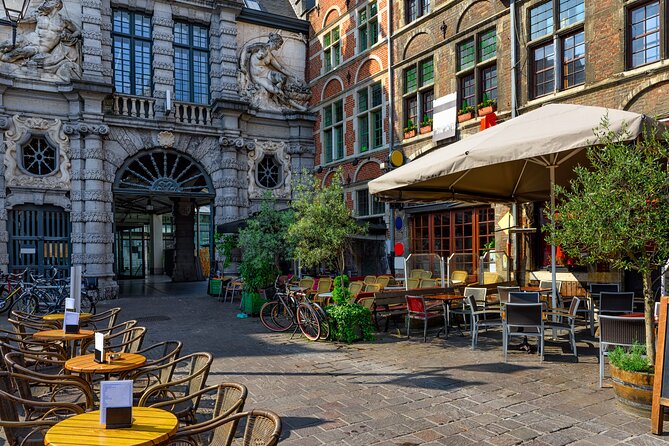
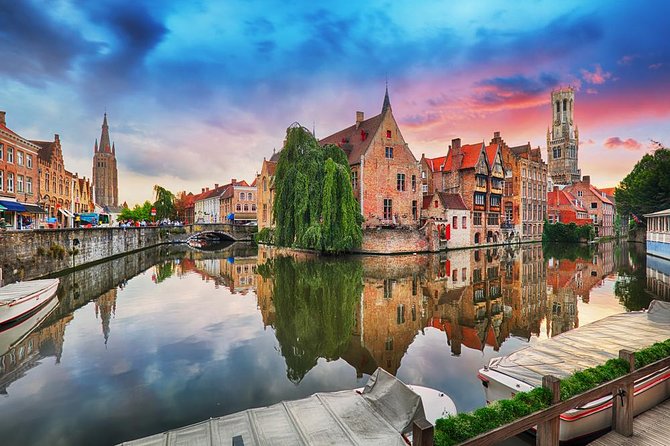
Then it’s back on the coach for the drive to Bruges, another UNESCO-listed city. In Bruges, you start with a scenic, softer-feeling moment: Minnewater (Lake of Love). This is the romantic pocket of calm inside the historic center, and it’s also where you’ll find the Lovers Bridge. It’s a great first impression stop because it breaks up the day. Ghent is towers and power; Bruges gives you water, reflections, and that iconic canal-city vibe.
Lunch is own expense, and it’s usually scheduled somewhere between 12:00pm and 2:00pm (subject to change). The ideal play here is to pick a place quickly if you’re hungry, since the tour is built around guided blocks and limited independent time. If you sit down and order something long, you can end up stressed about getting back to the group.
One practical tip: I’d plan to eat like you’re on a schedule. Even if the city is beautiful, you’ll likely have more fun later if lunch doesn’t swallow your afternoon.



Basilica of the Holy Blood, Our Lady’s Tower, and Market-Square Architecture
Once you’ve recharged, the guided walking tour focuses on the key Bruges landmarks.
Basilica of the Holy Blood is first in your list of big-ticket sights. The basilica houses a relic known as the Holy Blood, and the tradition ties it to Joseph of Arimathea and Thierry of Alsace. Even if you don’t track the details as a believer, it’s a powerful example of how medieval Bruges blended faith, politics, and pilgrimage-style prestige. Admission is listed as free for this stop.
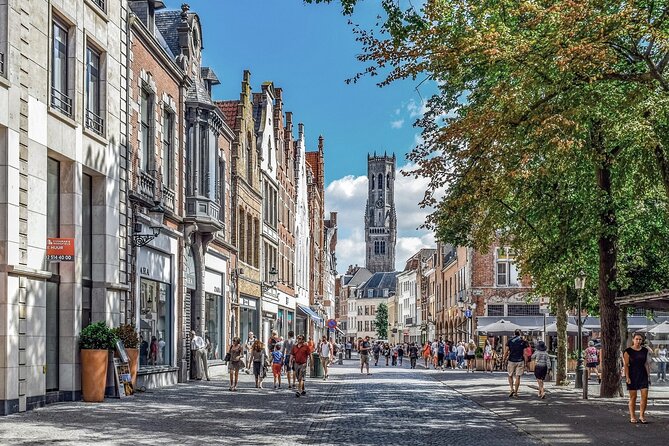
Next up is Onze-Lieve-Vrouwekerk (Church of Our Lady). Its tower reaches 115.6 meters, staying the tallest structure in Bruges and noted as the second-tallest brickwork tower in the world. Even if you only admire it from street level, this is the kind of landmark that makes your photos look like they belong to the city, not just your camera roll. The tour gives you time to take it in without forcing a long church sit-down.
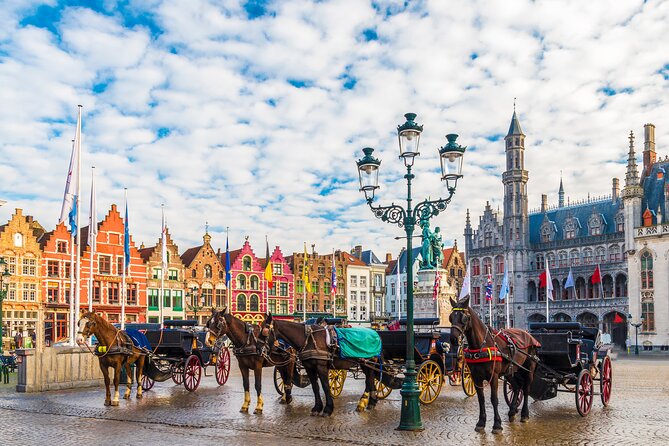
You’ll also see Stadhuis (Bruges City Hall) in Burg Square, the city’s political center. Pair that with Market Square and the surrounding medieval facades and you get a strong sense of what Bruges was built to project: wealth, governance, and civic pride, all packed into walkable squares.
Beguinage Ten Wijngaarde and the Value of One Quiet Stop
Between the big churches and squares, the tour includes The Princely Beguinage Ten Wijngaarde. This matters because it shifts you away from the usual cathedral-and-castle loop. The beguinage is described as the only preserved beguinage in Bruges, and while there aren’t beguines living there now, since 1927 it has functioned as a convent for Benedictines.
This stop is short, but it adds texture. Bruges can sometimes feel like a postcard parade. Ten Wijngaarde gives you a more human scale, and it’s an easy win if you like history beyond the grand monuments.
Canal Tour Option: The Best Pay-Extra Moment in Bruges
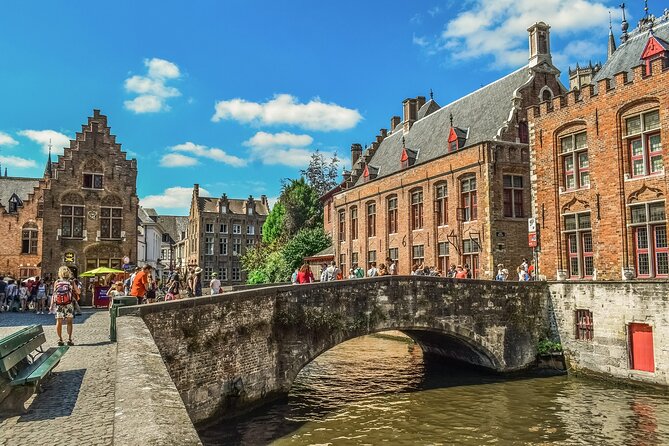
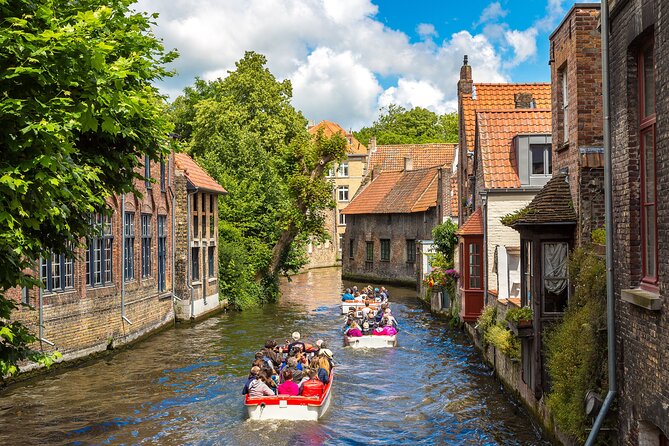
You’ll get time for an optional canal tour through Bruges’ winding waterways. The canal tour is organized at extra cost, and booking is only handled with your guide on the day. That means you shouldn’t assume you can grab tickets online before you arrive. If you want the water views, ask at the right moment during the day so you don’t miss the chance.
Why this is usually the best extra spend: Bruges has a lot of beautiful architecture, but seeing it from the water turns facades into a continuous scene instead of separate photo stops. It also gives your legs a break, which matters when you’ve already walked enough to earn a serious appetite.
If weather is bad, the canal tour can still be a comfort option since you’re seated. Still, you’ll want a backup plan in case you’d rather prioritize your own walking.
Price and Comfort: When $59.13 Is Good Value
At $59.13 per person, the value comes from what’s included: a professional guide, air-conditioned vehicle, and radios/earphones that keep group commentary clear. You’re also not paying for most of the key religious stops listed here, because admission tickets are marked as free for locations like St. Bavo’s Cathedral (and for St. Nicholas’, the Basilica of the Holy Blood, and others).
What you don’t get is the freedom that comes with a self-planned day. Lunch and food are own expense, and the time structure limits wandering. So this is best value if you:
- want to cover both UNESCO cities in one day without transportation stress
- like guided context at each stop
- are okay with a schedule that leaves you more “see and understand” than “linger and wander”
Group size is managed up to a maximum of 200 travelers, and that’s exactly why radios matter. In the real world, you can end up in a larger group than you hoped for. The good news is the earphones help prevent the classic problem of losing the guide whenever the group reshuffles.
Language Switching and Timing: The Two Things That Can Make or Break Your Day
One of the most repeated issues is language switching. The tour can be English, Spanish, and/or French, and commentary may run bilingual, then move again. If you end up listening to similar information repeated in multiple languages, it can feel tiring—especially when you’re walking, trying to look, and also listen.
There’s also a strict approach to late arrivals. The tour notes that it cannot accommodate latecomers, and the FAQ says they can wait 5 minutes if you let them know in advance. If you’re coming from elsewhere in Brussels, build in buffer time. Don’t plan to cut it close.
On the positive side, the most praised experiences emphasize how well the day is handled: clearly explained sights, good pacing, and drivers who keep things smooth. Names that show up in praise include Albert (praised for strong historical explanation), Stephan (praised for professionalism), Niko (praised for clear delivery), Pablo (praised for being professional and friendly), and Surge/Mohammed/Morad (praised for driving). You can’t control who you get, but those names are a sign that some departures perform really well.
As for timing: some days can feel slightly rushed to certain people, particularly if you’re expecting more guided history inside Bruges. The tour still provides free time on each excursion (with the free time range stated as 45 minutes to 3 hours, depending on the excursion), so it’s worth treating that free block as your window for extra details you care about most.
Should You Book This Bruges and Ghent Day Trip From Brussels?
I’d book it if you want a smart, guided sampler of two UNESCO cities with low hassle. This is a great fit for first-time visitors who like medieval sights, want context fast, and don’t mind a packed schedule. It’s also ideal if you’re traveling solo or with mixed skill levels and want a guide to keep everyone oriented.
I’d skip it (or choose a different style of trip) if you:
- need lots of independent time with no schedule pressure
- hate repeating information in multiple languages
- are hoping for a slow, deep museum day in just one city
If your goal is to get your bearings quickly and leave Brussels with a full dose of Ghent and Bruges, this day trip is a strong value. Just wear comfortable walking shoes, plan for short meals, and treat the free time as part of the strategy, not a surprise.
FAQ
What time does the tour start from Brussels?
The tour starts at 9:00am. The meeting point is Bd de Berlaimont 18, 1000 Bruxelles.
Where does the tour end?
The tour ends in central Brussels at Brussel-Centraal, Carr de l’Europe, 1000 Bruxelles.
How long is the day trip?
The duration is about 10 hours 30 minutes.
Is lunch included?
No. Food and drinks are not included, and lunch is typically on your own.
When is lunch scheduled?
Lunch is usually between 12:00pm and 2:00pm, though it can change depending on the day.
Will I have time to explore on my own?
Yes. You’ll have free time on every excursion, except for tours within Brussels. The stated range for free time is 45 minutes to 3 hours, depending on the excursion.
Can I book the Bruges canal tour in advance?
No. The canal tour can only be booked with your guide on the day of the trip.
What languages are offered?
The tour can be offered in English, French, and/or Spanish, and the commentary may be bilingual.
What if I’m late to the meeting point?
The tour cannot accommodate latecomers. The FAQ states they may wait up to 5 minutes if you let them know in advance by calling the number provided.
Is Mystic Lamb access at St. Bavo’s Cathedral available every day?
Access to the Mystic Lamb at St. Bavo’s Cathedral is not possible on Sundays.