REVIEW · BRUSSELS
Brussels: Private Historical Highlights Walking Tour
Book on GetYourGuide →Operated by Legends Experiences · Bookable on GetYourGuide
Brussels hides stories in plain sight. This private historical highlights walk threads Grand Place architecture to the Manneken Pis legend, with a local guide keeping the route short and the explanations clear. I love how it feels like you’re walking through a guidebook that actually talks back.
I like two things most: the tour is private and customizable, so you can steer the pace and focus, and it pairs famous landmarks with the smaller details that make Brussels feel lived-in. I also appreciate that the route is built for getting your bearings fast, without burning your whole day on transit.
One thing to consider: it runs rain or shine, so if wet weather makes you slower, you’ll want truly comfortable shoes and a flexible attitude.
In This Review
- Key highlights worth your time
- Starting at Grand Place 8: the fastest way to get your bearings
- Grand-Place: reading Brussels through architecture
- Manneken Pis: the legend that explains more than a statue
- Saint Nicholas Church: a quick stop with real atmosphere
- La Monnaie De Munt and the culture thread
- Galeries Royales St Hubert: elegance in a quick window
- Saint-Géry Island: the city’s smaller stories
- Cathedral of St. Michael and St. Gudula: a major landmark moment
- Brussels Park and Royal Square: pauses that make the route work
- Ending at Mont des Arts: where to continue your Brussels day
- Price and value: $206 per group for a private 150-minute walk
- Who this tour suits best (and who might feel limited)
- Rain or shine: how to make the most of a walkable city day
- Language and guide style: why the storytelling lands
- Should you book this Brussels Historical Highlights Walking Tour?
- FAQ
- Where does the tour start?
- How long is the tour?
- Is this a private tour?
- What languages are available?
- Is the tour accessible for wheelchair users?
- Does food or drinks come with the tour?
- Do I need to worry about weather?
- Can I cancel and get a refund?
Key highlights worth your time
- Private guiding for a small group (priced for up to 2): less crowd pressure, more chances to ask questions.
- Meeting at Grand Place 8 by City Hall: you’ll look for the red umbrella to start.
- Grand Place to Mont des Arts in 150 minutes: a well-paced loop of big sights.
- Manneken Pis with the story behind it: not just a quick stop.
- A “walk-and-learn” mix of major landmarks and side streets: Saint Nicholas Church, La Monnaie De Munt, and more.
- English, French, or Dutch guide options: choose the language that keeps you comfortable.
Starting at Grand Place 8: the fastest way to get your bearings
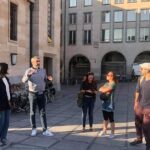
This tour is designed for a short, high-impact day in Brussels. You meet at Grand Place 8, right in front of the city hall on the main square, and you’ll spot your guide by the red umbrella. Once you start walking, the route is built to reduce guesswork, so you spend less time figuring out where to go next.
Because it’s private, the experience doesn’t feel like you’re squeezing into someone else’s schedule. The guide can adjust the rhythm for your group, and that matters on a 150-minute walk where every extra detour has a cost.
Also, it’s rain or shine, so you’re not waiting out bad weather. You’re simply choosing the right moment to move through the city: bring shoes you can keep on for a while.
You can also read our reviews of more walking tours in Brussels
Grand-Place: reading Brussels through architecture
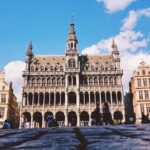
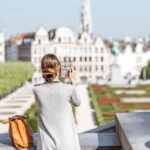
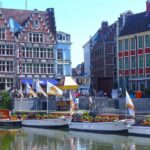
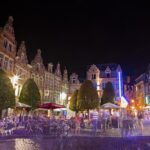
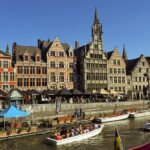
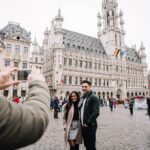
Grand-Place is the opening act for a reason. You’ll get a guided stop there (about 15 minutes), and the focus is on the beautiful facades and the way the buildings work together as a single scene. Even if you’ve seen photos, it hits differently when you stand close and realize how much detail is packed into the stonework.
This is also where your guide typically sets the tone: what to look at first, what stories connect the buildings, and how the square fits into daily city life. I love this start because it gives you a visual map before you move on to more quirky, smaller landmarks.
If you’re the kind of person who likes structure, this first segment is especially useful. You’ll leave Grand-Place with a clearer sense of what makes Brussels look the way it does, so the rest of the walk feels less random.
Manneken Pis: the legend that explains more than a statue
Next up is Manneken Pis (around 10 minutes). The statue is small, but the storytelling around it is big. This is one of those places where a good guide makes the difference between a photo moment and a real memory.
What I like about this stop is that it’s not treated like a joke you rush past. The tour frames it with the famous tales that have shaped its reputation, so you understand why people care and what the statue has come to represent in Brussels culture.
A practical note: Manneken Pis is a magnet, so the 10 minutes matter. The tour is timed to keep you moving, so you get the meaning without turning the whole walk into a waiting game.
Saint Nicholas Church: a quick stop with real atmosphere
The route then moves to Saint Nicholas Church in Brussels (about 10 minutes). This kind of stop works well in a “highlights” tour because it adds contrast. After civic space and a famous playful legend, you shift to a religious landmark that brings a different feel to the streets.
In those 10 minutes, you’re not trying to cram in a full church visit. Instead, you’re getting the guided context that makes the exterior and setting make sense, plus the kind of story a guide can connect to earlier stops.
If you prefer walking tours that feel like a smooth narrative, this stop helps bridge the story across different sides of the city.
La Monnaie De Munt and the culture thread
La Monnaie De Munt is next (about 15 minutes). The name matters here because the tour uses it as a cultural anchor, not just another landmark you pass. You’ll get a guided walk-through that ties into the city’s identity—how art and public life sit side by side.
I like that this part of the tour doesn’t feel only formal or only fun. It’s one of the stops where the guide can connect big-city culture to street-level walking, so the whole experience stays human-sized.
If your visit to Brussels is short and you want to cover more than just squares and statues, the inclusion of La Monnaie De Munt is a smart way to widen your picture.
You can also read our reviews of more private tours in Brussels


Galeries Royales St Hubert: elegance in a quick window
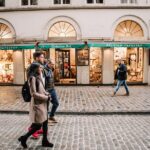
Then it’s Saint-Hubert Royal Galleries (about 10 minutes). This is described as elegant, and that’s exactly the right word for what you’re aiming to catch in this time slot: the feel of a special space. In a walking tour, you rarely get long to fully explore a place like this, but the guide’s timing gives you enough to notice character without losing the flow.
I find stops like this valuable because they break up the day. After stepping through open squares and iconic street corners, you get a change in tempo—something more contained, more designed.
If your goal is photos, this is also one of the better segments to keep your camera ready. The setting is made for it, and the guide will help you spot what’s worth your lens before you move on.
Saint-Géry Island: the city’s smaller stories
Saint-Géry Island is on the itinerary (about 10 minutes). This is the kind of stop that adds texture. When you’re walking a highlights route, it’s easy to feel like everything is famous and obvious. A place like this shifts the tone back toward the everyday character that makes Brussels feel like a real city.
You’ll get guided context that helps you understand why this area shows up on a historical route, even though it isn’t as universally recognized as Grand-Place. I like these short segments because they make the tour feel like a curated walk with personality, not a checklist.
Cathedral of St. Michael and St. Gudula: a major landmark moment
Next comes the Cathedral of St. Michael and St. Gudula (about 15 minutes). This is a longer stop, and it signals that you’re moving into one of the heavier landmark chapters of the walk.
For me, cathedrals work best in tours when they’re treated as more than architecture. A guide can connect the site to the broader city story, so you’re not just looking at stone and stained-glass vibes. Here, the time is generous enough for you to understand what makes the cathedral important in the city’s skyline and identity.
A consideration: if you’re visiting on a busy day or during any unexpected schedule changes, your time might feel tight. The tour time-box is clear, though, so it’s usually easy to keep up without feeling rushed.
Brussels Park and Royal Square: pauses that make the route work
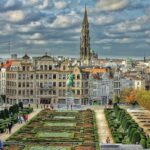
Brussels Park is next (about 15 minutes), followed by Royal Square (about 15 minutes). These are the breathing spaces. After the big landmark intensity, a park and square let you reset your attention and absorb how the city spaces connect.
I like how these stops round out the tour. A highlights walk can sometimes swing too hard toward monuments. Here, you get a more balanced blend of formal landmarks and public space, which also helps when you’re taking the route on a day with mixed weather.
Also, parks and squares are useful for orientation. If you’re planning the rest of your day after the tour, you’re likely to recognize the layout more easily once you’ve walked through it with a guide.
Ending at Mont des Arts: where to continue your Brussels day
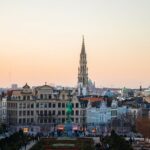
The tour finishes at Mont des Arts. You’re capped off with the end point, which is a smart design for people who don’t want to keep walking until their feet quit. It also gives you a solid starting place for anything you do next, since you’re landing in an area that’s easy to reference after the fact.
What I appreciate here is the tour doesn’t leave you stranded miles from where you started. The route has a clear beginning and end, and the walk stays within a workable city rhythm.
If you like to keep your evenings open, this finish works well. You’re done at a point that feels central enough to build the rest of your day.
Price and value: $206 per group for a private 150-minute walk
The price is $206 per group up to 2, for 150 minutes. That sounds like a lot until you break it down.
If you’re two people, you’re effectively splitting the guide cost, and the private format becomes the value. You’re paying for more than directions; you’re paying for a real local storyteller who shapes the walk so you don’t miss the meaning behind what you see. For a first-time visit or a short stay, that kind of time-saving is often worth it.
If you’re only one person and the group price still applies, it becomes more of a personal decision. I’d only book it for a solo trip if you know you want guided context rather than wandering with a map.
Either way, the structure is what makes the pricing feel fair: the tour covers a meaningful stretch of central Brussels, includes multiple iconic stops, and stays to a tight schedule without dragging you around for hours.
Who this tour suits best (and who might feel limited)
This is a great fit if you want a guided walk that mixes major sites with smaller context. It’s ideal for couples, friends, and anyone doing Brussels for the first time who doesn’t want to spend their day reading websites or sorting out which neighborhood comes next.
It also works well if you care about stories, not just sights. The Manneken Pis portion alone is a good indicator: the tour leans into the “why,” and that’s where you’ll remember Brussels.
It may be less perfect if you want long, unhurried time inside specific buildings. Many stops are quick guided segments, so you’re getting context and orientation rather than a deep visit. In that case, consider pairing it with additional time on your own at just one or two favorite locations.
Rain or shine: how to make the most of a walkable city day
Because it runs rain or shine, plan for wet sidewalks and slick stone. Your best move is straightforward: wear shoes with good grip and comfortable support. Even though this is a short urban walk, the ground is still ground, and Brussels rewards solid footwear.
If weather turns grey, lean into what the tour does well. A guide can keep the experience focused even when visibility drops. And if the streets are crowded due to conditions, the private format helps you keep moving with less friction.
Language and guide style: why the storytelling lands
The tour runs with live guides in English, French, and Dutch, which is a big deal for staying engaged. You’ll get better value when the guide can explain the little connections clearly, and this tour is built on those connections.
From previous experiences with guides such as Dan, Daniel, and Sebastien, the standout trait is how they make the architecture feel readable. In particular, the Grand Place explanation tends to click fast because the guide frames what you’re seeing in a way that makes you understand the buildings, not just recognize them.
That’s also why the Manneken Pis story works so well here. A good storyteller doesn’t just repeat facts; they connect the legend to nearby streets and help you understand why it matters.
Should you book this Brussels Historical Highlights Walking Tour?
I’d book it if you want a private, time-efficient way to see the center of Brussels and come away with a clear story. The combination of Grand Place, Manneken Pis, major landmarks like the Cathedral of St. Michael and St. Gudula, plus a finishing point at Mont des Arts creates a route that’s practical for short stays.
I also think it’s a strong choice if you enjoy architecture and want your photos to come with context. This tour doesn’t treat sights as background scenery; it treats them as chapters.
Only skip it if you already plan to spend a full day on a slow, self-guided explore where you don’t want to follow a schedule. On a “need the highlights fast” day, this one is built for you.
FAQ
Where does the tour start?
The tour starts in front of the city hall on Grand Place, at Grand Place 8. Look for the red umbrella.
How long is the tour?
The tour lasts 150 minutes.
Is this a private tour?
Yes. It is a private group and your walking tour is private and customizable.
What languages are available?
The live guide is available in English, French, and Dutch.
Is the tour accessible for wheelchair users?
Yes, the tour is wheelchair accessible.
Does food or drinks come with the tour?
No. Food and drinks are not included.
Do I need to worry about weather?
The tour takes place rain or shine.
Can I cancel and get a refund?
Yes. Free cancellation is available up to 24 hours in advance for a full refund.