REVIEW · BRUSSELS
Guided tour: Brussels Crime Scenes
Book on Viator →Operated by Brussels By Foot · Bookable on Viator
Brussels has plenty of charm, but it also has a darker side. This guided Brussels Crime Scenes walk uses real locations to connect 19th- and 20th-century crimes to how people lived, feared, and behaved. I loved how the guide keeps the tone respectful while still calling the cases what they were, and I also liked that the story is always tied to the wider city context, not just shock value.
Two things make this tour work: the pacing (about two hours) and the way the guide stitches crime details to everyday Brussels life across eras. It’s a walking route through central sights, so you’re never stuck in one place listening.
One consideration: this is a crime-focused experience, and the descriptions can get frightening and sometimes violent. If you prefer light sightseeing, this route is probably not for you.
In This Review
- Key highlights worth your time
- A 2-hour walk through Brussels’ darker streets
- Price, group size, and why $23.26 is fair value
- Where you start on Rue de l’Étuve and where you finish
- Grand Place: bright stones with a dark story ahead
- Rue de l’Amigo: from a hotel’s reputation to a crime of passion
- Stop mood: the hotel that changed reputations
- Hotel À la Ville de Courtrai and a passion-driven case
- Le Coin du Diable: the Devil’s Corner legend in 17th-century context
- Place Saint-Géry: a brutal case that pulled Brussels into the spotlight
- Place du Jardin aux Fleurs: the crime with unusual loot
- What the guide does well: respectful facts with historical context
- If you want costumes or audience participation, note the format
- How to prep for a crime-story city walk
- Who should book Brussels Crime Scenes (and who should skip)
- Should you book this tour? My call
- FAQ
- How long is the Brussels Crime Scenes tour?
- How much does the tour cost?
- Where does the tour start?
- Where does the tour end?
- Is there a mobile ticket?
- What’s included in the price?
- What is not included?
- How big is the group?
- Are service animals allowed?
- What is the cancellation policy?
Key highlights worth your time

- A 2-hour guided walk built around major central Brussels locations
- Small groups (max 25), so your questions should land well
- Multiple crime cases linked to the city’s social customs and police work across eras
- No museum tickets needed at the stops, just show up and listen
- Mobile ticket for easy entry
- Grand Place to Place Saint-Géry gives you a tidy central-circle route
A 2-hour walk through Brussels’ darker streets
This tour is built for people who like their travel stories grounded in place. You start in the center and move stop to stop, letting the city streets act like a map of real cases that shaped Brussels in the 1800s and 1900s.
What surprised me in a good way is the balance. Yes, the subject matter is grim, but it’s handled with care. The goal isn’t to sensationalize; it’s to show how crime reveals the pressures, rules, and social habits of each era.
If you want a standard “see the sights” day, this won’t be that. If you want a sharper look at how cities work—when things go wrong—this is a strong fit. Expect a walk that can feel chilly in tone, especially when the guide talks about violence, but always with a respectful framing of the people involved.
You can also read our reviews of more guided tours in Brussels


Price, group size, and why $23.26 is fair value
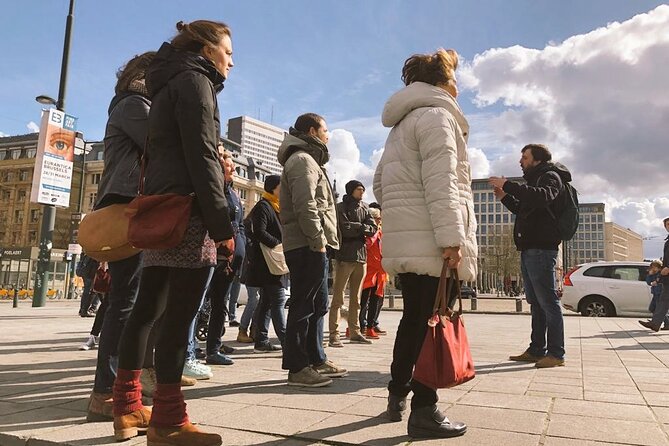
At $23.26 per person for about two hours, you’re paying for guided storytelling tied to real addresses in central Brussels. That’s the big value: the tour doesn’t ask you to hunt for clues on your own, and it doesn’t require museum entry.
The group limit helps. With up to 25 people, it’s not cramped, and it’s easier to keep attention than on big coach-style tours. Also, since it’s typically booked about 12 days in advance, it’s smart to reserve sooner rather than later—especially if you’re in Brussels during busy weekends.
Another value point: all fees and taxes are included. That means you’re not worrying about surprise add-ons just to follow the route. The only thing you’ll want to plan yourself is any snack or coffee stop, because those aren’t included.
Where you start on Rue de l’Étuve and where you finish
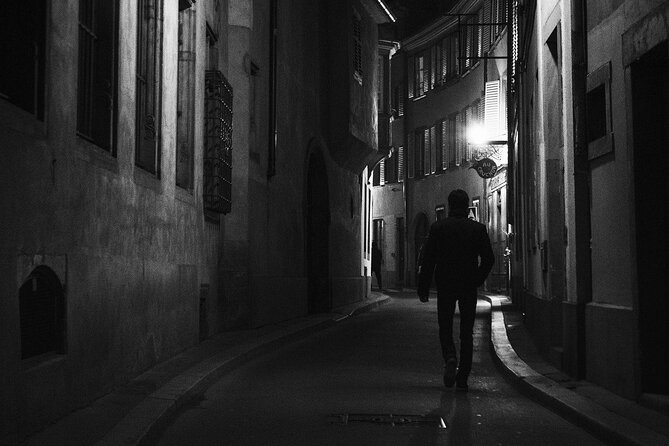
You’ll meet at Rue de l’Étuve 1, 1000 Bruxelles. The tour ends at Pl. Saint-Géry 1, 1000 Bruxelles, in the center of Place Saint-Géry.
This matters more than it sounds. Starting and finishing in central locations makes it easier to connect the tour to the rest of your day—dinner, a museum, or even a second walk. Place Saint-Géry is a handy landing spot because it’s easy to keep moving from there.
The tour also runs near public transportation, which is useful if your plan is to bounce between sights. And if you travel with a service animal, they’re allowed.
Grand Place: bright stones with a dark story ahead
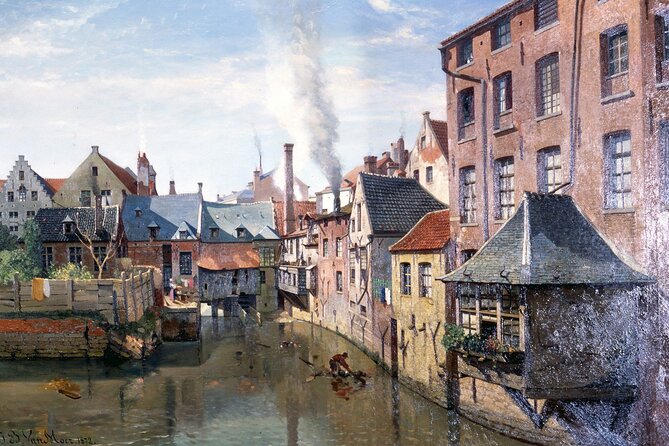
The route crosses Grand Place, Brussels’ famous showpiece. This is a great opening choice because it sets up contrast fast: you start in a place most people associate with beauty and civic pride, then you’re guided toward cases that show the reality behind the shine.
Think of Grand Place as the “before” picture. Even if you already know the square, you’ll get a different lens on it—how a city can look orderly while still wrestling with fear, conflict, and crime underneath.
If you’re the kind of traveler who likes context, you’ll appreciate how the guide uses the city’s social customs as a bridge. Instead of treating crime as random events, you’ll hear it explained as something tied to relationships, class, and policing practices of the time.
Rue de l’Amigo: from a hotel’s reputation to a crime of passion
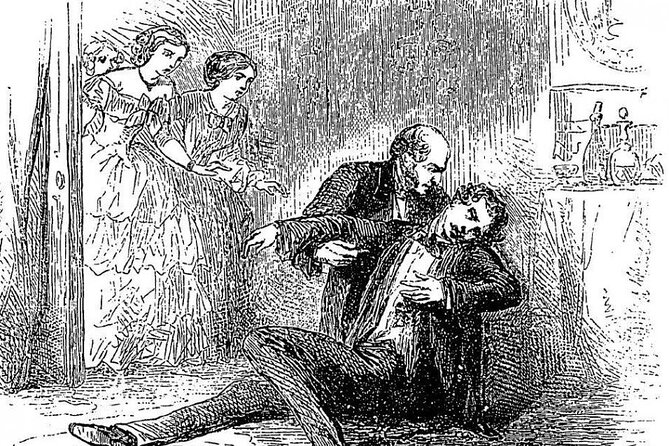
You’ll spend time around Rue de l’Amigo in two separate moments, and both are about what happens when you connect a place to a person’s story.





Stop mood: the hotel that changed reputations
One stop focuses on a “dream story” about a well-known hotel on the street—described as a place that has not always welcomed the most prestigious visitors. You get the sense that the building’s identity isn’t fixed. It changes depending on who arrives, who holds power, and what the era expects.
This is a smart way to start a crime narrative. You’re not just hearing about what happened; you’re learning what the location represented socially.
Hotel À la Ville de Courtrai and a passion-driven case
A bit later, you’re pointed to another address on Rue de l’Amigo, tied to a famous crime of passion connected with the hotel À la Ville de Courtrai at the corner of Rue de l’Amigo.
“Crime of passion” usually means a story driven by intense emotion rather than a careful plan. Even without turning into a courtroom reenactment, the location matters. You’re standing near where the drama would have unfolded in the public eye, and the guide uses that to frame how society judged motives then.
My practical tip: take a minute before the story starts to look at how the streets connect. These cases make more sense when you can picture who would have been passing by, where attention would gather, and how police would respond in that kind of street layout.
Le Coin du Diable: the Devil’s Corner legend in 17th-century context
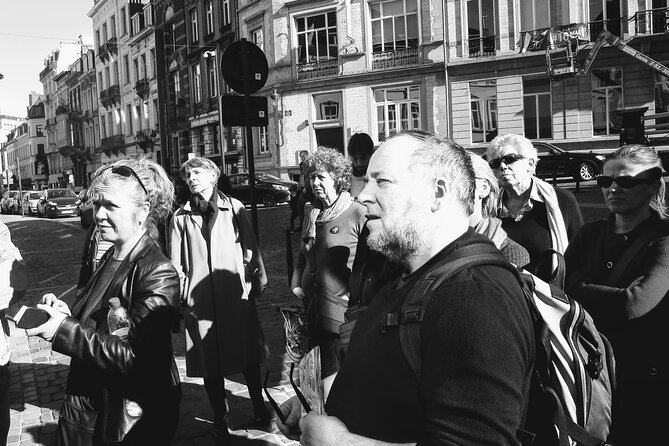
Next, you’ll reach Le Coin du Diable, known for the Devil’s Corner legend dating back to the 17th century. This part shifts the tone slightly from documented 19th- or 20th-century casework into a darker local tradition.
Legends like this matter in real travel terms because they show how communities explain fear. Even when a story is old or hard to verify, it still reflects what people were afraid of—and what they wanted to warn each other about.
The tour keeps it respectful, but don’t expect a “cute old myth” vibe. The guide treats it as part of Brussels’ mental map: the city’s corners, names, and rumors all feed into how people imagine danger.
If you like history you can see with your feet—street names that carry meaning—this stop is one of the more memorable moments.
Place Saint-Géry: a brutal case that pulled Brussels into the spotlight
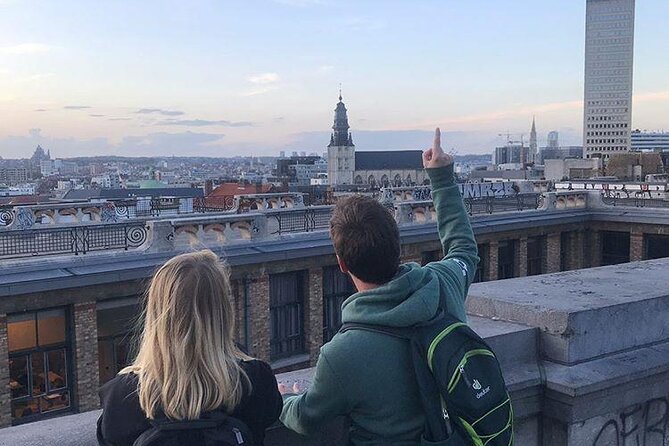
The tour then lands at Place Saint-Géry, a key stop and a major reason this walk feels so focused. You’ll hear about the crime of Place Saint-Géry, described as particularly atrocious, and the facts include that it left 3 dead.
That number alone tells you the stakes. What makes it especially compelling is the way the story is framed as something that fascinated Brussels in the mid-19th century. In other words, the impact wasn’t limited to the victims and the police. It became part of how the city talked about justice, morality, and order.
As you stand in the square, you’ll likely feel the psychological contrast between a public place and a private tragedy. The guide connects that to how society worked at the time—who got attention, who controlled the narrative, and how the police and community responded.
Consideration for your comfort: this stop is the one most likely to feel heavy. If you’re easily unsettled by violence details, pace yourself and use the short pauses between points to reset.
Place du Jardin aux Fleurs: the crime with unusual loot
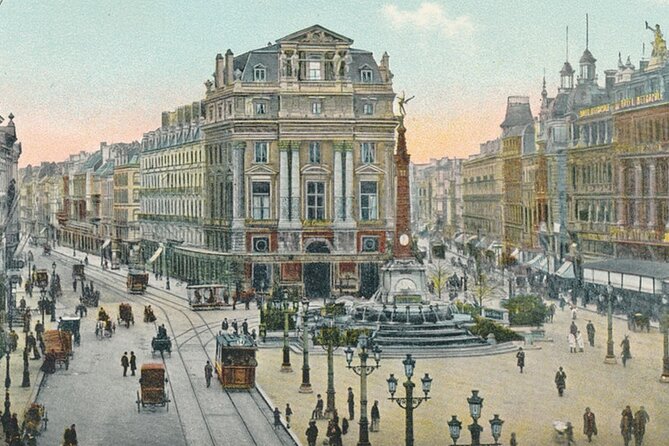
The final stop is Place du Jardin aux Fleurs, where the story includes a villainous crime involving unusually described loot. The key idea here is that not all crimes are the same kind of crime.
A detail like unusual loot changes the feel of the case. It’s often what makes a story stick in memory—because it breaks expectations. In a tour like this, that’s useful. It prevents the walk from becoming only one long mood. You get variety in motive and method, even while the tone stays serious.
Also, ending around this area gives you a chance to keep walking on your own afterward. If you want to continue exploring, you’re already in a lively part of central Brussels where it’s easy to transition to food or another sight.
What the guide does well: respectful facts with historical context
You’ll get a lot out of this tour if you enjoy guided narration that explains why things happened, not just what happened. The storytelling style is professional and structured, with the guide adding historical context so you can understand the social layer behind the crime.
One thing I especially appreciate in tours like this is when the guide avoids turning people’s suffering into entertainment. Here, the framing stays respectful even when the events are frightening. That matters, because crime stories can easily slide into tasteless drama, and this one works to keep the focus on facts and context.
The guide also captures the attention of the group. With a small group size, the tone and pace are easier to maintain.
If you want costumes or audience participation, note the format
One critique that fits your expectations planning: this is not described as a theatrical, costume-heavy show. If you’re hoping for dramatic role-play, interactive audience games, or a highly “ludic” style, you might feel something is missing. The strength here is the guided walking + narration approach.
For most people, that’s exactly what they came for. But it’s worth knowing up front so you can match the tour to your personality.
How to prep for a crime-story city walk
A tour like this works best when you give it room to land. Here’s how to make it smoother without overthinking it.
- Wear comfortable shoes. You’re walking for about two hours through central streets.
- Bring the mobile ticket with you. The tour uses a mobile ticket format, so have it ready on your phone.
- Come with a curiosity mindset. You’ll get more out of it if you’re open to how the city’s society and customs shaped how crimes played out.
- Expect a range of emotions. Some scenes are described as shivering and sometimes very violent, so mentally prepare for that.
If you’re a first-time Brussels visitor, this can be a great second-day activity after you’ve already seen the basics. If you already know the highlights, it still works because the street names and squares become evidence boards for the past.
Who should book Brussels Crime Scenes (and who should skip)
Book it if you like:
- Crime stories grounded in real places
- City history that explains social behavior, not just buildings
- A small-group walking tour with a strong guide
- A darker theme that stays respectful
You might skip it if you:
- Want light, relaxing sightseeing
- Don’t handle discussions of violence well
- Prefer interactive theatre-style activities over straight narration
This tour is also a good match for people who like walking routes where you finish in a central square. Ending near Place Saint-Géry makes it easy to keep your momentum.
Should you book this tour? My call
I think Brussels Crime Scenes is a smart buy for anyone who wants history you can walk through. The price is reasonable for a guided, place-based tour, and the structure keeps it from dragging. You’ll come away with a more complicated view of Brussels—less postcard, more “how people lived when things went wrong.”
The biggest reasons to book are the respectful tone, the guide’s historical context, and the fact that you’re not just hearing names—you’re standing in the city where the stories played out.
Just be honest with yourself about the theme. If crime and violence make you uncomfortable, this won’t be the right day. If you can handle it and you like thoughtful storytelling, this tour is one of those experiences that gives you a different kind of understanding of a city.
FAQ
How long is the Brussels Crime Scenes tour?
It lasts about 2 hours.
How much does the tour cost?
The price is $23.26 per person.
Where does the tour start?
The meeting point is Rue de l’Etuve 1, 1000 Bruxelles, Belgium.
Where does the tour end?
The tour ends at Pl. Saint-Géry 1, 1000 Bruxelles, Belgium, in the center of Place Saint-Géry.
Is there a mobile ticket?
Yes, the tour uses a mobile ticket.
What’s included in the price?
All fees and taxes are included.
What is not included?
Coffee and/or tea are not included.
How big is the group?
The tour has a maximum of 25 travelers.
Are service animals allowed?
Yes, service animals are allowed.
What is the cancellation policy?
You can cancel for a full refund if you cancel up to 24 hours in advance of the experience start time.