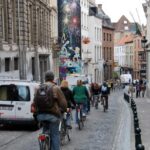
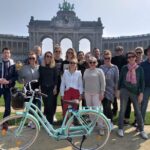
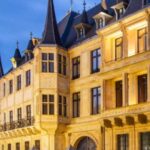
Brussels becomes manageable on two wheels. This small-group bike tour strings together big-name sights and everyday neighborhoods in about 3.5 hours, with guide stops that help you understand what you’re actually seeing.
I love that bike rental and a fietshelm (helmet) are included in the price, so there’s no surprise add-on mid-tour. I also like how the route blends classic center landmarks with workaday areas like the Marolles and Tour and Taxis, so you end the day with a clearer picture of real Brussels, not just postcard photos.
The main thing to consider is riding comfort. The tour depends on good weather, and the streets can include cobblestones and some hills, so you’ll want a basic level of bike confidence and the willingness to stay with the group.
In This Review
- Key points worth knowing before you pedal
- The Tour Plan: A tight Brussels loop that gives you bearings fast
- Start at Grand Hospice: where the ride begins and the neighborhood story starts
- Stop 1: La Bourse de Bruxelles and Place de la Bourse
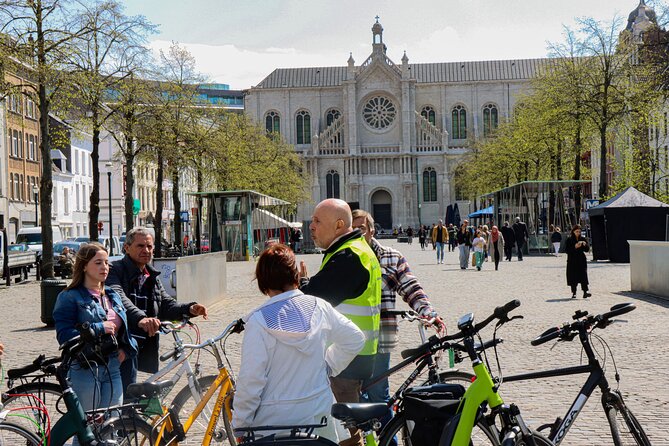
- Stop 2: Place Sainte-Catherine and the church of Sainte-Catherine
- Stop 3: La Fonderie Bruxelles and Brussels’ industrial “how it worked” story
- Stop 4: The Palace of Justice view from Place Poelaert
- Stop 5: Quartier Marolles, flea market area, and the Palais de Justice backdrop
- Stop 6: Gare Maritime and the Tour and Taxis transformation
- Stop 7: Royal Park and Palais Royal area
- Stop 8: Back to Grand Hospice to close the loop
- How hard is the riding, really?
- Guides make the difference: volunteer storytelling that keeps pace human
- Price and value: what $39.92 buys you in Brussels
- What you’ll do after the tour (and why that matters)
- Should you book this Brussels highlights and industrial neighborhoods bike tour?
- FAQ
- How long is the Brussels Highlights & Hidden Gems Bike Tour?
- How much does the tour cost?
- Is bike rental included, and is a helmet provided?
- What language is the tour offered in?
- How large is the group?
- Where does the tour start?
- Do I need paid tickets for the stops?
- What if weather is bad?
- Is coffee or tea included during a break?
Key points worth knowing before you pedal
- Max 14 riders keeps the pace friendly and the group easier to manage.
- Bike + helmet included means you can travel light.
- Eight focused stops give you both highlights and off-the-radar corners close to the city center.
- Mostly free entry stops so you’re paying for the experience, not ticket lineups.
- Cobblestones and hills happen; pack comfy energy and don’t treat it like a Sunday stroll.
- Guides like Andrea, Jessica, Mauro, Vito, Philippe, and Renaat have led this route, and you’ll usually get stories tied to what’s around you.
The Tour Plan: A tight Brussels loop that gives you bearings fast
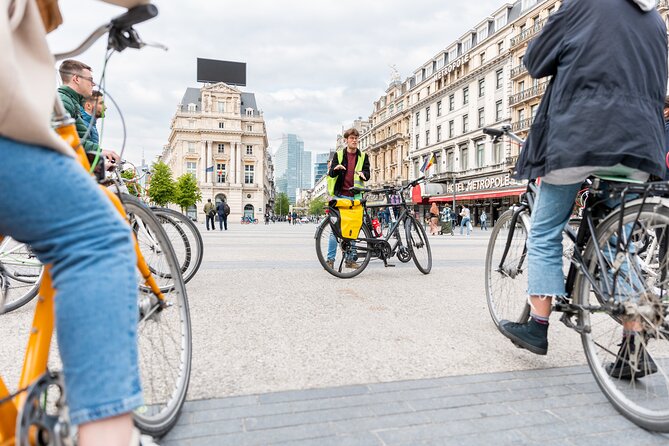
This tour is built for the first stretch of a trip when you want fast orientation. In just a few hours, you get a guided route that hits the city’s big visual markers—then uses the bike to move you into neighborhoods that don’t show up on every same-old itinerary.
The best part is the balance. You’re not stuck doing long museum hours. You’re moving, stopping, looking up at architecture, and then learning how each place fits into Brussels’ layers: commerce, industry, monarchy, and the everyday life between them.
The other quiet win: the sights you see are mostly close enough that you can circle back later. Even if you don’t know Brussels yet, you’ll leave with enough location memory to navigate on your own.
You can also read our reviews of more cycling tours in Brussels
Start at Grand Hospice: where the ride begins and the neighborhood story starts
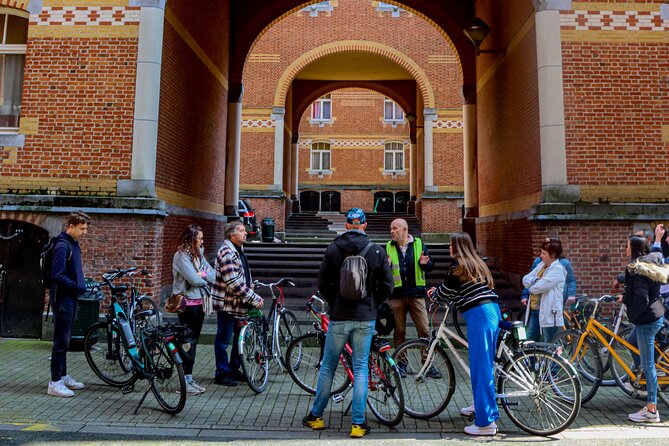
You’ll meet at Rue du Grand Hospice 7, 1000 Bruxelles. The start point is Grand Hospice, a neoclassical building that’s nearly 200 years old. Today it’s used as a temporary occupation and cultural venue, so it’s not just preserved stone—it’s part of what Brussels uses now.
Because the meeting point is also one of the tour’s stops, you get a nice full-circle effect. You begin with the context of the area, then later you return to the same spot to wrap your head around the route you just rode.
Logistically, it’s near public transportation, and you’ll get a mobile ticket. That matters if your day is already moving fast—no hunting for paper, no extra steps.
Stop 1: La Bourse de Bruxelles and Place de la Bourse
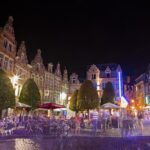
The ride kicks off around La Bourse de Bruxelles at Place de la Bourse. This is the kind of central square where everything feels layered: formal architecture nearby, and a street-life rhythm that changes with the hour.
What makes this stop useful is perspective. Seeing the city’s central “beat” early helps you later when you’re comparing it to more residential or working areas. It’s a quick visual anchor, not a long detour.
Since the stop includes a free admission ticket note, you’re not paying to get value here. You’re there to look, listen, and get oriented.
Stop 2: Place Sainte-Catherine and the church of Sainte-Catherine
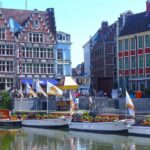
Next comes Place Sainte-Catherine, historically tied to the old Fishmarket, plus Church Sainte-Catherine. This is where you start noticing Brussels’ ability to keep old functions in the urban fabric, even when the city’s moved on.
You’ll get a short stop—about 10 minutes—to take in the church and the surrounding streets. The goal isn’t a deep religious tour. It’s more like: look at how the built environment shapes daily movement.
If you’re the type who likes to walk away knowing what to search for later, this is a good place to mentally save street names. You’ll likely come back through this area during your trip, even if you don’t plan it now.
Stop 3: La Fonderie Bruxelles and Brussels’ industrial “how it worked” story
Then you hit one of the route’s most surprising parts: La Fonderie Bruxelles, tied to the Musée bruxellois des industries et du travail. The tour frames this as a real industrial heritage stop—one you may not find on your own unless you’re already searching for it.
Why this matters for your trip: Brussels isn’t just a capital of institutions. It’s also a city shaped by manufacturing, logistics, and work. When a guide points out why a building survived, changed use, or shifted function, the neighborhood makes more sense the next time you pass it.
This stop is short—around 5 minutes—so think of it as a spark. If you want to go deeper, you’ll know what to look up after you get home or later in the afternoon.


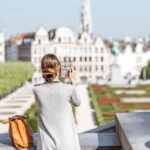
Stop 4: The Palace of Justice view from Place Poelaert
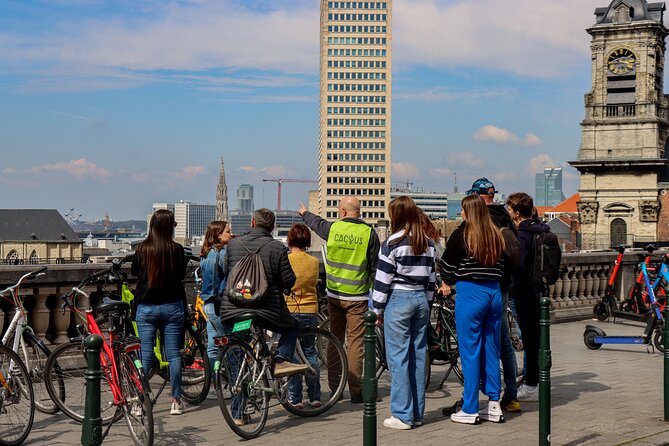
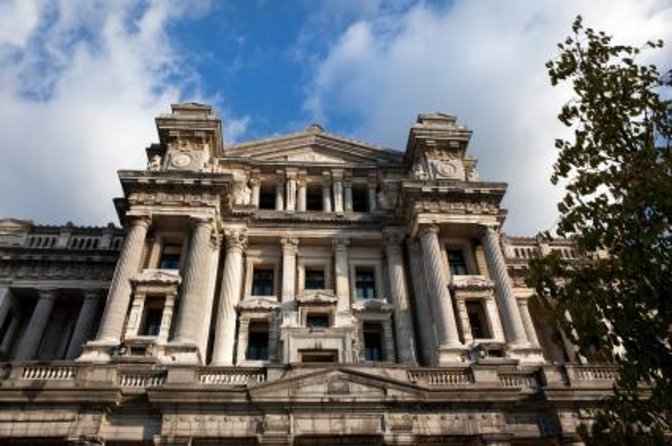
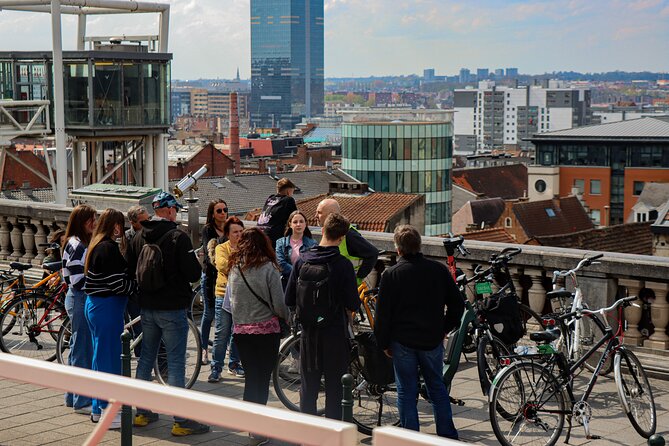
Stop 4 is all about viewpoints. You’ll pause at Place Poelaert for a view toward the Palais de Justice (Palace of Justice), with sightlines that also include Les Marolles and the broader city.
This is where your brain starts connecting the “grand” with the “neighborhood.” The Palace of Justice is monumental, but it sits in a city full of people and older street patterns. Standing in the right angle helps you understand that the big landmark isn’t isolated.
If you’re someone who takes photos, this is one of those moments where your shot will be better simply because you’re in the guide’s chosen spot.
Stop 5: Quartier Marolles, flea market area, and the Palais de Justice backdrop
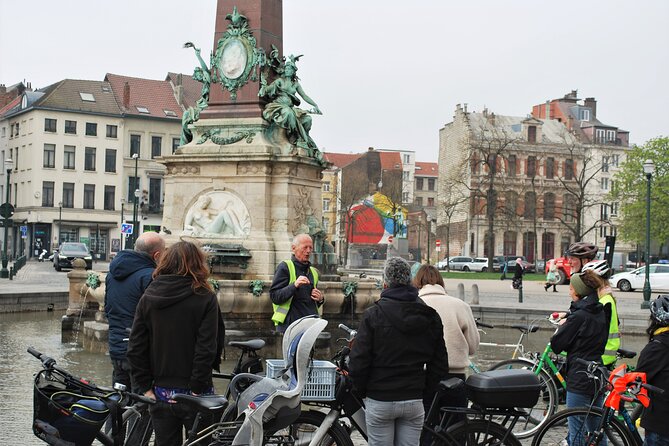
Next up is Quartier Marolles, with the familiar combo of the flea market area and continued views tied to the Palais de Justice. Marolles gives Brussels a more lived-in, rough-around-the-edges feel, which is exactly the contrast you want after the cleaner lines of the center.
This stop is about 10 minutes. Expect the guide to tie in social and economic contrasts—how Brussels neighborhoods have historically housed different groups and how the city’s changed over time.
One practical note: this is a bike tour, so you’re not strolling. You’ll get just enough time to take in the street character, then you’re back on the saddle.
Stop 6: Gare Maritime and the Tour and Taxis transformation
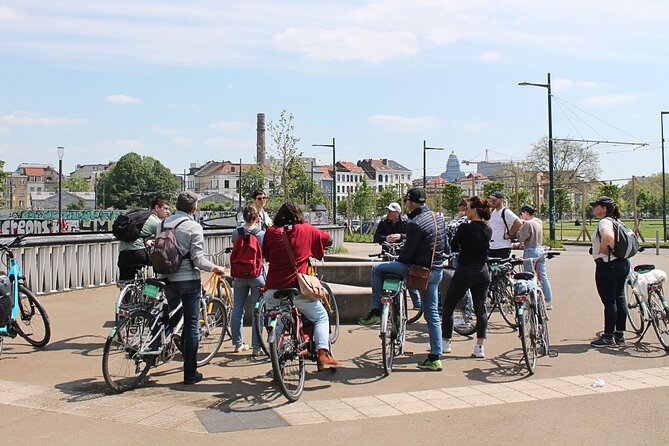
Then you roll into one of the route’s best “now look at that” areas: Gare Maritime, connected to Tour and Taxis. This stop focuses on how historic logistics and industrial spaces got transformed into a new multifunctional district.
If you only travel to capitals by museum ticket, you might miss this type of story. Here’s the value: the city shows you what changed and why. A guide’s explanations make the reused structures feel less like random hulks and more like part of a continuing urban plan.
This stop lasts about 10 minutes, and it’s a great time to ask yourself: what do these buildings currently do for the city? Even without entering anything, you’ll understand what to look for if you return later.
Stop 7: Royal Park and Palais Royal area
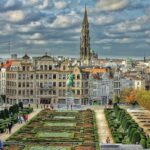
After the industrial and neighborhood contrasts, the tour shifts tone with the Palais Royal de Bruxelles stop. You’ll ride near the Royal Park next to the Royal Palace, and the guide explains why this symbolic area matters.
This is a classic “slow down and notice” moment. The architecture and the layout are different from the working districts. Your eyes catch on the orderliness—lines, open spaces, and the way the grounds structure movement.
It’s also an easy mental reset. After a day learning about different city layers, stepping into a more ceremonial zone helps everything feel balanced.
Stop 8: Back to Grand Hospice to close the loop
You finish by returning to Grand Hospice, the same meeting point where the tour started. That wrap-up matters. By the time you’re back, you’ve got a mental map of how each neighborhood connects, so the meeting building becomes a reference point rather than just a location.
The whole ride is designed to end where you began, so you don’t feel stranded or forced into guessing your route home.
How hard is the riding, really?
Expect an active city ride. The route runs for about 3 hours 30 minutes, and it’s not just flat cruising. Some stops are short, but you’re still covering distance across multiple neighborhoods.
From real rider feedback, plan for:
- Cobblestones that can make the ride bumpy
- Some hills (described as long enough to feel, even if not extreme)
- A need to stay with the group
If you’re an experienced urban cyclist, this will feel manageable. If you’re a beginner, you can still do it, but don’t assume it’s gentle. One review even puts it at around 10 to 11 miles, with up-and-down riding.
Practical safety tips for you:
- Bring water, and keep it in a spot you can reach safely. One rider mentioned not having easy access during the ride, which is avoidable if you plan.
- Wear a helmet if one is provided (yours is included here).
- If you start tiring, speak up early so the guide can help you keep moving safely.
Guides make the difference: volunteer storytelling that keeps pace human
Many guided bike tours can feel like a lecture you half-hear while steering. This one tends to work better because the guide uses the stops like punctuation marks—short explanations at key moments, then you’re moving again.
I noticed names showing up again and again in English-guide departures: Andrea, Jessica, Mauro, Vito, Philippe, and Renaat. Different guides, similar goal: you should come away understanding why these areas look the way they do.
One more local touch: the tour is run by Cactus Brussel à vélo, and reviews mention the guides are volunteers with a non-profit mission tied to getting people on bikes. That’s a good reason to be friendly about tips if you’re able.
Price and value: what $39.92 buys you in Brussels
At $39.92 per person for about 3.5 hours, this is strong value when you compare what’s included.
You get:
- Bike rental
- Fietshelm (helmet)
- A route with multiple major stops
- Time spent in areas many visitors skip
You’re also not paying for admission at the stops listed in the itinerary, since each stop notes free admission ticket. That doesn’t mean there’s no value in the buildings—it means your money goes toward the guided experience and the route planning, not extra fees.
The tradeoff is simple: you’re paying for a guided ride, not a private driver, not a full museum day, and not a slow walking tour. If you want that, look elsewhere. If you want orientation plus stories in a single morning or afternoon block, this price makes sense.
What you’ll do after the tour (and why that matters)
A good bike tour should teach you where to go next. This one helps because your itinerary hits places that are walkable from the city center afterward.
For example, once you’ve seen:
- the central squares like Place de la Bourse and Place Sainte-Catherine,
- the landmark angles around Palais de Justice and Marolles,
- and the industrial-to-modern transformation area near Tour and Taxis,
…you can pick your return priorities fast. You’ll know what to revisit for longer photo time or a slower walk.
And if you want a break, some guides build in chat time. Coffee or tea isn’t included, so plan your own stop if you want a sit-down drink.
Should you book this Brussels highlights and industrial neighborhoods bike tour?
Book it if you:
- Want one efficient ride to learn the city’s big landmarks and its working-side neighborhoods
- Are comfortable riding a bike on city streets, including possible cobblestones and hills
- Like guided context more than you like rigid museum hours
- Appreciate a route that avoids only the most crowded tourist circuits
Skip it (or choose a different option) if you:
- Are uneasy with traffic-style biking or you rarely ride outdoors
- Want leisurely pacing with lots of stopping for photos and slow walks
- Prefer a single-theme tour (architecture only, history only, or politics only)
If you’re in the middle—curious, mobile, and up for some bumpy cobblestones—this is an excellent way to get your Brussels bearings fast and get out to places you likely would not find as easily on your own.
FAQ
How long is the Brussels Highlights & Hidden Gems Bike Tour?
It lasts about 3 hours 30 minutes.
How much does the tour cost?
The price is $39.92 per person.
Is bike rental included, and is a helmet provided?
Yes. Bicycle rent is included, along with a fietshelm (helmet).
What language is the tour offered in?
The tour is offered in English.
How large is the group?
The tour has a maximum of 14 travelers.
Where does the tour start?
The meeting point is Rue du Grand Hospice 7, 1000 Bruxelles, Belgium.
Do I need paid tickets for the stops?
The itinerary lists free admission ticket for the stops mentioned, and the tour is designed around what you can see during the stops without additional entry fees.
What if weather is bad?
The tour requires good weather. If it’s canceled due to poor weather, you’ll be offered a different date or a full refund.
Is coffee or tea included during a break?
No. Coffee or tea is optional and not included in the price.