REVIEW · BRUSSELS
A Self-Guided Tour of Brussels: From Medieval to Modern Times
Book on Viator →Bookable on Viator
Brussels rewards slow walking with smart audio. This self-guided route lets Isaac connect royal lineage, medieval street corners, and modern Brussels landmarks into one easy flow you control. I like how the narration points you toward what to notice, not just what to name.
I also like the value: lifetime access plus offline VoiceMap means you can save it for your schedule and re-walk the route. One caution: this is a city of stairs and slopes, so wear comfy shoes, especially for the viewpoint climbs around Palais du Justice and nearby angles.
In This Review
- Key reasons this Brussels walk is worth your time
- Why a self-guided tour beats a rushed bus day
- Royal Palace area to Royal Square: start with power, not trivia
- UNESCO Grand Place and the Tintin mural: town-square beauty with a wink
- Palais du Justice steps: the climb that pays you back
- Musical Instruments Museum stop and the Mont des Arts calm
- Chapels, harbor traces, and the city’s playful spirit
- Shopping arcades, puppet tradition, and the elegance of Galerie de la Reine
- Opera and city life around De Brouckèreplein and La Monnaie
- Black Tower, Church of Saint Catherine, and the Sainte Catherine clock remnants
- Museums, Town Hall, and the Grand-Civic finale before Marolles views
- Practical tips for smoother audio walks in Brussels
- Should you book this self-guided Brussels tour?
- FAQ
- How long is the self-guided tour?
- What do I need to use the tour?
- Are museum or attraction tickets included?
- When can I use the tour?
- Where does the tour start and end?
- Is this tour only for my group?
Key reasons this Brussels walk is worth your time
- Offline audio and maps let you keep going without data headaches
- UNESCO Grand Place plus royal sights make the core stops feel connected
- Quirky icons like Tintin murals and Manneken Pis keep the tour fun, not stiff
- Music-themed stops (including the Musical Instruments Museum area) give you a new lens
- Major viewpoints help you understand the city’s layout from above
Why a self-guided tour beats a rushed bus day
Brussels is compact, but it still has layers: royal power, merchant wealth, comic-book culture, and serious civic buildings all in walking distance. This tour is built for your tempo. You don’t wait for a group, and you can pause when something catches your eye, like a facade detail or a statue you want to photograph before moving on.
The big practical win is the app experience. You get a unique code after booking, then the VoiceMap app guides you to the starting point at Pl. des Palais 1. Once you’re there, you tap start and the audio takes over. It also works offline for audio, maps, and geodata, which is exactly what you want in a city where you might pop in and out of streets and squares quickly.
The other value point is time flexibility. You can use the tour before and after your booking date, and you even have the option of a virtual tour from home. For $9.99, that’s more than a one-off activity. It’s a tool you can use over multiple trips or multiple days if you want to revisit.
You can also read our reviews of more guided tours in Brussels

Royal Palace area to Royal Square: start with power, not trivia
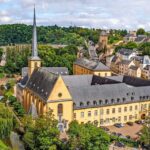
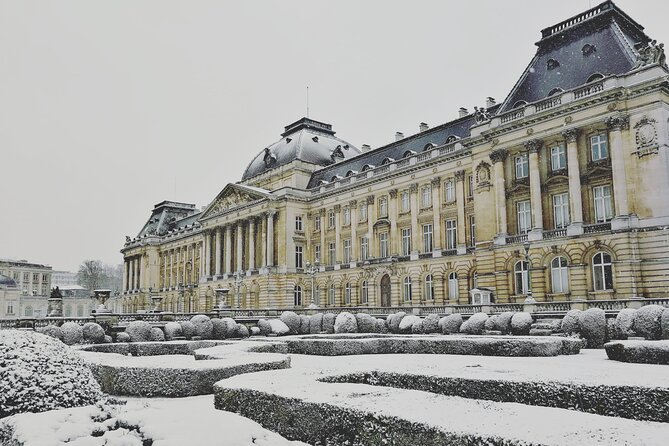
The walk begins near the Royal Palace of Brussels, which is a smart opener. Right away, the audio sets up the Belgian Royal Family’s lineage, so the royal setting doesn’t just feel grand—it feels meaningful. You’ll also get a sense of how royal residences shaped the city’s center over time, which makes the later civic buildings feel connected rather than random.
Next you move toward Royal Square, where you’ll see the statue of Godfrey of Bouillon. He’s not just a name on a plaque. The tour’s framing helps you understand why medieval-era figures show up in Brussels’ public spaces, and why statues can feel like history lessons you can walk around.
If you like context, this start works well because it gives you a foundation before you hit the UNESCO area and the big photographic stops.
UNESCO Grand Place and the Tintin mural: town-square beauty with a wink
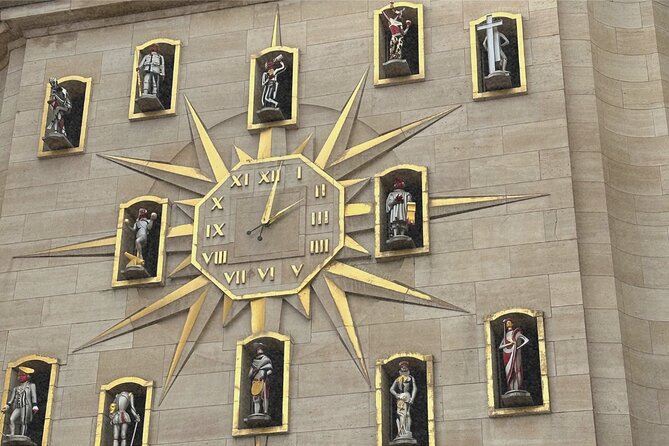
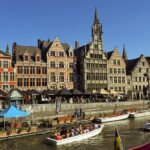
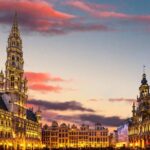
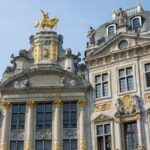
You’ll reach UNESCO-listed Grand Place, and this is the moment where Brussels stops feeling like background city scenery and starts feeling like a destination. The audio focuses on the ornate guild houses and surrounding palaces, which helps you look past the obvious postcard views and notice the layers of architecture.
One of the best parts is that you don’t stay in “serious mode.” As you keep walking, you’ll spot the Tintin Comic Mural. That’s a great reminder that Belgium’s identity isn’t only about kings and guilds. Comics are part of how people recognize their own culture in public space, and the mural gives you a break from museum-style learning.
Practical tip: Grand Place is a place you may want to see more than once. If you can, linger briefly for photos and then move on before your legs cool off. The route continues into side streets and courtyards where the city feels more intimate.
Palais du Justice steps: the climb that pays you back
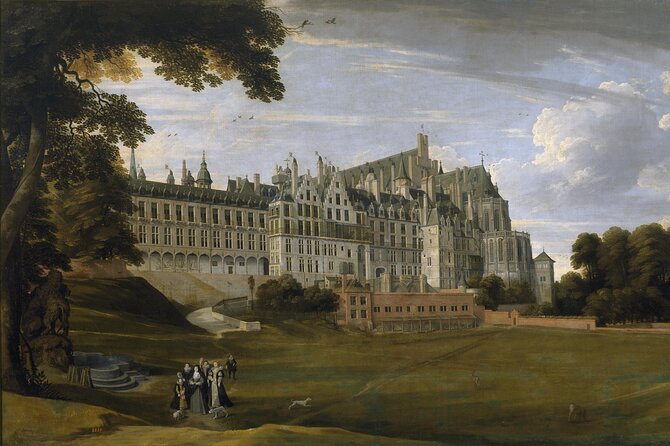
Some tours treat viewpoints like a bonus. This one makes them a point of the experience. You’ll ascend the steps of Palais du Justice, and the audio guides you toward the best panoramic perspective as you climb.
This stop is valuable for a simple reason: Brussels is easier to understand when you can see its layout. From up there, you can connect the dots between the older center, the civic core, and the way modern buildings sit beside older streets. It’s also a nice break from dense architectural detail. Your eyes need a wider frame after so much close-up looking.
Consideration: this is one of the uphill segments. If you’re sensitive to stairs or long climbs, plan your pace slower than you think you’ll need, and take short stops without rushing. A self-guided route is only “easy” if you let it be easy.
Musical Instruments Museum stop and the Mont des Arts calm
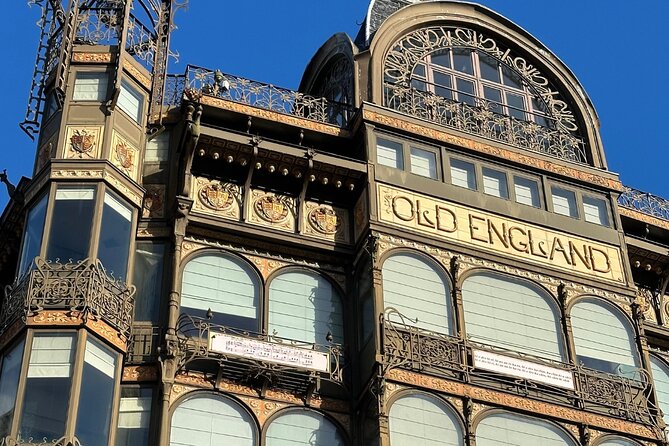
You’ll get directed toward the Musical Instruments Museum area, where the narration focuses on how music evolved through the ages. Even if you don’t go inside, the audio framing helps you see the building and the surrounding space as part of a cultural story, not just another stop name.
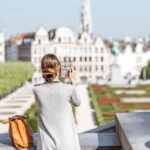
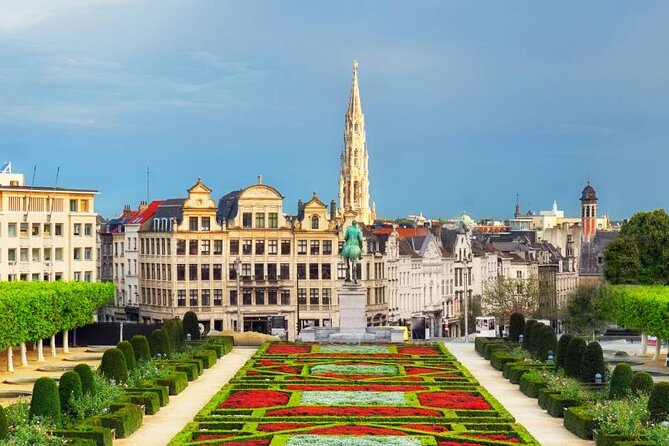
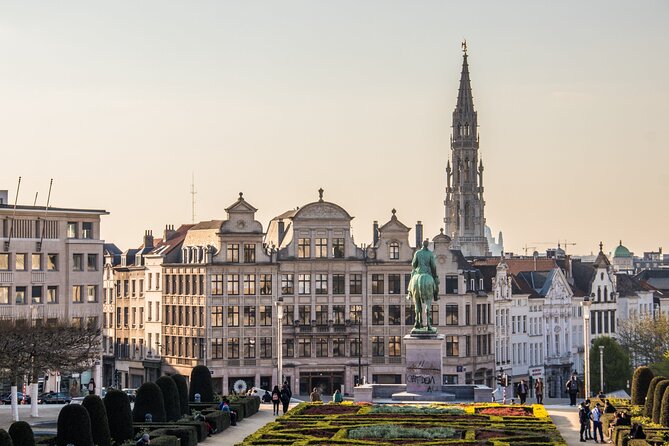
Then the tour shifts toward Mont des Arts Garden, which is a welcome change after busy streets. This is where you can slow down and let your senses reset. The audio doesn’t compete with the view—it helps you enjoy it.
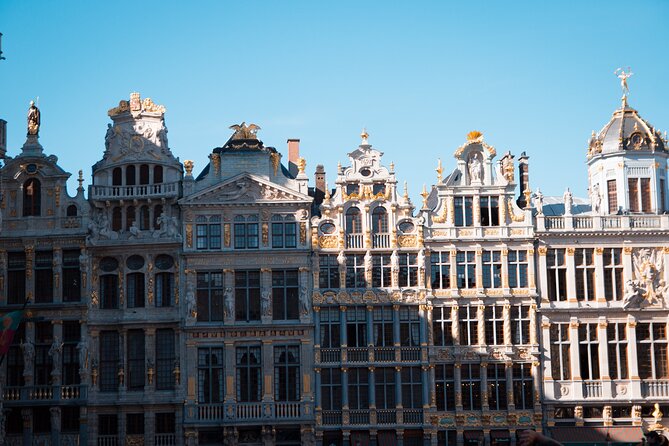
Nearby, you’ll pass Klokkenspel van de Kunstberg, known for its bell sounds. If the timing lines up when you’re there, it adds a layer that’s hard to get from photos alone. It turns the walk into something you can hear as well as see, which makes the route feel more alive.
You can also read our reviews of more tours and experiences in Brussels

Chapels, harbor traces, and the city’s playful spirit
As you continue, the route points you to the Mary Magdalene Chapel, offering insights into religious heritage and architectural character. This is the kind of stop that works best when you don’t rush. Spend a few minutes looking at how sacred space sits inside city life, and let the narration give the background that you’d otherwise miss.
Then you reach Agoraplein (Grasmarkt), where you’ll see remnants tied to Brussels’ former harbor and traces of medieval city walls. That’s a useful shift in perspective: instead of focusing only on buildings, the tour helps you understand Brussels’ shape in the past, including where people once moved goods and where boundaries used to be.
And then the route leans into Brussels’ humor. You’ll encounter Jeanneke-Pis and later Manneken Pis. These tiny statues have a big cultural footprint. They show you that Brussels likes its history with a smile, and the audio helps you place that humor in the city’s identity.
If you’re the type who enjoys quirky stops but worries that they’ll feel like “tourist filler,” this route does a good job tying the humor to a sense of place rather than leaving it as random silliness.
Shopping arcades, puppet tradition, and the elegance of Galerie de la Reine
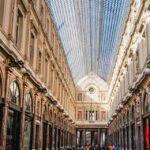
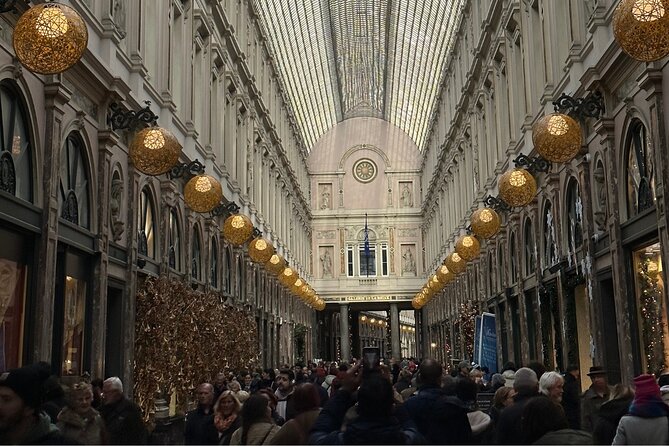
One of the smarter parts of this walking route is how it threads the city’s everyday life into the historical stops. You’ll walk through Galerie de la Reine, a historic shopping arcade where the narration highlights the elegance of the architecture.
This is a good moment to remember that Brussels wasn’t built only for ceremonies. It also developed for commerce and daily movement. Seeing an arcade in the middle of a royal and civic-heavy route keeps the story grounded.
You’ll also reach Toone, a puppet theater with tradition. Puppet culture can feel like a niche topic until you experience it as part of local folklore. The audio helps you see it as entertainment rooted in how people tell stories—an easy and fun contrast to the heavier civic buildings.
Opera and city life around De Brouckèreplein and La Monnaie
At La Monnaie / De Munt, you’ll appreciate Brussels’ opera house context. The tour’s focus here gives you a cultural layer that balances the royal lineage and architecture.
Then you pass through De Brouckèreplein, which gives you a sense of modern city energy. It’s a reminder that Brussels is not frozen in medieval time. Even while you’re doing a historical route, you’re walking through places where people live, work, and move today.
For me, this section is where the tour becomes more than sightseeing. It becomes a way to feel the city’s mix: ceremony and street life side by side.
Black Tower, Church of Saint Catherine, and the Sainte Catherine clock remnants
You’ll also pass the Black Tower, an ancient structure sitting among newer buildings. That old-versus-new contrast is one of the most Brussels things you’ll see during the walk, and it helps you understand how the city evolves without erasing everything.
Next are stops connected to Church of Saint Catherine and the Ancien Clocher Sainte Catherine (remnants of a medieval tower/clock area). These are excellent for taking slow looks. Instead of asking what you’re seeing, ask why certain pieces survived while others didn’t. The audio framing helps you interpret the remnants as part of a timeline rather than as leftover bits.
Practical tip: if you’re walking in warmer weather, take advantage of shade breaks here. This is a route where your schedule is flexible, so don’t try to “power-walk” through every stop.
Museums, Town Hall, and the Grand-Civic finale before Marolles views
Later, you’ll pass the Brussels Stock Exchange, then reach the Brussels City Museum area, which gives you a deeper look at the city’s past through artifacts. The audio makes the museum setting feel like an extension of what you’ve already learned on the streets.
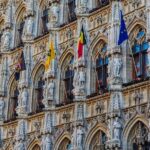
You’ll also get to the Brussels Town Hall, which is one of the city’s best administrative architecture statements. The narration helps you see it as part of how Brussels governed and organized itself, not just an ornate facade.
After that, you’ll circle back to the iconic Manneken Pis moment—one of those “don’t miss” pauses where you can laugh at the statue and then look closer at the surrounding street life.
The route also includes the Anneessenstoren, which is another historic structure to watch for as you move toward the viewpoint areas. You’ll then head toward Church of Our Lady of Victories at the Sablon, a strong place to slow down again for a religious-art stop with context.
Finally, you’ll enjoy the View Grande Roue Bruxelles from above (a different kind of viewpoint than Palais du Justice), before finishing near the Palais de Justice steps again for a strong panorama. The route ends at Lookout des Marolles, which is a satisfying way to get a final perspective while letting your feet cool down.
Practical tips for smoother audio walks in Brussels
A self-guided audio tour succeeds or fails on the basics. Here’s how to make yours feel easy.
Bring the right setup. The tour includes the VoiceMap app and offline audio, but it doesn’t include your smartphone and headphones. If you want privacy and clearer audio, plan on using your own headphones.
Charge your phone. Offline audio still uses your device. Keep your battery healthy, especially because this route involves lots of walking and repeated map checks.
Expect hills. The route includes major stair climbs. Even if you’re fit, go slow on the Palais du Justice approach, because that’s where exhaustion can kill your attention to detail.
Use the tap-start flow. The app shows directions to the starting point. When you’re in the right spot, you tap start. Following that beats guessing where the narration should begin.
If audio glitches, troubleshoot early. If the narration skips, repeats, or behaves oddly, contact VoiceMap support through the email or phone options they provide. Starting the tour with enough battery and stable app performance lowers the chance of problems.
Plan a realistic time window. Expect about 1 hour 30 minutes to 2 hours in practice. If you linger for photos at Grand Place, pause for the statue moments, or stop longer at chapels, add time. That’s not failure; that’s the point.
Should you book this self-guided Brussels tour?
If you want a route that mixes headline sights with smaller culture signals—royal lineage, UNESCO Grand Place, Tintin, musical culture cues, quirky statues, and payoff viewpoints—this is a strong match. It’s also a great pick for a first-time audio tour user because the flow is built around easy starting, clear stop areas, and offline navigation.
Skip it if your priority is “only indoor attractions” or if you dislike walking uphill. This route is about moving city to city on foot, with the best moments often connected to exterior views and street-level details.
For most people, the best decision rule is simple: if you’ll enjoy wandering and you’re willing to wear good shoes, this is excellent value for a flexible, self-paced Brussels overview.
FAQ
How long is the self-guided tour?
It takes about 1 hour 30 minutes to 2 hours, depending on how long you stop for photos and viewpoints.
What do I need to use the tour?
You need the VoiceMap app (Android/iOS). You also need your own smartphone and headphones, since those are not included.
Are museum or attraction tickets included?
No. Tickets or entrance fees for museums or attractions along the way are not included.
When can I use the tour?
It’s available all day (12:00 AM to 11:59 PM). You also get unlimited use before your booking date and after it.
Where does the tour start and end?
It starts at Pl. des Palais 1, 1000 Bruxelles, Belgium and ends at Lookout des Marolles, Rue des Minimes 66, 1000 Bruxelles, Belgium.
Is this tour only for my group?
Yes. It’s listed as private, meaning only your group participates.