REVIEW · BRUSSELS
600 Years of History and Heritage: A Self-Guided Walking Tour of Leuven
Book on Viator →Operated by VoiceMap Audio Tours · Bookable on Viator
Leuven has a way of rewarding slow walking. This self-guided audio tour turns the city center into an easy route of squares, churches, and university history—with steps you can pause and resume. I really like how the narration is clear and specific, so you’re not guessing what you’re looking at, and I also like that it works well when you’re simply on your own schedule. One drawback: you’ll still need to bring your own smartphone and headphones, and you’ll want good walking shoes for the incline.
You start at Rector de Somerplein, loop past the city’s main sights, then finish at Fonske. Along the way, the audio points out major architecture and stories you’d miss if you were just sightseeing with your camera. Because it’s self-paced, you can linger where you want, but you’ll also want to keep an eye on time if you’re trying to fit this neatly between trains or a meal.
In This Review
- Key highlights worth your time
- Leuven on your terms: how the self-guided format feels in practice
- What you’ll need (and why it matters)
- Starting at Rector de Somerplein: your launch point and the mindset
- Leuven’s market square and town hall views you’ll actually understand
- A quick tip for this section
- Church-site resilience: destruction and reconstruction in the same street scene
- The Catholic University of Leuven: where learning meets the old town
- When you might want to pause longer
- Oude Markt energy: competing squares, chapels, and famous statues
- Saint Anthony’s Chapel and the Father Damien grave
- Climbing Sint-Antoniusberg: an incline with big façade payoff
- A practical note
- Squares, libraries, and a beer-and-building storytelling stop
- If you’re a museum-at-heart person
- Shopping streets, a 1800s theatre, and finishing at Fonske
- Price and value: is $11.99 worth your time?
- Who this tour suits best (and who should consider something else)
- Book it or skip it? My take
- FAQ
- How long is the Leuven self-guided walking tour?
- What language is the tour available in?
- Do I need an internet connection to use the tour?
- Where do I start the tour?
- Where does the tour end?
- Are entrance tickets included for buildings or museums?
- Do I need to bring my own smartphone and headphones?
- Is the tour refundable if I cancel?
- Can service animals join the tour?
Key highlights worth your time
- Pause-and-continue pacing lets you stop for photos and checks without scrambling back
- English voice narration makes the walking route feel organized, not like wandering
- Offline maps and audio help even if your phone signal is spotty
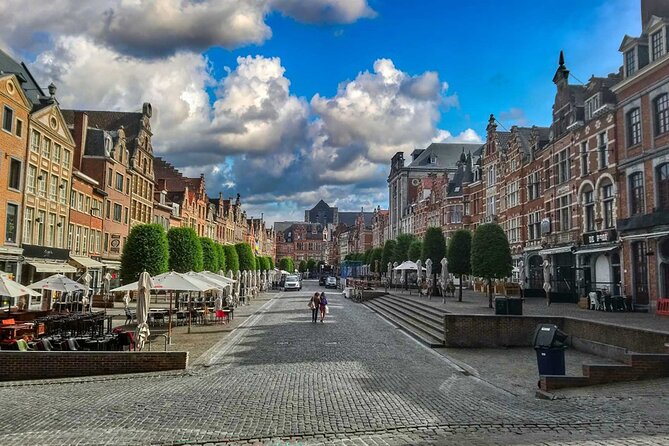
- Landmarks in one loop: Leuven’s market squares, chapels, university buildings, and major facades
- Small “story moments”: statues, plaques, and street names that explain what you’re seeing
Leuven on your terms: how the self-guided format feels in practice
This tour is built for people who like structure without babysitting. You get lifetime access in English, delivered through the VoiceMap app (Android and iOS), and you can download everything for offline use: audio, maps, and geodata. That means you can start walking, then worry less about data plans and signal.
The best part for me is the pacing. A walking tour can be too fast when someone else decides your timing. Here, you control the stop-and-go. When I want a closer look at a façade or a statue, I pause the narration and keep it moving when I’m ready. The route is set up so you don’t feel like you have to backtrack just to follow the story.
There’s also a practical side: the tour covers a compact city-center loop that fits in about 1 hour to 1.5 hours. It’s short enough to do before dinner, but long enough to give you that “I finally understand this place” feeling.
You can also read our reviews of more walking tours in Brussels
What you’ll need (and why it matters)
The experience doesn’t include a smartphone or headphones, so plan on bringing your own. I also strongly recommend charging your phone before you start—offline audio is still audio, and batteries still drain.
If you’re traveling light, keep your headphones in the same pocket as your phone. Sounds basic, but pulling them out mid-walk saves you from that awkward moment where you stand there, trying to start audio one-handed while holding a bag.
Starting at Rector de Somerplein: your launch point and the mindset
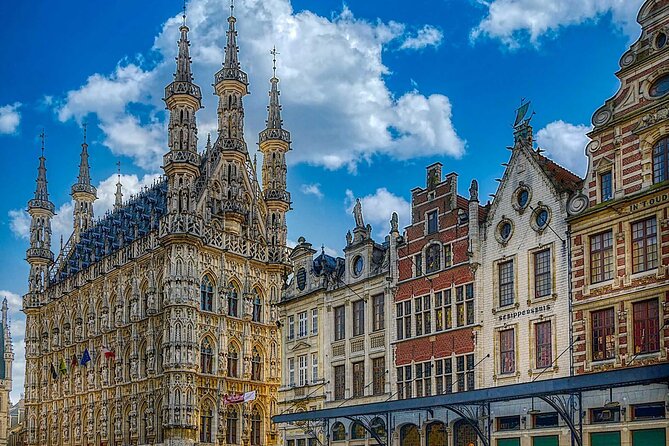
Your walk begins at Rector de Somerplein, right at perron C3000 Leuven. The area is a smart place to start because it puts you in the center of the city rather than out on the edge. You also end back around the same “main square” zone, which is convenient if you’re using local transit.
The first minutes set your expectations: the audio doesn’t just say what to look at. It frames the city center as a layer-cake of centuries—civic power, church resilience, university influence, and later street-life culture.
If you’re new to Leuven, this tour is a quick way to get your bearings. If you’ve been before, it still helps because the audio connects details—like statuary and specific building features—to the bigger story.
Leuven’s market square and town hall views you’ll actually understand
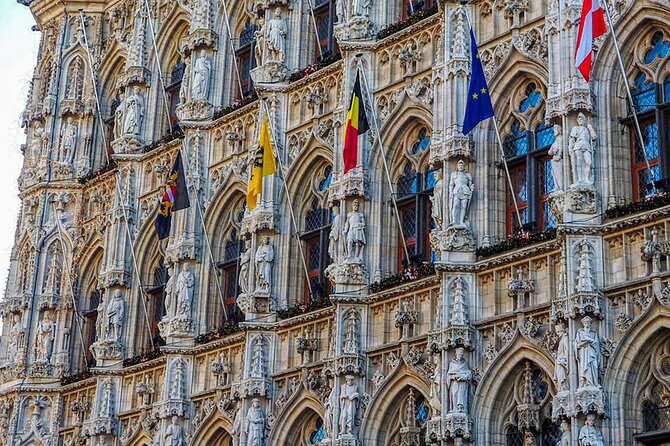
The route heads into Leuven’s central market area, where you’ll feel how important this square is to daily life and to civic identity. As you look up, the narration focuses on the construction of the hall and the statues around it. You’re not just admiring the building; you’re learning what the details are for and why they matter.
This is where self-guided audio shines. A town hall façade can look like decoration if nobody explains it. With the audio, you know what element to look for next. You also learn how the city’s public space has long served as a stage—where community identity gets built in stone.
A quick tip for this section
Look up, then rotate your body slightly to catch the next angles. The audio prompts you to “gaze up,” and your best views usually sit a few steps left or right from where you first stop.
You can also read our reviews of more guided tours in Brussels





Church-site resilience: destruction and reconstruction in the same street scene
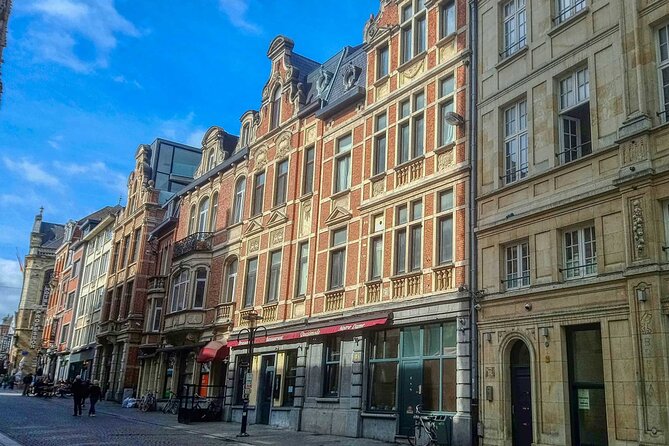
From the central civic sights, the audio steers you toward church history. You’ll hear about a church-site’s history of destruction and reconstruction, which is a sobering theme in European city centers. Instead of treating the church as a static postcard, the narration explains that the present form is the result of repairs, rebuilding, and endurance.
This matters because it changes how you see the façade. You stop thinking only in terms of “old” and start thinking in terms of “survived.” That shift makes the architecture feel less distant.
There’s a second layer here: while you’re walking, you’re also training your eye. The tour points you toward key features as you go, so you’re not stuck staring at one wall waiting for your own imagination to fill in the gaps.
The Catholic University of Leuven: where learning meets the old town
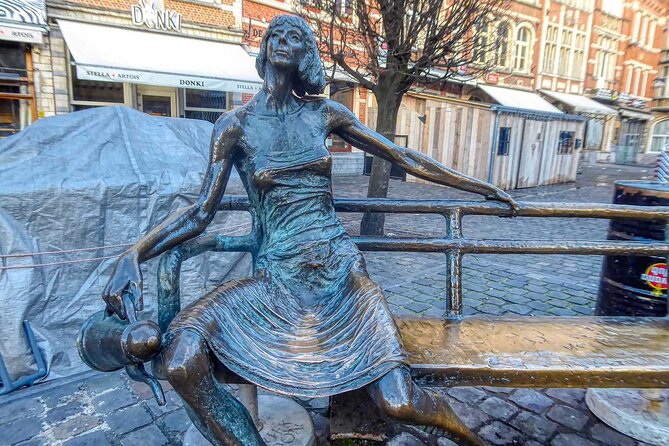
One of the tour’s standout storytelling threads is the Catholic University of Leuven. The audio stops outside the university and then ties the institution to the nearby Oude Markt’s history. Even if you don’t care about universities, this connection helps you understand why Leuven’s old center feels shaped by scholarship, not just merchants and churches.
You’ll also walk along one of the city’s older streets, and the narration gives you two types of info at once:
- distant story (how the street got to be what it is)
- immediate attractions (what’s in front of you right now)
That combination keeps the walk interesting. It’s easy to lose patience if the narration is only historical facts. Here, it stays anchored to the sidewalk.
When you might want to pause longer
If you’re the type who likes photos, give yourself an extra minute or two around the older-street section. The audio is telling a story, and your photos will look better if you’re not rushing past the moments it highlights.
Oude Markt energy: competing squares, chapels, and famous statues
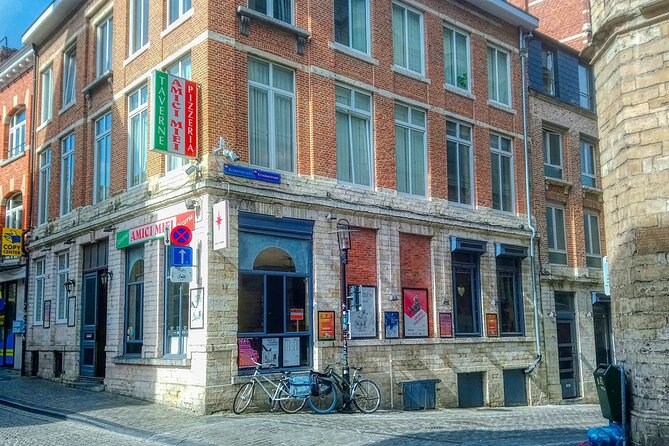
The tour then moves toward the Old Market square (Oude Markt), where you’ll hear how it competes with the Grote Markt for the title of Leuven’s most famous square. That’s a fun way to understand civic pride. You’re not memorizing trivia; you’re learning how residents and visitors frame the city’s most important public spaces.
As you walk, you’ll also get several “stop points” that turn the street into a series of mini-snapshots:
- you greet a famous Leuven resident statue
- you pass by what the audio calls the longest bar in Europe
- you see Holy Trinity College Preparatory School on the Old Market square
- you stop at Saint Anthony’s Chapel
This is a great example of how the tour uses variety. You’re not only dealing with churches and official buildings. You’re also seeing the social culture of Leuven—pub life, student zones, and the kinds of streets where people actually hang out.
Saint Anthony’s Chapel and the Father Damien grave
A highlight for many people is the stop at Saint Anthony’s Chapel, followed by time at the grave of Father Damien. This is one of those moments where the audio can help you slow down without telling you what to feel. You’ll get the context to make the site meaningful rather than just another stop on a route.
Then you shift from reverent to scenic. The tour continues toward Sint-Antoniusberg street, described as a mountainous incline. It’s a physical change in the walk—small enough for most people, but enough to make the city feel like it has shape.
Climbing Sint-Antoniusberg: an incline with big façade payoff
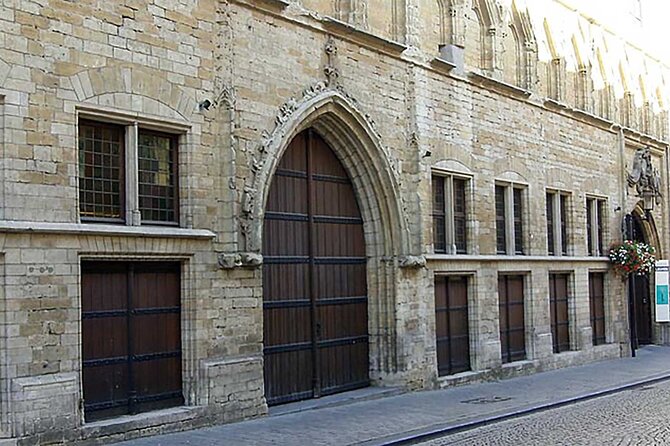
Walking up Sint-Antoniusberg is where the tour earns its legs. You’ll hear the history of the church as you marvel at its impressive façade. Even if you’re not the world’s biggest architecture fan, façades work well with audio because the narration can guide your gaze to specific visual elements.
As you reach the upper part of the climb and keep walking along the street, you’ll pass the Hotel De Pastorij and the Faculty of Theology. These stops help you see Leuven as a place where faith and learning overlap in physical space—things that often feel separate in your head but show up together in the city.
A practical note
Because this section is uphill, go at your pace. This isn’t a race. If you’re stopping for a photo, do it on the safer, wider sidewalk edges—not mid-slope.
Squares, libraries, and a beer-and-building storytelling stop
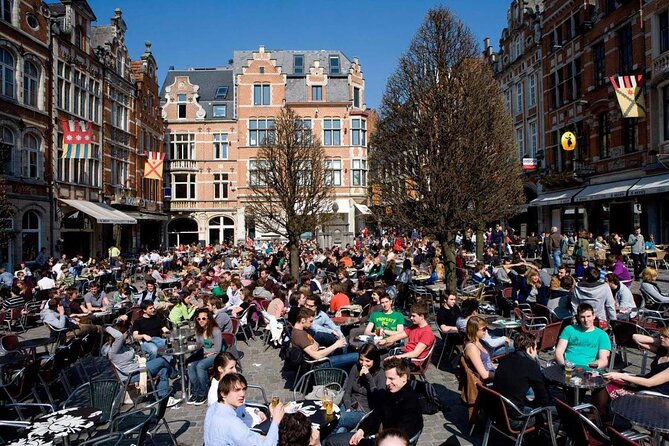
After the church and theology area, the route brings you to a square where the audio points out where to find a good bite to eat. That’s useful because the tour doesn’t include food, and it’s easy to forget lunch timing while you’re distracted by statues and façades.
Then you hit the part of the experience I think many people will remember: the tour introduces a brewery with homebrewing inside since 1985 and mentions an extensive collection housed in the building. Even if you don’t go inside (tickets aren’t included), the audio gives you enough context to recognize what you’re looking at and why it’s a cultural landmark.
Next, you’ll see the largest square in Leuven and hear how it got its name. The audio also connects a Beetle totem to the library in Ladeuzeplein. That kind of detail is exactly why audio tours work better than random reading. It connects the symbolic to the physical.
Then you’ll get a stop where you hear the short history of a building described as only about 100 years old. That keeps the tour from feeling stuck in the medieval-only mindset.
If you’re a museum-at-heart person
Since tickets to museums or attractions along the route are not included, your entry options depend on opening times and what you choose to do. The tour is designed for exterior views and audio context, and you can always add museum time if you want more depth.
Shopping streets, a 1800s theatre, and finishing at Fonske
After the larger civic square area, the route turns toward one of Leuven’s main shopping zones. This part feels like a shift from landmarks to everyday movement. You’ll also pass a theatre that dates from the 1800s, and the narration gives it a role in the street picture, so it feels like part of the city’s story—not just a building you walk past.
Finally, you return to where you started, ending at Fonske at Rector de Somerplein. Fonske is described as a statue dedicated to enlightenment, and the ending works because it ties the city’s identity together: civic life below, spiritual and educational influence in the middle, and the city’s future-minded spirit at the finish.
It’s a satisfying circle: you start in a hub, walk through layered stories, and end with a single symbolic figure that makes the whole stroll feel coherent.
Price and value: is $11.99 worth your time?
At $11.99 per person, this tour sits in the “budget-friendly, high-impact” category—especially because you get lifetime access. Most city walking tours cost a lot more when you factor in guided time, and many audio tours don’t give you enough structure to be genuinely helpful.
Here’s what makes it good value for your money:
- You’re paying for meaning, not just directions.
- The offline features reduce the risk of tech failure.
- The route length (about 1–1.5 hours) means it’s easy to fit in without derailing your day.
The only real cost besides the price is effort: you have to bring headphones and pay attention while you walk. If you prefer turning your brain off and simply strolling, a self-guided audio tour might feel like homework. If you like to learn while you go, it’s a strong deal.
Who this tour suits best (and who should consider something else)
This works especially well if you:
- want a structured walk but hate feeling rushed
- prefer to stop for photos or quick looks without redoing the route
- enjoy church and civic architecture, plus the university influence in town
- need something light enough for an afternoon
It may not be your best match if:
- you don’t like uphill walks at all (the Sint-Antoniusberg incline is part of the route)
- you don’t want to rely on an app and offline audio
- you were hoping for included museum tickets (those are not included)
Also, because it’s a private tour/activity for your group only, it can be a nice choice when you don’t want to merge into a crowd.
Book it or skip it? My take
If you want an easy first pass through Leuven’s center with stories that make the sights click, I’d book this. The clear English narration, the ability to pause, and the way the route connects civic squares, churches, and the Catholic University make it feel like more than a simple walk.
Skip it only if you’d rather do a ticket-based guided tour with lots of indoor stops. This experience is most powerful for what you can see on the street and façades you can study with audio guidance.
FAQ
How long is the Leuven self-guided walking tour?
Plan for about 1 hour to 1 hour 30 minutes, depending on how often you stop.
What language is the tour available in?
The tour audio is offered in English.
Do I need an internet connection to use the tour?
No. You can download offline access for audio, maps, and geodata.
Where do I start the tour?
You start at Rector de Somerplein perron C3000 Leuven, Belgium.
Where does the tour end?
The tour ends at Fonske at Rector de Somerplein 3, Leuven.
Are entrance tickets included for buildings or museums?
No. Tickets or entrance fees to any museums or attractions along the route are not included.
Do I need to bring my own smartphone and headphones?
Yes. A smartphone and headphones are not included.
Is the tour refundable if I cancel?
No. This experience is non-refundable and cannot be changed.
Can service animals join the tour?
Yes. Service animals are allowed.