REVIEW · BRUSSELS
Brussels 2-Hours Walking Tour: Must-See Highlights in the Center
Book on Viator →Operated by My Super Tour · Bookable on Viator
Brussels feels best on foot, and this tight 2-hour loop helps you get your bearings fast. I like that it’s small (max 15) and keeps you moving through the center with stops that have free admission tickets. One possible drawback: if the background noise is high in busy areas, it can get harder to catch every word from the guide.
You’ll get an English-speaking guide to point out what matters, plus practical ideas for your next meal or drink. The route is also easy to pair with a food tour or any other add-on you want the same day, since you’re not stuck for half a day.
In This Review
- Key Things to Know Before You Go
- Getting Oriented at Place du Trône (Monument Léopold II)
- Price and What You’re Really Paying For
- Palais Royal de Bruxelles and Manneken Pis: Power and Play
- Notre-Dame du Sablon and Warandepark: Gothic Contrast and a Royal Green Break
- The Museum Quarter Without the Museum Headache
- Grand Place and Mont des Arts: Two Stops You’ll Feel in Your Camera Roll
- Egmont and Hornes Fountain: The City’s Guild Mindset in Stone
- From Rue des Petits Carmes to the Sablon Antique Market
- How the Guide Tips Can Improve Your Whole Day
- Timing, Pacing, and Pairing It With Food Tours
- Who This Tour Fits Best (and Who Might Skip It)
- Should You Book This Walking Tour?
- FAQ
- How long is the Brussels walking tour?
- How much does the tour cost?
- Is the tour offered in English?
- How big is the group?
- Where does the tour start and end?
- Do I need physical tickets?
- Are service animals allowed?
- What fitness level is required?
- Can I get a refund if I cancel?
Key Things to Know Before You Go
- A small group (up to 15) makes it easier to ask questions without shouting over crowds
- Free-admission stops help your money go farther and reduce schedule stress
- Grand Place + Mont des Arts give you two of the most rewarding views in central Brussels
- Sablon Market + chocolate/pralines focus makes the walk useful even after the tour ends
- A guide-led pacing keeps the tour moving while still giving you short, meaningful photo stops
Getting Oriented at Place du Trône (Monument Léopold II)
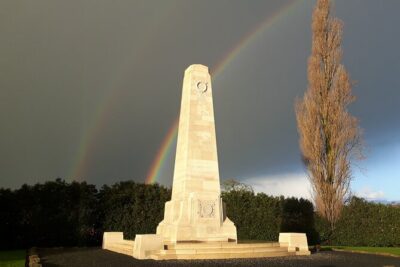
Your tour starts near Monument Léopold II, right at Place du Trône 9/1. That’s a smart entry point because it puts you close enough to central landmarks quickly, without feeling like you’re doing a long warm-up walk first.
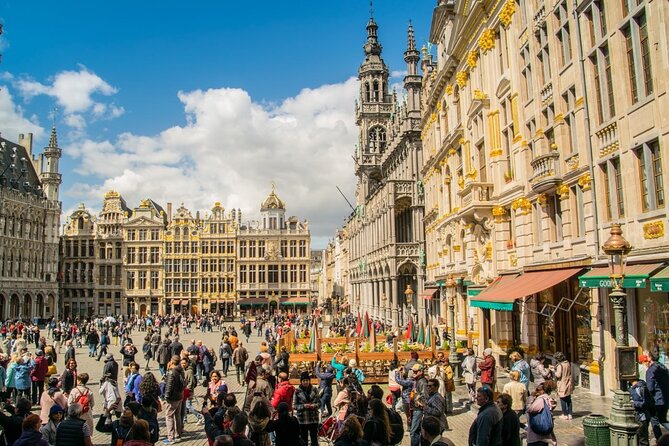
You’ll finish back in the heart of it all at Grand Place, in front of the City Hall. That matters because you can end your walking loop and immediately plug into your own plan for the evening—dessert, a beer, or just more time soaking up the square.
You can also read our reviews of more walking tours in Brussels
Price and What You’re Really Paying For
At $42.14 per person for about 2 hours, this isn’t a throwaway add-on. The value is in three areas: a guide who can connect the dots between landmarks, a tight route that doesn’t waste time, and the fact that multiple stops list free admission tickets.
In practical terms, you’re paying mostly for interpretation and direction, not museum ticket fees. And because the pacing is built for a 2-hour experience, you’re less likely to waste a half-day trying to plan your own route.
Palais Royal de Bruxelles and Manneken Pis: Power and Play
The tour begins at Palais Royal de Bruxelles, where the Belgian king has his working place. Even if you mainly focus on what you can see from the outside, it’s still a key “anchor” stop because it sets the tone for Brussels: royal authority, public life, and everyday city energy all in one view.
You also get a short window to learn about what’s inside the palace complex—there’s a museum and even a cozy café—so the stop feels more useful than a quick photo. You’ll be there about 20 minutes, which is enough time to understand what you’re looking at without turning it into a museum marathon.
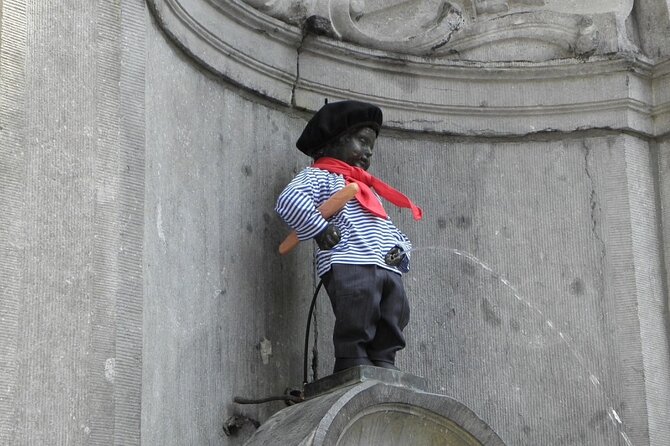
Then it’s straight to Manneken Pis, the famous little mascot with an oversized reputation. In about 10 minutes, the guide helps you understand why this tiny statue became such a big deal in Brussels—legend, history, and the way the city turns humor into identity. It’s one of those stops that’s worth it even if you’ve seen it in photos online.
Notre-Dame du Sablon and Warandepark: Gothic Contrast and a Royal Green Break
Next comes the church of Notre-Dame du Sablon, a Gothic art highlight with a strong local legend tied to Holy Mary. Expect a 15-minute stop where the guide’s job is to give you the context that makes the architecture click—otherwise it can look like just another ornate church facade in a city full of them.
After that, you’ll move to Parc de Bruxelles (Warandepark), the largest urban park in the center. It’s called the Royal Park because of its position in front of the Royal Palace, so you get a rare feeling in Brussels: formal royal surroundings plus actual breathing room.
This park segment is short (about 10 minutes), but it works as a reset. When you step from church details into open space, you’ll notice your pace feels less rushed for the rest of the walk.
The Museum Quarter Without the Museum Headache
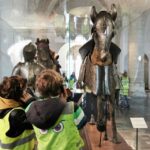
At the Royal Museums of Fine Arts of Belgium, you’re not committing to a full museum visit. Instead, you’re getting oriented to the Museum Quarter in the capital—helpful if you want to choose one museum later rather than trying to do everything.
Here’s what you’ll learn the area includes: the Museum of Fine Arts, plus the Museum of Magritte, the Museum of Modern Art, and the Museum of Musical Instruments, among others. Even if you only plan to visit one, the guided explanation helps you decide based on your interests, not guesswork.
This stop is about 10 minutes, so it’s best seen as a map in walking form—enough to point you toward a smart follow-up.




Grand Place and Mont des Arts: Two Stops You’ll Feel in Your Camera Roll
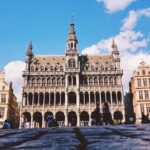
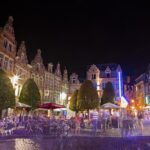
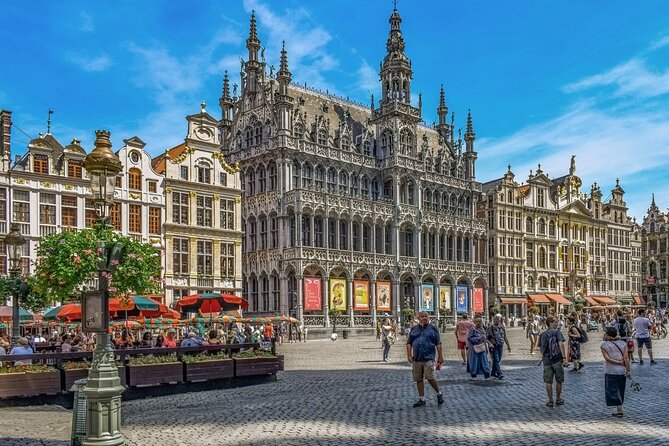
Grand Place is the big civic moment—home to the magnificent City Hall—and the tour gives it about 15 minutes. This is where you start to see why Brussels is so photogenic: the square is built for drama, and the guide helps you notice the details that make the architecture feel alive.
Right after that, you’ll head to Mont des Arts. The guide will share the story behind the place and then you get a short window for that city-view payoff. Expect some of the best skyline-looking photos of the day without needing to hike or detour too far.
A nice bonus: one guide style you may get is picture-making. The walk includes a moment where the guide helps you get memorable photos, so you’re not stuck awkwardly asking strangers or trying to set up your phone under time pressure.
Egmont and Hornes Fountain: The City’s Guild Mindset in Stone
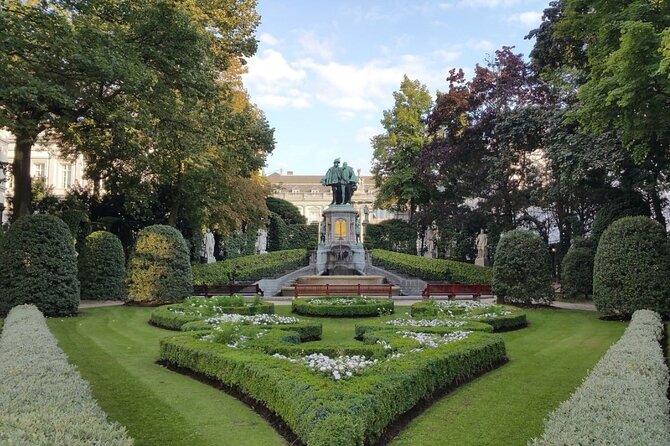
Egmont and Hornes Fountain is a garden space divided by 48 columns, each topped with a small statue representing one of the 16th-century guilds of Brussels. That detail is the point: Brussels didn’t just grow through kings and churches. It grew through trades, organizations, and craft.
You’ll have about 10 minutes here, which means you’ll want to slow your pace for a moment. Don’t just look forward—also look up at the column tops, because that’s where the symbolism lives.
This stop is also a good “breather” before the tour shifts into neighborhoods and streets, where you’ll be less focused on monuments and more on what kind of area you’re walking through.
From Rue des Petits Carmes to the Sablon Antique Market
Rue des Petits Carmes gives you a different Brussels look: the quarter of embassies and international representations. In about 10 minutes, the guide helps you understand how this area fits the city’s larger role—Brussels as both home and headquarters for global activity.
Then the tour ends at the Sablon Antique Market (Antiekmarkt Zavel/Marche des Antiquites et du Livre du Sablon). This market has been operating since 1960 and is still working each weekend, so it’s not just a “cute stop.” It’s a real place to browse and time your visit for the days it’s active.
Even better for practical travelers: the market area is known for some of the best chocolate and pralines producers in Brussels. If you’re the type who likes to bring home edible souvenirs, this stop makes your walk feel immediately usable, not just educational.
How the Guide Tips Can Improve Your Whole Day
The guide component is where this tour often pays off beyond the landmarks. In English, you’ll get recommendations for exploring Brussels after the walk—plus specific ideas for classic Belgian treats and drink stops.
From the guide stories you’ll hear on the route, it’s clear that some guides really lean into local suggestions. For example, one guide named Polina is noted for mixing history, culture, art, and some bites into the day plan. Another guide, Paulina, handled a major rainstorm by waiting under a roof and then continuing after it passed, which is the kind of calm problem-solving you want from a leader in a city where weather can shift fast.
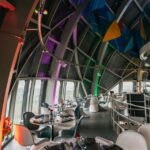
You may also get taste-focused tips: chocolate, fries, waffles, and beer recommendations, plus a suggested rooftop bar that fits well with an evening in central Brussels. Even if you skip every suggestion, the guiding theme is solid: get ideas that match your interests, then follow your own timing.
Timing, Pacing, and Pairing It With Food Tours
This is a moderate physical walk, built around 10–20 minute stops. It’s long enough to connect meaningful sights, but short enough that you’re not exhausted by the halfway point.
The best pairing is simple: do this tour first to learn the shape of the city, then add a food tour while you’re already oriented. Since the walk ends at Grand Place, you can also pivot into dinner plans without a long transport shuffle.
If you’re visiting with kids or people who move slower, the short stop lengths can help. If you’re sensitive to noise, plan for it in the busiest squares—some guides perform better when groups stay quieter, and your best move is to step in close at each stop.
Who This Tour Fits Best (and Who Might Skip It)
This tour is a great match if you want a guided overview of central Brussels in two hours, with stops that are easy to remember later. It also works well if you like planning with structure: see a highlight, get context, then choose your next move.
Skip or consider something else if you’re looking for a heavy museum day. The tour points you toward museums, but the walking format means you won’t spend long inside. If you already have an advanced interest in one specific museum or want a deep architectural study, you’ll likely want extra time on your own afterward.
Should You Book This Walking Tour?
Book it if you want to save time and still feel like you truly understand the center. The small-group size, free-admission stops, and guide-led context make it a practical way to learn Brussels without turning the day into logistics.
I’d especially recommend it as your first serious activity in town: Grand Place and Mont des Arts alone make the walk worthwhile, and the Sablon market ending gives you a natural hook for treats and browsing. If your goal is to walk away with both memories and a smarter plan for the rest of the day, this one fits.
FAQ
How long is the Brussels walking tour?
It lasts about 2 hours.
How much does the tour cost?
The price is $42.14 per person.
Is the tour offered in English?
Yes, it’s offered in English.
How big is the group?
The tour has a maximum of 15 travelers.
Where does the tour start and end?
It starts at Monument Léopold II, Pl. du Trône 9/1, 1000 Bruxelles, Belgium, and it ends at Grand Place (Grote Markt), 1000 Brussel, in front of the City Hall.
Do I need physical tickets?
No. You get a mobile ticket.
Are service animals allowed?
Yes, service animals are allowed.
What fitness level is required?
You should have a moderate physical fitness level.
Can I get a refund if I cancel?
Yes. You can cancel up to 24 hours in advance for a full refund, and changes less than 24 hours before the start time aren’t accepted.