REVIEW · BRUSSELS
Historical Walking Tour: The Story of Brussels – by Legends
Book on Viator →Operated by Legends of Bruges Free & Private Tours · Bookable on Viator
Brussels comes alive in 150 minutes of stories. This Legends-style walk strings big-name landmarks together with short, memorable tales, and it starts right where the city story begins: Grand Place. I love how the guide points out small details you’d miss on your own, and I also love that the stops include free admissions so you’re not juggling tickets while you’re moving.
The main thing to consider is that this is a walking tour with a history-and-legend focus. If you want a light, photo-only stroll, you may find the storytelling a bit packed, and weather can affect how comfortable the walk feels.
In This Review
- Key highlights you’ll notice right away
- Meeting by Grand Place: find the red umbrella and get moving
- Grand Place and Brussels Town Hall: the UNESCO stop that teaches you how to look
- Comic art at the museum and murals: Tintin, Smurfs, and Brussels’ playful identity
- Manneken Pis: the cheeky statue with a timeline behind it
- St Nicolas Church: old foundations, and the wealth signals hidden in architecture
- La Monnaie and Galeries Royales Saint-Hubert: opera grandeur and an old shopping arcade
- Saint-Géry Island: a calmer wander that still has energy
- St Michael & St Gudula Cathedral: Brabant Gothic and legend-led storytelling
- Royal Park (Parc de Bruxelles) and Royal Square: King Albert I and the power map
- Mont des Arts finish: the view that closes the loop
- Price and value: why $3.62 per group can make sense
- What makes the guiding style special (and who it suits)
- Should you book this Brussels story walk?
- FAQ
- FAQ
- How long is the walking tour?
- Where does the tour start and end?
- Is the tour available in English?
- What’s included in the price?
- Is food included?
- What happens if weather is poor?
Key highlights you’ll notice right away
- Red umbrella meet-up at City Hall so you can locate your guide quickly at the start
- Grand Place in UNESCO detail with attention to the guildhalls and Town Hall mix of styles
- Comic culture made physical through murals tied to Tintin and the Smurfs
- Manneken Pis with actual history behind the cheeky statue
- A smooth finish at Mont des Arts for a strong city-overview moment
- Small-group feel up to 35 people during a 2.5-hour route paced for sightseeing
Meeting by Grand Place: find the red umbrella and get moving
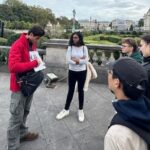
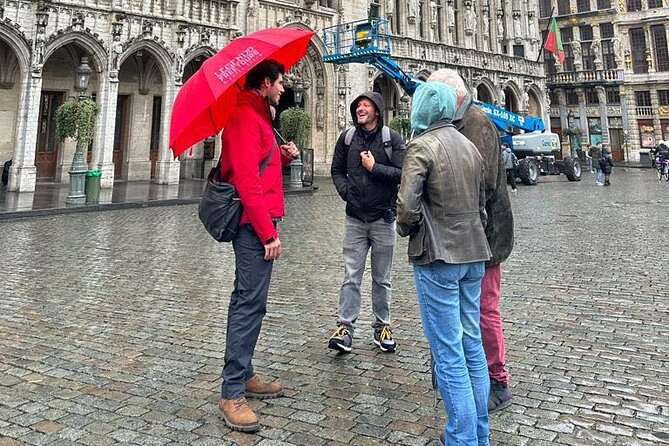
Your walk begins at Grand Place (Grote Markt), in the heart of Brussels. Look for your guide waiting near City Hall with a red umbrella—that’s your fastest way to confirm you’ve got the right group. The tour is offered in English, uses a mobile ticket, and you’ll typically be joining a group of up to 35 travelers.
What I like about this setup is how it reduces start-time stress. You’re not hunting through crowds for a booth or scanning signs. Just head to the plaza, find the umbrella, and start walking.
Also, because it’s a 2.5-hour format (about 2 hours 30 minutes), you’ll get a classic “greatest hits” loop without feeling like you’re stuck all day in one neighborhood.
You can also read our reviews of more walking tours in Brussels
Grand Place and Brussels Town Hall: the UNESCO stop that teaches you how to look
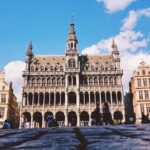
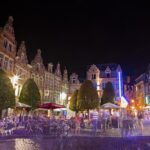
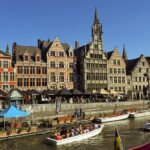
Grand Place is the kind of place that looks like a postcard—then your guide helps you read it like a page. This UNESCO World Heritage square is known for its guildhalls and for the impressive Town Hall, with architecture that blends Gothic and Baroque touches.
You’ll spend about 15 minutes here. That’s enough time to understand what you’re actually seeing: why these buildings matter, who built them, and how the square became the symbolic center of Brussels. Even if you’ve seen Grand Place photos before, you’ll likely leave with a different lens—more “why it’s here” than “it looks cool.”
If you’re the type who likes historical storytelling (and not just stand-and-snap photos), this is a strong starting payoff.
Comic art at the museum and murals: Tintin, Smurfs, and Brussels’ playful identity
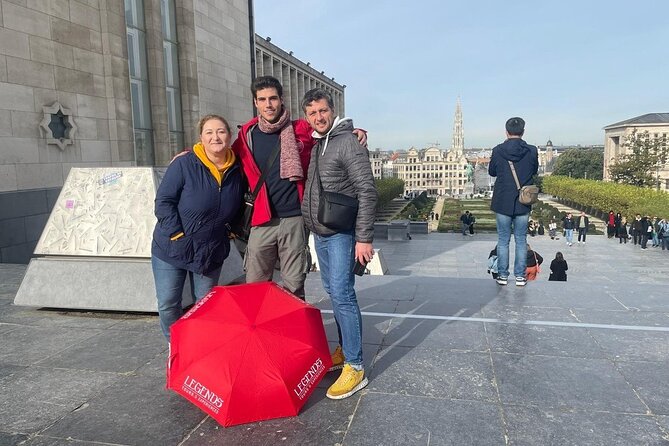
Brussels wears its comic heritage on its sleeve. The stop at the Comic Art Museum gives you a fast, guided way to understand why characters like Tintin and the Smurfs show up in public spaces and not just on book covers.
Time here is about 15 minutes, and it functions like a reset after the heavy stone-and-stone symbolism of Grand Place. Instead of guild power and civic ambition, you’re seeing how pop culture became part of the city’s identity—and how that identity became visible.
This is one of those stops that’s great for first-timers because it makes Brussels feel fun without losing context.
Manneken Pis: the cheeky statue with a timeline behind it
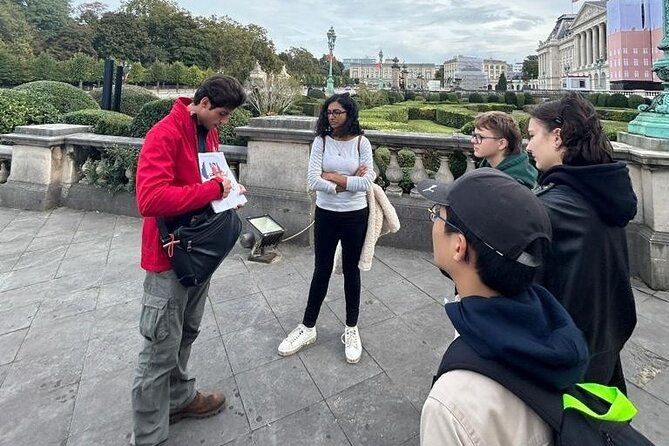
Next comes Manneken Pis, the little bronze boy doing his famous business. Yes, it’s whimsical. But the key is what your guide brings to it: history dating back to the 17th century, plus the way a joke becomes an enduring landmark.
You’ll spend about 10 minutes here. That short time is actually useful because it keeps the tour moving while still giving you the “why should I care?” version of the story. You’re not just watching a statue—you’re learning how Brussels keeps traditions alive through humor and repetition.
If you want a quick laugh break built into real context, this is it.
St Nicolas Church: old foundations, and the wealth signals hidden in architecture
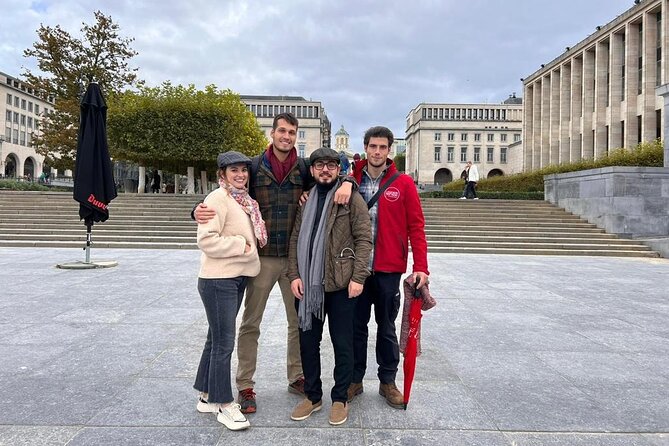
At the Church of St Nicolas, you’re back in serious old Brussels. This church is among the older churches in the city, with foundations laid in the 12th century. The guide also connects the church to the way it once carried the one and only belltower of Brussels—an important signal of wealth and independence.
Your time here is about 10 minutes. That’s long enough for orientation and a few “wait, notice this” moments, not long enough to feel like you’re stuck in one place. You also get the satisfaction of moving from one layer of Brussels into the next: the early medieval roots feeding the later city-center power.
One of the best parts of this style of tour is how it turns churches into storybooks, where details are there for a reason, not just decoration.
You can also read our reviews of more historical tours in Brussels


La Monnaie and Galeries Royales Saint-Hubert: opera grandeur and an old shopping arcade
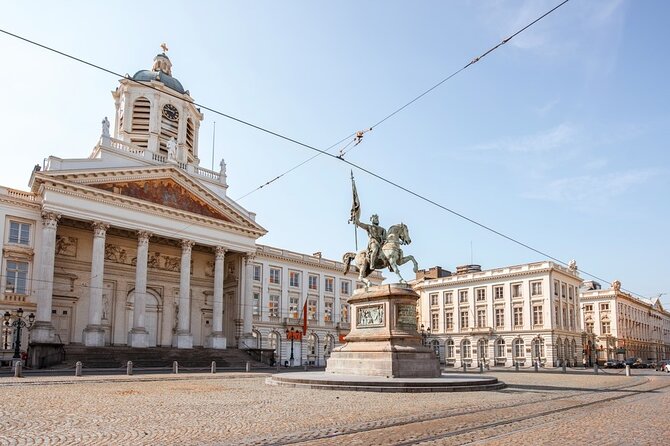
Then the walk shifts to La Monnaie (Théâtre Royal de la Monnaie), a renowned opera house known for its exceptional performances and architectural grandeur. Time here is about 15 minutes. It’s a chance to see how Brussels treats the arts as a public priority—and how impressive buildings can carry culture even when you’re just standing outside.
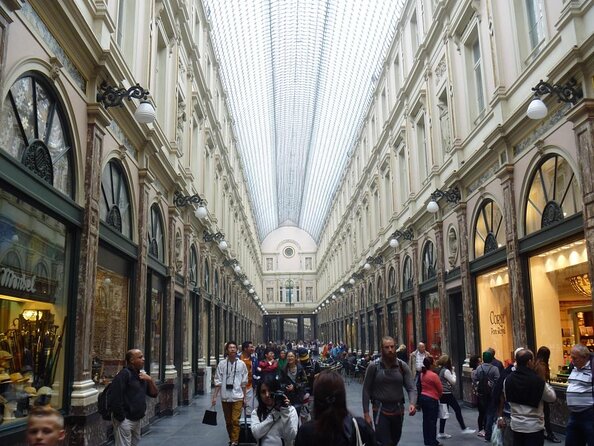
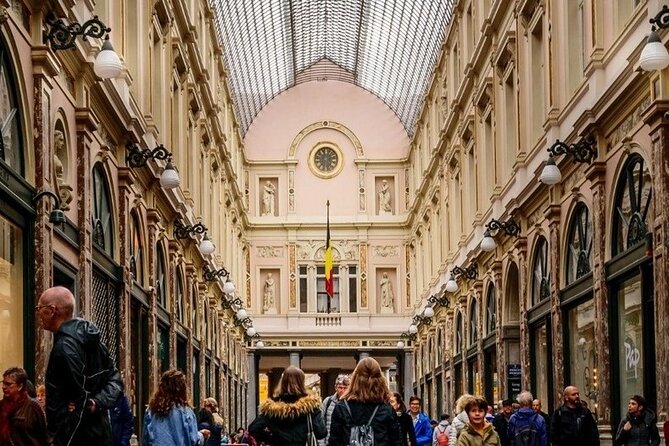
From there, you move into the Galeries Royales Saint-Hubert. This is one of the world’s oldest shopping galleries, and the design still feels special: an arcade-style passage with luxury boutiques, theaters, and charming cafes. You’ll spend about 10 minutes here.
I like pairing these two stops because they show two sides of the city’s “arts and elegance” theme:
- La Monnaie represents formal cultural prestige.
- Galeries Saint-Hubert shows everyday elegance—shopping, strolling, and people-watching under a roof.
If you want a quick break from big squares and statues, this segment delivers.
Saint-Géry Island: a calmer wander that still has energy
Saint-Géry Island is your next stop, about 15 minutes. This district is known for its trendy vibe—bars, restaurants, and cultural spaces in a former market area.
Even though the tour doesn’t linger long, this stop is useful because it shows you Brussels beyond the official monuments. You get a feel for where people actually go when they’re done with sightseeing—where the city shifts from “heritage” to “hang out and live your day.”
This is also a good mental reset before the cathedral portion of the route.
St Michael & St Gudula Cathedral: Brabant Gothic and legend-led storytelling
Now it’s time for one of Brussels’ most dramatic landmarks: St. Michael & St. Gudula Cathedral. You’ll spend about 15 minutes here, and the guide’s job is to help you notice the Brabant Gothic style and appreciate the long timeline behind it—taking you back to the 13th century.
The tour frames it with legendary tales connected to the cathedral, which is exactly how to make a huge church feel personal in a short visit. You don’t just stare upward; you learn why particular elements matter and how stories stick to stone over time.
If you’re curious about religion, symbolism, or the way legends shape a city’s identity, this stop is a must.
Royal Park (Parc de Bruxelles) and Royal Square: King Albert I and the power map
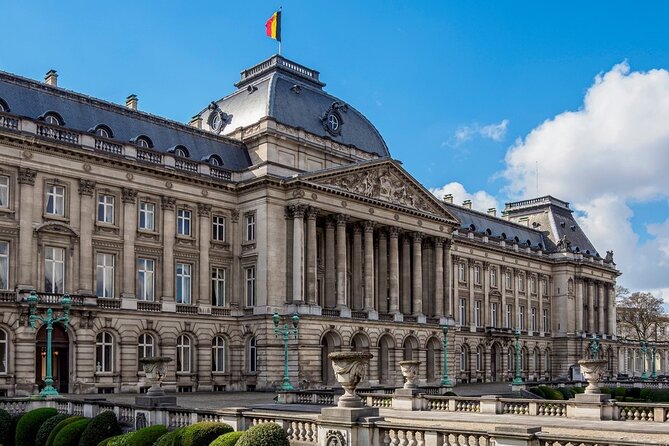
As you move toward the political heart of Brussels, the route gives you a breather at Parc de Bruxelles (Royal Park). Time here is about 15 minutes. It’s a green space tucked between the Royal Palace and the Belgian Parliament—so it’s both relaxing and strategically placed.
Then you head to Rue Montagne de la Cour 2, a square dominated by a statue of King Albert I, with the Royal Square nearby and neoclassical buildings in the frame (including the Royal Palace and the Belgian Parliament). You’ll get about 15 minutes here as well.
This is where the tour becomes a “Brussels power map.” Grand Place shows civic pride; churches show older authority; and here you see government-level symbolism. Even if you’re not a political history person, the visual logic makes it click fast.
Mont des Arts finish: the view that closes the loop
The tour ends at Mont des Arts (Montagne des Arts area), right near where you started feeling the city’s center. Time at this final stop is about 15 minutes. You’ll get a strong city overview from up top—close enough to Grand Place that it feels like the whole route is culminating in one final reveal.
You’ll also end at Mont des Arts 1, and the tour states it’s about a 10-minute walk from the starting point. In real terms, this means you’re not far from the area where you’ll likely want to keep exploring after the tour.
If you care about getting one good photo with context, this is the payoff.
Price and value: why $3.62 per group can make sense
Here’s the honest math. The price is listed as $3.62 per group (up to 6), for about 2 hours 30 minutes of guided walking in English. Even if that sounds low, the structure still delivers something that’s usually expensive in other cities: a guide who connects multiple stops into one story, plus free admission stops built into the route.
You also get all fees and taxes included, and you’re getting local and professional guidance (not just a self-guided audio script). Food isn’t included unless specified, so you’ll be planning your own lunch or chocolate break, but that’s normal for a walking highlights tour.
One more value note: group size is capped at 35 travelers, which helps keep the tour from turning into a shuffle line. You can still hear the guide and follow along without feeling lost.
What makes the guiding style special (and who it suits)
The biggest reason this tour earns such high satisfaction is the way guides bring the stories to life. I’ve seen references to guides like Julien, Dan, Isabella, Rita, and Patrick, and the common thread is clear: passionate delivery, strong English, and attention to what the group wants to notice.
A couple of details matter for you as a reader:
- Some guides add small extras, like a chocolate taste.
- If you show interest (for example, religious art or nativity scenes), a guide may help you connect it back to a church stop along the route.
- Multiple guides are praised for pacing that stays interesting without turning into a lecture.
Who should book this?
- First-time visitors who want a grounded introduction without getting stuck in one museum
- People who enjoy stories and legends as a way to remember what they saw
- Travelers who want a practical walk they can build on the rest of their Brussels days
If you’re mainly after empty-time strolling, you might prefer a slower, purely self-guided approach. But if you want your landmarks explained in human language, this route is a smart way to get oriented.
Should you book this Brussels story walk?
I’d book it if you want to understand Brussels fast, not just collect photos. The route hits Grand Place, the comic culture angle, key landmarks like Manneken Pis, and ends with a view from Mont des Arts. In 2.5 hours, it gives you a mental map you can use the moment you step away.
Book it especially early in your trip. You’ll come back to places later with better context, and you’ll know where you want to linger next.
FAQ
FAQ
How long is the walking tour?
It runs for approximately 2 hours 30 minutes.
Where does the tour start and end?
It starts at Grand Place (Grote Markt, 1000 Brussel) and ends at Mont des Arts 1 (1000 Bruxelles).
Is the tour available in English?
Yes, it is offered in English.
What’s included in the price?
The price includes all fees and taxes and a local/professional guide, plus admission is free at the stops listed.
Is food included?
No. Food and drinks are not included unless specified.
What happens if weather is poor?
The experience requires good weather. If it’s canceled due to poor weather, you’ll be offered a different date or a full refund.