REVIEW · BRUSSELS
Architecture Tour of Brussels
Book on Viator →Operated by Bruges City Tours · Bookable on Viator
Brussels looks different when you track the buildings, not just the sights. This 2-hour architecture tour links the city’s main landmarks into one clear story, guided by a local pro like Gamaal, who keeps the pace fun and the explanations sharp. I like the mix of architectural styles you actually see up close, and I like that you get photo-ready moments, especially from Mont des Arts. One thing to consider: this is a walking tour, and the route moves from spot to spot quickly—come ready to stroll.
The tour runs in the evening (starts at 8:00 pm) and stays small, with a maximum of 18 people, so you’re not stuck in a huge crowd. Still, because it’s a group format, you might want to share your interests early if you want extra emphasis—guides can adjust, but they can’t read your mind.
In This Review
- Key points worth knowing before you go
- Why this Brussels architecture tour works (especially at night)
- Getting the route right: from Grand Place to the Mont des Arts view
- Grand Place: the market that became a design statement
- Les Galeries Royales Saint-Hubert: Brussels’ early shopping arcade
- La Monnaie and the theater district: royal performance in a changing area
- Place De Brouckereplein: old river routes and city defense logic
- La Bourse de Bruxelles: what a building inherits from elsewhere
- Manneken Pis: cute statue, big backstory, and the wardrobe museum climb
- Jacques Brel Statue: a quick, meaningful pop in a city of songs
- Notre Dame des Victoires au Sablon: chocolate and the charm of the Sablon area
- BOZAR Centre for Fine Arts: what’s behind the big walls
- Mont des Arts: your best photo moment over the city
- What you’ll get from a pro guide (and why group size matters)
- Price and value: $30.10 for a tight loop of real landmarks
- Who this tour suits best
- Should you book it? My take
- FAQ
- FAQ
- What is the duration of the Brussels architecture tour?
- Is the tour in English?
- Where does the tour start?
- What time does it start?
- Do I need a printed ticket?
- Are entrance fees included for the stops?
- Is transport included?
- How big is the group?
- Who is this tour for?
Key points worth knowing before you go
- Small group size (up to 18) helps you ask questions and keep the flow.
- English mobile tickets make check-in simpler and faster.
- No admission fees at the listed stops, so you can spend your time on looking, not paying.
- Mont des Arts viewpoint is built into the route for a top panorama.
- Architecture-focused guidance turns familiar landmarks into something you understand.
- Evening timing works well if you like a calmer feel near central sights.
Why this Brussels architecture tour works (especially at night)
Brussels is full of famous names and big squares. What this tour does well is connect those places to how the city grew—market to monarchy, defense routes to royal theaters, and old waterways to grand public buildings. You walk away with a mental map that’s more useful than a phone app.
The setting helps too. Starting at 8:00 pm means you’re not fighting the busiest daytime crush, and the air often feels right for slow looking. One review specifically noted the great evening atmosphere in the old town, which lines up with the idea that this is a “hang out and learn” type of tour, not a sprint.
Value is also solid. At $30.10 per person for a guided ~2-hour loop through major landmarks, you’re getting professional guidance plus a lot of built-in “what to look for” moments. Transport isn’t included, but you’re staying concentrated around central Brussels and the meeting point is right by the big showpieces.
You can also read our reviews of more tours and experiences in Brussels.

Getting the route right: from Grand Place to the Mont des Arts view
You meet at Godiva Grand Place (Grand Place 21/22, 1000 Brussels). From there, the route fans out across the historic core and then settles into viewpoints and classic photo angles.
The best part of the pacing is that each stop has a clear focus. You’re not just “standing near a building.” You’re learning what makes the facade matter, what changed over time, and how one area connects to another.
Also, because it’s a group with a maximum of 18, you can actually hear the guide at street level. That matters in a city where sound can vanish between tall buildings and busy intersections.
If you’ve got limited time in Brussels, this is a smart way to get your bearings fast—without wasting half a day bouncing between places on your own.
Grand Place: the market that became a design statement
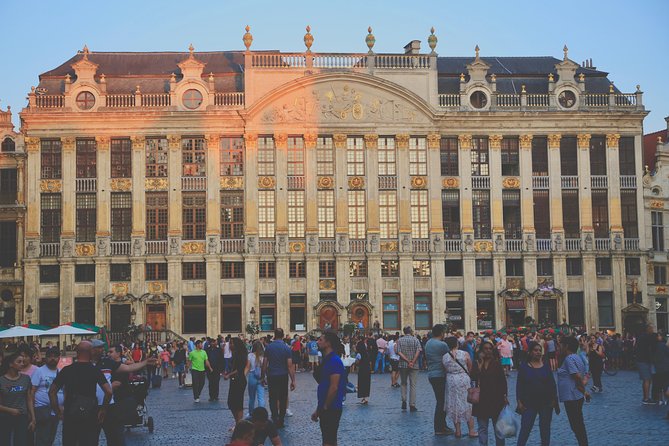
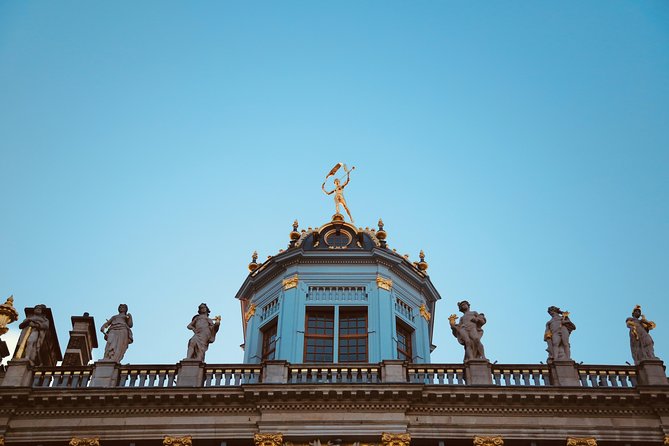
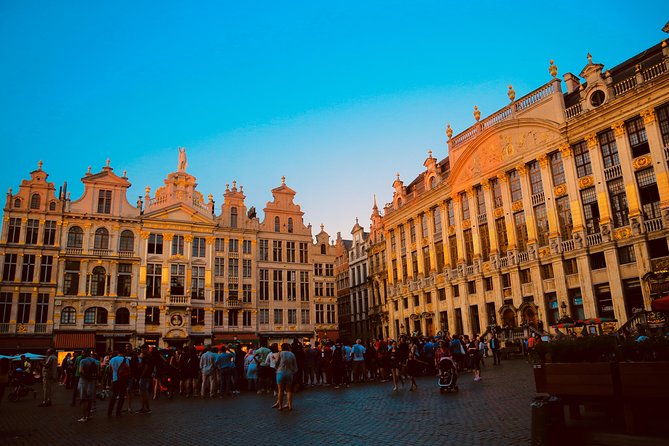
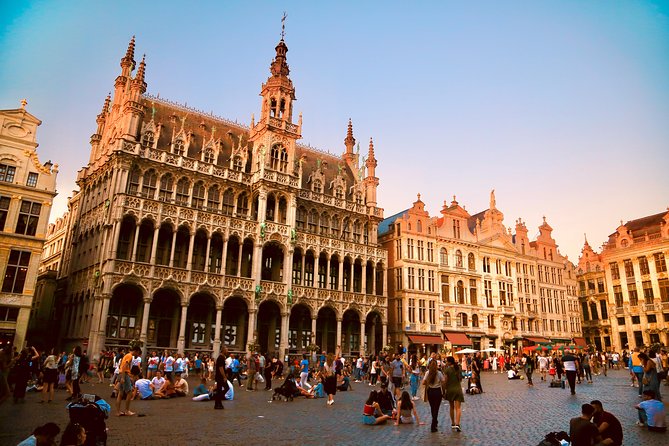
You start at Grand Place, the most visited spot in Belgium and a UNESCO heritage site. This is the moment where the tour earns its name. Instead of treating Grand Place as a postcard, the guide sets it up as a place that evolved.
You hear how it began as a market with wooden houses, then shifted into the gothic and baroque look you see today. Facades aren’t just decoration here—they’re history you can read with your eyes. Pay attention to how the building fronts relate to the square itself. It’s a visual lesson in how power, wealth, and city identity get expressed in stone.
The guide also points out links to famous people associated with the square. That gives you context if you’ve seen the location before but didn’t know why everyone cared.
Practical tip: Budget about 20 minutes here. If you want photos without rushing, stand slightly off to the side first to frame the facades, then move toward the most open angles once you understand what your guide is pointing out.
Les Galeries Royales Saint-Hubert: Brussels’ early shopping arcade
Next comes Les Galeries Royales Saint-Hubert, often described as the first shopping mall in the world, and it’s tied to the same era as Belgium’s early story. The guide talks about the architect’s ambition and the hard work needed to make the project real.
This stop is great if you like buildings that mix commerce and culture. It’s not just “shops inside a pretty hallway.” The space itself shows how people wanted to move, meet, and spend in a covered, designed environment.
You also pass cafés where famous authors were said to enjoy coffee and produce world literature. Even if you don’t know every name, the idea lands: this was a place of ideas, not only transactions.
Possible drawback: The stop is about 20 minutes, so you won’t have time to fully browse everything inside. Go for the architecture and atmosphere first. If you want to shop, plan a separate short visit later.
La Monnaie and the theater district: royal performance in a changing area
Then the tour shifts to La Monnaie, the royal theatre. The focus here is the theatre’s long story and how the surrounding area evolved. You’ll also hear about how the guide connects it to nearby streets, including the idea of a “shopping street” feel and the role of change and revolution in the area.
This is a good moment to reset your eyes. Grand Place and the arcade are visually dramatic. La Monnaie is more about understanding the cultural engine: why entertainment and civic life mattered enough to build grand spaces for them.
Expect around 10 minutes total. It’s quick, but the guide keeps it meaningful.
If you’re a theater fan: This stop is more about context than a performance. Still, knowing the setting makes the building more interesting when you walk past it later.

Place De Brouckereplein: old river routes and city defense logic
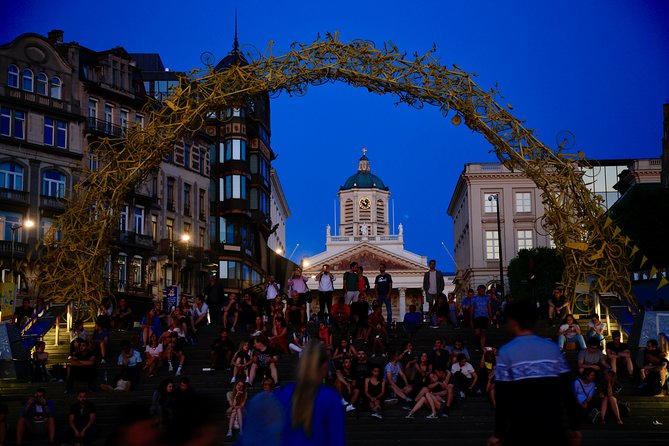
At Place De Brouckereplein, the tour introduces an idea that’s easy to overlook in modern Brussels: water wasn’t just scenery—it was part of how the city worked and defended itself.
The guide discusses the De Brouckere palace and the old river route within the city. You learn how water lines influenced layouts and why certain areas mattered strategically. It’s a small change in perspective, but it makes the city feel less random.
This stop runs around 10 minutes. Use it as a “connect the dots” moment. If you start seeing the city as infrastructure—squares, routes, waterways—Brussels becomes easier to navigate on your own afterward.
La Bourse de Bruxelles: what a building inherits from elsewhere
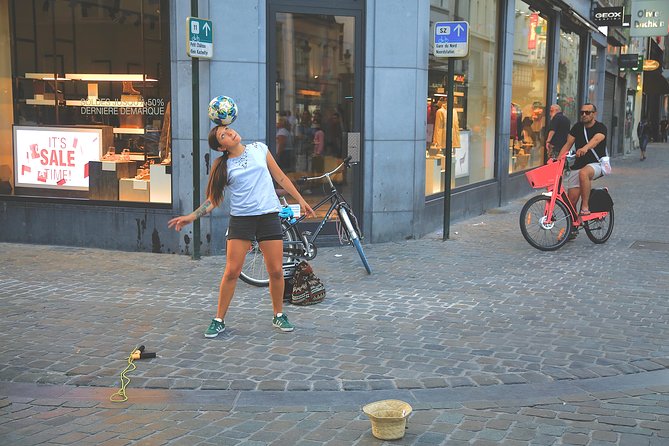
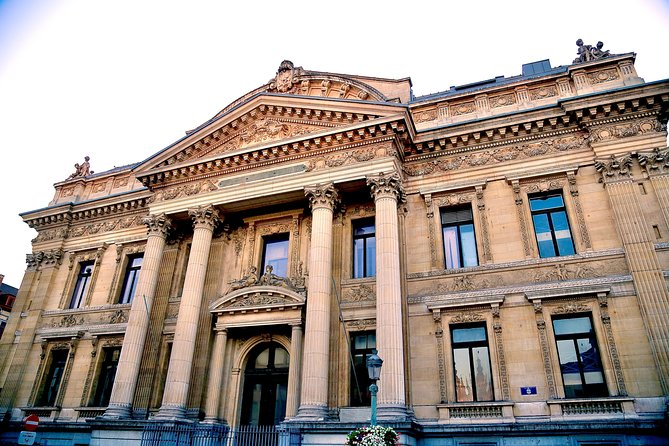
Next is La Bourse de Bruxelles, where you get the sense that architecture can carry a lineage. The guide explains how the development of the exchange moved from Bruges to Grand Place and then to this square.
Then the conversation turns to the building’s identity today: it became one of Brussels’ important art expedition locations (the guide frames it in the cultural sense). This is one of those stops where the building isn’t just about the facade; it’s about what it became after its first purpose.
Time-wise, it’s about 10 minutes—short enough to keep momentum, long enough for a basic understanding of why this structure matters in the city’s public life.
If you love business history: You’ll likely enjoy how the guide traces the exchange across places rather than treating it as a fixed object.
Manneken Pis: cute statue, big backstory, and the wardrobe museum climb
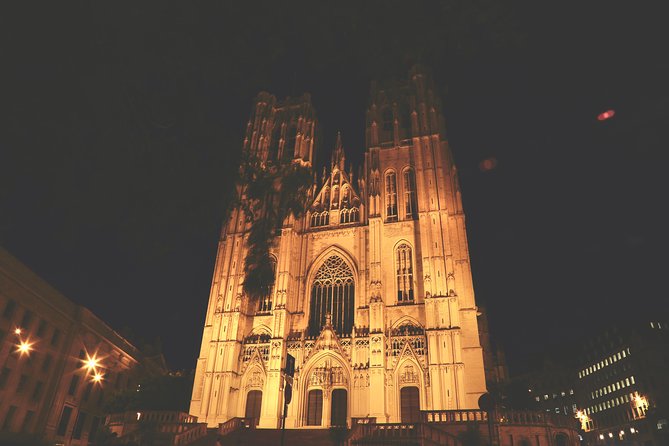
Then you reach the stop that can be either a fun detour or a letdown depending on your expectations: Manneken Pis. The tour’s approach helps. Instead of treating him as just a photo prop, the guide explains the stories behind the boy and highlights the connection to the famous collection of costumes—over 1,200 uniforms.
The tour also includes the climb up to the wardrobe museum. That’s a key difference between “see it from the street” and “actually understand why people care.”
Now, yes—Manneken Pis can be crowded, and you might have heard jokes about being disappointed. The tour handles this by giving you the framework to look past the surface. Once you know the costume tradition and the stories attached to it, the statue feels less random.
Tradeoff: This is 15 minutes, including the museum climb. If you have limited mobility, this stop may be the hardest segment of the whole route because it involves stairs/uphill movement.
Jacques Brel Statue: a quick, meaningful pop in a city of songs
After that, the tour makes a brief stop at the Jacques Brel statue. The guide asks a simple question: why would Brussels place a sculpture of him here? That’s the value of a short stop—it nudges you to notice cultural references you might otherwise walk right past.
This is only about 5 minutes, so don’t expect a long lecture. It’s more like a musical bookmark in your walking story.
Notre Dame des Victoires au Sablon: chocolate and the charm of the Sablon area
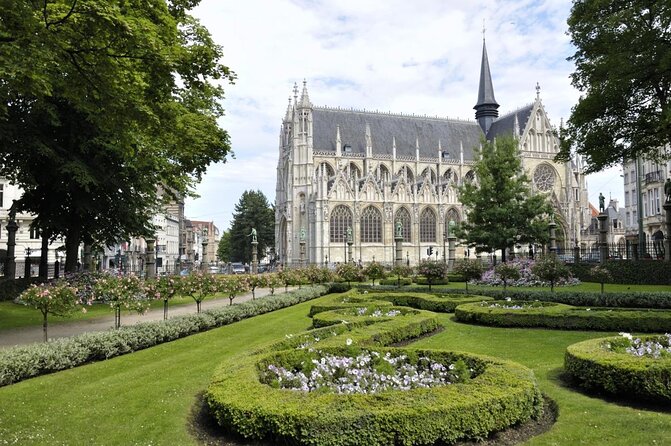
Then comes the Notre Dame des Victoires au Sablon stop, with a focus on the Sablon area—plus chocolate. This is where the tour gives you something more than architecture terms.
The guide frames the church and surrounding area in a way that’s grounded: you learn how the Sablon zone fits into the city’s identity, and then the chocolate component gives you a playful “reward” for your walking brain.
It’s about 15 minutes. You’ll want to use this time to slow down and look at the details around the building, not just the building itself. The Sablon area is the kind of place where small forms add up visually.
BOZAR Centre for Fine Arts: what’s behind the big walls
At BOZAR Centre for Fine Arts, the tour becomes a “what do you think is hidden here?” moment. The guide keeps it short—around 5 minutes—but the point is to train your eyes to notice institutional architecture. Big walls. Clear purpose. A cultural machine inside.
Even if you don’t go in, you get a sense of why this place matters on the Brussels cultural map. It’s the kind of stop that makes you more curious, which is often what you want from an architecture walk.
Practical note: Since this is a short stop, don’t plan meal breaks around it. The value here is quick orientation.
Mont des Arts: your best photo moment over the city
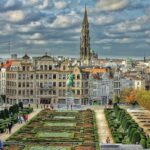
Finally, the tour reaches Mont des Arts, built for views. This is where you cash in your walking effort.
From here, you get a classic panorama over Brussels: the city hall tower becomes the focus in many frames, with the royal palace at the other end. The guide helps you set up your shots so you’re not just snapping at random angles.
This stop lasts about 20 minutes, and that time matters. You need a moment to let the view settle in, then try a few angles to find the best skyline lines.
If you only take one “proper” photo during your Brussels time, this is the stop that makes the strongest case.
What you’ll get from a pro guide (and why group size matters)
A tour like this lives or dies on the guide. Here, you get a local professional with a style that stays engaging and practical. One highlight from the experiences shared with me: Gamaal doesn’t just recite facts. He explains the history and architecture in depth but keeps it readable, and he can even adjust the emphasis based on what your group cares about.
That customization shows up in small ways—like spending a bit more time on churches if that’s your interest. In a city full of must-sees, that flexibility can make the difference between a tour that feels generic and one that feels made for you.
The fact that the group is capped at 18 also helps. You keep hearing the guide, and it’s easier to move toward viewpoints without losing half the group behind you.
Price and value: $30.10 for a tight loop of real landmarks
At $30.10 for a ~2-hour guided walk, this is priced like something designed for efficient sightseeing. And the math checks out if you care about learning, not just ticking boxes.
Key value points:
- A professional local guide
- Multiple major landmarks in central Brussels
- A route that includes both architecture and viewpoint time
- Stops where admission is listed as free
Transport isn’t included, so you’ll still handle getting to the meeting point. But once you arrive at Godiva Grand Place, the tour does a lot of the heavy lifting by keeping you concentrated in one area.
If you’re visiting on a tight schedule or you want the quickest way to understand Brussels’ architectural “why,” this price feels fair.
Who this tour suits best
This tour is a strong match if you:
- want a guided way to see big Brussels landmarks without getting lost
- like architecture and want explanation tied to what you see
- enjoy evenings in the city center and want a calmer pace
- prefer small groups and a guide who can respond to interests
It may be less ideal if you:
- hate walking or have difficulty with stairs (the Manneken Pis wardrobe climb is a factor)
- expect inside access to every stop (this is mostly about exterior viewing and short interpretive stops)
Should you book it? My take
I’d book this if you want a clean architecture framework for central Brussels. You’ll hit the headline sites—Grand Place, the Royal Galleries, Manneken Pis, and Mont des Arts—and you’ll leave with a much better sense of how the city’s look came together.
If you’re mostly chasing quick photos with zero learning, you could do a self-walk. But if you want your photos to come with context, and you like that the guide can shape the focus for the group, this is an easy yes.
Book it early if you can, since it’s typically reserved about 45 days in advance and depends on availability.
FAQ
FAQ
What is the duration of the Brussels architecture tour?
It runs for about 2 hours.
Is the tour in English?
Yes, it’s offered in English.
Where does the tour start?
The meeting point is Godiva Grand Place, Grand Place 21/22, 1000 Brussels.
What time does it start?
The start time listed is 8:00 pm.
Do I need a printed ticket?
No. You’ll have a mobile ticket.
Are entrance fees included for the stops?
The information provided for each listed stop states Admission Ticket Free.
Is transport included?
No, transport is not included.
How big is the group?
The tour has a maximum of 18 travelers.
Who is this tour for?
Most travelers can participate, and it’s designed as a standard walking group experience around central landmarks.