REVIEW · BRUSSELS
Brussels: 2-hours “Art Nouveau” Walking Tour
Book on GetYourGuide →Operated by Cognosimo Tours · Bookable on GetYourGuide
Art Nouveau in Brussels is a visual cheat code. This tight 2-hour guided walk explains how the movement took shape, then puts you face-to-face with the buildings that made it famous. I especially like how the tour starts with the big ideas first, then shows Hôtel Tassel and the rest of the story in real streetscape.
One practical catch: the meeting point is very specific, and I’d treat it like a small mission. You’ll meet outside the Brasserie Carpe Diem at Merode Station, at the Merode exit shown on the product photo, so arrive a few minutes early and double-check you’re at the right exit.
In This Review
- Key things you’ll notice on this Brussels Art Nouveau walk
- Brussels Art Nouveau: why this style got its foot in the door
- Finding the meeting point at Merode without wasting your time
- Cinquantenaire: the 15 minutes that makes the houses easier to read
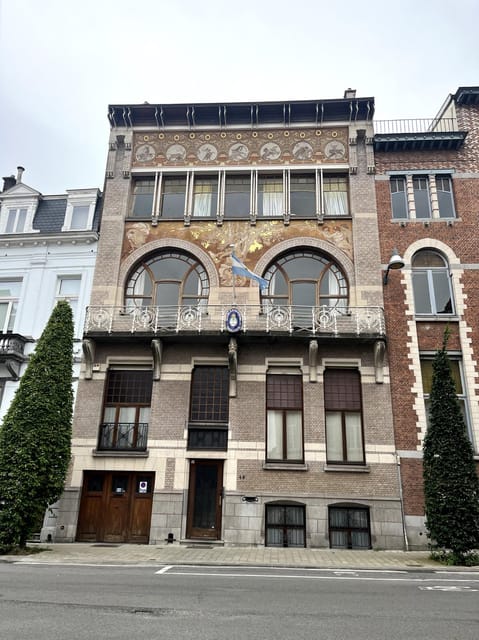
- Maison Cauchie, Stoclet, Saint Cyr, Van Dyck: landmark façades in a tight loop
- Hôtel Tassel and Hôtel van Eetvelde: where Horta becomes more than a name
- The quieter houses: Maison Roosenboom and the Horta family addresses
- How the guide turns “ornate” into “understandable”
- Hôtel Ciamberlani and the finish in Saint-Gilles
- Price and value: is $136 worth 2 hours?
- Who should book, and who should skip
- Should you book the Brussels Art Nouveau walking tour?
- FAQ
- FAQ
- Where is the meeting point for the Art Nouveau tour?
- How long is the tour?
- What language is the guide?
- Is this a private group tour?
- What’s included in the price?
- Which Art Nouveau buildings are included on the route?
- Is the tour wheelchair accessible?
- Is smoking allowed during the tour?
Key things you’ll notice on this Brussels Art Nouveau walk
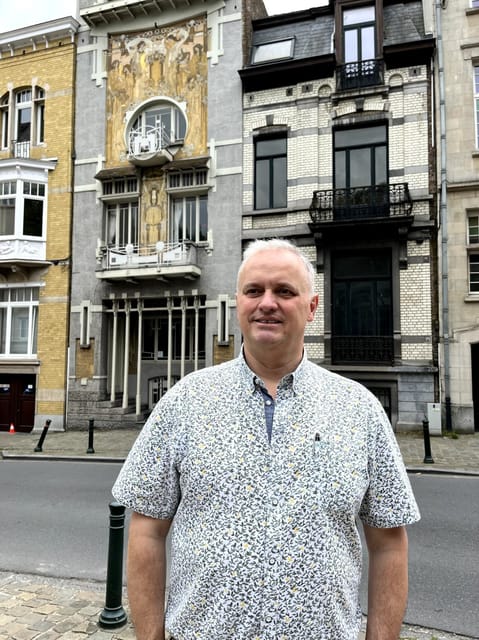
- A quick start at Cinquantenaire that sets the style in context before you start spotting details
- Major-name façades in a short loop, including Maison Cauchie, Palais Stoclet, and Maison Saint Cyr
- A strong Horta focus, with stops like Hôtel van Eetvelde and Hôtel Tassel
- The tour name-to-building match is real, with addresses such as Maison Van Dyck, Maison Roosenboom, and Maison Hankar
- Guide energy matters, and recent guides have been described as passionate and articulate (names like Davit, David, Eric, and Yves show up)
Brussels Art Nouveau: why this style got its foot in the door
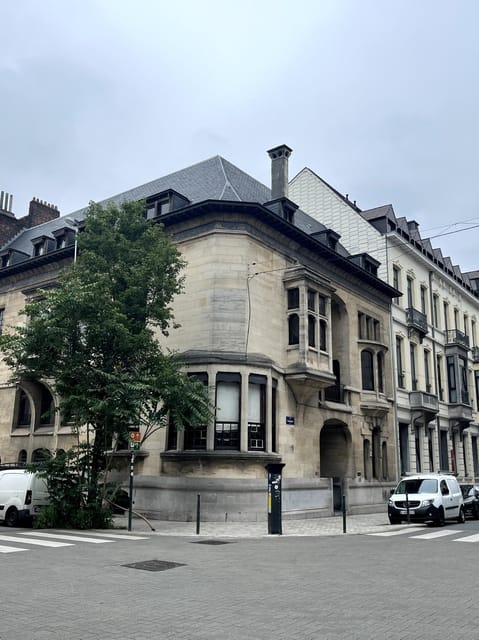
Brussels is where Art Nouveau really starts making sense—because you’re not just looking at pretty façades. You’re seeing a moment when design got more experimental, more expressive, and more “modern” than what came before. This tour is built around that idea: you learn the movement’s emergence and then you immediately apply it to the buildings you’re standing in front of.
I like that the guide doesn’t dump a textbook on you. Instead, you get a portrait of the different Art Nouveau trends and the characteristics that separate one approach from another. That makes the city stop feeling like a random collection of ornate houses.
And since the route connects multiple famous names—rather than repeating the same street view twice—you come away with a clearer “map” of how the style shows up across neighborhoods.
You can also read our reviews of more walking tours in Brussels
Finding the meeting point at Merode without wasting your time
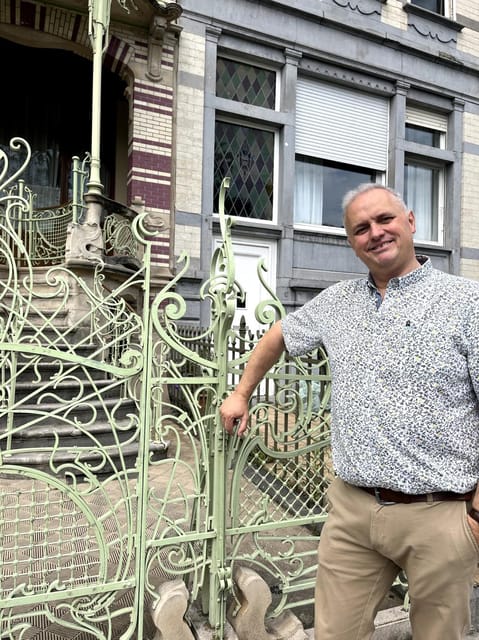
You meet by the Metro Station Merode, in front of the Brasserie Carpe Diem, next to the station and at the exit number shown on the product photo. This is one of those tours where being one exit off can turn “quick start” into “where is everyone?”
Plan to arrive early, not late. If your schedule is tight, I’d give yourself extra walking time from the nearest station entrance you choose, then confirm you’re lined up with the exact meeting spot.
Also note two practical limits:
- It’s not suitable for wheelchair users.
- Smoking isn’t allowed.
It’s a short tour, so these small logistics really matter.
Cinquantenaire: the 15 minutes that makes the houses easier to read
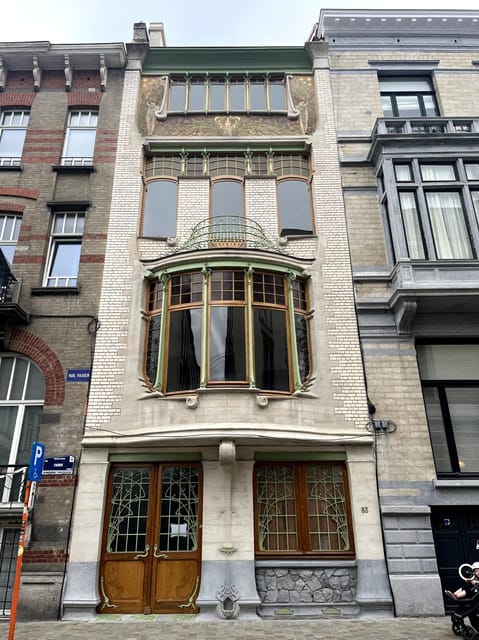
Right after you meet, you head into the area around Parc du Cinquantenaire. The tour begins with a guided introduction, around 15 minutes, where you get the origin story of Art Nouveau and why it felt so new at the time.
This is the part that pays off later. Once you understand what the guide is using as the “rules” for reading the style, you’ll start noticing patterns in how the buildings are shaped and decorated. Without that primer, you might just register “ornate” or “decorative.” With it, you can start sorting what you’re looking at.
Think of this as setting your “visual vocabulary” before you start collecting examples.
Maison Cauchie, Stoclet, Saint Cyr, Van Dyck: landmark façades in a tight loop
As you move around different areas, you’ll see a lineup of major Art Nouveau addresses, including Maison Cauchie, Palais Stoclet, Maison Saint Cyr, and Maison Van Dyck. These names matter because they’re the kinds of buildings people keep returning to when they try to explain what Art Nouveau looks like in practice.
What you’ll gain from seeing them in one guided session is comparison. The guide helps you connect what you learn about trends and characteristics to specific façades. Instead of treating each building like a one-off masterpiece, you start noticing how the style shifts from one approach to another.
One tip: bring a habit of looking in layers—starting with the overall form, then scanning for decorative organization, then stepping back to see how all of it fits together. That’s exactly the kind of pattern-recognition a good guide encourages on a walking route.
Hôtel Tassel and Hôtel van Eetvelde: where Horta becomes more than a name
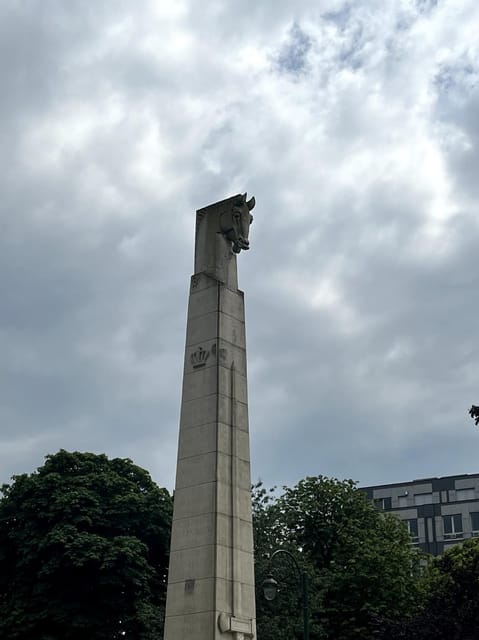
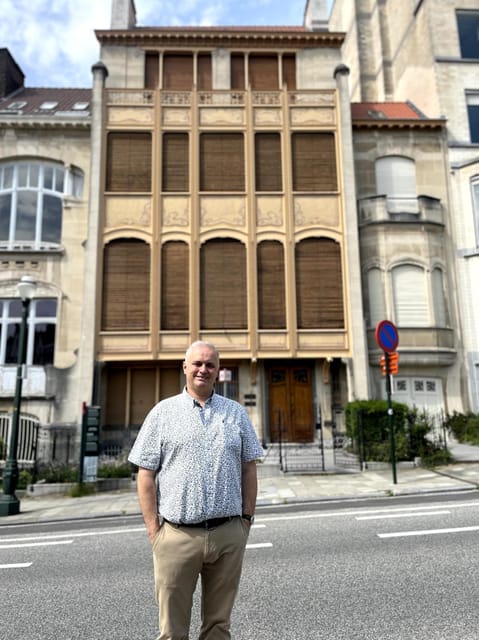
The biggest Art Nouveau star in Brussels is Victor Horta, and this tour gives you that focus through key addresses such as Hôtel Tassel and Hôtel van Eetvelde. You’ll also get more stops tied to Horta, including the Maison range and atelier-related addresses listed on the tour.
Here’s why that’s valuable for you: Horta’s work is a shortcut to understanding how Art Nouveau can feel both artistic and engineered. When you see multiple Horta-related buildings back-to-back, the differences stop feeling random and start feeling intentional.
You’ll also pick up a practical skill: learning what to look for when a building is trying to communicate motion, lightness, or a specific kind of modern identity. Even if you don’t consider yourself an architecture person, a guided walk makes your eye do the work.
And if you’re planning to visit the Horta Museum afterward, this tour is especially helpful. The kind of explanations you get on the walk tend to make the museum visit feel less like browsing and more like recognizing.






The quieter houses: Maison Roosenboom and the Horta family addresses
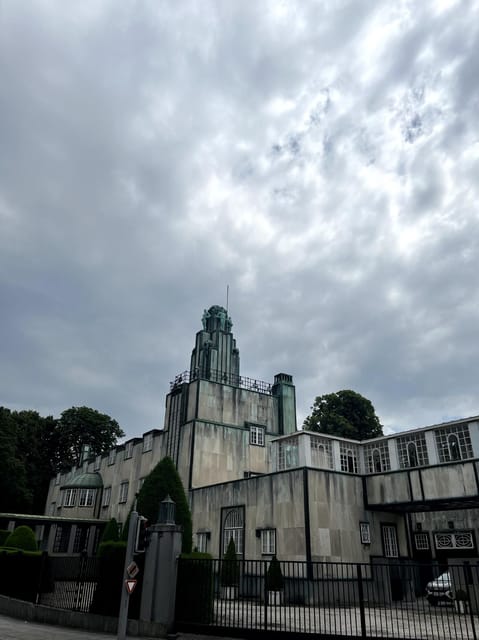
Not every Art Nouveau showcase is a giant landmark. This tour includes addresses that help you see the style in a more “everyday” housing context, with stops listed such as Maison Roosenboom, Maison Hankar, Maison et Atelier Horta, Maison Hannon, and Maison de son frère.
I like these kinds of stops because they fill in the blanks. Big sights can sometimes make you think Art Nouveau was only for grand statements. The smaller addresses help you understand how the same design language could show up in residential architecture too.
The guide also uses these buildings to reinforce the trends you learned earlier. So you’re not just walking past doors—you’re seeing variations of the same idea, under different design constraints.
How the guide turns “ornate” into “understandable”
A big part of the tour’s value is how the guide teaches you to read the style. You get:
- an explanation of the movement’s emergence,
- the core characteristics that made it feel modern at the time,
- and a quick portrait of different Art Nouveau trends.
That sounds general, but it has a concrete effect. After the intro, you’re not just reacting to decoration. You’re sorting what the building is communicating, and why.
Some of the guides leading this walk are described as genuinely passionate and articulate. Names like Davit, David, and Eric show up in recent bookings, and at least one guide—Yves—has been noted for going the extra mile to help you see more. Another account also mentioned extra car time, so if you’re strict about only walking the whole way, it’s smart to set that expectation up front.
Hôtel Ciamberlani and the finish in Saint-Gilles
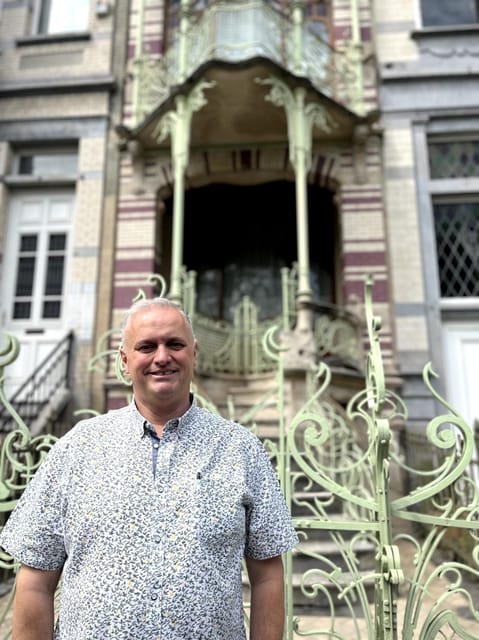
Toward the end, you’ll spend time at Hôtel Ciamberlani, with a guided segment listed at about 15 minutes at Hôtel Ciamberlani asbl. This is where the tour shifts from “big famous addresses” into one last focused look at a standout example of the style.
Then the walk finishes at Av. de la Jonction, Saint-Gilles. Finishing outside the center can be a plus if you like seeing the city beyond the postcard cluster. It also helps you continue your day easily—grab a meal nearby and keep wandering on foot.
Price and value: is $136 worth 2 hours?
At $136 per person for about 2 hours, this is a specialist tour price. The good news is that what you pay for isn’t just “a walk and photos.” The tour includes a professional guide and a guided route through multiple named Art Nouveau buildings.
So when is it good value?
- If you want a guided way to understand the differences between Art Nouveau trends.
- If you like architecture but don’t want to spend your time trying to identify houses by yourself.
- If you plan to pair this with a museum stop (especially anything connected to Horta), because the explanations can make the later visit easier to enjoy.
When might it feel pricey?
- If you only want a quick look at a single famous building.
- If your schedule or mobility needs require strict walking time, since a recent account mentioned a car drive on a departure.
My practical take: for people who care about interpretation, this price can be fair. For people who only want background decoration, you might get less from it.
Who should book, and who should skip
This is a great match if you:
- enjoy architecture and want to learn how to “read” façades,
- like structured sightseeing in a short time window,
- and want to cover multiple big addresses without planning a route yourself.
It may not be the best fit if you:
- need wheelchair access (it’s not suitable for wheelchair users),
- can’t handle a very specific meeting point requirement,
- or want zero variation from a walking-only format.
If you’re comfortable being flexible and you’re excited about learning the differences between buildings, this tour is exactly the kind of focused city experience that pays off.
Should you book the Brussels Art Nouveau walking tour?
Yes, if you want a guided education that leads you straight to the buildings. The tour’s biggest strength is that it teaches you how to look first, then gives you a concentrated set of addresses to test that knowledge on the spot.
Book it if you’re the type who likes seeing several examples of a style in one sitting: Maison Cauchie, Palais Stoclet, Hôtel Tassel, Hôtel van Eetvelde, and the other Horta-linked homes make the style feel coherent instead of scattered.
Skip it (or message the provider first) if walking logistics are your biggest concern, or if you’re expecting a perfectly uniform walking format with no changes.
FAQ
FAQ
Where is the meeting point for the Art Nouveau tour?
You meet in front of the Brasserie Carpe Diem, which is in front of Metro Station Merode. You should use the product photo to identify the correct Merode exit.
How long is the tour?
The tour lasts about 2 hours.
What language is the guide?
The live tour guide is English.
Is this a private group tour?
Yes. The tour is listed as a private group.
What’s included in the price?
The price includes a professional guide and a walking tour of Art Nouveau buildings.
Which Art Nouveau buildings are included on the route?
The tour highlights include Maison Cauchie, Palais Stoclet, Maison Saint Cyr, Maison Van Dyck, Hôtel van Eetvelde, Hôtel Tassel, Maison Roosenboom, Hôtel Ciamberlani, Maison de son frère, Maison Hankar, Maison et Atelier Horta, and Maison Hannon.
Is the tour wheelchair accessible?
No. It is not suitable for wheelchair users.
Is smoking allowed during the tour?
No. Smoking is not allowed.