REVIEW · BRUGES
Unforgettable Bruges: Sightseeings, History and Tasting.
Book on GetYourGuide →Operated by Artur Savastieiev · Bookable on GetYourGuide
Bruges becomes a story in 2 hours. This small-group walk with Artur Savastieiev turns medieval streets into explanations you can see and photograph, from the grand squares down to the canal bridges. I like the pace because it fits real sightseeing time, not a rushed checklist, and you keep moving through the city center.
Two things I really liked: the tour’s photo-heavy stops (you’ll know exactly where to stand), and the way the guide answers big Bruges questions as you pass the buildings. One possible drawback: it’s a fast, compact route—if you want to linger in museums or shop for long stretches, you’ll likely want extra time after the walk.
In This Review
- Key highlights you’ll remember
- Market Square start: find the Yellow Umbrella and get your bearings fast
- How this tour turns Bruges legends into what you actually see
- Market Square to Belfry: the city’s power in your first 15 minutes
- Burg Square and Bruges City Hall: symbols you can read without being an expert
- Huidenvettersplein and Bonifacius Bridge: canals and angles for real photos
- Gruuthusemuseum and Church of Our Lady: art and architecture as story props
- Sint-Janshospitaal Museum and the medieval street rhythm
- The storyline thread: Holy Blood, Black Death, and the ghost town turn
- Halve Maan brewery: beer break and a clean finish at the same meeting point
- Price and value: what $3.41 gets you (and what you should expect)
- Small-group comfort: 1 to 6 people and why it changes the tour
- Who this Bruges walking tour is best for
- Should you book Unforgettable Bruges: Sightseeings, History and Tasting?
- FAQ
- How long is the walking tour?
- Where does the tour start and where does it end?
- What language is the guide?
- Is the tour wheelchair accessible?
- Is food included?
- How big are the groups?
- What’s the cancellation window?
Key highlights you’ll remember
- Artur’s storytelling: funny, clear, and focused on what you’re looking at right now
- 15+ city-center landmarks: a concentrated route that still feels like a guided walk
- Bruges mysteries explained: Holy Blood, Virgin Mary facades, Black Death stories, and the no-cats legend
- Photo stops built in: bridges, squares, and facades where you’ll want to take your time
- Halve Maan brewery beer break: a practical tasting stop to end the tour on a local note
Market Square start: find the Yellow Umbrella and get your bearings fast
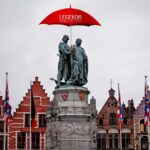
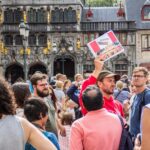
Your tour meets near the Belfort Tower on Market Square, with your guide holding a yellow umbrella. That matters more than you might think: Bruges center can look similar from one corner to the next, and you’ll want an easy way to lock onto the group immediately.
The whole experience is built for a tight time window—2 hours—so the early minutes are about getting oriented. I like that you start in the main public space instead of getting dropped off on the edge of town.
You can also read our reviews of more food & drink experiences in Bruges

How this tour turns Bruges legends into what you actually see
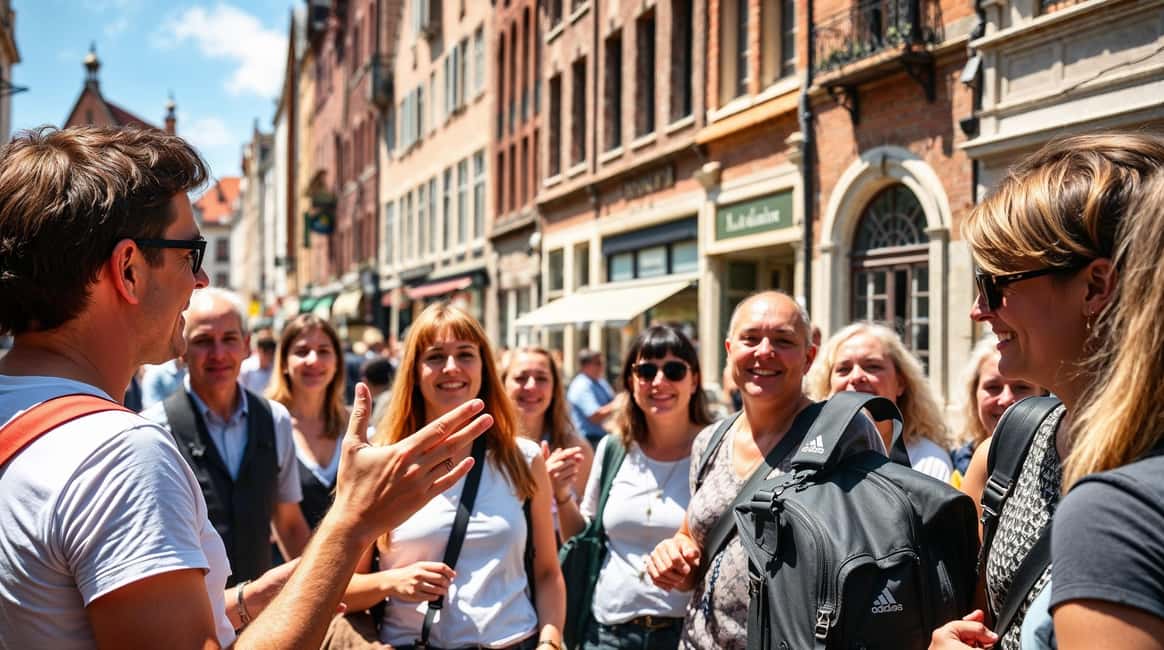
This walk is not just pointing at pretty buildings. It’s structured around questions that make you look harder: what’s behind the Basilica of Holy Blood claim, why there are 53 Virgin Mary figures on building facades, and why Bruges could swing from a major European trade center to a near ghost town.
Then the tour jumps to darker history: why Bruges had one of the lowest death rates during the Black Death, and how that period shaped the city people recognize today. Even the lighter mystery—why there are no cats in Bruges—fits the same pattern: you don’t just hear a random story, you see the kind of city that would grow these legends.
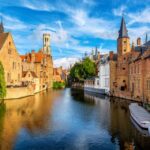
You’ll also get a steady flow of modern “Bruges life” context. The overview frames Bruges as a UNESCO World Heritage Site, chocolate- and beer-loving territory, and a canal city that earns its nickname in a very practical way: you’ll pass water and bridges often enough to feel it, not just to photograph them once.
Market Square to Belfry: the city’s power in your first 15 minutes
After starting at Market Square, the route heads toward the big visual anchor: the Belfry of Bruges. You get about 15 minutes here, which is a sweet spot for a guided visit—long enough to take photos and understand why the tower matters, not long enough to lose half your tour time.
The guide’s focus at places like this is usually the same: what the landmark signaled to the city, who used it, and how that shows up in the surrounding street layout. If you’ve ever felt lost in old towns, this is the opposite. You’ll get a quick “map in your head” early on.
Burg Square and Bruges City Hall: symbols you can read without being an expert
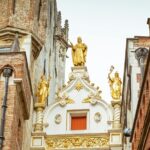
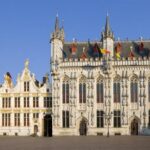
Next up is Burg Square, followed by a short stop at Bruges City Hall for photos and a brief visit. These are the kinds of stops that reward attention to details like facades and building placement.
At Burg Square, the atmosphere tends to feel more “official” than Market Square. City Hall-type buildings are where power and identity get stamped into stone. You don’t need background knowledge to get something out of this segment because the guide keeps linking the stories to what you’re seeing in front of you.
If you’re sensitive to crowds, go easy on expectations here. This is central Bruges during active sightseeing hours, so photos can involve a bit of timing. Still, the short visit windows help keep the group moving without endless waiting.
Huidenvettersplein and Bonifacius Bridge: canals and angles for real photos
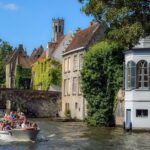
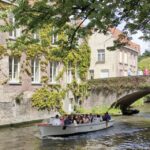
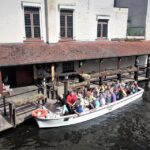
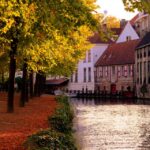
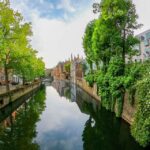
A big part of why people love Bruges is how water shapes everything. This tour leans into that through several quick photo-and-look stops, including Huidenvettersplein and Bonifacius Bridge.
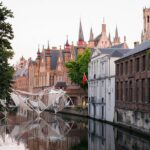
Bonifacius Bridge is one of those spots where the scene looks good even if you’re not trying. The guide’s role is to help you aim your photos and understand why that bridge view works—so you come away with images that feel like Bruges, not just generic canal pictures.
The practical tip I’d give you: dress for standing still. You’ll be pausing frequently for photos across the route, and a lot of those moments happen outdoors. Comfortable shoes matter more here than fancy clothes.
You can also read our reviews of more historical tours in Bruges
Gruuthusemuseum and Church of Our Lady: art and architecture as story props
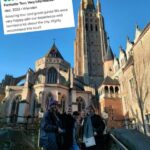
From bridges and small streets, the tour moves into more focused landmark territory. You’ll have a stop at Gruuthusemuseum for photo time, a visit, and a short guided component. Then the route includes Church of Our Lady, Bruges with photo stop, visit, and guided sightseeing.
These stops work well for two types of people:
- You love architecture and want someone to explain what you’re seeing without turning it into a lecture.
- You prefer the “walk-and-learn” style, where churches and museums are part of the route story, not separate side quests.
Now, the special part for this tour is how it connects religious and cultural details to legends. The highlight list points to the Basilica of Holy Blood question and to the “spot 53 Virgin Marys” challenge on building facades. While you’re moving through church-area streets, you’ll get the idea: in Bruges, decoration isn’t just decoration. It’s part of how people communicated identity and belief on public walls.
Sint-Janshospitaal Museum and the medieval street rhythm
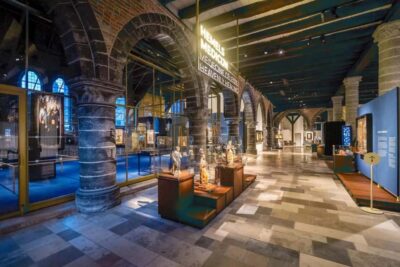
You’ll also stop at Sint-Janshospitaal Museum for photo stop, visit, and a guided component, then continue through streets like Stoofstraat and Walplein Square. These shorter segments are useful because they keep the tour grounded in the feel of everyday medieval city movement.
A museum stop in the middle of a walking tour can be intimidating if you only have one afternoon. Here, the timing is controlled—short enough that you won’t feel trapped, but structured enough that you still leave knowing what to look for next time you return.
Street names like Stoofstraat and the quick squares along the way are more than “filler.” They help you understand how Bruges sections connect, and they give the guide a chance to connect the grand landmarks to the smaller spaces where people actually lived and walked.
The storyline thread: Holy Blood, Black Death, and the ghost town turn
The tour has a clear pattern behind the stops: you’re handed a question, and then you’re guided to the visual or historical reason it matters. That’s why the big highlight items feel integrated rather than random trivia.
For example, the tour tackles the Basilica of Holy Blood claim directly—Is it the real Blood of Jesus Christ?—and it also asks why Bruges’ commercial trade power seemed to vanish into a ghost-town mood for one day. Those kinds of questions make the city’s historical shifts feel understandable, not just like dates on a plaque.
Then comes the Black Death angle: why Bruges’ death rate was among the lowest. You get the reason-story, not just the headline, and that can change how you view everything else around you. You start to notice that Bruges didn’t just survive history—it grew through it and carried visible traces forward.
Even the lightest highlight—why there are no cats in Bruges—fits the same theme. It’s a reminder that old cities create rules, habits, and legends out of human experience, not out of marketing.
Halve Maan brewery: beer break and a clean finish at the same meeting point
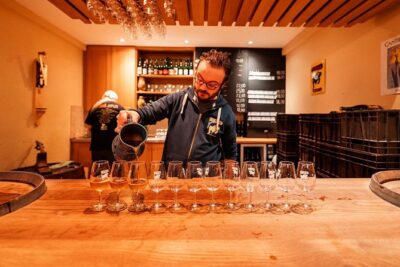
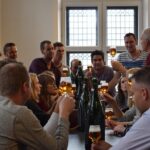
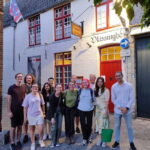
The tour’s last major stop is Halve Maan brewery, where you’ll get a break time and a guided visit. You also get a beer moment as part of this stop, and then the activity finishes back at Huisbrouwerij De Halve Maan.
This ending works because it gives you something sensory after all the stone-and-story time. You’ve been looking at landmarks, facades, and street shapes; now you can slow down a little and take in a modern Bruges tradition that still feels local.
One practical consideration: the tour lists food and drinks as not included. Since the itinerary explicitly includes a beer moment, I’d plan to treat that as the included tasting-style part, but keep in mind you might still want to buy anything extra yourself.
Price and value: what $3.41 gets you (and what you should expect)
The listed price is $3.41 per person, and even if you treat that as a placeholder or promo-style rate, the value question still matters. This is a guided, English-language walking tour that runs about 2 hours, covers 15+ city-center landmarks, and includes a brewery stop with a guided component.
So what you’re really paying for is time saved and clarity gained. Instead of wandering for hours and hoping you hit the “right” viewpoints, you get a planned route where each stop has a purpose. You also get an English-speaking guide and a small-group format that keeps things personal.
The only “cost” is how concentrated it is. This is not a slow, stop-everywhere-for-everything walking day. It’s a compact route that gives you a Bruges overview quickly, then leaves you free to return on your own when something catches your eye.
Small-group comfort: 1 to 6 people and why it changes the tour
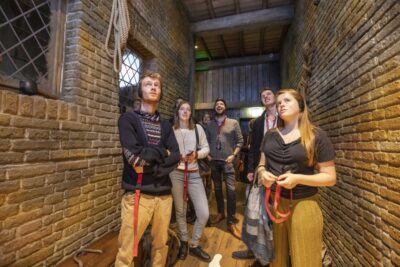
The tour currently accepts small groups of 1 to 6 people, and the bigger takeaway is that this format usually gives you more attention. You’re not competing for a guide’s time, and you can ask questions when something doesn’t make sense.
That matters especially for stories-heavy walking tours. The guide needs a bit of back-and-forth to explain legends and connect them to the facades and squares you’re seeing. With fewer people, the route stays lively instead of turning into a lecture from the front.
Who this Bruges walking tour is best for
You’ll be happiest with this tour if you want a guided introduction to Bruges center and you like stories that relate directly to landmarks. It’s a good fit if:
- you want photo opportunities built into the route
- you like history when it’s explained in plain language
- you want one beer-included-style moment at the end
It may be less ideal if you prefer long museum time or if you want to linger at each church until you’ve fully soaked it up. Think of this as a guided map and a guided hook—not the one-stop final word on Bruges.
Should you book Unforgettable Bruges: Sightseeings, History and Tasting?
If you’re planning a first Bruges day and want to see a lot without getting lost, this is a strong choice. You get a tight route through key squares, bridges, churches, and museums, plus a brewery finish that feels like real local culture rather than an afterthought.
Also, the guide experience is a major part of the appeal. Artur’s storytelling is described as charismatic and entertaining, with the right mix of history and charm. In a 2-hour tour, that kind of guide energy makes the difference between seeing Bruges and understanding it.
I’d only hesitate if you know you want to spend extended time inside sites, or if you already plan to cover these exact landmarks independently. For everyone else, it’s a practical way to get your bearings, learn the city’s biggest legends, and leave with photos you actually love.
FAQ
How long is the walking tour?
The tour lasts about 2 hours.
Where does the tour start and where does it end?
It starts near the Belfort Tower on Market Square, and it ends back at the meeting point.
What language is the guide?
The guide offers the tour in English.
Is the tour wheelchair accessible?
Yes, it is listed as wheelchair accessible.
Is food included?
No. Food and drinks are marked as not included.
How big are the groups?
The tour accepts small groups of 1 to 6 people. If you have a larger group, you’re advised to look for a private tour option.
What’s the cancellation window?
You can cancel up to 24 hours in advance for a full refund.