REVIEW · BRUGES
Historical Walking Tour: Legends of Bruges
Book on Viator →Operated by Legends of Bruges Free & Private Tours · Bookable on Viator
Bruges tells stories best on foot. This 2-hour 15-minute walk strings together the Markt, Belfort, beguinage, church, and more, with an English guide turning medieval power and daily life into scenes you can actually see.
I love how time-efficient it is for a first visit. I also like that the tour stops are ticket-free to enter, so you keep your budget for whatever you want to add later.
One consideration: the experience requires good weather, so you’ll want a flexible day or a backup plan.
In This Review
- Key highlights to know before you go
- A fast way to get your bearings in medieval Bruges
- Price and timing: $3.62 for a 2h 15m overview
- Walking stop by stop: from the Markt to Burg
- Stop 1: The Markt and Bruges as a medieval trading power
- Stop 2: Belfort and the medieval job of a bell tower
- Stop 3: Gruuthusemuseum and beer-trade power in a city palace
- Stop 4: Sint-Janshospitaal and medieval healthcare with real staying power
- Stop 5: De Princely Beguinage Ten Wijngaarde and 800+ years of community life
- Stop 6: De Halve Maan Brewery and why Bruges got the nickname Fools of Bruges
- Stop 7: Minnewater Lake and swans, love, and conflict with Maximilian
- Stop 8: Onze-Lieve-Vrouwekerk, Michelangelo, and Burgundy tombs
- Stop 9: Groeningemuseum garden and Flemish masterpieces as a preview
- Stop 10: Huidenvettersplein and the tanner’s square smell-and-work reality
- Stop 11: Burg Square and the political heart of Bruges
- Guides that turn facts into stories you can repeat
- What to do before and after the tour
- Is it good value at $3.62?
- Should you book Legends of Bruges?
- FAQ
- How long is the Legends of Bruges walking tour?
- What are the start and end points of the tour?
- Is the tour offered in English?
- Do I need to pay admission fees at the stops?
- What ticket format do I receive?
- What is the maximum group size?
- What is the cancellation policy?
Key highlights to know before you go
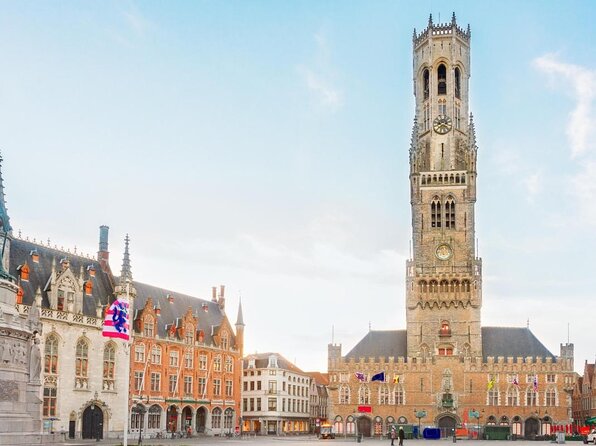
- A first-visit route that hits the big names: Markt, Belfort, Onze-Lieve-Vrouwekerk, Burg and more in one outing.
- Free entry at each main stop: the tour’s listed admissions are ticket-free.
- Short stops, smart pacing: most stops run about 5–15 minutes, which helps you keep momentum.
- Small group cap: up to 24 people, so questions tend to get answered.
- English guide, mobile ticket: easy to use without printouts.
- Stories with local flavor: guides like Louis, Victoria, Thomas, Erik, and Martin are repeatedly praised for making the city feel personal.
A fast way to get your bearings in medieval Bruges
If you’re short on time, Bruges can feel like you’re wandering from one postcard to the next. This tour gives you a path through the most important places, but it also gives you the why behind them. Instead of just pointing at buildings, your guide connects them to medieval trade, religion, civic power, and everyday routines.
The route is also a big help for orientation. You finish where the city’s political story begins: Burg Square. After the walk, it’s much easier to decide what to revisit, what to skip, and where to grab a drink without feeling lost.
You can also read our reviews of more walking tours in Bruges

Price and timing: $3.62 for a 2h 15m overview
At $3.62 per person for about 2 hours 15 minutes, you’re not paying for museum time or special attractions bundled into the price. You’re paying for guide time, structure, and the convenience of seeing a lot in one go.
Here’s why that can be excellent value:
- Every listed stop has free admission, so your money isn’t swallowed by entry fees.
- The route is designed for people who want a guided, coherent overview rather than a self-guided sprint.
- The group size is capped at 24, which keeps the experience from turning into a moving crowd.
One practical timing note: it’s often booked around 17 days in advance, so if you’re traveling during peak dates, don’t wait until the last minute.
Walking stop by stop: from the Markt to Burg
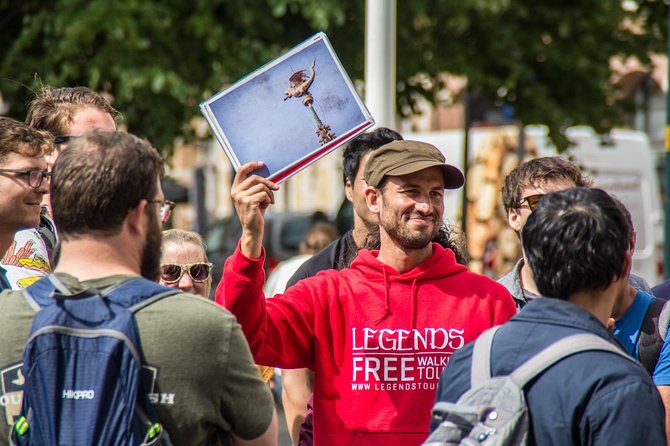
This is a story-driven route with quick stops. Expect frequent photo moments, occasional short interior look-backs, and a guide who uses facts plus city legends to connect the dots.
Stop 1: The Markt and Bruges as a medieval trading power
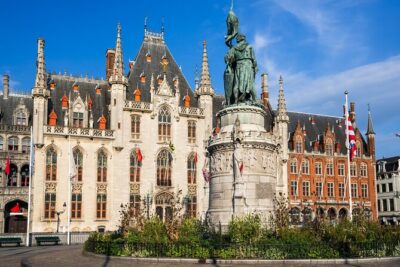
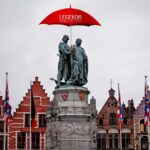
You start at The Markt, where the guide sets the stage for Bruges as a medieval trading hub. You’ll also hear about the city’s tense relationship with the French king—exactly the kind of conflict that helps explain why Bruges looks the way it does today: wealth, influence, and competition left fingerprints on the city.
Why it matters for you: this opening gives you context before you move into the civic buildings and “status” spaces later on.
Stop 2: Belfort and the medieval job of a bell tower
Next comes Belfort, with a focus on the halls behind the bell tower and the tower’s role in the Middle Ages. It’s one of those places where architecture is basically a job description: civic identity, authority, and visibility.
If you’re hoping for a tower-climb experience, do a quick check before you go. Some people plan for separate tower access elsewhere, and one review specifically warned to buy tower tickets in the morning.
You can also read our reviews of more historical tours in Bruges

Stop 3: Gruuthusemuseum and beer-trade power in a city palace
At Gruuthusemuseum, you’ll visit a wealthy family palace and hear about a monopoly tied to the beer trade. That’s not the usual “tourist version” of Bruges. It’s a reminder that money, recipes, and trade networks were all part of how power worked.
What to watch for: even if your time inside is brief, you’ll come away with a clearer sense of why Bruges could afford to build on such a grand scale.
Stop 4: Sint-Janshospitaal and medieval healthcare with real staying power
Sint-Janshospitaal is a standout stop because it links architecture to social history. You’ll see the hospital of St John, described as one of the oldest still existing hospitals in the world and a cornerstone of medieval society.
This stop works well if you like human stories. It’s not just “fancy building.” It’s about how communities tried to care for people, long before modern medicine.
Stop 5: De Princely Beguinage Ten Wijngaarde and 800+ years of community life
Then you step into the Beguinage Ten Wijngaarde—a beguinage community that’s described as the biggest of its kind in the world, with women living together for over 800 years. The guide’s storytelling here matters because you’re not just looking at structures; you’re hearing how this unusual community functioned for centuries.
It’s a good reset point in the tour too. The pace stays manageable, and the setting invites you to slow down for a minute.
Stop 6: De Halve Maan Brewery and why Bruges got the nickname Fools of Bruges
At De Halve Maan Brewery, the tour focuses on how Bruges people got the nickname Fools of Bruges—and you’ll also learn about a beer pipeline that flows beneath the city.
This is one of the stops that feels distinctly “Bruges,” because it ties a playful nickname to real infrastructure. If you enjoy the mix of legend and practical details, this part is easy to remember later.
Stop 7: Minnewater Lake and swans, love, and conflict with Maximilian
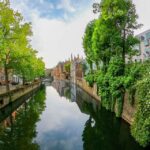
At Minnewater Lake, you’ll hear the story of why there are swans on the canals and how the city got into a conflict with Emperor Maximilian of Austria. It sounds like two separate topics, but the guide connects them through the city’s long-running history and identity.
One thing I like about this stop: it’s visually calming without breaking the flow of the bigger medieval story.
Stop 8: Onze-Lieve-Vrouwekerk, Michelangelo, and Burgundy tombs
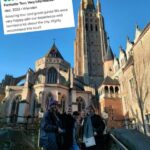
Now you hit Onze-Lieve-Vrouwekerk, an iconic church with the note that it has the 2nd tallest brick tower in the world. Inside, it also houses a statue by Michelangelo and the tombs of the last Dukes of Burgundy.
Even if you’re not a die-hard art fan, this stop gives you two anchors: the building’s scale and the names linked to it. Bruges was a serious place with serious patrons.
Stop 9: Groeningemuseum garden and Flemish masterpieces as a preview
At Groeningemuseum, you’ll be in the garden area for a short stop, described as where works of big Flemish masters are displayed. Since time here is brief, think of it as a taste—not a full art visit.
If you love paintings, you’ll probably want to plan extra museum time later. This tour mainly teaches you what to notice so you can go deeper independently.
Stop 10: Huidenvettersplein and the tanner’s square smell-and-work reality
Then you arrive at Huidenvettersplein, the old Tanner’s square where hides were processed into leather. The guide explains the trade involved, and yes, the historical reality of tanning came with the kind of working conditions people can’t ignore.
This stop gives the tour balance. After palaces, churches, and civic buildings, you see the labor that supported the city’s wealth.
Stop 11: Burg Square and the political heart of Bruges
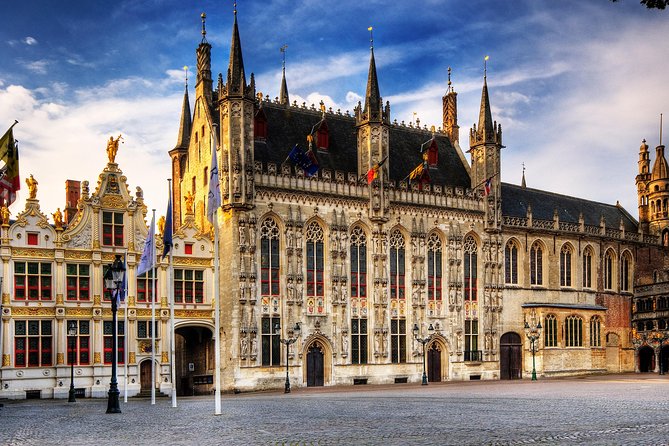
The tour ends at Burg Square, described as the political heart and birthplace of Bruges. You’ll pass by the old Fishmarket along the way, but the final focus is civic power: the places where decisions were made, not just where people worshiped or traded.
I like ending here because it helps your brain connect everything you learned. The city stops feeling like a collection of highlights and starts feeling like a functioning system.
Guides that turn facts into stories you can repeat
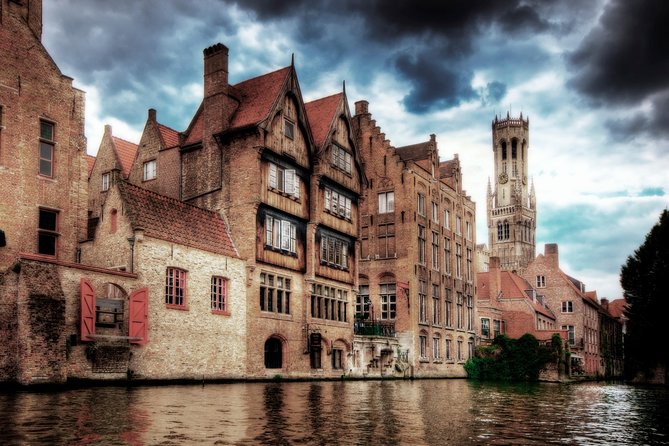
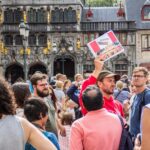
The best part of this kind of walking tour is how the guide handles the in-between moments: what you see, what you don’t notice, and what the building or square meant to people at the time.
In the feedback I saw, certain guides are repeatedly praised for being entertaining and engaging—people named Louis, Wilium, Victoria, Thomas, Erik, Sander, Martin, Nicholas, Emiel, Patrick, and Celine are all mentioned as standouts. Common threads show up too:
- Humor that keeps the walk moving even when you’re tired.
- Clear explanations that help you remember why a site matters.
- Strong use of storytelling techniques, including visual aids on some tours.
- A willingness to answer questions, especially when the group is small.
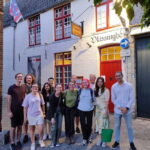
That small-group effect is worth noting. Even though the cap is 24, some runs are much smaller. When it’s only a few people, questions don’t feel like a line you’re interrupting.
One downside to keep in mind: there can be rare issues with a guide not showing up. If that happens on your day, give yourself a little time, stay near the marked meeting point, and use the confirmation information you received at booking so you can correct the problem fast.
What to do before and after the tour
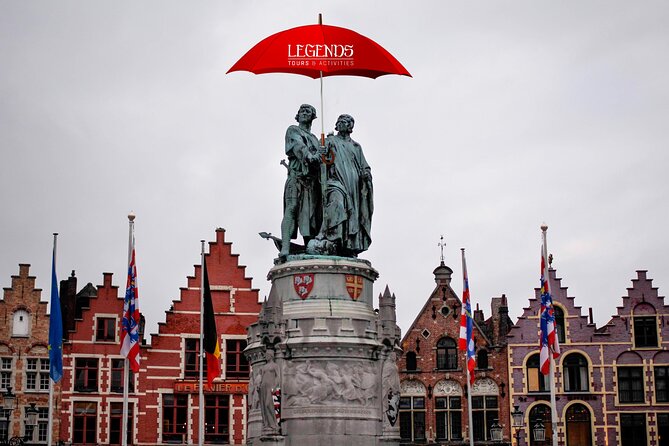
This is the kind of outing I like to schedule early. You’ll walk away with names, locations, and context, which makes the rest of your Bruges day far easier to plan. Afterward, you can pick which sites deserve your time—church interiors, art stops, or simply wandering with purpose.
A few practical tips based on the tour’s structure:
- Wear shoes you can walk in comfortably. The stops are short, but the total time is still over two hours.
- Bring layers. The tour is weather-dependent, so you’ll want to adjust if conditions change.
- If you’re interested in seeing more at the Belfort area, check what’s included versus what needs separate access. One review specifically advised buying tower tickets in the morning.
Also, if your guide adds extras like a chocolate stop, treat it as a fun bonus. In the feedback you provided, some guides included complimentary chocolates or even a free truffle.
Is it good value at $3.62?
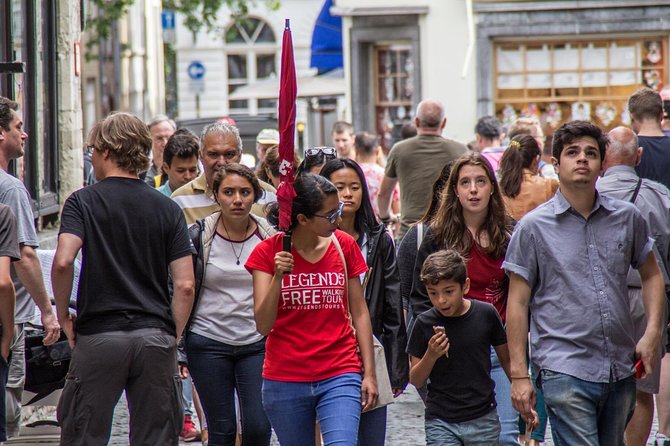
For a price this low, the value comes from structure and scope. You get:
- A route that hits the most recognizable Bruges highlights.
- All fees and taxes included.
- Free admission at the listed stops.
- An English guide for the full walk, not just a quick meet-and-greet.
Just set your expectations correctly. This isn’t a museum marathon, and some stops are intentionally quick (think about the garden stop at Groeningemuseum). If what you want is long, slow, cultural analysis, you may want to pair this tour with additional independent time.
Price-wise, the biggest “value risk” is expectations. If you expect a deep dive into one theme—like art, architecture, or beer culture—you might feel it’s more of a guided overview. One piece of feedback even suggested wanting more social and cultural history, which is a fair preference if you love that angle.
Should you book Legends of Bruges?
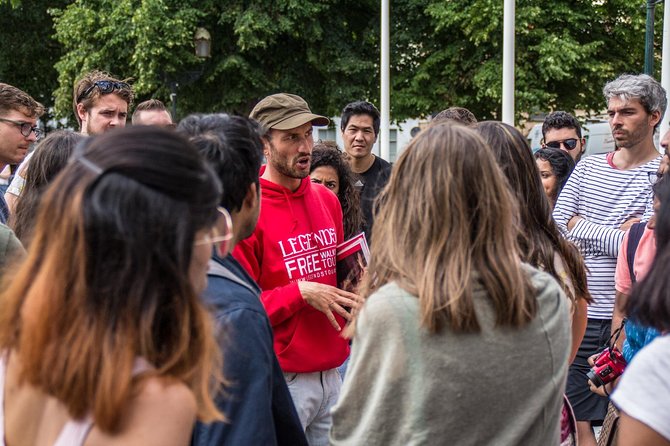
Book it if:
- You’re doing Bruges for the first time and want the key landmarks in one outing.
- You’re time-pressed and want context fast.
- You like guides who tell stories and keep the walk engaging.
- You want a budget-friendly way to get started and then choose what to do next.
Consider passing (or adding something else) if:
- You prefer long stops with deeper discussion at each site. The pacing here is designed to cover a lot.
- You’re only interested in one narrow theme (like paintings only). This tour spreads across civic power, religion, trade, and daily work.
If you want a smart first day anchor in Bruges, this one is a strong bet—especially because it combines big-name stops with approachable timing.
FAQ

How long is the Legends of Bruges walking tour?
It runs for about 2 hours 15 minutes.
What are the start and end points of the tour?
The tour starts at Pieter de Coninck en Jan BreydelMarkt, 8000 Brugge, Belgium and ends at De Burg, Burg 15, 8000 Brugge, Belgium.
Is the tour offered in English?
Yes, it’s offered in English.
Do I need to pay admission fees at the stops?
The tour lists admission as free at the stops included on the route.
What ticket format do I receive?
You get a mobile ticket.
What is the maximum group size?
The tour has a maximum of 24 travelers.
What is the cancellation policy?
You can cancel for a full refund if you cancel at least 24 hours before the experience starts. If you cancel within 24 hours, the amount paid won’t be refunded. If it’s canceled due to poor weather, you’ll be offered a different date or a full refund.