REVIEW · BRUGES
THE Storytelling Tour of Bruges | First Day Must | History & Tips
Book on Viator →Operated by Ambassadors Tours & Activities · Bookable on Viator
Bruges can feel like a postcard you can walk into, and this tour gives you a route that actually makes the city make sense. I like how the walk is paced like a story, not a checklist, and I also like the small-group format that keeps the conversation easy with an English-speaking local storyteller. You also get fast access to the big visual hits and the lesser-known context behind them, from the Belfry’s power to why Rozenhoedkaai became the iconic view. A good consideration: it’s an orientation-style overview—great for first time in Bruges, but not meant to replace museums if you want a super detailed deep architecture crawl.
Two more strengths that stand out: you’ll leave with practical local recommendations (including discounts at nearby businesses) plus a clear idea of what to revisit on your own—like the beer attraction area and where to grab something sweet. If you’re booking because you want the absolute biggest tour value at the lowest cost, keep in mind that the paid tour fee is only part of the cost; tips are welcome and expected at the end, with many people choosing around €10 to $50.
In This Review
- Key points to know before you go
- Price and what you really pay for in Bruges
- Where to meet: Markt Square and why yellow umbrellas matter
- How the route is paced (2–3 hours) and who it fits best
- Stop 1: Belfort (Belfry) and why the Middle Ages still feel close
- Stop 2: The Markt, the trading heart of Bruges
- Beer Experience walkthrough: what to look for on your own
- Stop 3: Rozenhoedkaai (Quai du Rosaire) and the postcard view logic
- Stop 4: Boniface Bridge (Bonifaciusbrug), the romantic curve with lesser-known roots
- Stop 5: Site Oud Sint-Jan, one of the oldest hospitals in the world
- Stop 6: Burg Square, Bruges politics in stone
- Pralines at Olivier: where the tour turns sweet
- Stop 7: Huidenvettersplein and the shift from rough to lovely
- Practical tips for walking this route in real life
- What makes the storytelling style worth your time
- Quick value check: should you book this if you’re tight on time?
- FAQ
- FAQ
- How long is the Bruges storytelling walk?
- Where does the tour start?
- What language is the tour offered in?
- Are tickets needed for the stops?
- What are the main sights the tour covers?
- How do I recognize the guide?
- Is tipping required?
- How big are the groups?
- Does the tour run in bad weather?
- Can I join if I use a service animal or need public transport access?
- Should you book the storytelling tour of Bruges?
Key points to know before you go
- Small groups (max 6 per booking) make it feel like a guided stroll, not a crowd herding exercise.
- Free admission at several stops keeps the “what do I pay now?” friction low.
- Belfort, Markt, Rozenhoedkaai, Burg Square cover the sights you’ll want photos of, with story context.
- Cobblestones plus a bridge with a few steps means you’ll enjoy it more with sturdy shoes.
- You’ll get orientation tips and discount suggestions to plan the rest of your Bruges day smarter.
- Storytellers can include named guides like Pascal, Nick, Thijs, Alasdair, Arthur, and Gosha based on the guide line-up people have experienced.
Price and what you really pay for in Bruges
On paper, the price looks extremely low at $3.62 per person. In reality, that’s not the whole financial story. What you’re paying for up front is the structured walk plus the handling cost of booking online, while the tour itself is built around an English-speaking professional guide and a story-driven route.
Plan to budget for the ending part: the tour expects gratuities. The format is pay-what-you-want at the end, and most people choose roughly €10 to $50 per person. That means your final value depends on two things:
- Whether you enjoy storytelling as a way to learn.
- Whether the guide’s pacing and humor match what you like.
If you do, this can be one of the most cost-effective ways to get oriented in Bruges, because you’re also walking to multiple major landmarks rather than only hearing facts from one place.
You can also read our reviews of more historical tours in Bruges

Where to meet: Markt Square and why yellow umbrellas matter
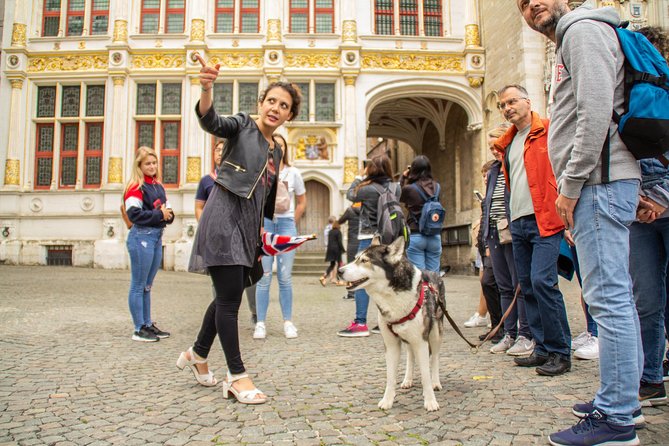
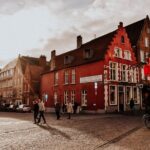
Your start is Markt 8000, in the Markt area of Bruges. This is smart because Markt is also the heart of the city’s public life—so you’re not wandering in circles trying to “arrive first.”
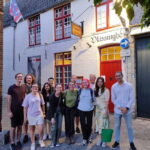
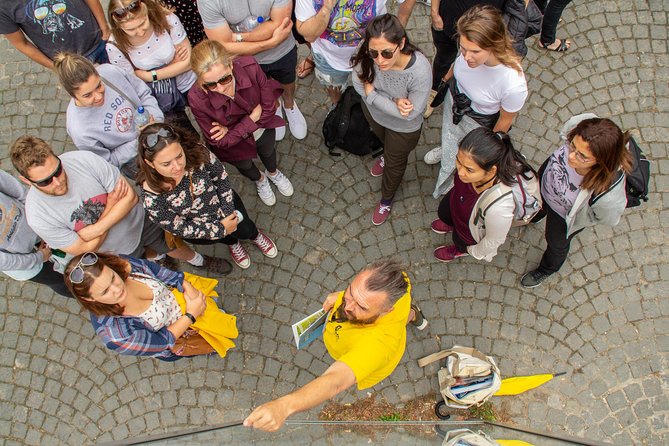
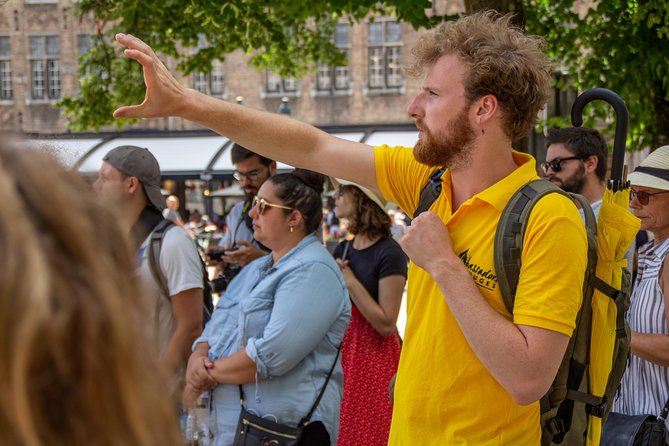
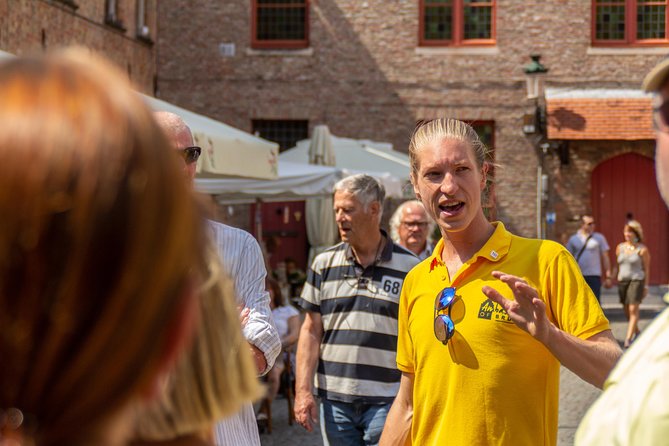
Most guided runs meet in front of the Belfry Tower and you’ll recognize the guide by a distinctive yellow umbrella a few minutes before the start. Build in a little buffer time. Cobblestones can slow your pace, and Bruges weather can change quickly.
Also, the tour ends in a different location than where it starts. That’s normal for a walking orientation, and it’s usually helpful because it reduces backtracking. If you like to plan transport, ask your guide where you’ll finish so you can time your next stop (museum, lunch, or your next walking loop).
How the route is paced (2–3 hours) and who it fits best
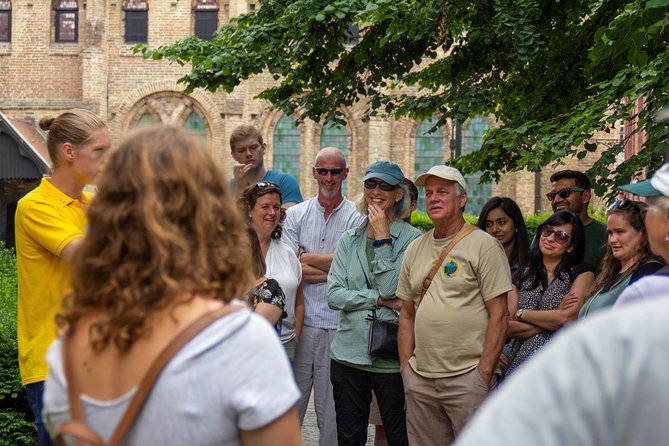
This walk is set for about 2 to 3 hours, and it’s designed as a sequence of short, meaningful stops. That matters in Bruges because:
- You’re moving between landmarks that are close enough to walk.
- Each stop is short, so you keep momentum.
- You can still enjoy the city afterward rather than feeling “locked in” for a half-day.
It also works well for a wide age range. People have enjoyed it from teens through adults, which fits the style: light drama, quick context, and enough time to ask questions.
A downside to consider: if you’re hoping for a long, stop-by-stop history lecture of every building detail, this won’t feel like that. Some people prefer a slower, more architectural tour. This one is more about the city’s story thread.
Stop 1: Belfort (Belfry) and why the Middle Ages still feel close
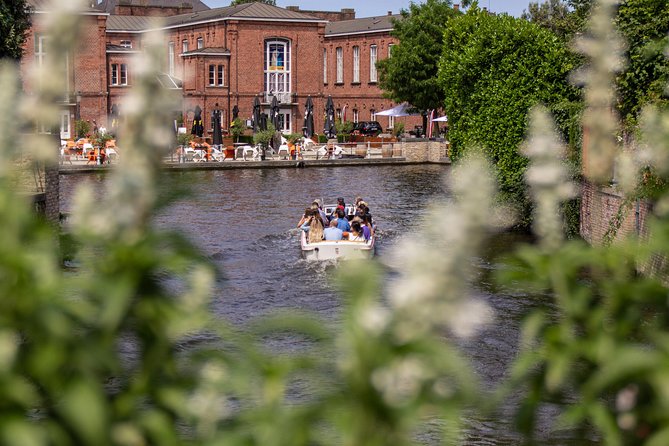
The tour begins with Belfort, the icon of Bruges and a symbol of its power in the Middle Ages. The stop is about 10 minutes, and the admission there is listed as free.
What you should pay attention to here:
- How the Belfry represents civic authority, not just beauty.
- Why it mattered enough for Bruges to build such a visible statement.
- Any details your guide points out so you’re not just seeing a tower, but understanding its job.
If you’re the type who loves learning why something looks the way it does, this opening is a strong start. It also gives you a mental anchor before you move into squares and viewpoints.
Stop 2: The Markt, the trading heart of Bruges
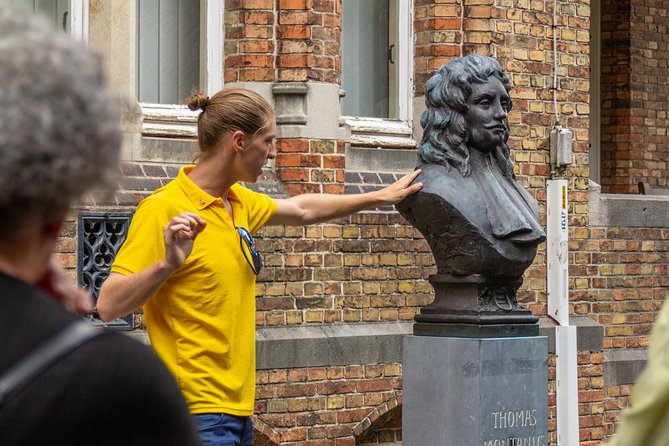
Next up is The Markt, the medieval trading center. This stop runs about 15 minutes, again with free admission.
This is one of the best parts of the route because Markt is more than a pretty square. It’s where you learn the “how” of daily life in a trade city:
- Think in terms of money, goods, and movement.
- Notice how major buildings face the square and why that matters.
- Use your guide’s cues to connect the city’s layout with its economy.
If you’re visiting for a day, this is the kind of stop that makes the rest of Bruges click. You’ll start recognizing what you’re looking at.


Beer Experience walkthrough: what to look for on your own
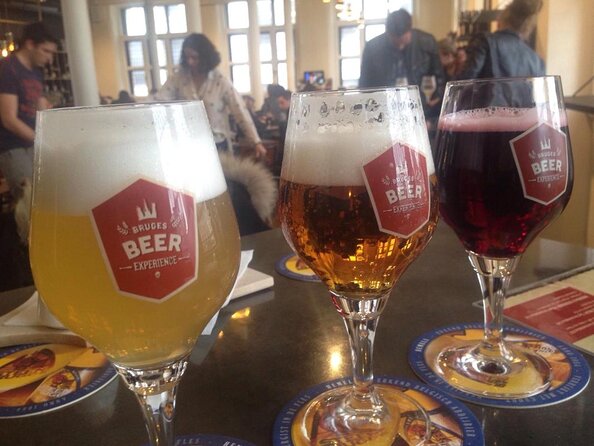
Along the route, you’ll walk by the Bruges Beer Experience (also called Beer Heaven), and your guide will point out different parts to visit and why you should do so.
Even if you’re not going inside today, this adds value because it turns a random storefront into a planned decision. Bruges is full of attractions; your guide helps you pick which elements are worth your time.
If beer isn’t your thing, you can treat this as a “mental map” stop. You’ll still get useful context for what to prioritize later.
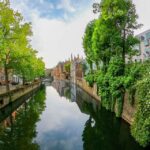
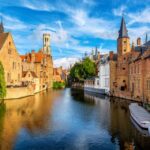
Stop 3: Rozenhoedkaai (Quai du Rosaire) and the postcard view logic
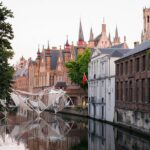
Then comes Rozenhoedkaai, also known as Quai du Rosaire. This is the stop where your camera will suddenly make sense.
It’s short—about 5 minutes—and the whole point is why this became the famous postcard angle. Your storyteller shows you the view and explains what makes it iconic: the composition, the water, and the way the city reads from this spot.
Practical note: even in a short stop, plan for a moment of patience. People gather here for photos because it’s genuinely photogenic. If it’s busy, you’ll still get the “where to stand” instruction that helps you get a good shot without wandering.
Stop 4: Boniface Bridge (Bonifaciusbrug), the romantic curve with lesser-known roots
Boniface Bridge is described as the smallest, most romantic bridge in the city. It’s about 10 minutes, with free admission.
This is a classic Bruges move: the tour finds the visually charming spot and then gives you the story behind it—what it was for, how it’s tied to the city, and why it’s remembered.
The bridge is also an easy “break” in the walking rhythm. If your feet are starting to feel it, this kind of short, scenic stop helps you recharge without losing the tour flow.
Stop 5: Site Oud Sint-Jan, one of the oldest hospitals in the world
The stop at Oud Sint-Jan takes you to one of the oldest hospitals in the world, with about 10 minutes here and free admission.
This is a great counterbalance to the squares and views. Bruges isn’t only medieval wealth and pretty canal edges—it also has long threads of care, institutions, and everyday human needs.
What I’d listen for from your guide:
- How old hospitals fit into a medieval city.
- What the site shows about changing life over centuries.
- Any details that help you imagine the site beyond what’s visible today.
A note for your expectations: this stop may feel more reflective than dramatic. If you want everything to be purely photogenic, you might notice it. If you like meaning behind places, you’ll enjoy it.
Stop 6: Burg Square, Bruges politics in stone
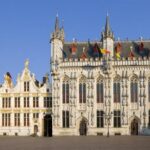
Burg Square is where you shift into political heart mode. It’s about 10 minutes, with free admission, and it’s described as having over a thousand years of history.
This is the kind of stop that’s easy to miss if you’re walking without context. Your guide helps you read the architecture like a timeline:
- Think civic power, not just a nice street scene.
- Notice how buildings around the square signal authority.
- Let the stories tie what you see today to what existed long ago.
If Bruges is your first stop in Belgium’s north, this helps you understand why cities there developed strong civic identities. Burg Square gives you that idea fast.
Pralines at Olivier: where the tour turns sweet
As you move through the center area, you’ll hit a stop connected to Olivier pralines, described as the perfect pralines made by the seller’s dad and brother.
This isn’t just a food mention. It’s a practical “do this now” moment. If you’ve been walking, you’re likely ready to snack, and a recognized local sweets stop can also anchor the tour in a real Bruges experience instead of only facts.
If you’re watching your sugar intake, you can treat it like a quick look and then decide. But if you like pralines, this is the kind of pay-off that makes the tour feel worth it.
Stop 7: Huidenvettersplein and the shift from rough to lovely
Next is Huidenvettersplein, once described as the worst square and now a much nicer place. It’s about 5 minutes, free admission.
Short stops like this matter because they teach you that cities evolve. Bruges isn’t frozen in time; it’s been reshaped by people, needs, and changing views of public space.
This is also a good place to look around after your guide explains the story. You’ll notice the contrast between reputation and what it feels like today.
Practical tips for walking this route in real life
Bruges cobblestones are charming until they’re under your feet for an hour. This route also includes one small bridge with a few steps, so:
- Wear shoes you trust on uneven stone.
- Bring a light rain layer if the forecast looks mixed. One of the most common issues in Bruges is drizzle, and the tour requires good weather.
The tour is designed so most people can participate, and it allows service animals. It’s also near public transportation, so you can connect it to your wider day plan without making the whole day one long trek.
What makes the storytelling style worth your time
The standout theme in guide feedback is that the best parts aren’t only the stops—they’re how the guide makes the city feel alive. Named guides people have experienced include Pascal, Nick, Thijs, Alasdair, Arthur, and Gosha, and the common thread is storytelling that feels like it’s meant for real people, not textbooks.
You’ll usually notice that:
- The history is timed to where you’re standing.
- Humor and drama keep you alert.
- You get just enough context to make your own exploring easier after the tour.
If you enjoy learning by walking and talking, this style is a win. If you prefer silent museum-like study, you might find it too performative.
Quick value check: should you book this if you’re tight on time?
If you only have a morning or afternoon in Bruges, book it. This tour is built for orientation: major landmarks, photo-worthy angles, and short story stops that help you understand where to go next.
If you’re the type who wants to linger at one museum for a long time, this may feel short. You might pair it with a focused museum visit later.
If you already know Bruges well and just want photos, you could skip a tour and self-guide. But even then, the route’s mix of postcard views and specific context—like the Old Saint-Jan hospital stop—can still change how you see the city.
FAQ
FAQ
How long is the Bruges storytelling walk?
It lasts about 2 to 3 hours.
Where does the tour start?
You start at Markt 8000, 8000 Brugge, Belgium.
What language is the tour offered in?
The tour is offered in English.
Are tickets needed for the stops?
Admission tickets are listed as free for the stops noted in the route.
What are the main sights the tour covers?
The walk includes Belfort, the Markt, Rozenhoedkaai (Quai du Rosaire), Boniface Bridge, Site Oud Sint-Jan, Burg Square, and Huidenvettersplein. It also includes passing by the Beer Experience area and a praline stop connected to Olivier.
How do I recognize the guide?
The guide is identified by a yellow umbrella near the Belfry Tower area on Markt.
Is tipping required?
Tips are welcome and expected, and the payment is pay-what-you-want at the end. Many people choose around €10 to $50 per person.
How big are the groups?
A maximum of 6 people per group can be booked, and the activity has a maximum of 24 travelers overall.
Does the tour run in bad weather?
It requires good weather. If it’s canceled due to poor weather, you’ll be offered a different date or a full refund.
Can I join if I use a service animal or need public transport access?
Service animals are allowed, and it’s near public transportation. The tour also says most travelers can participate.
Should you book the storytelling tour of Bruges?
Yes—if you want an efficient first day in Bruges, this is a strong move. You’ll get a smart route that hits the biggest visuals (Belfry, Markt, Rozenhoedkaai, Burg Square) plus meaningful stops like Oud Sint-Jan, and you’ll leave with practical guidance for what to do next.
Skip it only if you’re planning to spend the day in deep, quiet study mode. This walk is about story, pacing, and orientation. If that matches your style, it’s one of the easiest ways to turn Bruges from pretty into understandable.