REVIEW · BRUGES
Historical Walking Tour: The Story of Bruges – by Legends
Book on GetYourGuide →Operated by Legends Experiences · Bookable on GetYourGuide
Step into medieval Bruges, then see it in 360°. This Legends Experiences tour uses a local guide, a story-first route, and 360° VR to help you connect the dots between today’s streets and the Middle Ages.
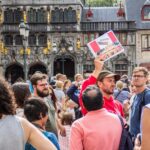
What I like most is the guide-led storytelling. People in the group (yes, even the kids) stay engaged because guides such as Mauricio and Victoria bring Bruges legends to life with humor and patience, and you get practical tips for what to do next in real life.
One thing to consider: it’s a tight 2-hour loop on old cobblestones, and some stops are quick. If you’re sensitive to walking on uneven ground, wear shoes with good grip and plan for a brisk pace.
In This Review
- Key highlights to know before you go
- Two Hours in Bruges: How the Tour Keeps the Stories Moving
- Start at Markt: The Red Umbrella Meet-Up Trick
- Belfry of Bruges: Power in Stone and the Stories Around It
- Gruuthusemuseum: Where Private Wealth Meets Public Life
- Sint-Janshospitaal Museum: Bruges Beyond the Postcard
- Beguinage and Lake of Love: Peace, Routine, and Romance
- Halve Maan Brewery and Stoofstraat: Smells, Stories, and Narrow Streets
- Church of Our Lady, Dijver, and Rozenhoedkaai: The Waterway Sequence
- Fish Market (Vismarkt) and De Burg: Finish With a Sense of Place
- VR 360° Visualizations: What It Adds (and What It Doesn’t)
- What’s Included, What’s Not, and How to Think About Value
- Practical Tips: Shoes, Pace, Languages, and Rain-Ready Planning
- Who This Tour Fits Best
- Should You Book The Story of Bruges Walking Tour?
Key highlights to know before you go
- 360° VR stops that help you visualize Bruges during the Middle Ages
- A legend-led route that mixes big landmarks with quieter corners
- Small-group feel (subgroups up to 6) that makes questions easier
- Short guided stops that keep the tour moving for a 2-hour overview
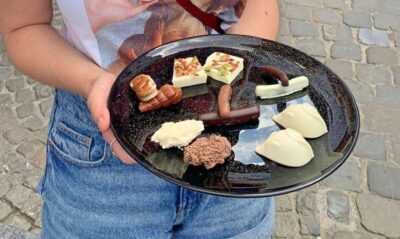
- Chocolate treat plus a booklet with coupons and discounts
- A guide style that doesn’t rely on headphones in many cases
Two Hours in Bruges: How the Tour Keeps the Stories Moving
Bruges is one of those cities where everything looks beautiful at first glance, but it can be hard to understand what you’re actually seeing. This tour solves that problem fast. You move through the medieval core in about 2 hours, with quick stops that balance sights, legends, and context without turning into a long lecture.
The pacing matters. Each stop is guided for roughly 10 minutes, so you get enough time to understand the place, then you’re off to the next one. I like this structure because it builds a mental map quickly. By the time you reach the finish point, you’re not just looking at buildings—you’re linking them to the way the city worked, what people feared, what people loved, and what made Bruges powerful.
You can also read our reviews of more walking tours in Bruges

Start at Markt: The Red Umbrella Meet-Up Trick
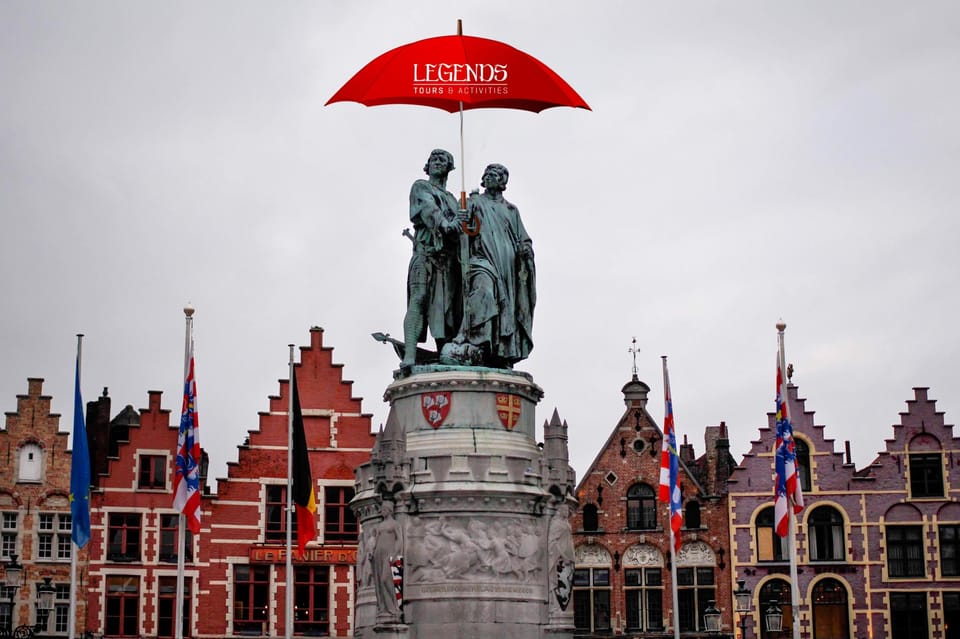
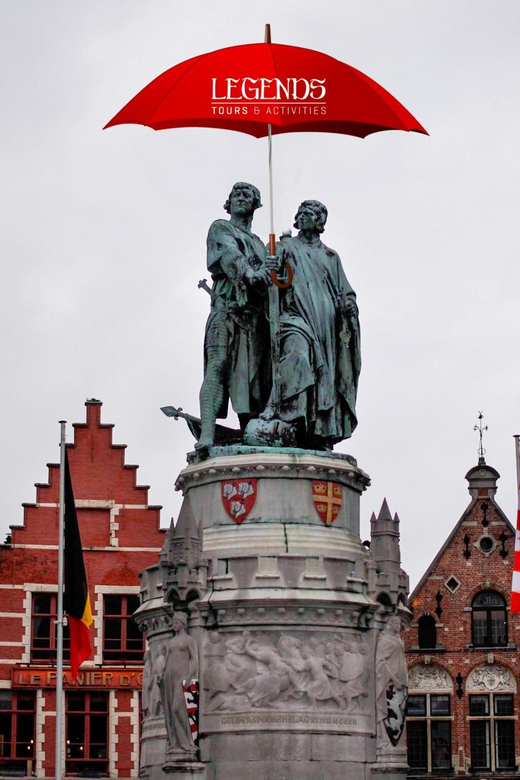
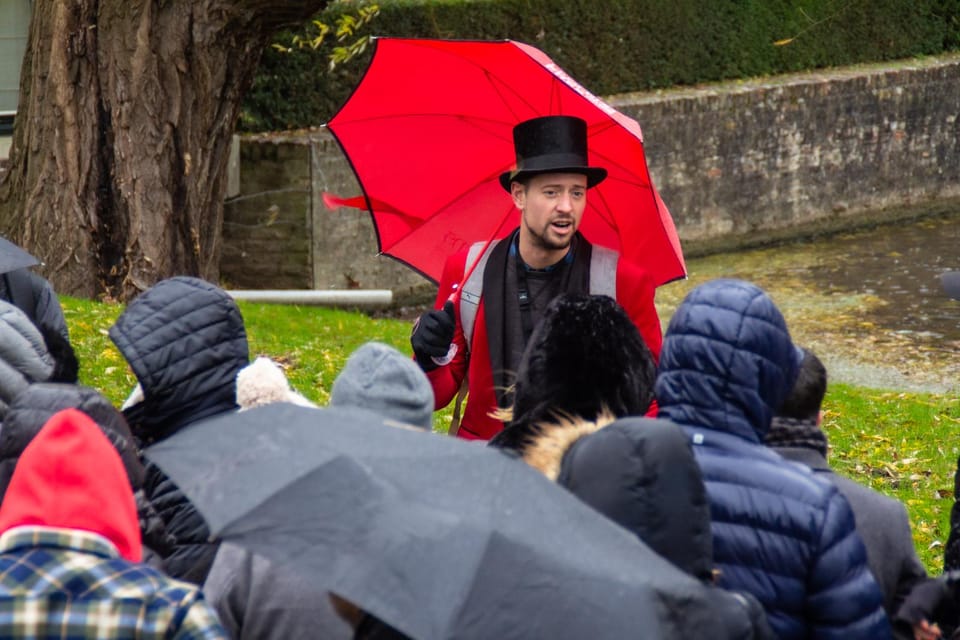
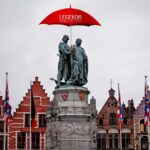
You begin at Markt in Bruges’ main square. The meeting point is the Grote Markt, where your guide waits by the statue in the middle of the square with a red umbrella.
This is a great start location for two reasons. First, it’s easy to find even if you arrive on foot from wherever you’re staying. Second, your guide can set the tone early—how Bruges got to its golden-era look, and what you should watch for as you walk.
One practical note: the statue area can have construction or changes around it. If the umbrella isn’t where you expect, don’t freeze. Re-check nearby in the square quickly so you can reconnect with the guide.
Belfry of Bruges: Power in Stone and the Stories Around It
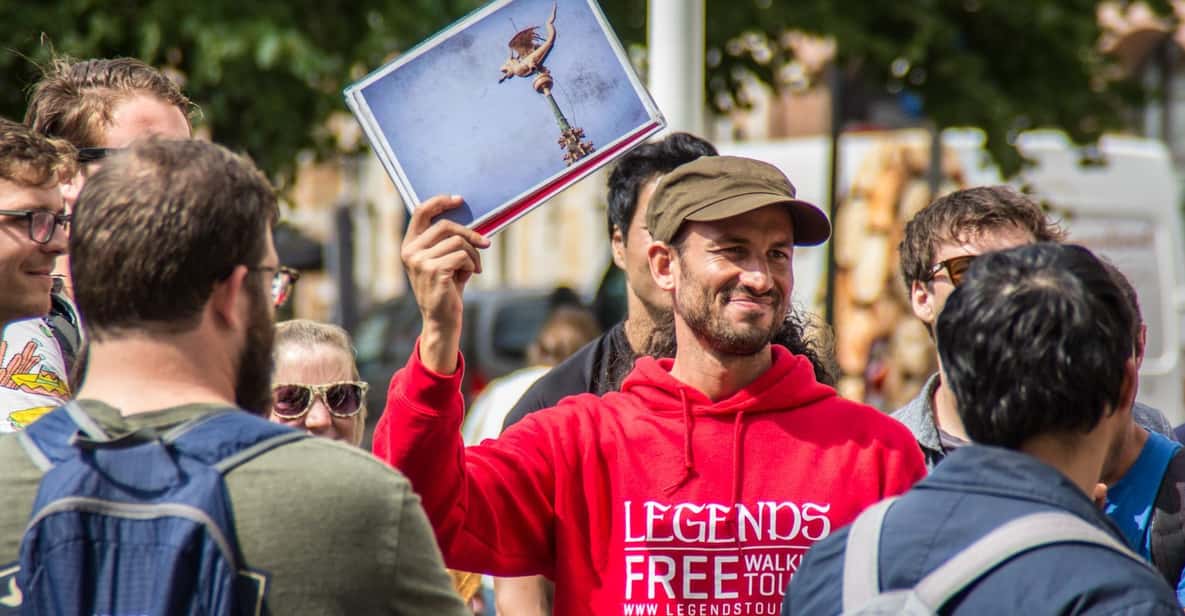
Your first major guided stop is the Belfry of Bruges. This is the kind of landmark that instantly signals civic pride—your guide uses that energy to explain how Bruges functioned in medieval times, not just how it looks now.
What’s valuable here is the way the guide turns the building into a character. Instead of only pointing out architecture, you get the city’s “why.” That matters because the belfry is tied to how a town organized itself and communicated status. You’ll also learn how to read the rest of the route more intelligently afterward.
If you love photos, this stop is a natural anchor. You get your first “wow” moment early, which makes the rest of the walk feel more connected.
Gruuthusemuseum: Where Private Wealth Meets Public Life
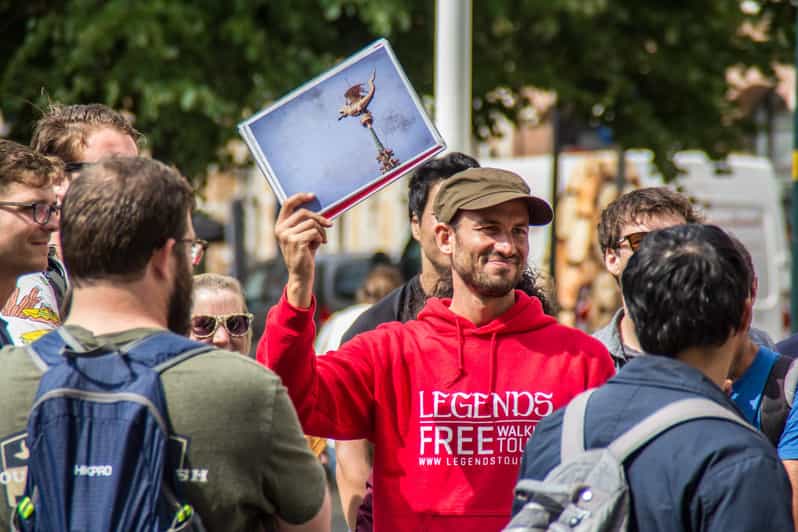
Next you head to the Gruuthusemuseum. Even if you don’t plan to go inside during this tour, the exterior context helps. Your guide uses the site to talk about the families and social position behind the city’s grandeur.
This stop tends to work well for anyone who asks, why did Bruges look so rich? The answer isn’t just trade in general. Your guide connects the dots to the people who had the means to build and preserve status.
One drawback: museum admission isn’t included. So if you want to step inside and go deeper, you’ll need to budget extra time and pay for tickets separately.
Sint-Janshospitaal Museum: Bruges Beyond the Postcard
Then it’s the Sint-Janshospitaal Museum, a stop that shifts the story toward everyday life. A city isn’t only its merchants and towers. It’s also its care systems, its institutions, and its compassion—at least the version of those ideas people practiced centuries ago.
Even with a short guided stop, this location adds balance. It helps you understand Bruges as a living community, not just a decorative place built for visitors. If you like history that feels human, this is one of the stops that can make the tour feel real rather than polished.
Again, museum admission isn’t included, so this is mainly a guided look and story framing.
You can also read our reviews of more historical tours in Bruges

Beguinage and Lake of Love: Peace, Routine, and Romance
Two stops that often surprise people are the Beguinage and the Lake of Love (Minnewater).
The beguinage offers a different mood than the main square. Your guide uses it to explain how religious devotion and community life shaped parts of Bruges that still feel quiet today. It’s the kind of stop where you can slow down mentally, even if the tour schedule doesn’t slow down physically.
Then you walk to Lake of Love. This is where the “fun facts” and legend side usually gets extra attention. Guides commonly weave stories and symbolism here, because the place name practically asks for it. The lake also gives you a pleasant reset. After belfry and museum stops, this feels like a breather in open space.
If you’re the type who likes to understand a place’s meaning, not just its facts, this pair is a highlight.
Halve Maan Brewery and Stoofstraat: Smells, Stories, and Narrow Streets
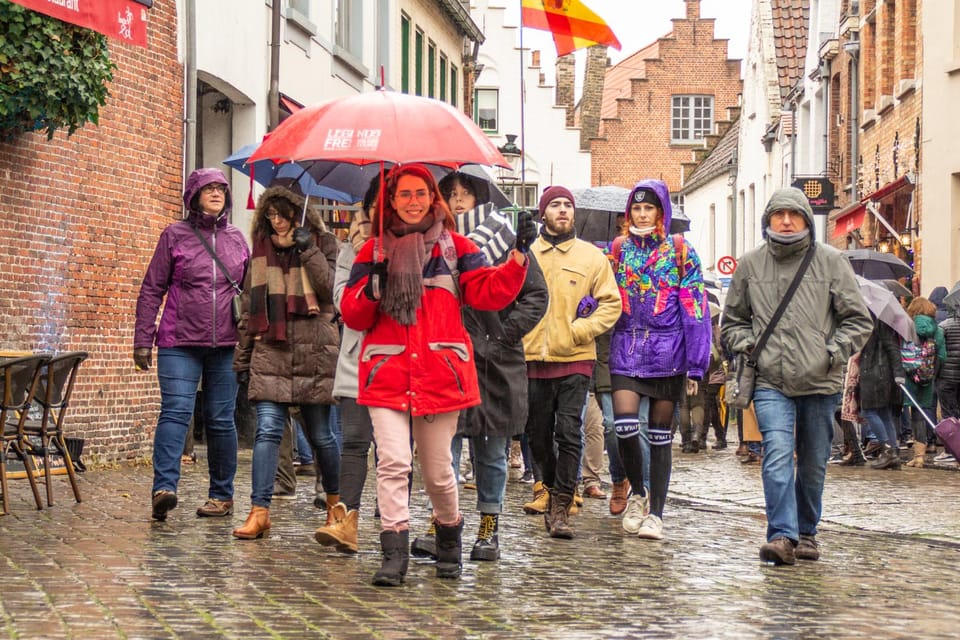
Next comes Halve Maan brewery and then Stoofstraat.
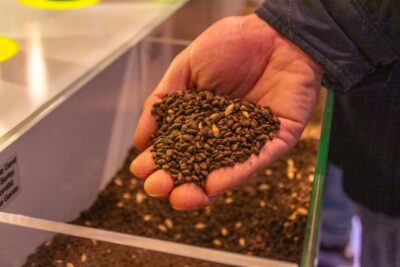
I like the way this section blends modern continuity with medieval context. A brewery is a living industry, not a ruined relic, and your guide uses that to connect Bruges’ long relationship with production and craft. You also get a chance to notice how the city’s layout supports daily life—even now.
Then you hit Stoofstraat, a narrow street that often gets people to pay attention. This part works because Bruges isn’t only grand squares and big churches. It’s also tight spaces where daily routines happened. Your guide uses this to give the tour that “I wouldn’t have noticed that” effect—especially when you’re walking with someone who’s calling out patterns you’d miss alone.
Church of Our Lady, Dijver, and Rozenhoedkaai: The Waterway Sequence
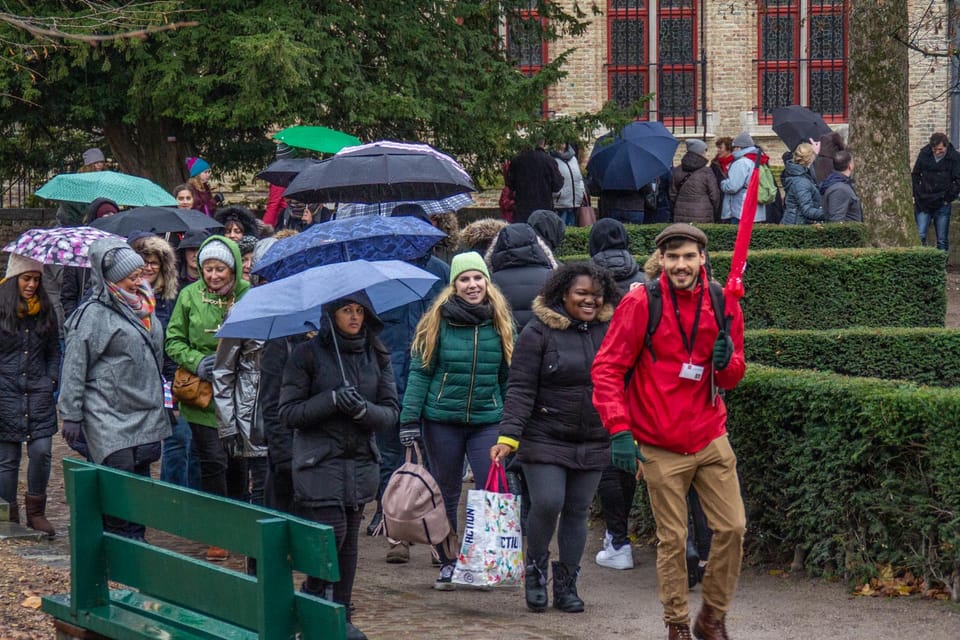
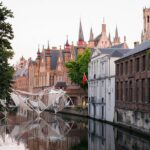
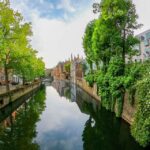
After the street section, you move into the heart of the “Bruges postcard” story: the Church of Our Lady, then along Dijver, and finally to Rozenhoedkaai.
This stretch is especially good for first-time visitors because it creates a clear visual progression. Churches anchor the spiritual and artistic side of the city. Waterways like Dijver explain how Bruges moved goods and people. And Rozenhoedkaai tends to deliver that classic riverside viewpoint where the city feels composed, not accidental.
Your guide’s job here is to make you look beyond the obvious angles. When you understand how water shaped the city, the views stop being just pretty. They become evidence.
If you want photos, plan for quick shots between explanations. This part is gorgeous, but time is limited by the 2-hour structure.
Fish Market (Vismarkt) and De Burg: Finish With a Sense of Place
The final guided stops include Fish Market Vismarkt, and then the tour ends at De Burg.
A fish market is a strong closing note because it ties the city to work—food, trade, daily bargaining, and the kind of economic rhythm that made Bruges grow. Your guide uses the stop to wrap up how the medieval city functioned, then you finish back at De Burg, a fitting end point because it keeps you inside the medieval core.
By the time you finish, the route stops feeling like disconnected points. You can look at Bruges and see a system: civic power, institutions, belief, trade, and the practical street network that still shapes what you walk through today.
VR 360° Visualizations: What It Adds (and What It Doesn’t)
One of the tour’s standout features is the 360° virtual reality visualisations of main locations during the Middle Ages.
This is useful when your brain can’t yet picture how a place looked before today’s buildings and street-level changes. The VR component can help you “translate” the modern scene into a medieval one.
What it doesn’t do is replace the walk. VR is a tool, not a full experience by itself. The real value is how VR connects to the guide’s stories while you’re standing in the real place. It’s the combination—stories plus location—that makes the mental picture stick.
What’s Included, What’s Not, and How to Think About Value
This tour is priced extremely low on paper—$2.27 per person—but you should judge value by what you actually get and how guides sustain their work.
Included:
- A local guide
- A chocolate treat
- A booklet with coupons and discounts
Not included:
- Museum admission (so any museum entry you want will be extra)
What the low price usually means in this style of tour is that the guide’s income often depends on your tip. Some people specifically recommend tipping well. My practical advice: treat it as a proper guided experience and plan a tip amount that feels fair for the quality of the storytelling and the time.
If you’re trying to stretch a Bruges budget, this is one of the more cost-friendly ways to get a structured overview. You’re paying for direction, story, and a route that hits major highlights plus smaller lanes.
Practical Tips: Shoes, Pace, Languages, and Rain-Ready Planning
A few real-world points make a difference here:
- Cobbles and walking comfort: Reviews mention cobbles can feel tiring. Bring shoes you’re comfortable standing and walking in for 2 hours.
- Weather: The tour runs rain or shine. If you hate being wet, bring a light rain layer.
- Languages: Live guide is offered in French, Spanish, and English. If you’re choosing times, pick the language that matches your comfort level so you catch every legend and fun fact.
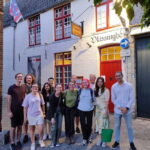
- Small group limit: It’s reserved for subgroups up to 6 people. That generally helps questions and makes the guide easier to hear.
- Wheelchair accessibility: The activity is listed as wheelchair accessible, which is a big plus for visitors who need more mobility support.
Also, guides in this tour style often talk clearly without needing you to rely on headphones. If you dislike devices, that’s comforting.
Who This Tour Fits Best
This is a strong choice if you’re:
- In Bruges for the first time and want a medieval overview without getting overwhelmed
- The type who likes stories with history, including humor and legends
- Traveling with mixed interests—someone who wants sights and someone who wants context
- Trying to keep costs down while still getting a guided route
If you want museum deep-dives, you’ll likely want to pair this with separate museum time. This walk is built for orientation and story, not for long ticketed visits.
Should You Book The Story of Bruges Walking Tour?
If you want Bruges to make sense quickly, I’d book it. The guide-led storytelling, the tight route of standout landmarks plus quieter lanes, and the 360° VR component give you a memorable framework in just 2 hours.
I’d skip (or at least adjust expectations) if you strongly dislike walking on cobblestones or if you want long stops and lots of museum time. In that case, you may feel the pace is fast.
For most visitors, though, this is a high-value way to turn Bruges from pretty buildings into a place with characters, motives, and legends you can actually remember.