REVIEW · BRUGES
From Bruges: Great War Flanders Fields Minibus Tour w/ Lunch
Book on GetYourGuide →Operated by Quasimodo Tours Bruges · Bookable on GetYourGuide
Crater fields and poppies tell a brutal story. On this Bruges-to-Ypres minibus day, you trade museum-style dates for story-driven World War I context inside the Ypres Salient.
I really like two things about the experience. First, the guide turns the history into human-scale stories, and they weave in how each country involved shows up across the day’s stops. Second, the sights are built around the big emotional anchors: the rebuilt city of Ypres, war graves at places like Passchendale and Polygon Wood, and the Menin Gate Memorial with its 55,000 names.
One thing to consider: this is a full day with frequent stops and uneven ground at memorials and battlefield sites. Bring comfortable shoes, and don’t expect this to be easy on mobility.
In This Review
- Key highlights worth planning for
- Bruges to Ypres on a comfortable minibus day
- Ypres, also called Wipers: a city rebuilt and a front-line target
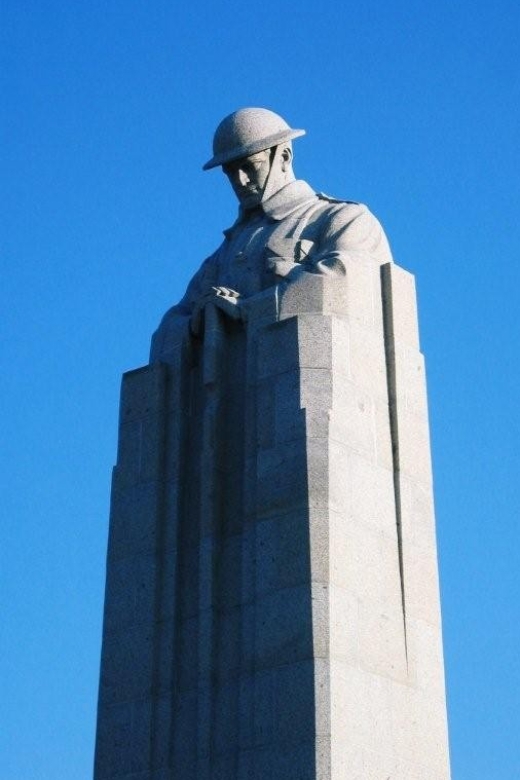
- Menin Gate Memorial: missing soldiers and 55,000 names
- Passchendale and Polygon Wood: war graves in the field
- Hill 60 bunkers and craters: when the battlefield becomes 3D
- Lunch at De Dreve: fuel for a long, heavy day
- Poppies in season and the guide’s country-by-country stories
- Family connections: visiting an ancestor’s grave
- Last Post Ceremony option: a short event with long after-hours impact
- Price and value for a 9-hour WWI day trip
- Who should book, and who should skip it
- Should you book this Bruges to Ypres WWI minibus tour?
- FAQ
- Where do I meet the tour in Bruges?
- What time will I get back to Bruges?
- What’s included in the price?
- Are drinks included with lunch?
- Can I visit an ancestor’s grave?
- Can I stay for the Last Post Ceremony at Menin Gate?
- Is this tour suitable for children or wheelchair users?
- Can I cancel for a refund?
Key highlights worth planning for
- Guides like Phillipe and Lucas bring local, respectful WWI storytelling in English
- Rebuilt Ypres and the Ypres Salient gives you a clear front-line map in real places
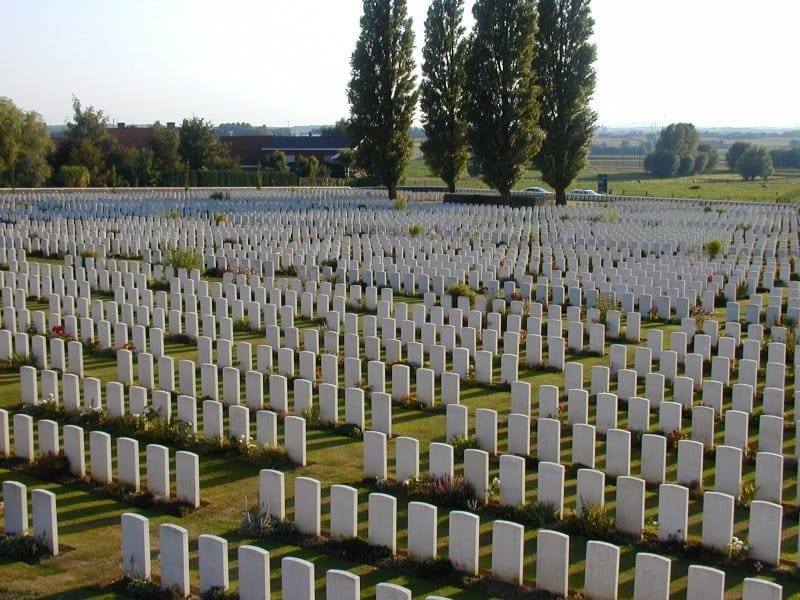
- Passchendale, Polygon Wood, and war graves make the scale feel personal and close
- Hill 60 lets you clamber over preserved battlefield craters and bunkers
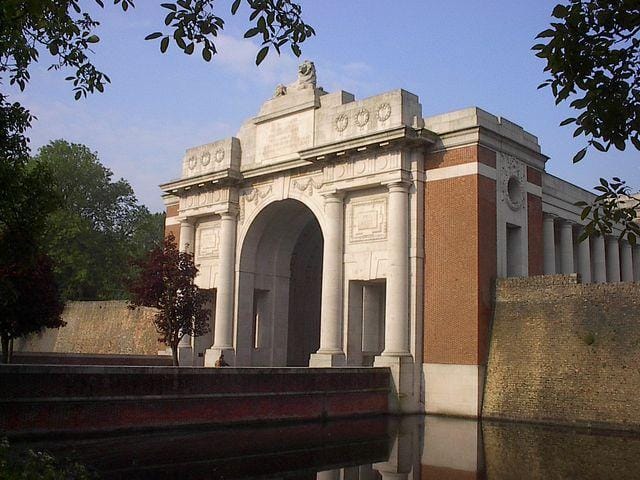
- Menin Gate Memorial is the emotional finale, with the missing soldiers’ names at the exact departure point
Bruges to Ypres on a comfortable minibus day
This tour is built for one thing: getting you from Bruges to the Ypres front fast enough that you can actually see the important sites. You’ll meet right outside the Grand Hotel Normandy on Hoefijzerlaan 37 at 8.55 am. Then you’re off in an air-conditioned mini-coach, which matters more than you’d think when you’re doing a long day of outdoors time and memorial stops.
The schedule is paced so you’re not stuck on the bus for hours without a payoff. You’re moving between battlefields, graves, memorials, and viewpoints that help you understand how the war worked on this specific stretch of Belgium. You’ll usually be back in Bruges around 6:15 pm (give or take about 15 minutes), which is a helpful timing target if you’ve got dinner plans.
Practical note: you’ll want to plan for small walking segments between stops. A couple of sites can involve steps or rough ground, so don’t show up in fancy shoes and hope for the best. Your feet will thank you.
You can also read our reviews of more tours and experiences in Bruges.

Ypres, also called Wipers: a city rebuilt and a front-line target
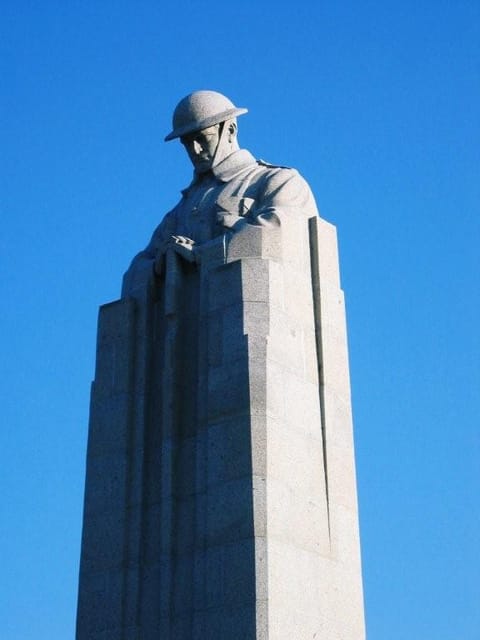
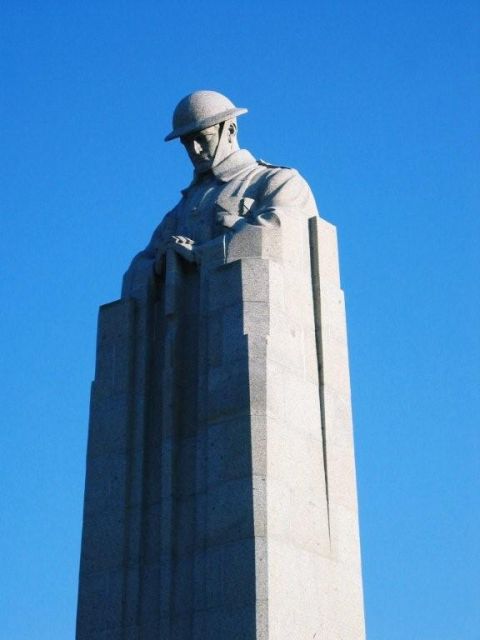
The first real emotional jolt hits when you reach Ypres. It’s nicknamed Wipers, and it matters because the city wasn’t just damaged—it was essentially razed in the early 1900s and later rebuilt using a medieval blueprint. That contrast is powerful: medieval planning meets industrial-era destruction.
From there, you’ll connect the local story to the wider WWI storyline. You’ll learn how the Germans invaded Belgium and why this region became a strategic attack route toward France from the north. The guide’s job is to help you not get lost in place names. Instead of treating each memorial like a standalone postcard, the day builds a front-line logic: where forces went in, where they dug in, and why so many of these towns and fields ended up as prolonged battle zones.
And yes, Ypres is also where you start feeling the scale of loss. You’re not just looking at architecture or signs—you’re seeing a town that was rebuilt for survivors while the missing were never fully accounted for.
Menin Gate Memorial: missing soldiers and 55,000 names
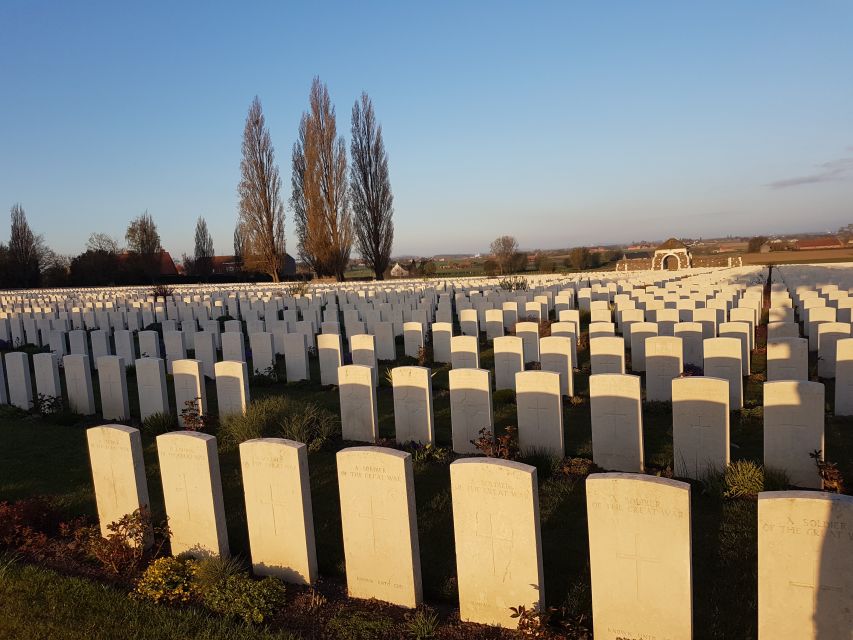
The Menin Gate Memorial is the stop that tends to hit hardest. It’s not just impressive in size—it’s meaningful because it lists missing soldiers, with 55,000 names carved into the memorial. Importantly, it sits on the spot where the soldiers left the city for the battlefront.
If you only see the memorial during the day, it’s still a full impact moment. But the big advantage is how the guide frames the names. Instead of pushing a vague, general “remember them” message, the storytelling is tied to people and circumstances—why they left, what happened afterward, and how the region became a long-term graveyard of the missing.
There’s also a meaningful option to extend: the Last Post Ceremony at the Menin Gate. If you can, I think it’s worth your time. The ceremony itself is short, but it gives you a formal, moving punctuation mark that the earlier battlefield stops can make hard to land emotionally.
Tip: if you’re attending, wear layers. Even in seasons when you expect mild weather, the air around memorials can feel cooler once you’re standing still for a set time.
Passchendale and Polygon Wood: war graves in the field
After Ypres, the day shifts from city memory to the fields where the fighting actually happened. Two names come up often in this area: Passchendale and Polygon Wood. You’ll walk among war graves here, and that’s where the war stops feeling abstract.
This is also where you’ll appreciate the value of a live guide. Museums tend to hand you facts in neat blocks. Here, the guide stitches the story together so the cemeteries don’t feel like random collections of dates. You get context for why these places became so important, and how the landscape—and the violence—changed over time.
This part of the day can be emotionally heavy, but it’s also honest history. The scale is immense, and standing there makes you understand why WWI memorial culture in Flanders is so central to local identity.
One practical consideration: some grave sites can involve small fees or limitations around payments. Bring a bit of cash just in case (and for bathroom stops, too, because some places use small coins and don’t take cards). It’s not glamorous advice, but it saves time.
Hill 60 bunkers and craters: when the battlefield becomes 3D
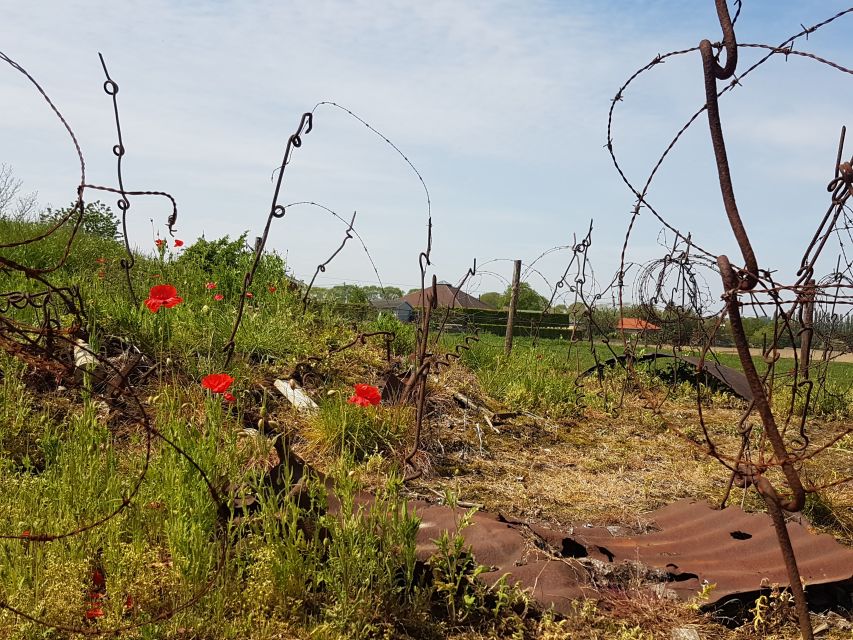
Hill 60 is a highlight for a reason. You don’t just look at it from a distance—you’ll clamber over craters and bunkers on the preserved battlefield. That physical aspect changes how you understand the day. Suddenly the history is about elevation, cover, and how soldiers and machines fought for small tactical advantages.
The guide’s commentary helps you connect what you’re seeing with what you’re learning. You’ll get historical framing on the fighting in this area, and you’ll hear why Hill 60 became a key point rather than a random hill on a map. The day’s tone stays respectful, but it never turns into a dry lecture. You get facts, yes, but also practical understanding of how trench warfare shaped daily life.
Also, this is one of the best stops for people who like seeing the “how.” If you’ve ever wondered what bunker systems were built to do—or how soldiers lived in places that barely counted as shelter—Hill 60 answers that with your own eyes.
Bring a good pair of shoes. This is not a stop for slippery soles.

Lunch at De Dreve: fuel for a long, heavy day
You’ll have lunch at De Dreve (or an alternative stop if needed). Lunch is included in the price, which matters because it keeps the day from turning into “buy food, then rush, then repeat.”
What I like about this setup is that lunch is more than a break—it’s a mental reset between memorials. You’ll eat while the day is still fresh enough to enjoy the shift from battlefield facts to regular human rhythms.
Some travelers also describe the lunch stop as a chance to add a small extra layer of context through a museum-like element. If that’s available on your day, you’ll get a little extra WWI atmosphere without adding another full stop.
Practical tip: drinks aren’t included. So if you like water or beer with lunch, budget for it ahead of time. And because you’ll be walking some distance across the day, don’t skip the meal. This route isn’t short, and your energy level affects how much you can take in.
Poppies in season and the guide’s country-by-country stories
One of the quieter, surprisingly emotional moments comes from the countryside itself—especially when Flanders poppy fields are in season. They look soft from afar. Then you remember what happened here. That contrast is part of what makes the region’s memorial culture so distinctive.
The other big strength is the way the guide tells the story with multiple sides in mind. The experience is designed so you hear each country involved during your time in Flanders Fields. You’re not only learning about one army’s perspective. You’re learning the regional impact across the countries drawn into WWI.
This matters because it prevents the day from becoming a one-note narrative. You come away understanding how the conflict played out locally, and why these sites hold meaning for families from different nations—not just one.
And if you’re hoping for something more than textbook-level narration, pay attention to the way the guide links places together. It’s the difference between seeing a list of famous sites and understanding the logic of how they connect.
Family connections: visiting an ancestor’s grave
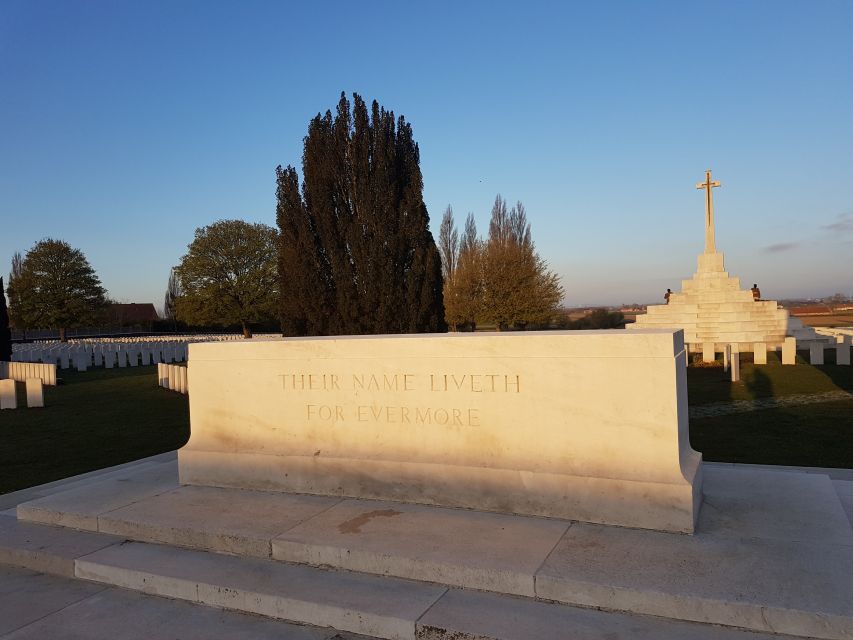
If you have family ties to the war, this tour offers a specific option: you may be able to visit an ancestor’s grave if requested ahead and when it’s possible within the Ypres Salient area.
This isn’t a guaranteed add-on for every booking, so request early. The tour runs on a set route, and grave access can depend on timing and logistics. But when it works, it’s hard to describe how different the day feels. You stop thinking in generalities and start thinking in names.
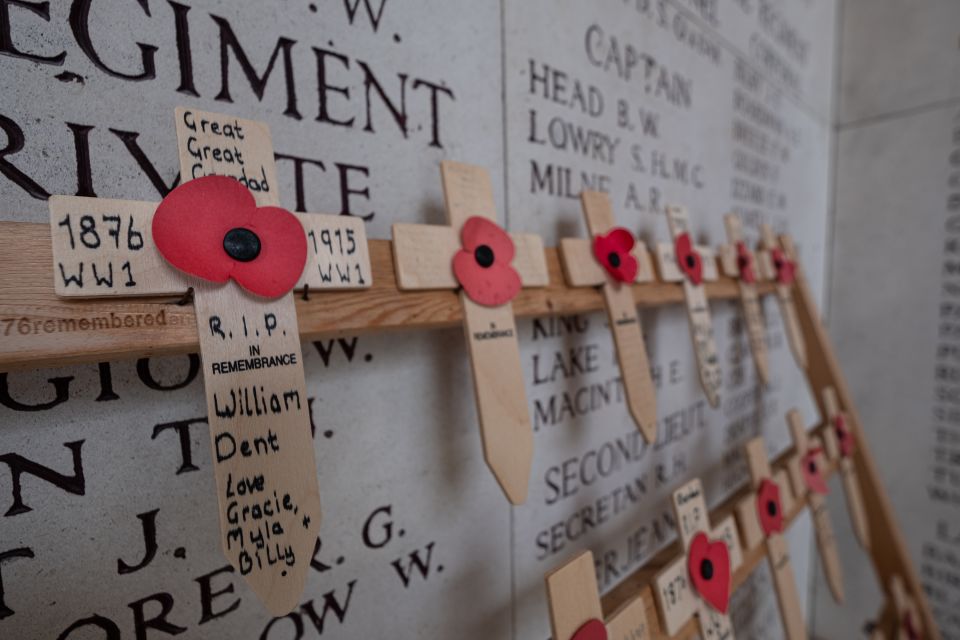
Guides also have been known to help visitors connect names to the Menin Gate records. That kind of support can turn a large memorial into something more personal without breaking the respectful tone.
If you want this option, come prepared with any details you have (names, dates if you know them). The more you can provide, the easier it is for the guide to plan around what’s feasible.
Last Post Ceremony option: a short event with long after-hours impact
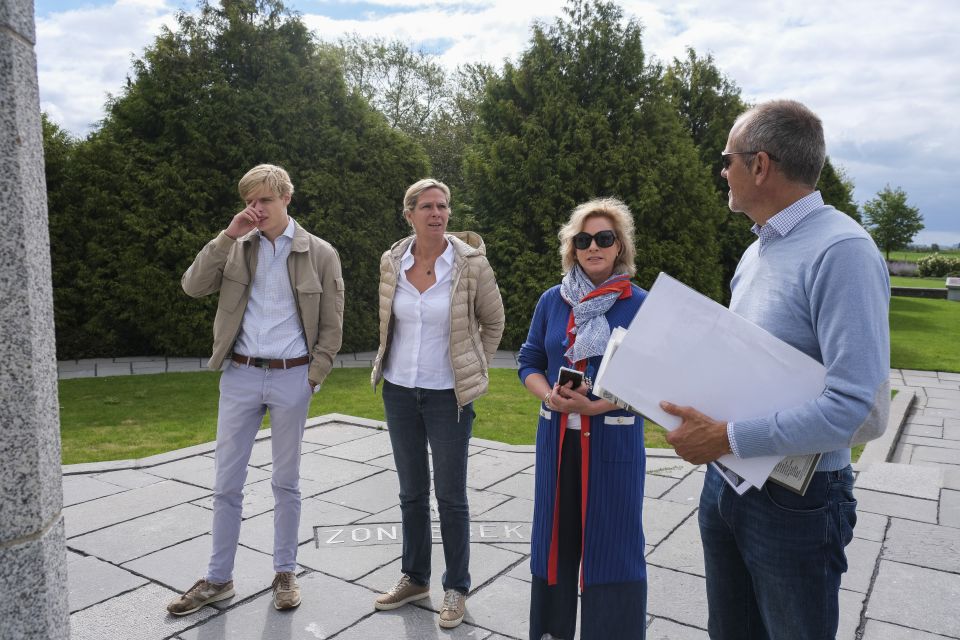
Staying for the Last Post Ceremony at Menin Gate is an upgrade option, not part of the standard day. If it’s available, you can usually stay in Ypres for the ceremony until 8 PM, and then you’ll be brought back to your Bruges hotel by taxi, with return by about 9.15 PM.
There’s a fee for this option: €35 per person, and there’s also a minimum of two persons with the day trip booking. It’s paid on the day of the tour, preferably in cash.
Even if you’re not usually a ceremony person, I think this is the moment that helps the day land. Earlier stops can make you feel overwhelmed. The ceremony gives you structure—like the war story finally pauses long enough for your heart to catch up.
If you’re short on time in Bruges, weigh this carefully. It’s worth it for many people, but it does change your evening plans. Plan for a late finish.
Price and value for a 9-hour WWI day trip
At about $130 per person, this is not a bargain-basement outing. But in the value equation, you’re paying for time on the road, a live English guide, entrance-time equivalent coverage at key sites, and lunch included. Drinks are extra, so factor that in if you like having something with your meal.
Here’s what justifies the cost in real terms:
- You’re covering multiple major WWI anchors in one day: Ypres, Passchendale/Polygon Wood war graves, Hill 60, and Menin Gate.
- You’re not doing this solo with a vague guidebook. The guide provides the connective tissue—why each place matters and how the war’s local story fits into the bigger picture.
- You’re on an air-conditioned mini-coach, which reduces fatigue compared with piecing together buses and taxis.
Also, the guide approach seems to be a major part of the premium. Multiple named guides associated with this tour—like Phillipe and Lucas—are described as passionate and careful with the subject. The tone tends to be respectful, and the pacing is built so you can actually ask questions at stops.
If you want just one WWI day trip from Bruges, the route earns its price.
Who should book, and who should skip it
This tour fits best if you:
- care about World War I history and want it told through places, not just dates
- like guided storytelling and context from someone who clearly knows the region well
- want a structured day that includes both battle sites and memorials
- might have family links and are interested in the possible grave visit option
It may not be ideal if:
- you need wheelchair access or have mobility challenges, since it’s listed as not suitable for people with mobility impairments and wheelchair users
- you’re traveling with kids under 8, since the tour isn’t designed for children under that age
- you hate walking on uneven ground or standing for long memorial moments
This is also a day that’s naturally serious. If you’re looking for light sightseeing, this won’t be that. But if you want meaningful history in authentic places, it delivers.
Should you book this Bruges to Ypres WWI minibus tour?
Yes, if you want your WWI visit to feel coherent and human. This tour’s biggest strength is the way it connects city history, battlefield reality, graves, and the Menin Gate memorial into one moving story. You get the contrast that makes Flanders unforgettable: poppies and rebuilt towns next to trenches, craters, and the names of the missing.
Book it especially if:
- you want an English guide who explains not just what happened, but why these sites matter
- you’re planning only one day trip from Bruges and want the essentials
- you can consider the Last Post Ceremony option for a final emotional moment
Skip it if mobility access is a deal-breaker or if you’re traveling with very young kids. Otherwise, bring your questions, your walking shoes, and a little extra patience for how heavy this topic can feel.
You’ll leave Ypres with more than photos. You’ll leave with a map in your head—and a fuller sense of what the war did to this part of Belgium.
FAQ
Where do I meet the tour in Bruges?
Meet outside the Grand Hotel Normandy on Hoefijzerlaan nr 37 at 8.55 am. The pickup is right in front of the hotel.
What time will I get back to Bruges?
You’ll return around 6:15 pm, give or take about 15 minutes.
What’s included in the price?
The tour includes transportation in an air-conditioned mini-coach, a live English guide, and lunch at De Dreve (or an alternative stop).
Are drinks included with lunch?
No. Drinks are not included.
Can I visit an ancestor’s grave?
It may be possible if you request it ahead of time and if it’s feasible within the Ypres Salient during the tour.
Can I stay for the Last Post Ceremony at Menin Gate?
Yes, if available. You can stay until 8 PM and return to your Bruges hotel by taxi by about 9.15 pm. It costs €35 per person with a minimum of two persons, paid on the day (preferably cash).
Is this tour suitable for children or wheelchair users?
No. It is not suitable for children under 8 years, people with mobility impairments, or wheelchair users.
Can I cancel for a refund?
You can cancel up to 24 hours in advance for a full refund.