REVIEW · BRUGES
Discover Bruges with a self-guided Outside Escape city game tour!
Book on Viator →Operated by Outside Escape · Bookable on Viator
Bruges turns into a puzzle when you play. This self-guided Outside Escape city game lets you walk key sights at your pace, solving clues in a story about an ancient curse and how to save the city from disaster.
I like the way the game turns famous spots into a scavenger hunt, and I also like how it nudges you toward quieter corners most people miss. The only real catch is you’re counting on your smartphone and mobile data.
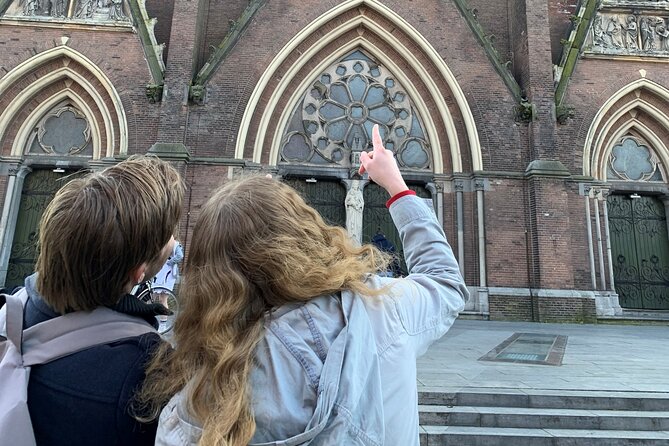
The route is built around a simple idea: look up, look closer, then answer the game. At the Minnewater Lake and Wijngaardplein, you’re not just sightseeing. You’re practicing city-reading skills—using details around bridges, gates, and old water systems to move forward.
One consideration: it’s still a walk. You’ll cover about 2.5 kilometers and spend roughly 1.5 to 2.5 hours working puzzles, so if you want a fully narrated tour or zero thinking on the go, this may not feel worth the effort.
In This Review
- Key things to know before you start
- How the Outside Escape game works in Bruges
- From Minnewater Lake to Wijngaardplein: love, water, and puzzle clues
- Walplein cobbles and Cathedrale Saint Sauveur: history you can’t miss
- Simon Stevin Square and Stadhuis: smart clues and medieval government
- The Markt and its final riddle: where Bruges feels like the center
- Price and logistics: is $28.94 per group actually good value?
- Timing, pacing, and how to avoid getting stuck
- Who this Bruges escape game is perfect for
- Should you book Outside Escape in Bruges?
- FAQ
- How long does the self-guided Bruges game take?
- How far do you walk during the game?
- Where do you start and where does it end?
- Is this a guided tour with a person?
- Do you need mobile data on your phone?
- What group size is it designed for?
- What time of day can we start?
- Do the sights along the route cost extra?
- Are service animals allowed?
- Is there free cancellation?
Key things to know before you start
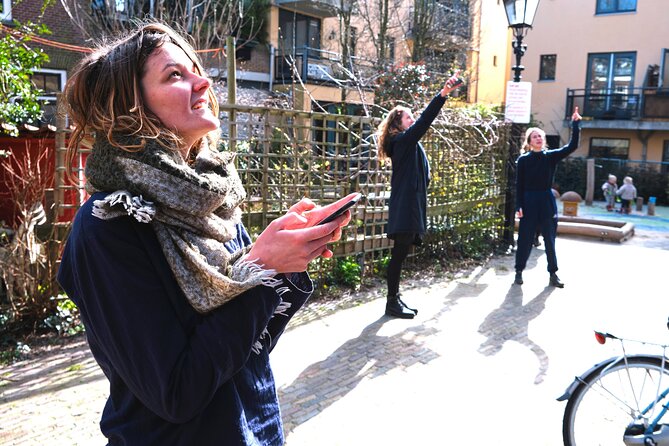
- Self-guided, story-driven: You solve puzzles tied to a plot about an ancient curse and saving Bruges.
- Smartphone required: You’ll use a mobile ticket and need a phone with a mobile data plan (40MB max).
- Small-group style: Works best for teams up to about 5–6 players (and priced per group up to 5).
- Start anytime during the day: The game runs daily 7:00 AM to 11:00 PM, and you can start at your chosen moment.
- Finish on the Markt: The last riddle lands right on the Market Square.
How the Outside Escape game works in Bruges
This isn’t a traditional walking tour with a guide talking the whole way. It’s more like a friend handed you a mission and said, Go figure it out. You start at Minnewater and follow a course through Bruges using your smartphone. Then, you solve puzzle steps that connect the locations to the story theme about an ancient curse.
What makes this format work well in Bruges is that the city is perfect for slow looking. You’ll naturally pay attention to details while you hunt for answers: inscriptions, architectural features, small landmarks, and street-level context. If you enjoy problem-solving, you’ll feel the city becoming a set of clues rather than a checklist.
The pacing also tends to fit real travel days. Because it’s self-guided, you can linger near a canal bridge, take a break at a terrace, or speed up if a clue comes fast. The experience is designed for about 2 hours, with flexibility up to about 2.5 hours depending on how often you pause to think.
Just remember the tech side: you need a smartphone and mobile data (up to 40MB). If your phone battery is shaky, bring a charger. And if you hate switching between apps and menus, set up everything before you start walking.
You can also read our reviews of more guided tours in Bruges

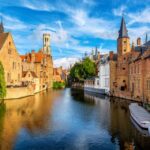
From Minnewater Lake to Wijngaardplein: love, water, and puzzle clues
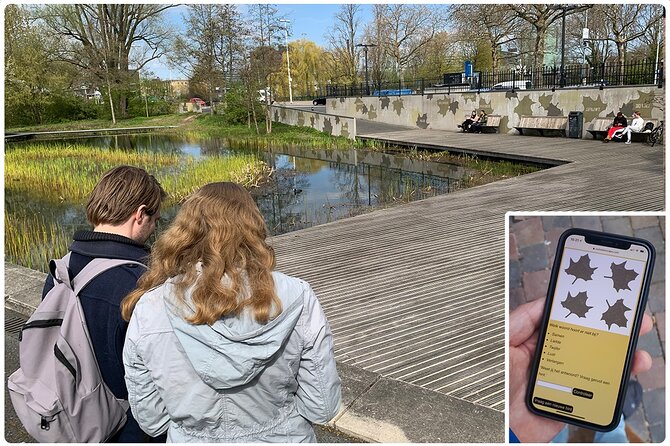
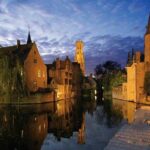
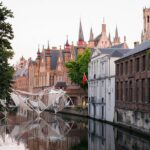
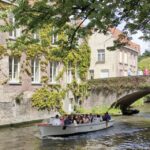
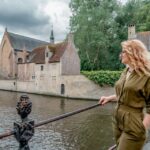
Stop 1 is Minnewater Lake (Minnewater Bridge). If you’ve heard Bruges described as romantic, this is where that reputation starts. The bridge is the standout view, and the setting changes with weather—rain, sun, mist, or snow. For the game, this kind of landmark matters because it gives you a clear visual anchor early on, so you can get your bearings before the puzzles get serious.
After you begin your story, you move to stop 2: Wijngaardplein. This square is where Bruges feels like it has layers. You’ll notice the Beguinage main gate drawing your eye, and you’ll also want to slow down for the Sashuis. That building is linked to how water was regulated in the city center, which ties directly to the existence of the Lake of Love. In other words, the game nudges you to learn why the water works the way it does, not just that it looks pretty.
What I like here is the “aha” effect. You’re doing two things at once: moving along the route and learning city logic. Bruges isn’t random medieval scenery; it’s a system. Even if you don’t love history in the classroom sense, understanding how the city managed water helps you read the canals and lakes with more meaning.
Practical note: this section is great if your group likes photos. You’ll likely want to stop and frame shots, and the game format still leaves room for that.
Walplein cobbles and Cathedrale Saint Sauveur: history you can’t miss
Stop 3 is Walplein, a small cobbled square. The name may reference the first city walls built nearby in 1127–1128. That’s the kind of detail that changes how you see a street corner. You stop seeing it as just a place to pass through and start seeing it as a spot that once marked a boundary.
This square also offers something more everyday: lively café terraces under trees, which makes it a natural “pause here” moment in the route. And the game uses the square’s context well, including a sculpture by Jef Claerhout called Zeus, Leda, Prometheus and Pegasus visit Bruges. That blend of myth and local pride is exactly the kind of Bruges flavor that keeps a puzzle tour from feeling like homework.
Stop 4 is Cathedrale Saint Sauveur de Bruges, noted as Bruges’ oldest parish church (12th–15th century). Here you’re in the heavyweight category of medieval architecture and art, with a treasure-filled interior. The highlights mentioned for this site include:
- a rood loft with an organ
- medieval tombs
- Brussels tapestries
- a collection of Flemish paintings (14th–18th centuries), including works by Dieric Bouts and Hugo van der Goes
Even if you only glance at a few features, the game framing helps you notice what you’d otherwise walk past. You go from I’m in a church to Oh, this is where certain medieval art objects sit, and why they matter.
The main drawback here is also simple: church visits can be slower than outdoor stops. If your group moves quickly through puzzles, you might feel slightly rushed. If you move slowly, it can be perfect. Either way, you stay in the flow because the game’s checkpoints keep you moving.
Simon Stevin Square and Stadhuis: smart clues and medieval government
Stop 5 brings you to Square and Statue of Simon Stevin. He’s a mathematician and physicist born in Bruges in 1548 and died in The Hague in 1620. The square is named for him and lined with neat rows of linden trees, which means it’s not just about a statue—it’s a calm visual break in the middle of the walk.
This is a good moment to catch your breath and regroup as a team. If your puzzle styles differ (one person spots details faster, another reads text carefully), this stop often helps distribute roles without anyone feeling stuck.
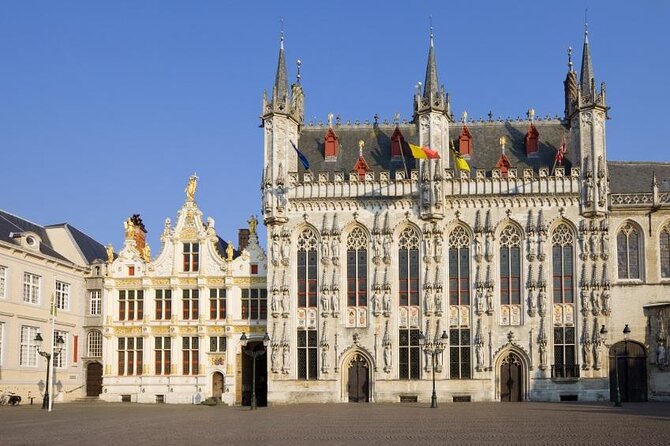
Stop 6 is Stadhuis (the City Hall), a monumental building from 1376–1421. It’s described as one of the oldest in the Low Countries, and the game context points out that the city has been governed from here for more than 600 years. Inside, the focus is on the Gothic Hall, including its impressive vault and 20th-century murals depicting the history of Bruges.
For puzzle tours, landmarks like Stadhuis work well because they’re built for recognition. Even from the outside, the building has that “this matters” feeling. The game uses that attention to turn you from a passer-by into an observer. You notice forms, scale, and the sense of civic power that medieval cities put right at the center.
One practical consideration: if your group has a mix of interest levels, Stadhuis is the best place to find a common thread. People who love puzzles also tend to like the visual logic of grand civic buildings.
The Markt and its final riddle: where Bruges feels like the center
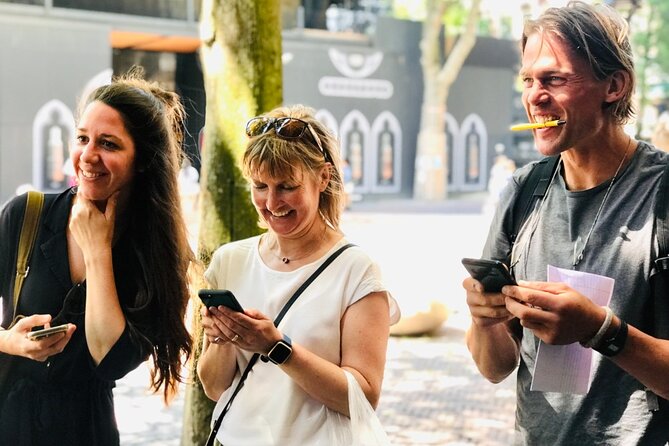
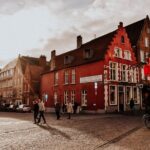
Stop 7 takes you to The Markt, Bruges’ beating heart. This is where the route pays off with the kind of public square that makes you slow down even if you’re racing the game. The description emphasizes that the square is dominated by the Belfry, standing 83 meters high.
The Markt area also includes other big visual cues like the imposing Provincial Court and colorful stepped gables. If your group likes options, this is also the kind of place where you might end up browsing, resting, or taking in a few extra sights. The route even hints at the possibility of a carriage ride once you’re in this area.
Most importantly for the game, the last riddle is on the Market Square. That’s a smart design choice. You finish at the city’s social and visual center, so you can celebrate with your friends right where Bruges feels most alive.
If you climb the Belfry area (or just linger at street level), it helps the ending land. The game gives you a reason to pay attention; the square gives you the reward of scale.
You can also read our reviews of more city tours in Bruges
Price and logistics: is $28.94 per group actually good value?
The price is $28.94 per group (up to 5). That’s the part that matters most for value: you’re not paying per person. In a small group, you’re essentially turning a self-paced city walk into an activity you can do together, with built-in structure and learning moments.
You also get a long time window of use: the tour is available daily 7:00 AM to 11:00 PM, and you can start at the moment you like. For a place like Bruges, where you may want to time your sightseeing around meals, weather, or light for photos, that flexibility can be worth real money.
Other logistics that affect value:
- it’s a mobile ticket, so you’re not dealing with printed vouchers
- it runs on your phone and needs mobile data (40MB max)
- you’re covering about 2.5 km, which is manageable for many people but still a walking day
So I’d call it good value if your group enjoys puzzles or wants a different way to see Bruges highlights. If you prefer guided commentary and don’t care about problem-solving, you might feel the cost is better spent on a traditional tour.
Timing, pacing, and how to avoid getting stuck
Plan around about 2 hours for the full route, with a typical range from 1 hour 30 minutes to 2 hours 30 minutes. That range covers the two big variables: puzzle speed and how often you stop for photos or short breaks.
A team of up to 5–6 players works best for this kind of game. With that many people, you get more eyes on details, and you can assign puzzle roles without a long debate. If you have a larger crew, you may find everyone crowding the same spot around clues. If you have a smaller crew, it can be even more fun because you’re not competing for attention—you just solve faster.
The biggest practical issue is getting “stuck” on a clue. When that happens, keep it simple: one person reads slowly, one person checks the most obvious nearby landmark, and one person makes sure everyone has stable phone reception. Don’t burn 20 minutes on one step. If your group is frustrated, you’ll enjoy the city more by moving on and looping back if the game lets you.
Also, Bruges weather can shift fast. If it rains, you’ll appreciate that the route uses recognizable landmarks and interior spaces like the church and City Hall, not only open squares.
Who this Bruges escape game is perfect for
I think this fits best when at least part of your group likes games, riddles, or lightly competitive problem-solving. It also works well for couples or friends who have been to other European cities and want something more active than a standard walk.
It’s a strong choice if you want:
- a short day activity that still hits major Bruges sights
- a way to learn without sitting through lectures
- a team experience built around walking and noticing
It’s also a good rainy-day backup compared to tours that depend entirely on outdoor viewing. Church and civic buildings give you options when the sky is less cooperative.
Age-wise, it’s listed as suitable for teams of 12 and older, with supervision recommended for younger players. So if you’re traveling with teens, this can be a fun “screen time with purpose” activity.
Should you book Outside Escape in Bruges?
Book it if you want Bruges to feel interactive, not just photographed. The route hits big names like Minnewater, Wijngaardplein, Saint Sauveur, Stadhuis, and the Markt, but the puzzle structure keeps you from zoning out. For $28.94 per group, it’s one of those rare city activities that combines movement, learning, and a shared laugh at solved clues.
Skip it if your ideal Bruges day is slow strolling with minimal mental work, or if you don’t want to rely on a phone and data connection. In that case, a guided walking tour might match your style better.
If you’re on the fence, here’s the quick test: if your group enjoys escape games, scavenger hunts, or “solve it together” activities, this one is a very natural match.
FAQ
How long does the self-guided Bruges game take?
The tour takes about 1 hour 30 minutes to 2 hours 30 minutes.
How far do you walk during the game?
The total route is approximately 2.5 kilometers.
Where do you start and where does it end?
You start at Minnewater (8000 Brugge) and end at Market Square (Markt, 8000 Brugge). The last riddle is on the Market Square.
Is this a guided tour with a person?
No. It’s a self-guided city game, so you follow the experience using your smartphone.
Do you need mobile data on your phone?
Yes. You need a smartphone with a mobile data plan, with a limit of 40MB max.
What group size is it designed for?
It’s suitable for teams up to 5–6 players aged 12 and older (with supervision recommended for younger kids). The price is per group up to 5.
What time of day can we start?
The experience is available daily from 7:00 AM to 11:00 PM.
Do the sights along the route cost extra?
Each listed stop shows admission ticket free in the route information.
Are service animals allowed?
Yes, service animals are allowed.
Is there free cancellation?
Yes. You can cancel for a full refund if you cancel at least 24 hours before the start time.