REVIEW · BRUSSELS
Private Tour: The Dark Side of Brussels
Book on Viator →Operated by Legends of Bruges Free & Private Tours · Bookable on Viator
Brussels has another side worth seeing in 2 hours. This private tour strings together gothic churches, the Palais de Justice, and Marolles streets with stories that don’t shy away from the city’s harsh past. If you like history with teeth, you’ll get it here, told in a lively, human way.
What I like most is the guide-led storytelling. In recent tours, guides like Sebastian bring a fun edge to the facts, and you’ll hear everything from grand cathedrals to chilling details like beheadings.
One thing to consider: the stops are short, with quick timed looks at each landmark, so you’ll mostly see exteriors and street-level scenes rather than settling in for long inside visits.
In This Review
- Key things you’ll notice on this tour
- Entering the Dark Side theme at Grand Place
- The quickest way to get your bearings: Sablon and Place Saint-Jean
- Tour Anneessens: where modern streets meet older stories
- Rue de Rollebeek: charming street, serious context
- Notre-Dame du Sablon: gothic beauty with a sharper edge
- Palais de Justice: the building that looks like power
- Petit Sablon: statues, squares, and a slower pace
- Place du Jeu de Balle: flea market chaos, welcome energy
- Kapellekerk finish: ending in the vernacular Marolles
- Value check: is $105.02 per person worth it?
- Who this tour suits best
- Who should think twice
- Should you book The Dark Side of Brussels?
- FAQ
- How long is The Dark Side of Brussels private tour?
- What language is the tour offered in?
- Is it a private tour?
- Where does the tour start and end?
- What does the tour cost?
- Can I cancel for a full refund?
Key things you’ll notice on this tour
- Private group time so your guide can adjust the pacing for your questions
- English-speaking guide focused on dark Brussels themes
- Courts and punishment in the spotlight at the Palais de Justice area
- Sablon + Marolles contrast: designer-chic streets to everyday neighborhood life
- Photo-friendly stops from Grand Place to the Kapellekerk finish
- Flea market energy at Place du Jeu de Balle if timing lines up
Entering the Dark Side theme at Grand Place
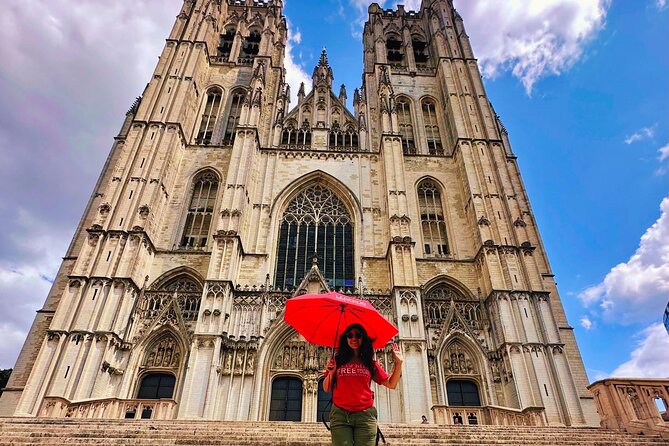
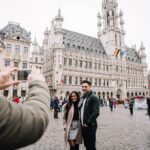
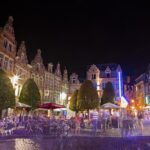
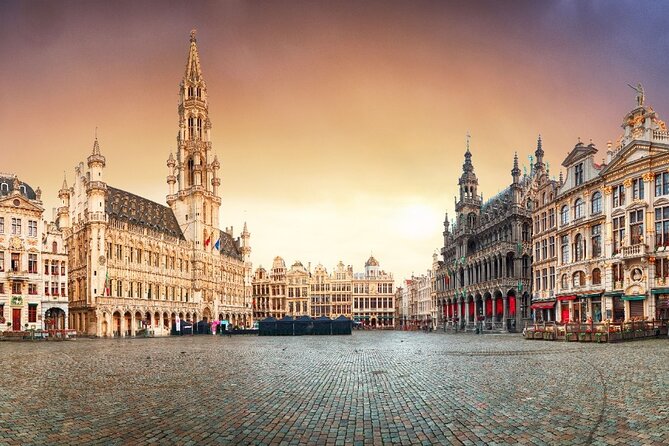
Most Brussels tours start with postcard views. This one starts with the Grand Place (Grote Markt), then sets a different tone fast. You get the sense that the city wasn’t only built for beauty—Brussels also built systems of power, and people lived under them.
This is a private walking tour. Only your group comes along, which matters in a city center where it’s easy to feel rushed in a larger group. And with an English guide, you won’t lose nuance when the stories turn serious.
The tour runs about 2 hours, so it’s a good choice if you want something meaningful without committing a half-day. The price is $105.02 per person, and while that’s not budget pricing, the value is in the guide attention and the tight route that hits major “dark-side” landmarks efficiently.
You can also read our reviews of more private tours in Brussels


The quickest way to get your bearings: Sablon and Place Saint-Jean
From the Grand Place, you head into the Sablon area, where you’ll spend time around Place du Grand Sablon. This is a useful first stop because it helps you read Brussels: markets and churchy architecture close to the civic core. Even if you don’t buy anything, you’ll understand the rhythm of the neighborhood.
Next comes Place Saint-Jean. It’s a small, historic square with cafés and surrounding buildings that make you slow down for a moment. That’s not an accident. It gives you a reset before the tour pivots toward more intense themes.
These early segments are also a practical win for jet-lag brains. Short stops mean you’re not stuck waiting for one long presentation. You’ll keep moving, but you’ll still get context tied to the buildings and streets you’re standing on.
Tour Anneessens: where modern streets meet older stories

Tour Anneessens is one of those places that’s easier to understand with a guide than by yourself. You’re in a neighborhood with a different feel than the showier parts of the center, and that matters because the tour’s theme is about who gets pushed to the edges of history.
You’ll get the sense that “Brussels” isn’t just one version of the city. It’s a patchwork of districts with different lives and different consequences. For a two-hour tour, this stop helps make the story feel grounded instead of purely dramatic.
Rue de Rollebeek: charming street, serious context
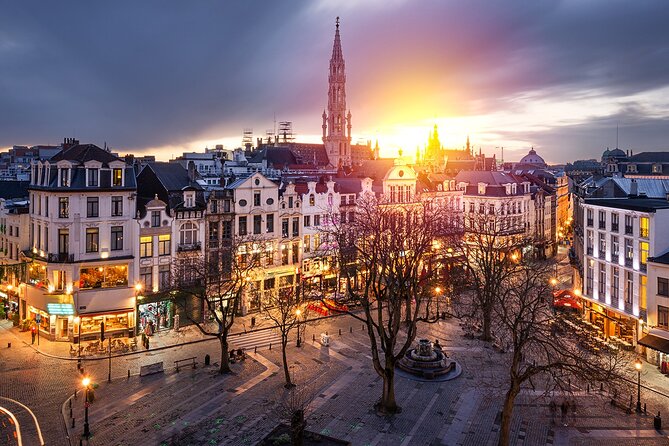
Then you walk along Rue de Rollebeek, a street that looks like it was made for a slow stroll. Cobblestones, boutiques, and a compact street layout make it ideal for telling street-level stories—how people would have moved, gathered, worked, and eventually faced authority.
This is where I like a good guide most. The street is beautiful, but the tour keeps pointing to why places become important. You’re not just admiring old brick; you’re learning how location and power connect.
Notre-Dame du Sablon: gothic beauty with a sharper edge
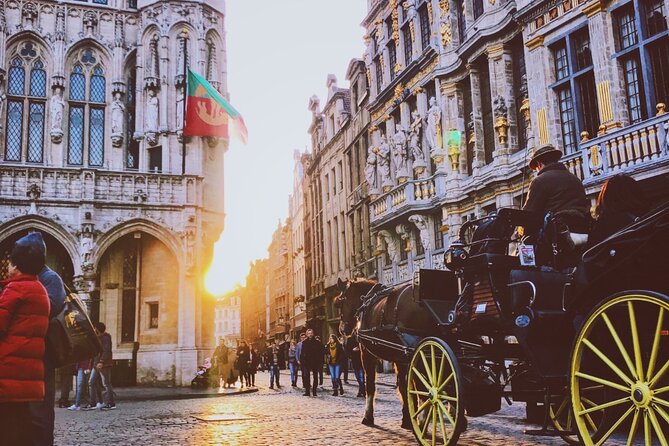
After that, you arrive at Notre Dame du Sablon (Notre Dame des Victoires au Sablon). This gothic church is the kind of stop that can turn into a photo session if you don’t get guidance. With a guide, you’ll read the details you’d otherwise miss—stained glass, stonework, and what the church signals about the people who shaped the city.
The dark-side angle isn’t random. Places of worship often sit near institutions that ran daily life—courts, records, enforcement. By the time you reach this church, the tour has already trained your eye to notice connections.
If you love architecture, you’ll appreciate how the guide keeps the visual stuff and the story stuff together. If you don’t, you’ll still get something out of the stop: it teaches you how Brussels used religion, art, and authority to influence ordinary people.




Palais de Justice: the building that looks like power
No “dark Brussels” walk is complete without the Palais de Justice (Palais de Justice). This courthouse is monumental, and standing near it does something to your posture. The scale is real, and the hilltop setting gives it a dominant presence over the surrounding streets.
This stop is a highlight for anyone who likes history that feels physical. The Palais de Justice isn’t just a background landmark—it’s the city’s legal heritage turned into architecture. You’ll likely talk about why courts matter, how authority presents itself, and what people feared.
The good part is that your guide doesn’t treat it like a lecture hall. The stories connect back to what you see around you: the building’s commanding form, the way you’d have approached it, and the social weight of the justice system.
Petit Sablon: statues, squares, and a slower pace
After the courthouse, you head to Square du Petit Sablon. Here you get a calmer interlude: a garden square with bronze statues representing medieval guilds. It’s a compact, pleasant space that helps you transition from law-and-order intensity back into everyday Brussels symbolism.
I like this stop because it adds a different kind of “power” to the tour. Guilds, trade groups, and civic identity show how control and status weren’t only courtroom-based. You’ll also get a moment to breathe and take photos without feeling like you’re stealing time from the schedule.
Place du Jeu de Balle: flea market chaos, welcome energy
Then comes Place du Jeu de Balle in the Marolles area. This is the flea market zone, and the atmosphere is described as extremely welcoming. Even if you don’t shop, you’ll notice how the place works as a social hub—old photos, vintage bits, and secondhand finds are part of the neighborhood’s character.
This stop is important to the tour’s “dark side” theme because it balances the heavy institutions you’ve just been near. Brussels isn’t only power and punishment. It’s also reinvention and reuse, where people give objects a second life and talk across generations.
If your timing lines up with market hours, you’ll enjoy the energy more than you might expect. The tour keeps the visit brief, but the feeling sticks.
Kapellekerk finish: ending in the vernacular Marolles
The tour wraps at the Church of Our Lady of the Chapel—Kapellekerk. It’s a Gothic church tied to a chapel founded in 1134, which gives the last stop a strong sense of continuity. Ending here is smart: you finish not in the showpiece center, but in a neighborhood that feels more lived-in.
This final segment is short, so think of it as a strong landing rather than a long service. You’ll get just enough story and visual focus to understand why this church belongs at the end of a tour like this. It’s the kind of closing stop that makes the earlier “dark” themes feel more human.
Value check: is $105.02 per person worth it?
For many Brussels experiences, $105.02 per person can feel high. Here, the price makes more sense because you’re paying for a private guide, a planned route, and a structured way to see multiple landmarks in a short window.
What tips it toward good value is the storytelling quality. The tour’s reputation for guide performance is strong, with a 4.9/5 rating and 20 ratings total. In plain terms: you’re more likely to leave with a clear, memorable sense of Brussels than with a checklist of photos.
Also, the stops are tied to places where you don’t need extra ticket drama. Each stop lists free admission for the experience, which can help you avoid “surprise” add-ons and keep the cost predictable.
Who this tour suits best
This is a strong match if you:
- want Brussels history with an edge, not just gentle sightseeing
- like gothic architecture and big civic buildings
- prefer a smaller, private format over crowded group tours
- enjoy guides who bring stories to life, like Sebastian’s fun delivery
It’s also a good fit for couples, friends, and small families who want a guided walk but don’t want to split attention among dozens of people.
Who should think twice
Consider choosing something else if you:
- want lots of long museum time or inside-only visits
- hate walking between stops for a full 2 hours
- prefer purely uplifting history with no talk of punishment
Because the schedule is tight, this isn’t a slow meander. It’s more like a guided route that gives you the meaning behind what you’re seeing.
Should you book The Dark Side of Brussels?
Yes, if your idea of a great Brussels day includes stories tied to real buildings—church, court, neighborhood squares, and a market district. You’ll get a guided path that connects beauty with consequences, and a guide with personality who can keep dark details from feeling stiff.
If you’re the type who likes history to be dramatic but still organized, this tour will click. If you want long stops, deep indoor exploration, or a strictly “pleasant only” itinerary, you might feel a bit rushed.
FAQ
How long is The Dark Side of Brussels private tour?
It’s about 2 hours (approx.).
What language is the tour offered in?
The tour is offered in English.
Is it a private tour?
Yes. It’s private, so only your group participates.
Where does the tour start and end?
It starts at Grand Place (Grote Markt), 1000 Brussels, Belgium. It ends at Kapellekerk in the Marolles neighborhood, at Brux.-Chap/Brus.-Kap, Rue des Ursulines, 1000 Brussels, Belgium.
What does the tour cost?
The price is $105.02 per person.
Can I cancel for a full refund?
Yes. You can cancel up to 24 hours in advance for a full refund.