REVIEW · BRUGES
Ticket Expo Body Worlds in Bruges, Belgium
Book on Viator →Operated by expo BODY WORLDS - Körperwelten (Site Oud Sint-Jan) · Bookable on Viator
Anatomy gets real fast in Bruges. Body Worlds Vital turns over 200 real plastinated specimens into a walk-through of how your body works in health and distress, including life-like whole-body poses and organ displays. I especially like the anatomical mirror, where you can see your internal reflection in a giant projection as you move, and the exhibition’s clear, educational pacing through body systems. The main drawback: some displays are medically graphic by nature, so if you’re sensitive, go with a plan.
This exhibition is set in Bruges’ Old St. John site, in 19th-century halls that feel more like a place of study than a theme park. I also appreciate the tone of respect that comes through in how the materials are presented, including the stages of development and the focus on real anatomy rather than scary spectacle. My one consideration for most people: you’ll probably need more than a quick browse—plan on 1 to 2 hours so you’re not rushed.
In This Review
- Key things to know before you go
- Body Worlds Vital in the Old St. John halls: what the building changes
- What you’ll see: plastinated bodies, organs, slices, and vessels
- A heads-up on intensity
- The anatomical mirror: turning a museum into a body experiment
- Life-like poses and how the exhibition frames everyday action
- Learning media and the process behind the specimens
- Where this fits in your Bruges day (and how to pace it)
- Ticket price and value: is $81 worth it?
- Who should go (and who might skip it)
- Quick practical tips for a smoother visit
- Should you book Body Worlds Vital in Bruges?
- FAQ
- How long does the Body Worlds Vital visit take?
- Where is Body Worlds Vital located in Bruges?
- How close is it to major central landmarks?
- What’s included with the ticket?
- Is the ticket mobile?
- What are the opening hours?
- Are service animals allowed?
- Is confirmation provided after booking?
- What interactive feature does the exhibition have?
Key things to know before you go

- 200+ specimens covering whole bodies, organs, translucent slices, vessel setups, and development stages
- Anatomical mirror interaction that links your movement to what’s inside you
- Life-like whole-body poses showing anatomy at work in everyday-style actions
- Health and distress themes that help you connect body parts to real medical situations
- Real-life context through learning media, including explanations of how specimens are prepared
Body Worlds Vital in the Old St. John halls: what the building changes
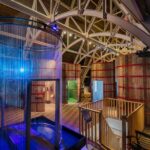
Body Worlds Vital (part of BODY WORLDS) takes over the former city hospital at Site Oud Sint-Jan. That matters more than you’d think. Hospitals have a certain mood—measured, practical, and a little sober—and this venue keeps the exhibition from feeling like a novelty.
You’re also in the center of Bruges, with the Market Square and the railway station about a 10-minute walk away. That makes this a good “add-on” stop if you’re already doing the historic core, or a solid main stop if you like museums that teach rather than just decorate.
The opening hours during the listed operating period are daily from 10:00 AM to 6:00 PM. With a typical visit window of about 1 to 2 hours, you can fit it into almost any day without wrecking your plans for the rest of Bruges.
You can also read our reviews of more tours and experiences in Bruges


What you’ll see: plastinated bodies, organs, slices, and vessels

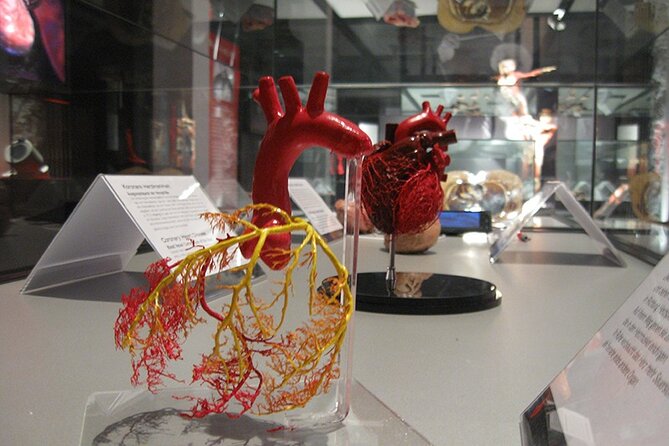
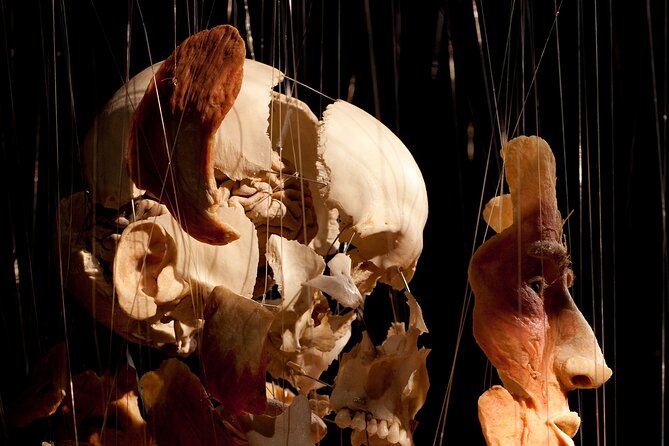
The heart of Body Worlds Vital is its collection of real human specimens—presented as whole-body plastinates, plus lots of organ-focused displays. Expect to see:
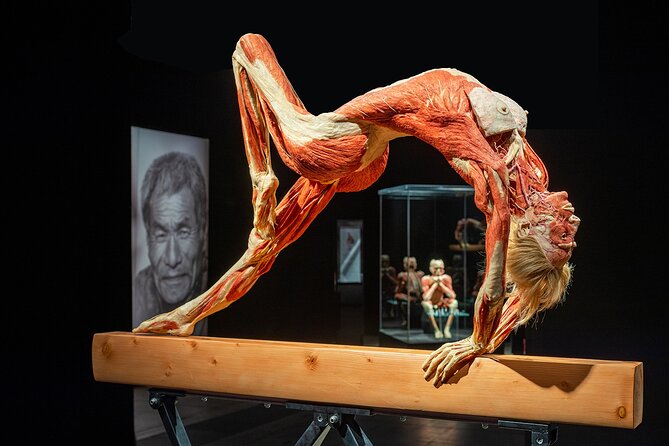
- whole-body plastinates in life-like poses (including actions like sports and more intimate positioning)
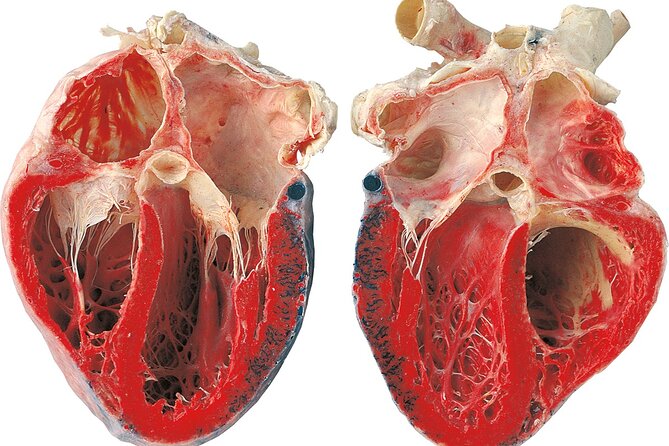
- individual organs and organ configurations
- translucent slices that make layers easier to visualize
- blood vessel configurations that show how circulation is built
- stages of development, including a fetus
For me, the value here is how the exhibition makes anatomy understandable in normal-world terms. A lot of medical imagery stays abstract. This show tries to connect structure to function—where things sit, how they relate, and what changes when the body’s dealing with problems.
Also, the exhibition isn’t just “body parts laid out.” It groups things so your eyes know what to track: skeleton-to-muscle relationships, organ neighbors, and vessel patterns. That turns the visit from reading captions into following a visual logic.
A heads-up on intensity
Because the theme includes both health and distress, some sections can feel heavy. That’s the nature of anatomy exhibitions that focus on real conditions. If you know you’re not into medical or graphic content, you can still go—but you’ll enjoy it more if you give yourself time, and you choose your pacing (linger in the easier sections, skip what feels like too much).
The anatomical mirror: turning a museum into a body experiment
One of the most memorable parts of Body Worlds Vital is its interactive anatomical mirror. You stand in front of a large projection and essentially get a view of an internal reflection tied to your movement.
It’s a smart piece of design for two reasons. First, it turns passive viewing into active learning: you’re not just looking at specimens, you’re testing what your body does in space. Second, it makes the relationships between movement and internal structure feel less mysterious.
You’ll likely leave with a different mental map. Instead of thinking of your organs as “stuff inside,” you’ll start picturing how movement shifts positioning and how your body systems cooperate.
And yes, it’s weirdly satisfying in a practical way. It gives you that moment where anatomy stops being diagrams and starts being something you can relate to your own body.
Life-like poses and how the exhibition frames everyday action
Body Worlds Vital places whole-body plastinates into realistic, almost situational poses—think sports and everyday movement, not just “look at this anatomy” mannequin styling. That approach helps you see posture and mechanics as part of the story.
When you connect those posed bodies with organ and muscle displays nearby, you start seeing patterns. For example, you’re less likely to treat organs as isolated objects. They become “neighbors,” affected by how the body is arranged.
If you like when a museum uses good storytelling instead of only labels, this section is where the exhibition gets most convincing. It’s not only anatomical; it’s conceptual. The question being answered is basically: how is your anatomy built to support what you do?






Learning media and the process behind the specimens
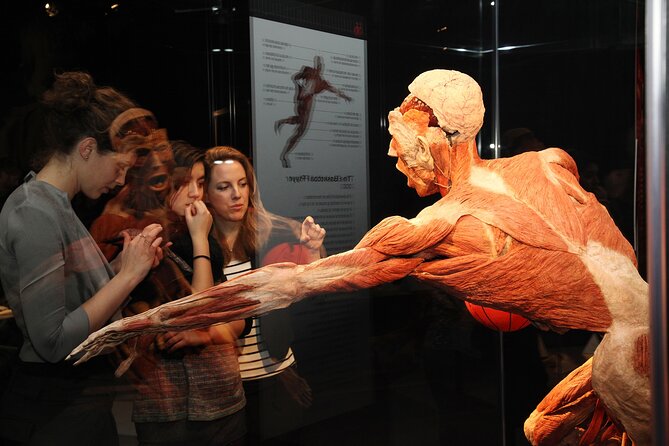
Beyond the displays themselves, the exhibition includes explanations delivered through media—specifically, it presents how the bodies are prepared for exhibition. One of the standout details from people who’ve gone is that you can learn the process and see it illustrated through film.
That’s important because it changes your mindset while you’re looking. When you understand the steps behind specimen preparation, the exhibition becomes less about shock and more about technique and care—how science creates a usable educational display while keeping the presentation respectful.
I also found the development stages particularly useful if you like seeing growth as a continuum instead of a single snapshot. Seeing early development helps you understand that anatomy isn’t static. It changes as the body forms.
Where this fits in your Bruges day (and how to pace it)
The location makes planning easy. From the railway station and from Market Square, you’re walking about 10 minutes. That puts you close to almost everything tourists already do—canals, chocolate shops, and plenty of wandering time.
With 1 to 2 hours as a practical target, I suggest you do it one of two ways:
- If you want a calm, educational visit, go earlier in the day (when you can move slowly through the systems).
- If you’re mixing in a busy itinerary, plan a tight but not rushed route—hit the major sections and then use the mirror interaction to slow you down without losing the plot.
Because this is an anatomy exhibition with real specimens and health themes, I wouldn’t treat it like a quick stop between other attractions. The best experience comes from letting it take time.
Ticket price and value: is $81 worth it?

At $81, this isn’t a budget add-on. But I do think it can be good value for what you’re getting.
Here’s the case for value:
- You’re buying entry to a show built around 200+ real specimens, not a small, short gallery.
- There’s a unique interactive component (the anatomical mirror) that adds time and memorability.
- The content is designed around learning—whole-body poses, organ groupings, translucent slices, vessel displays, and development stages all support a cohesive theme.
The main reason the price might feel high is simple: you’re paying for a specialized museum experience, not a casual stroll. If you’re the type who enjoys museums that explain your body—how it works, how it fails, and why anatomy matters—this price starts to make sense.
Who should go (and who might skip it)
This is a great fit if you want:
- a hands-on, visual explanation of how anatomy connects to function
- interactive learning, not just reading signs
- an exhibition that focuses on health and distress rather than only “anatomy as art”
It’s also described as suitable for most travelers, and service animals are allowed.
It might not be for you if you dislike medical or graphic content, especially when the theme includes distress and real conditions. Even if you go, you should expect that some sections will feel intense. Choose your pace and give yourself breathing room between rooms.
Quick practical tips for a smoother visit
- Wear shoes you can stand in. This is an exhibition built around continuous looking and small movements.
- Give yourself enough time to try the mirror interaction. It’s not a 30-second extra.
- If you’re planning Bruges sightseeing the same day, avoid stacking too many “quiet museums.” Pair it with a walk afterward, so your brain has space to reset.
Should you book Body Worlds Vital in Bruges?
I’d book it if you like museums that teach with real specimens, clear structure, and at least one genuinely memorable interaction. The combination of 200+ displays, the anatomical mirror, and the way the exhibition connects body parts to real-life positioning is exactly the kind of experience that can stick with you longer than the typical city stop.
Skip it (or go later and expect a slower pace) if medical content will throw you off emotionally. The exhibition leans into real health and distress themes, and that tone is part of why it works.
If you want a high-value Bruges activity that’s close to the center and easy to slot into your day, Body Worlds Vital is a strong choice.
FAQ
How long does the Body Worlds Vital visit take?
Plan for about 1 to 2 hours.
Where is Body Worlds Vital located in Bruges?
It’s at Site Oud Sint-Jan in Bruges, in the former city hospital halls (Old St. John site).
How close is it to major central landmarks?
It’s about a 10-minute walk from both the railway station and the Market Square in the center of Bruges.
What’s included with the ticket?
Admission to the exhibition is included.
Is the ticket mobile?
Yes, the ticket is provided as a mobile ticket.
What are the opening hours?
During the listed operating period, it runs daily from 10:00 AM to 6:00 PM.
Are service animals allowed?
Yes, service animals are allowed.
Is confirmation provided after booking?
Confirmation will be received at the time of booking.
What interactive feature does the exhibition have?
The exhibition includes an interactive anatomical mirror with an oversized projection so you can explore your internal reflection as you move.