REVIEW · YPRES
PRIVATE Australian Western Front Battlefields 3-Day Tour Ypres to Amiens
Book on Viator →Operated by A Foreign Field WW1 Tours · Bookable on Viator
A walk through the Western Front hits differently. This private Australian battlefields tour links the stories of the fighting between Ypres and Amiens with memorials you can actually visit, plus museums and cemeteries tied to Australian service. I really like that the guide, Soren Hawkes, brings family-linked context to places that can feel like a blur on a map.
Two things I liked a lot: you get bottled water each day, and you spend time in major sites that Australians know well, including Tyne Cot, the Menin Gate Last Post ceremony, and the Australian National Memorial. The pace also feels designed for meaning, not just ticking boxes.
One possible drawback: meals and accommodation are not included, so your overall spend can creep up once you factor in dinner, lunch, and where you’re sleeping for three days.
In This Review
- Key points I’d plan around
- Entering the Western Front with an Australian focus
- Why the private guide factor changes everything
- Price and logistics: what you’re really buying
- Day 1 from Messines Ridge to Menin Gate
- Messines Ridge and the mine-and-attack story
- The Christmas Truce at Plugstreet Wood
- Spanbroekmolen Mine Crater, and Hill 60’s tunnelling
- Polygon Wood: concrete bunkers and the walk-through
- Tyne Cot, Essex Farm, and the museum pause
- Ypres Cloth Hall and the town break
- Last Post at Menin Gate
- Langemark Cemetery as a side contrast
- Day 2: Fromelles identification and viewing the fight from trench lines
- Fromelles Museum: the 2008 mass grave identification
- Le Trou Aid Post Cemetery and Pompey Elliott
- Pheasant Wood and VC Corner
- Australian Memorial Park: German perspective and the Cobbers statue
- Arras lunch break with a UNESCO main square
- Bullecourt Digger and the tank echoes
- Ending in Amiens
- Day 3: Albert, Pozieres, and the missing Australians at the Australian National Memorial
- Albert Basilica and the leaning virgin story
- Lochnagar Crater: mine warfare made visible
- Pozieres: the 1st Australian Division Memorial
- Windmill Memorial and OG1/OG2 trenches
- Tank Corps Memorial: tanks in battle
- Lunch at Le Tommy
- École Victoria: Australian pennies for a French school
- Adelaide Cemetery: the unknown exhumed in 1993
- Australian National Memorial and the missing
- Sir John Monash Centre for context
- Australian Corps Memorial: Le Hamel’s pace and losses
- Finish in Amiens
- Who this tour fits best
- Practical tips to make the days easier
- Should you book this private Western Front tour?
- FAQ
- How long is the tour?
- Where does the tour start and end?
- What’s included in the price?
- What’s not included?
- Is this a private tour?
- When does the tour start and is cancellation free?
Key points I’d plan around
- Private guiding by Soren Hawkes with family-linked ties to the battle sites
- Start in Ypres and finish in Amiens (or swap the direction) for a clean three-day flow
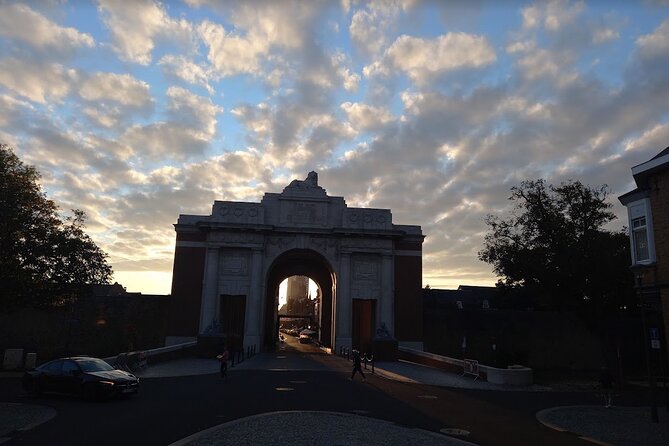
- Last Post at Menin Gate each night at 8pm, run by local buglers (with the WWII pause noted in the tour context)
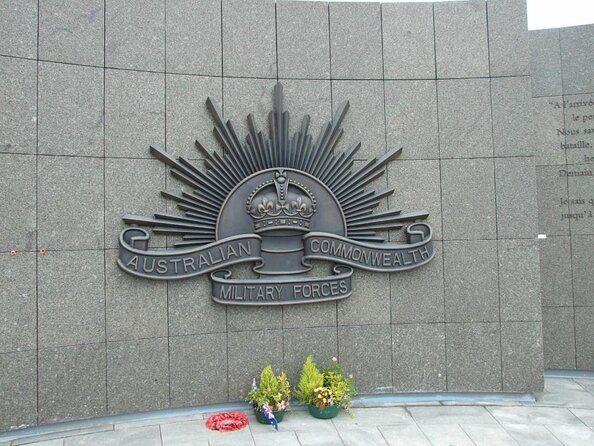
- Major Australian cemeteries and memorials like Tyne Cot, VC Corner, and the Australian National Memorial
- Museum time where details matter, including In Flanders Fields and the Sir John Monash Centre
- Free admissions at many stops, with a mix of included-entry museums to slow down and read properly
Entering the Western Front with an Australian focus
The Western Front is a big story, and it can get confusing fast. What I like about this tour is the tight focus: it centers on Australian participation in the fighting stretching from the Ypres Salient down toward Amiens. You’re not just watching history from the roadside. You’re standing where Australians fought, buried comrades, and later built the memorials meant to keep names and stories from fading.
The Ypres-to-Amiens direction also gives your brain a useful shape. You move from the high-intensity Ypres fighting and the underground war (mines and tunnelling) toward the major offensives and the final reckonings of the missing.
And because it’s private, you don’t have to “perform” your attention. If something hits hard, you can pause. If a detail matters to your family tree, you can ask.
You can also read our reviews of more private tours in Ypres


Why the private guide factor changes everything

This isn’t a group coach where everyone hears the same script and moves on. It’s a private tour, tailored to your interests, with a guide who has family links to the battle sites.
That matters for two reasons. First, you’ll usually get clearer connections between what you see and what happened. The tour’s built around specific places—craters, cemeteries, visitor centers—so having someone who can tie them together keeps you from feeling lost.
Second, the tour says you can request tailoring if your ancestors fell in the battle. Even if you don’t have names nailed down, you can still steer toward what you care about most: tunnelling warfare, specific battalions, the story behind a memorial, or the “human” side of the cemeteries.
Price and logistics: what you’re really buying
At $1,965.48 per person, this is not a budget outing. But you are paying for several high-value pieces at once:
- A private guide for three full days
- Transport between sites
- Guided time at memorials and visitor-center stops
- Complementary bottled water each day
What is not included is also crystal clear: meals and accommodation are at your own expense. That means your final total depends on where you stay (Ypres and Amiens area prices vary a lot) and how you eat.
Admissions are listed as free for many stops, with some museums marked included. Practically, that means you shouldn’t feel stuck worrying about entrance fees every time you turn a corner. Still, do expect to pay for lunch unless you’re using the “free time” windows to eat on your own.
Timing-wise, it starts at 9:00am. Day 2 runs all the way to arriving in Amiens around 5pm, and Day 3 ends with a drop-off back at your Amiens lodging or at the railway station.
Day 1 from Messines Ridge to Menin Gate
Day 1 is about intensity and the Ypres world—salients, mines, ruined woods, and cemeteries that feel like they go on forever.
Messines Ridge and the mine-and-attack story
You start at Messines Ridge, covering the Ypres Salient stretch from Messines to Passchendaele (1914–1918). The tour zeroes in on the 1917 attack toward Passchendaele by Australian soldiers. This is a strong opener because it frames why later sites (craters, tunnelling, memorials) aren’t random stops—they’re part of the same fight.


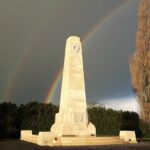


The Christmas Truce at Plugstreet Wood
Next comes the Christmas Truce Memorial at Plugstreet Wood. The point here isn’t to “romanticize” war. It’s to pause on a human moment that still shows up in modern memory, then contrast it with the industrial reality that followed.
Spanbroekmolen Mine Crater, and Hill 60’s tunnelling
Then you see the Spanbroekmolen Mine Crater and Hill 60, both tied to massive explosions and tunnelling warfare. If you’ve ever wondered how miners and engineers fit into the killing of the Western Front, these stops make the connection tangible.
Polygon Wood: concrete bunkers and the walk-through
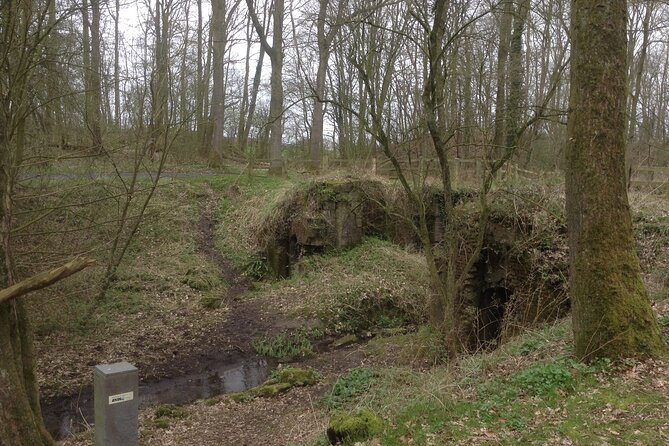
At Battle of Polygon Wood, you walk through the woods and visit concrete bunkers that were still present when Australians captured the area. You also visit the cemetery and the Australian 5th Division monument. This is the kind of stop where reading explanations helps, but looking slowly matters more than rushing.
Tyne Cot, Essex Farm, and the museum pause
The day climaxes with three major “read the names” stops:
- Tyne Cot Cemetery, the world’s largest Commonwealth War Graves Commission cemetery (about 12,000 buried, with only 3,000 names), including two Australian VC recipients
- Essex Farm Cemetery, connected to Lt Col John McCrae and In Flanders Fields
- In Flanders Fields Museum, with about an hour to explore
This is also where the emotional weight tends to land. Tyne Cot alone is enough to change your pace for the rest of the afternoon. The museum gives you context you can’t get from stone alone.
Ypres Cloth Hall and the town break
Back in Ypres, you stand on the main square near the Cloth Hall and the cathedral. There’s short free time in town—plus a practical tip: you can eat Flemish stew while you’re there. Even with the solemn subject matter, it’s useful to break the day with normal life for a bit.
Last Post at Menin Gate
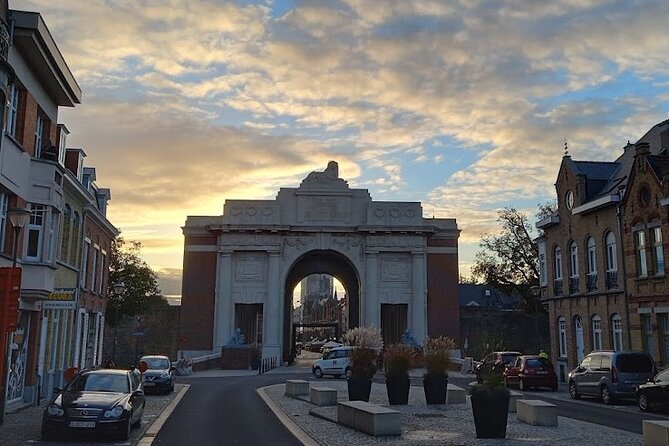
Finally, you take part in the Last Post ceremony at Menin Gate at 8:00pm, carried out by local fire brigade buglers since 1927 (with the WWII interruption noted in the tour’s background). This is one of those moments where you don’t need a lecture to understand why people return year after year. It’s a ritual of remembrance, in a place built for it.
Langemark Cemetery as a side contrast
Day 1 closes with Langemark Cemetery, where the Germans commemorated their war dead, with about 44,000 buried. It adds an important “both sides of the story” contrast, without turning the tour into a generic tour of WWI.
Day 2: Fromelles identification and viewing the fight from trench lines

Day 2 shifts to Fromelles and the wider sense of Australia’s losses—especially where identification and remembrance intersect.
Fromelles Museum: the 2008 mass grave identification
At the Museum of the Battle of Fromelles, you see how researchers found and identified 250 Aussies from a mass grave discovered in 2008. This is the kind of stop that makes you think about what “missing” meant at the time—and what science and persistence can do decades later.
Le Trou Aid Post Cemetery and Pompey Elliott
Then you go to Le Trou Aid Post Cemetery, described as stunning, with the story of Pompey Elliott and the massacre of the Australian 5th Division during the battle. It’s one of those places where the memorial itself is only part of the story. The background your guide provides is what makes it land.
Pheasant Wood and VC Corner
You continue to Pheasant Wood Military Cemetery and then VC Corner Australian Cemetery, including the mass grave and viewpoints from Australian trench lines. The viewing angle is a practical advantage. It helps you understand how terrain shaped decisions, not just where bodies ended up.
Australian Memorial Park: German perspective and the Cobbers statue
At Australian Memorial Park, you look at the battlefield from the German perspective and hear about the Cobbers statue. This is a strong mid-tour reset. It nudges you away from a single-narrator version of events and toward the reality that both sides lived with the same killing ground.
Arras lunch break with a UNESCO main square
You then hit Arras for lunch and time around the UNESCO World Heritage main square. The tour frames it as stunning enough to give you goosebumps. Even if you find that a bit dramatic, it’s still a good idea to have a built-in lunch break after a heavy run of cemeteries.
Bullecourt Digger and the tank echoes
After lunch, you visit the Bullecourt Digger and learn about the battle that led to the deaths of 10,000 Australian soldiers in two weeks. Next is the Slouch Hat Memorial, with remnants of tanks and the slouch hat reference. These stops help you connect infantry tragedy to the hardware and tactical shifts that came with changing battle conditions.
Ending in Amiens
By the end of Day 2, you arrive in Amiens around 5pm and your guide helps you with where to eat and where to get the best views before dropping you at your lodging. It’s a smart finish because it leaves you enough evening hours to decompress in a real city, not just a war-site bubble.
Day 3: Albert, Pozieres, and the missing Australians at the Australian National Memorial
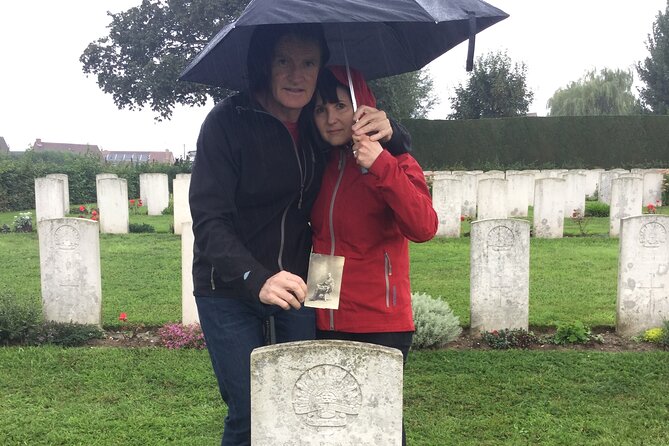
Day 3 focuses on iconic landmarks tied to major battles and then lands at some of the most important missing-person memorials.
Albert Basilica and the leaning virgin story
You stop at Albert to see the Basilica and hear the story of the famous leaning virgin. Even if you’ve seen photos before, this kind of stop works because it’s a reminder that places survived in uneven ways—and that people later used surviving landmarks as anchors for remembrance.
Lochnagar Crater: mine warfare made visible
Next is Lochnagar Crater, a 30-meter-deep crater from a mine blown on 1 July 1916, tied in the tour to the deaths of 20,000 British soldiers. It’s one of those sights that’s so physical you almost forget to read the plaque. Don’t skip the plaque.
Pozieres: the 1st Australian Division Memorial
Then you visit the 1st Australian Division Memorial, built around the battle of Pozieres. You hear about the six-week slaughter and the death toll of 24,000 Australians for a village about one mile long that lay in ruins. The memorial gives you scale, and the guided story helps you track why that scale mattered.
Windmill Memorial and OG1/OG2 trenches
At the Windmill Memorial, you see the site of the German trench system known as OG1 and OG2, and hear how it relates to what was once a windmill. That mix of old landmark + later trench system gives you a workable “before and after” mental image.
Tank Corps Memorial: tanks in battle
You then reach the Tank Corps Memorial, where the tour explains tanks being used in battle for the first time and how tactics and developments evolved. If you’ve mostly seen tanks in films or museums, a memorial tied to their early battlefield reality can be sobering.
Lunch at Le Tommy
For lunch, you stop at Le Tommy. The tour notes it’s a cafe full of love and respect for the Australian sacrifice, and lunch is at your own expense. Even if you don’t plan to eat there, this is a useful waypoint because you know the stop is connected to the broader remembrance theme.
École Victoria: Australian pennies for a French school
Next is École Victoria, with the story of a French school paid for by pennies of little children in Australia in the 1920s. It’s a softer note, but not a distracting one. It shows how remembrance didn’t stop when the guns did.
Adelaide Cemetery: the unknown exhumed in 1993
At Adelaide Cemetery, you learn about the unknown Australian soldier exhumed from this site in 1993. The stop is short, but the timing detail helps you understand that the work of identifying and honoring the dead has continued long after the war ended.
Australian National Memorial and the missing
Then comes one of the emotional anchors: the Australian National Memorial to the 20,000 missing Australians in this area, with about an hour at the site. This is where you feel the meaning of “missing” as something that carried into families for generations.
Sir John Monash Centre for context
Finally, you get about an hour at the Sir John Monash Centre. This is a useful counterweight to all the stone and names. Centers like this help you connect the dots between people, units, and the larger offensive picture.
Australian Corps Memorial: Le Hamel’s pace and losses
You also visit the Australian Corps Memorial, tied to Monash’s masterpiece, the Battle of Le Hamel. The tour frames it as rapid, costing fewer lives than some other fights, and containing many historical firsts. Even with the reduced loss context, it doesn’t turn the battle into a “win.” It stays honest about cost while highlighting why this action mattered.
Finish in Amiens
Day 3 ends with a drop-off back to your Amiens hotel or the Amiens railway station, so you can plan your next move without scrambling.
Who this tour fits best
This works especially well if you:
- Care about Australian WWI history and want places that match Australian commemorations
- Want a private guide who can slow down, answer questions, and tailor where possible
- Prefer museums and cemeteries with time to read, not a drive-by photo stop rhythm
If you want a fast highlight route with minimal talking, this may feel heavy. But if you want meaning, this route has it.
Practical tips to make the days easier
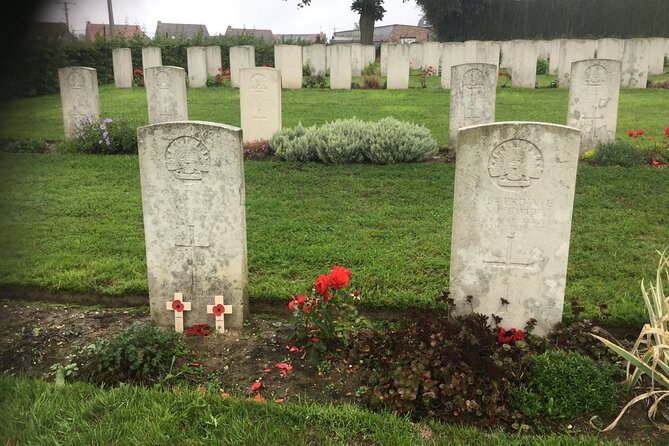
This is a long, walk-and-stand kind of trip, even when the vehicle does the driving. I’d plan for:
- Comfortable walking shoes and layers for changing weather
- A small day bag for water, tissues, and a light rain layer
- Mental pacing: some cemeteries are better with slower breathing than a checklist mindset
Also, because you’re ending in real cities (Ypres and Amiens), I’d book lodging you can reach easily and plan at least one relaxed evening meal after each day of sites.
Should you book this private Western Front tour?
If you’re going to the Western Front and you want an experience that stays grounded in Australian memorials, with real time at cemeteries and the kind of guidance that can connect personal questions to specific places, I think this is a strong pick. The value isn’t just the sites. It’s the private attention plus the mix of cemeteries, visitor centers, and an evening ritual at Menin Gate.
Before you book, do the simple math on your total comfort costs: meals and accommodation are on you. If you’re okay planning that part, this is the sort of tour that can stay with you long after you’ve left the region.
FAQ
How long is the tour?
The tour runs for about 3 days.
Where does the tour start and end?
It starts in Ypres and ends in Amiens. You can also opt for the reverse route.
What’s included in the price?
Included items listed are transport and guided tours, plus complimentary bottled water each day. Some museum entries are included as well. The tour also uses mobile tickets.
What’s not included?
Meals and accommodation are not included, and you’ll pay for lunch/dinner and where you stay separately.
Is this a private tour?
Yes. It’s a private tour/activity, and only your group participates.
When does the tour start and is cancellation free?
It starts at 9:00am. Cancellation is free, and you can cancel up to 24 hours in advance for a full refund.