REVIEW · YPRES
From LIlle or Bruges, Christmas Truce to Passchendaele Ypres 1 day WW1 private
Book on Viator →Operated by A Foreign Field WW1 Tours · Bookable on Viator
Mine craters and moments of mercy. This private guide day in Ypres connects big WWI battles to the exact places you can stand, with mine craters and memorials built into one clear route across the Ypres Salient. I like that the approach stays practical and respectful, and you get explanations tied to what you’re looking at, not just dates on a board.
I also like how this tour can be tailored if your family history connects to the region’s battles and cemeteries. One consideration: it runs about 9 hours, and lunch isn’t included, so plan on staying out all day (and don’t let hunger turn the car ride into a mutiny).
In This Review
- Key highlights you’ll care about
- Why this Ypres WWI route feels different than a drive-by day
- Price and logistics: what $532.32 buys you (and what it doesn’t)
- Stop 1: Messines Ridge, mine craters, and the Christmas Truce moment
- Stop 2: Hooge Crater Cemetery, Pat Bugden VC, and Menin Road
- The in-between site: Australian HQ in September 1917 (plus earlier Nov 1914 actions)
- Stop 3: Battle of Polygon Wood, concrete bunkers, and the Australian 5th Division monument
- Stop 4: Hill 60 and the 1st Australian Tunnelling Coy mine crater
- Driving sections that actually help: tracking the Australian advance line
- Stop 5: Tyne Cot Cemetery, 12,000 graves, and the names that aren’t there
- Stop 6: The John McCrae site and In Flanders Fields
- Stop 7: Menin Gate Memorial and the story behind 55,000 missing names
- Stop 8: Sanctuary Wood Museum and original First World War trenches
- The guide is the difference: what Søren-style guiding brings
- Who this Ypres private day suits best
- Should you book Christmas Truce to Passchendaele in Ypres?
- FAQ
- FAQ
- Is this a private tour?
- Where can pickup happen?
- How long is the tour?
- What language is the tour in?
- What’s included in the price?
- Is lunch included?
- Do I need to pay for admissions at the stops?
- Do I get a ticket on my phone?
- What’s the cancellation window?
Key highlights you’ll care about
- Private, English-speaking guide who can answer questions and adjust to your interests
- Messines Ridge + mine craters + Christmas Truce scene in one stop
- Australian WWI touchpoints like Menin Road gun pits, 5th Division monument, and Passchendaele-related ground
- Tyne Cot Cemetery scale plus the reality of named vs. unnamed graves
- Menin Gate Memorial with the story behind the missing names
- Sanctuary Wood Museum with original trenches (admission included)
Why this Ypres WWI route feels different than a drive-by day
Ypres is one of those places where the geography still does the explaining. When you move from ridge to ridge and crater field to cemetery, you start to understand how the war could keep chewing forward for years. A big part of the value here is that you don’t just visit famous stops—you link them together with a guide who keeps pointing out why each spot mattered.
This tour is built around that “sequence” effect. You start with the fighting around Messines Ridge, then you trace later actions associated with the road and assault routes toward Passchendaele. After that, you shift from the battlefield terrain to places built for remembering: cemeteries, monuments, and the memorial wall. It’s an emotional shift, but it’s also a logical one. You finish with Sanctuary Wood Museum, where original trench remains help you picture what you’ve just been told.
If you want a day that’s moving without becoming vague, this pacing helps.
You can also read our reviews of more private tours in Ypres


Price and logistics: what $532.32 buys you (and what it doesn’t)
At $532.32 per person for a private day (around 9 hours), you’re paying for transportation plus a guide who works only for your group. That matters around Ypres, because the real benefit isn’t the sites—it’s the way someone connects each site to the next one and keeps the story grounded in the ground itself.
You also get pickup and drop-off from hotels or B&Bs in a 66 km radius of Ypres, including Gent Dampoort Station for Ghent pickups, plus Lille and Arras. That’s a big deal if you’re not renting a car or if you want to keep your day simple. You get a mobile ticket, and the tour is in English.
What’s not included is straightforward: lunch isn’t part of the price. Bottled water is. So you’ll want to plan on bringing snacks or using a stop on the way (the schedule and parking decide what’s possible).
Stop 1: Messines Ridge, mine craters, and the Christmas Truce moment
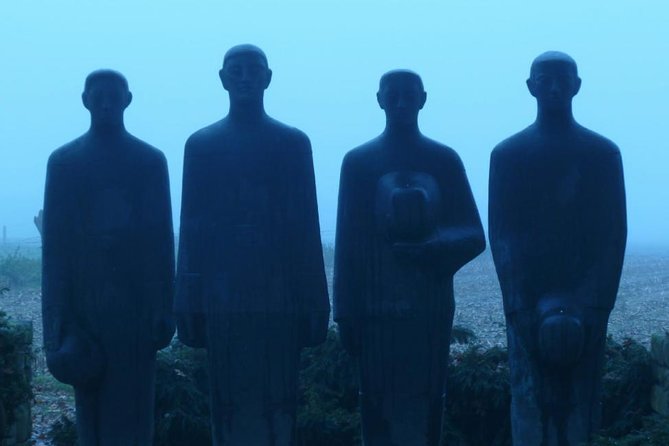
Messines Ridge is a strong opening, because it sets the tone: large-scale planning, brutal outcomes, and then one of the most human surprises of the war. Here you’ll hear the story of the Battle of Messines, then you visit mine craters connected to that fighting.
Then comes the part that tends to stop people mid-sentence: the Christmas Truce scene. The tour treats it as part of the history rather than a gimmick, which is exactly how you want it. You’re not being asked to “feel a certain way.” You’re being shown what happened and why it stands out.
You also visit a crypt connected to Adolf Hitler, where he was treated for wounds. That’s heavy material, and this stop matters because it adds the wartime underground layer to a battlefield that is often simplified into just trenches and shelling.
Practical note: this is also the kind of stop where you’ll benefit from asking questions early. If you’re curious about timelines or unit movements, bring them up here while the guide has the whole map fresh in mind.
Stop 2: Hooge Crater Cemetery, Pat Bugden VC, and Menin Road
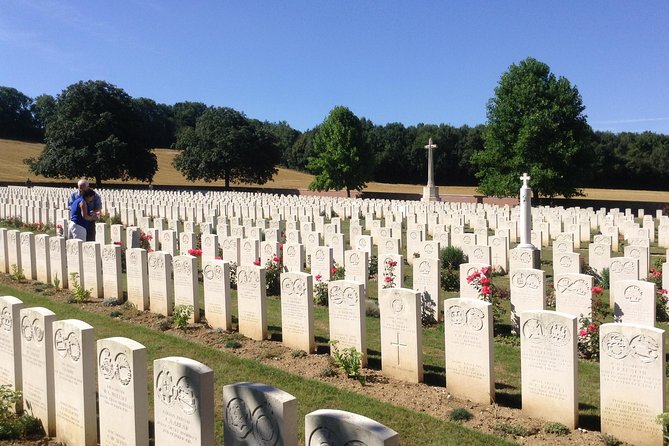
Hooge Crater Cemetery is where the war narrows down into names, awards, and specific places. You visit Pat Bugden VC, noted as a 20-year-old Victoria Cross recipient. That detail matters because it pulls the story away from abstraction.
You’ll also stand near the Menin Road, alongside where Australian gun pits were used for the assault on Passchendaele. This is one of the “you can point at it” sections of the day. If you’ve ever wondered how an operation turns into real positions on real ground, this is the answer: the map becomes a road, and the road becomes a viewpoint.
One short stop here is a common pattern in well-run battlefield tours: you get enough time to absorb the key facts without losing the thread of the day. That balance keeps the tour moving while still feeling thoughtful.
The in-between site: Australian HQ in September 1917 (plus earlier Nov 1914 actions)
Between the cemetery and the next battlefield walk, you’ll visit a site tied to Australian HQ in September 1917. You’ll also learn about earlier actions on the same ground in November 1914.
This is the kind of stop that can be easy to skip on a rushed schedule, but it’s a real value-add. It shows you that this region didn’t become important only after a single battle. The same ground got pulled into conflict again and again, with different forces and purposes over time. It’s a reminder that the Western Front wasn’t a straight line—it was a looping machine.
You can also read our reviews of more tours and experiences in Ypres

Stop 3: Battle of Polygon Wood, concrete bunkers, and the Australian 5th Division monument
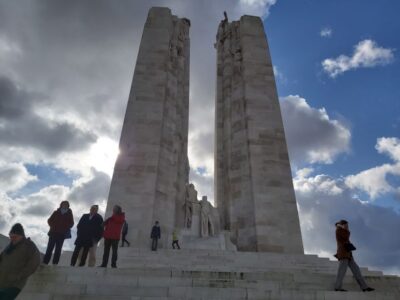
Polygon Wood is where the war starts feeling more tactile. You’ll walk through the woods and see concrete bunkers that were there when Australian soldiers captured the position. The point isn’t to impress you with military engineering. It’s to help you understand how soldiers tried to survive in a place designed to be lethal.
After that, you visit the cemetery and the Australian 5th Division monument. This combination works because it links the action you just walked past to the lasting record of those who didn’t come home.
If you prefer a tour that balances battlefield survival details with remembrance structures, this stop hits that sweet spot.
Stop 4: Hill 60 and the 1st Australian Tunnelling Coy mine crater
Hill 60 is a battlefield story built on engineering and timing. You’ll hear about Captain Woodward and the 1st Australian Tunnelling Coy, including the mine that was blown at 3.10am on 7 June 1917. Then you’ll see the crater.
This stop is one of the best places to grasp how WWI differed from earlier wars. It wasn’t just soldiers charging forward. It was also tunnels, explosives, and attempts to control what the enemy felt and saw next.
It also gives you a different kind of “scale” comprehension. A crater doesn’t look like strategy. But on the ground, when your guide explains how it fit into the assault plan, it becomes clear why so much effort went underground.
Driving sections that actually help: tracking the Australian advance line
Between the major stops, you’ll do driving sections that follow the line of the Australian advance, and later you’ll drive through Zonnebeke in that same advance area.
This sounds like filler until you’ve seen how the terrain stretches. The driving segments help you avoid the classic problem of battlefield touring: visiting spots that feel disconnected. Here, you’re building a mental path as you go, which makes the final cemetery-and-memorial phase hit harder.
If you’re someone who wants a story with continuity—who likes knowing how each place relates to the next—this structure is a win.
Stop 5: Tyne Cot Cemetery, 12,000 graves, and the names that aren’t there
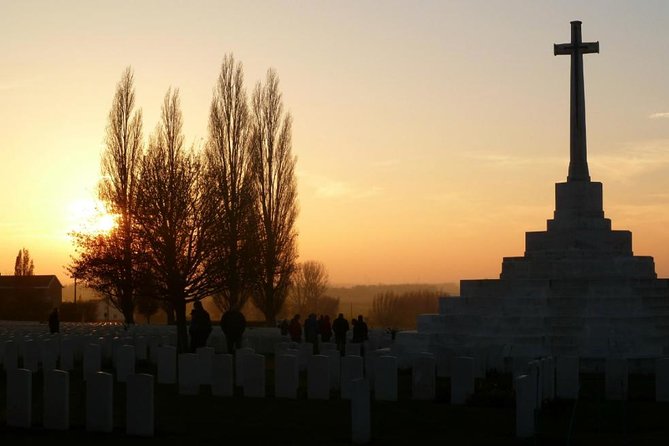
Tyne Cot Cemetery is one of the most powerful places in the region. You’ll visit the Commonwealth War Graves Commission cemetery, described as the world’s largest of its kind, with around 12,000 soldiers buried there. Only about 3,000 have names, which changes how you read the place.
This is where the “value” isn’t just that it’s famous. It’s the math of remembrance. The guide’s explanations can help you understand why the missing names feel so heavy and why WWI memory in this area often centers on loss with incomplete records.
You’ll also learn that two Australian VC recipients are buried here. That detail adds another layer, because it reminds you that the cemetery isn’t only about scale. It holds specific stories and recognized acts.
Stop 6: The John McCrae site and In Flanders Fields
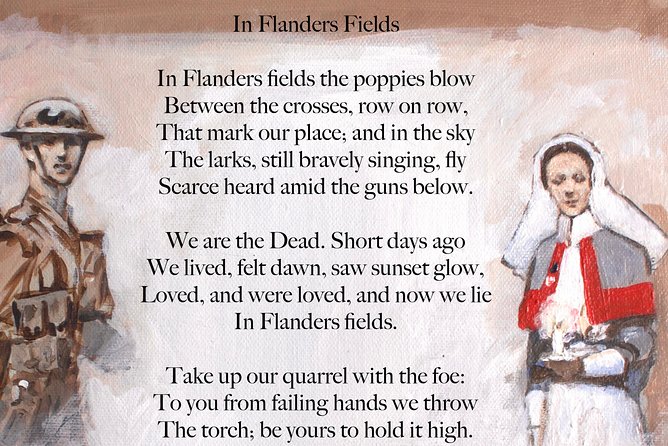
Next you’ll visit the site connected to Lt Col John McCrae and the hospital area where he composed In Flanders Fields. This stop works because it shifts from battlefield mechanics to language.
Even if you’ve read the poem before, seeing the site helps you understand how quickly the war became something that could be shaped into words. It’s one of those connections between personal suffering and public memory that this region does especially well.
Keep an eye on timing here. It’s a short stop, so it’s best treated like a moment to absorb rather than to rush through.
Stop 7: Menin Gate Memorial and the story behind 55,000 missing names
At Menin Gate Memorial, you’ll hear how the memorial came about and the story behind the 55,000 names listed there for the missing. This stop is big in meaning, but it’s also good for context. You’ll learn what the memorial represents and how the missing names became part of a permanent record.
One practical tip: if the schedule allows, you may be able to stay for the Last Post at the Menin Gate. That’s not guaranteed in every day plan, but it’s a real possibility when you’re wrapping up close to the end of the morning-and-afternoon flow.
If you’re sensitive to strong emotions, this is also where you might feel them most. It’s okay to take a step back, look, and give yourself a minute.
Stop 8: Sanctuary Wood Museum and original First World War trenches
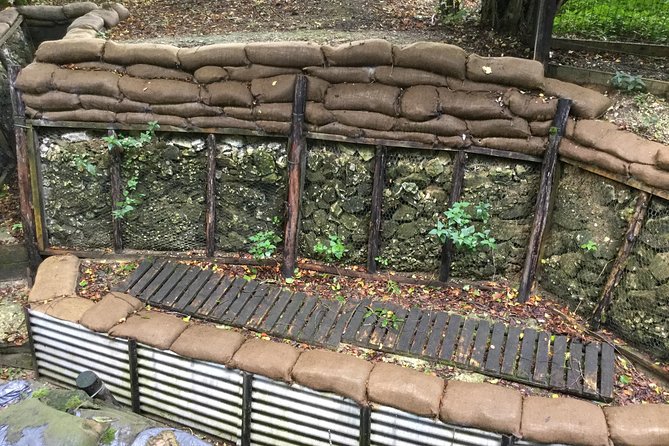
The finish is smart: Sanctuary Wood Museum. You’ll visit unique original First World War trenches, and admission is included. This matters because it reduces guesswork. Instead of imagining what trenches must have been like, you’re looking at remains that help you picture the reality.
This last stop also ties back to everything earlier in the day. If you spent the morning hearing about mines, bunkers, craters, and assault lines, the trenches give you the “why it all mattered” physical context.
It’s a good ending point for another reason: you can leave the museum with something concrete in your mind, not just a string of names and battle titles.
The guide is the difference: what Søren-style guiding brings
The biggest praise you’ll hear about this tour centers on the guide. Søren (when he’s your leader) has a way of turning WWI details into clear scenes, without losing respect for what happened. The day stays organized, and you’re not stuck with one-way lecturing.
Two other things you’ll likely appreciate:
- You can ask questions as they come up, instead of waiting for some late “Q&A time.”
- Your route can be shaped if your interests are personal, including family history connected to the region.
That tailoring isn’t a marketing line—it’s what helps a private day feel personal instead of generic. And because the group is only your party, the guide can keep the pace aligned with your comfort level.
Who this Ypres private day suits best
This tour is a strong fit if you:
- Want a private Ypres WWI day with pickup from nearby Belgian and northern French bases
- Like battlefield touring that includes both action sites and remembrance sites
- Have a family link to the Ypres area and want the day arranged around that connection
- Prefer a guide who will explain the “why” behind each location, not just the “what”
It may be less ideal if you only want broad, high-level overview and you hate questions and walking from stop to stop. But if you’re the type who can sit with difficult places and still want answers, it’s an excellent match.
Should you book Christmas Truce to Passchendaele in Ypres?
If you’re planning a day in the Ypres Salient and you want more than a checklist, I’d book this. The route makes sense, the stops connect to each other, and the guide component is where the day becomes truly useful. Add in hotel pickup from Ghent/Bruges/Lille-area locations and a strong mix of mines, trenches, cemeteries, and memorials, and you get good value for a private WWI experience.
I’d hesitate only if a long day out (about 9 hours) without lunch included will stress you too much. If that’s you, plan snacks and decide what matters most—because this itinerary is designed for people who want the full arc from battlefield ground to the places of remembrance.
FAQ
FAQ
Is this a private tour?
Yes. It’s listed as a private tour/activity, meaning only your group participates.
Where can pickup happen?
Pickup is offered from hotels or B&Bs within a 66 km radius of Ypres, including Ghent (Gent Dampoort Station), Lille, and Arras.
How long is the tour?
The duration is about 9 hours.
What language is the tour in?
The tour is offered in English.
What’s included in the price?
Bottled water is included. Sanctuary Wood Museum admission is included as well.
Is lunch included?
No. Lunch is not included.
Do I need to pay for admissions at the stops?
Most stops list admission as free. Sanctuary Wood Museum has admission included.
Do I get a ticket on my phone?
You receive a mobile ticket.
What’s the cancellation window?
Cancellation is free if you cancel up to 24 hours in advance of the start time for a full refund.