REVIEW · YPRES
From Ypres 4hr Christmas Truce and Monster Mines of Messines PRIVATE Tour
Book on Viator →Operated by A Foreign Field WW1 Tours · Bookable on Viator
Hill 60 to the Christmas Truce in one focused ride. This private tour from Ypres strings together the most meaningful corners of the Messines and Ypres battlefield area without you bouncing between buses. You’ll get a guide’s attention, so you can ask questions as they come up, including how the battle connects to your own family history.
I especially like how the stops are spread out but still feel smooth, because you’re traveling as a passenger with pickup in the Ypres area. I also like that the tour is designed to be personal, not scripted, with a private format that keeps the pace flexible when you want to linger at a memorial. One possible drawback: since it’s a compact 4-hour block with several stops, you may wish you had more time at the site that hits you hardest.
In This Review
- What makes this Ypres private WWI tour worth your time
- Private pick-up in Ypres, then a fast track to the key battle sites
- Hill 60 and the Caterpillar Crater: why this spot still feels haunting
- Spanbroekmolen Mine Crater: meet the scale of WWI tunnelling
- Messines Ridge memorials: New Zealand and Irish contributions in one flow
- Christmas Truce Memorial: the ground where the moment is remembered
- Hyde Park Corner Commonwealth War Graves Cemetery: personal graves, not just monuments
- How the 4-hour timing and private format affect your day
- Value for money: $532.32 per group (up to 4)
- Practical details that matter before you go
- Should you book this Ypres private WWI tour?
- FAQ
- How long is the private tour?
- What’s the meeting point in Ypres?
- How many people are in the group?
- Is the tour in English?
- Do the stops require paid admission?
- What does the tour include in terms of sites?
- Can I get a full refund if I cancel?
What makes this Ypres private WWI tour worth your time

- Private guide attention means your questions and interests shape what you focus on
- Car-friendly touring helps you cover multiple spread-out sites in one morning window
- WWI sites with context: Hill 60, Spanbroekmolen, Messines Ridge, and the Christmas Truce ground
- National and battlefield memory in one loop: New Zealand and Irish memorials plus Commonwealth graves
- Family-history friendly—you can steer the story toward what matters to you
Private pick-up in Ypres, then a fast track to the key battle sites
The biggest advantage here is simple: you’re not trying to “optimize” battlefield geography on your own. With pickup at the Ypres train station or at your hotel/BnB (if it’s not listed, you message the provider with your address), you start with the part most people hate: figuring out where to meet and how to get from site to site.
From there, you’re given a straightforward rhythm. Each stop is short enough to keep the momentum going, but long enough to actually read, look, and absorb what the guide is pointing out. The tour also runs in English, which matters in WWI history where the details can shift from one unit, date, or front section to another. You’ll get explanations tailored to what you’re seeing, not just a list of names.
This is also a smart format if you have a family-research goal. The tour specifically notes the possibility to tailor it to relevant family history. In practice, that means you can push beyond general storytelling and ask questions like: Which area matches my ancestor’s timeline? What kind of fighting happened here? Why does this memorial exist? A private guide can slow down when you need it, and move along when you don’t.
You can also read our reviews of more private tours in Ypres


Hill 60 and the Caterpillar Crater: why this spot still feels haunting

Hill 60 is where the tour’s tone deepens fast. You’ll hear the story of Hill 60 and the Caterpillar Crater, and you’ll learn why this location matters so much for understanding how the fighting played out on the ground level. The guide’s focus here isn’t abstract. It’s about people—how they were placed, how they endured, and how the battlefield reshaped life.
Two details stand out in what you’ll take in at this stop. First, you’ll hear about the 8,000 soldiers who were encased in the earth. That’s the kind of fact that reframes the entire war from “history chapters” to something more physical and immediate. Second, you’ll learn about a cemetery concept described as a cemetery without headstones. Even if you know WWI basics, that combination tends to hit harder in person than it does on a screen.
This stop is about understanding the “why” behind the landscape you’re walking through. Hill 60 isn’t just a viewpoint. It’s a lesson in how engineering, explosions, and mass movement could trap soldiers in ways the war diaries could barely explain. You’ll likely find yourself looking longer at the ground here than at other stops, because the guide’s explanation gives you something to “see” even where there’s little that looks dramatic at first glance.
Practical tip: plan to bring a notebook or use your phone for quick notes. Hill 60 is the kind of stop where terms and names start connecting to other locations later in the tour.
Spanbroekmolen Mine Crater: meet the scale of WWI tunnelling
Next comes Spanbroekmolen Mine Crater, and it’s a totally different kind of battlefield story. Instead of the surface drama you might expect, this stop emphasizes what was happening underneath. You’ll see the Spanbroekmolen Mine Crater described as weighing 91,000 lb, and you’ll hear about the tunnellers who made it possible.
This is one of the stops that helps you understand how WWI fought itself. The war wasn’t only about marching and rifles. It was also about digging, timing, drainage, and getting men into and out of underground spaces with precision. When the guide talks about the tunnellers, you start to see the battlefield as a giant construction project driven by fear and urgency.
The time here is short—about 10 minutes—so don’t treat it like a museum visit. Treat it like a focused checkpoint. You’ll want to listen for the guide’s explanation of what this crater represents and why it was relevant to the broader Messines Ridge fight. If you do, the next memorial stops will make more sense.
A consideration: if you’re the type who likes reading every sign slowly, the crater stop might feel brisk. You can often ask the guide to spend an extra minute where you care most, since it’s private, but the schedule still has a fixed backbone.
Messines Ridge memorials: New Zealand and Irish contributions in one flow
After the mine story, the tour shifts toward remembrance, and it does it in a way that helps you map alliances and unit identities across the same battlefield area.
At Messines Ridge (N.Z.) Memorial, you’ll hear about the New Zealand contribution to the battle. This is valuable because WWI battlefield tourism can sometimes flatten nations into one generic “Allied” label. Here, the emphasis on New Zealand keeps the story specific—who fought, where their presence fits, and why a dedicated memorial matters.
Then comes the Island of Ireland Peace Park, where the guide brings up the Irish contribution to the battle of Messines. This stop adds emotional context because it ties the fighting to a wider human story that includes divided loyalties and complicated histories. Even if you’re just getting started with WWI, these two memorials side by side give you a cleaner picture of how the same ridge line could carry different national meanings.
What I like about this two-stop stretch is how it turns your attention from tactics to people. You’re not just asking what happened. You’re asking: who remembers it, how do they remember it, and what was it like for the men whose names and markers still live here.
Time note: each of these stops is around 15 minutes, so you’ll get enough to understand what you’re looking at, but not so much that you feel stuck. If you have a strong family-history angle, this is a good moment to ask the guide how the New Zealand and Irish stories connect to the broader battle timeline.
Christmas Truce Memorial: the ground where the moment is remembered
Now you move into the stop most people recognize instantly: the Christmas Truce Memorial. Here, you’ll hear the story and see the ground where that moment took place, when soldiers met in No Man’s Land in Christmas 1914.
This stop works because it isn’t treated like a feel-good sidebar. The guide’s framing typically gives you a sense of why it happened when it happened, and why this single shared human gesture became a lasting symbol. In a tour full of engineering and death—craters, mines, memorials—this one adds a different emotional dimension. It reminds you that WWI wasn’t just machinery. It was also people making choices in impossible circumstances.
At about 15 minutes, you won’t get stuck here for hours, but you’ll leave with the key idea: this wasn’t legend from nowhere. It’s tied to a specific place in the wider battlefield narrative.
If you’re touring with family, this is often the stop that creates the most “on the spot” questions. It’s also a good chance to ask your guide how this event has been remembered over time, since the memorial is part of the storytelling.
You can also read our reviews of more tours and experiences in Ypres

Hyde Park Corner Commonwealth War Graves Cemetery: personal graves, not just monuments

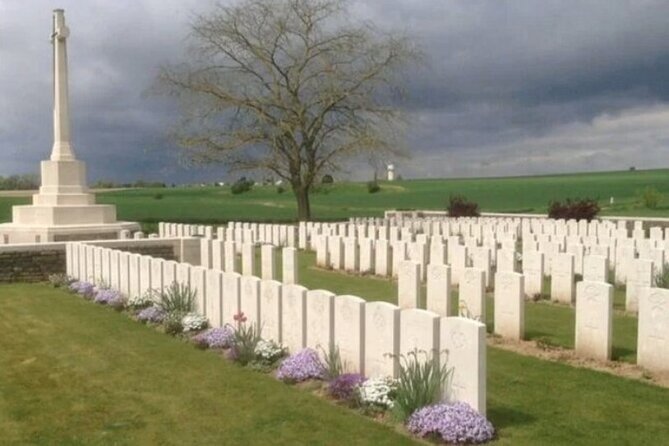
The final battlefield memory stop is Hyde Park Corner Commonwealth War Graves Commission Cemetery. You’ll see the Hyde Park Corner Memorial, and you’ll learn about two details that make this cemetery feel personal rather than generic.
First, you’ll hear about the resting place of an England rugby captain. Second, you’ll see that twin brothers are buried side by side. Those two facts are the kind that stay with you because they force you to picture normal life—sports, family, everyday identity—ending up inside WWI record-keeping.
This is also where the tour’s private nature can really help. If the guide knows what you care about—country, unit, or a specific type of story—you can spend more time with the graves or memorial elements that connect. Even within the short schedule (around 15 minutes), you can often steer your attention toward what matters most to you.
One more practical note: cemetery visits tend to reward a slow pace. If you want to take photos, do it respectfully and without rushing the guide’s explanation. For me, this stop is the best “closing scene,” because it pulls the story back toward individual names and family loss.
How the 4-hour timing and private format affect your day
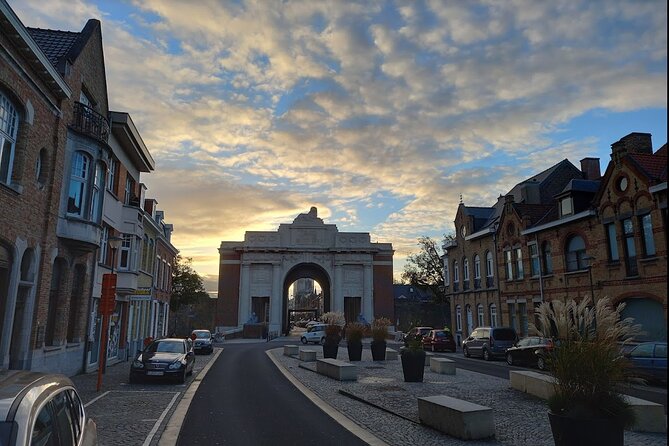
The tour is listed as about 4 hours and includes six stops. In theory, that sounds like a lot. In practice, it’s manageable because the stops are short and focused: around 35 minutes at Hill 60, then 10–15 minutes at each of the other points.
This kind of timing is ideal if:
- you want a guided overview without spending your whole day commuting,
- you’re visiting from outside Ypres and have limited time,
- you’re doing family-history research and want targeted context.
It’s less ideal if you want long, unstructured time at cemeteries or if you’re hoping for deep reading at every marker. Still, because this is a private tour—only your group participates up to 4 people—you’re not locked into a big group pace.
Pickup hours are also relevant. The listed opening window is 9:00 AM to 1:30 PM (with the tour running on Monday through Sunday). That means your day plan should be built around a morning-style schedule.
Value for money: $532.32 per group (up to 4)
The price is $532.32 per group, for up to 4 people. If you fill all four spots, that’s about $133 per person for a private guide and transportation as part of the experience. If you’re only two people, it becomes roughly $266 per person, which can still be worth it if you care about a tailored, focused route instead of piecing together transit and guide services yourself.
I think this is strongest value when:
- you have a small group (family or friends),
- at least one person cares about asking detailed questions,
- you want to avoid the stress of coordinating multiple independent stops.
Practical details that matter before you go
You’ll get a mobile ticket, and pickup is arranged via your arrival time if you’re coming by train. If your accommodation isn’t on the list, you message the provider with your hotel/BnB name and you’re met there.
Language is English, and service animals are allowed. The tour also notes that most travelers can participate, which is a good sign if you’re not looking for an intense hike. Still, you’ll be visiting memorial sites and cemeteries, so wear shoes you trust on uneven ground and bring a layer for Belgium’s weather shifts.
Finally, a big “day quality” point: this is offered as a private tour/activity, meaning your questions stay front and center. That’s not just a marketing line. It changes the experience because it’s easier to connect the story to what you’re actually trying to learn.
Should you book this Ypres private WWI tour?
If you’re interested in WWI beyond broad facts—especially the Hill 60 story, the Spanbroekmolen tunnelling angle, and the emotional pull of the Christmas Truce site—this is a strong pick. I’d book it if you can bring a small group and want a guide like Soren, who’s described as engaging and able to explain the siege of Ypres in a way that makes the sites click.
I’d think twice only if you want lots of free roaming time with no structure. This tour is intentionally compact, with stop lengths designed to keep the full arc moving from crater to memorial to graves.
FAQ
How long is the private tour?
It’s listed as approximately 4 hours.
What’s the meeting point in Ypres?
You’ll be picked up at IEPER TRAIN STATION (message with your arrival time) or at IEPER hotels & BnBs that are listed; if yours isn’t listed, you message with your accommodation name.
How many people are in the group?
It’s a private tour with only your group participating, up to 4 people.
Is the tour in English?
Yes, it’s offered in English.
Do the stops require paid admission?
The stops listed include free admission tickets.
What does the tour include in terms of sites?
You’ll visit Hill 60, Spanbroekmolen Mine Crater, Messines Ridge (N.Z.) Memorial, Island of Ireland Peace Park, Christmas Truce Memorial, and Hyde Park Corner Commonwealth War Graves Commission Cemetery.
Can I get a full refund if I cancel?
Yes. Free cancellation is available, and you can cancel up to 24 hours in advance for a full refund.