REVIEW · YPRES
From Ypres: WWI Battlefields Private Tour
Book on GetYourGuide →Operated by A Foreign Field Battlefield Tours/Passchendaeleprints.com Søren Hawkes · Bookable on GetYourGuide
Trenches have a sound you can almost hear. This private Ypres WWI tour turns the Ypres Salient into a real route you can follow on foot and in front of the big memorials, with your guide pacing the story around what you care about. I especially liked how it blends trench remains with quiet cemetery time, and how it can be steered by guide Søren Hawkes or Sabine for an Australia, Canada, or Kiwi focus.
I love that you walk parts of the front line—Sanctuary Wood and the crater area—so the war feels physical, not just read on a plaque. I also love the emotional contrast: Tyne Cot’s sheer scale, then stops like the Brooding Soldier memorial and the John McCrae dressing-station photo stop that connect battlefield history to culture and memory.
One consideration: with only 4 hours, you’ll cover the major sites and a small number of smaller cemeteries, so you’ll want to have your must-sees (and any family names) ready before you set off.
In This Review
- Key moments I’d circle before you go
- From Ypres pickup to a tight 4-hour front-line route
- Hill 60 B Caterpillar Mine Crater: where the ground itself becomes a witness
- Sanctuary Wood Museum and trenches: learning to read the front line
- Tyne Cot Cemetery: when scale does the talking
- The Brooding Soldier memorial: the gas attack story in one stark scene
- John McCrae dressing station stop: In Flanders Fields meets the ground
- Essex Farm Cemetery: a short visit that still deserves attention
- Tailored national routes: Australia, Canada, and Kiwi focus
- Price and value: $530 per group, and what you really get
- What to bring and how to get the most out of each stop
- Should you book this Ypres WWI private tour?
Key moments I’d circle before you go
- Hill 60 B Caterpillar Mine Crater walk where the ground literally changed shape in 1917
- Sanctuary Wood Museum + trenches with a guided route that helps you read the terrain
- Tyne Cot Cemetery with its long rows and the feeling of scale you only get in person
- The Brooding Soldier and the memorial angle on the 1915 first-ever German gas attack
- John McCrae dressing station and the cultural footprint of In Flanders Fields
From Ypres pickup to a tight 4-hour front-line route
The tour is designed for people who want a strong overview without feeling dragged through too much. You meet your guide in Ypres—either at your accommodation, at the Ypres Railway Station, or at a pick-up spot you agree on. From there, you get a private format (up to four people), which matters on these sites because you’ll usually want time to look, read, and ask questions without feeling rushed or competing with a big group.
Expect a comfortable, car-based circuit with short guided walks at specific stops. Multiple guides in the program (including Søren and Sabine) are praised for keeping the pace human—no sprinting, no skipping your questions. If you’re the type who likes to photograph calmly and take notes, that style helps a lot.
Because the entire tour is only 4 hours, you should use the first moments wisely: tell your guide what you’re most interested in, and if you have any family connections, share the names early. The tour can be tailored where possible, and that can completely change how meaningful the cemeteries feel.
You can also read our reviews of more private tours in Ypres

Hill 60 B Caterpillar Mine Crater: where the ground itself becomes a witness

The route starts with the Caterpillar Mine Crater (Hill 60 B) and includes a guided tour plus a short walk (about 30 minutes total). This is one of those places where the war stops being abstract. You’re not only looking at history—you’re looking at altered earth, the kind that turns into a battlefield advantage and later an enduring scar.
What I like about starting here is that it gives you a baseline for understanding everything that comes next. Once you’ve seen how digging, explosives, and terrain control worked, the rest of the sites snap into focus: lines, movement, and why soldiers needed cover and elevation.
Practical tip: wear comfortable shoes. Even when the walking time is short, you’ll likely be on uneven ground. A camera is worth it too, but take a moment to look first—this stop is one of those where photos can’t fully replace the feeling of scale.
Sanctuary Wood Museum and trenches: learning to read the front line
Next comes Sanctuary Wood Museum (about 50 minutes), where you’re taken through the area in a way that helps you visualize the fighting around Passchendaele in 1917. The tour specifically follows the kinds of soldiers who attacked toward Passchendaele, including Australian, Canadian, New Zealand, South African, and British forces, and the museum helps anchor that in place.
This stop works best if you lean in. The guided time isn’t just about dates. It helps you understand what the land meant to the people using it—why certain routes mattered, where perspective changes as you stand in different positions, and how the war’s grind shaped daily decisions.
One bonus I appreciate: your guide can tailor this segment based on national interests. For example, an Australia-focused route can mean you spend more time on the sites that connect best to Australian actions in the area. If you’re traveling with friends or family who care about different aspects, the private format makes that negotiation much easier.
Tyne Cot Cemetery: when scale does the talking
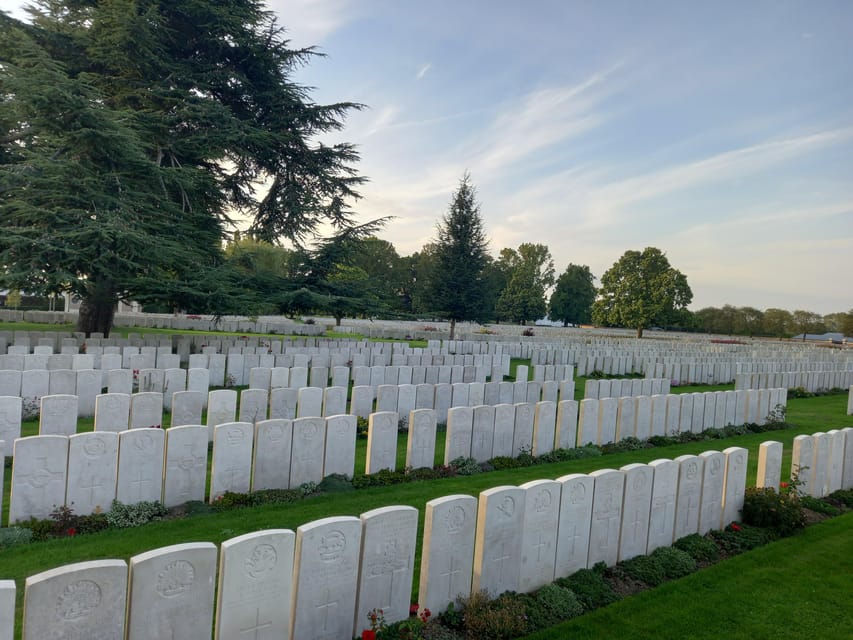
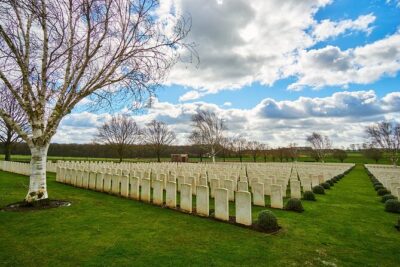
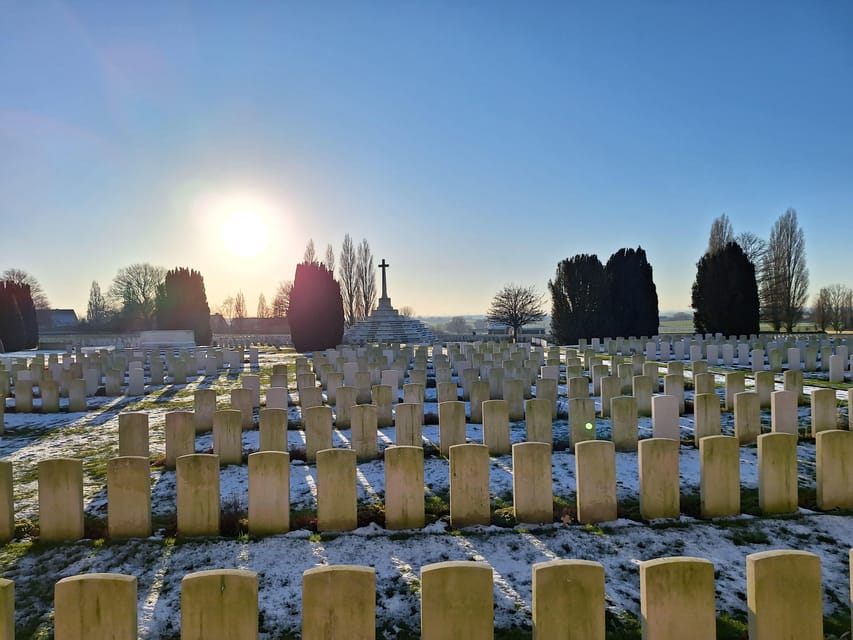
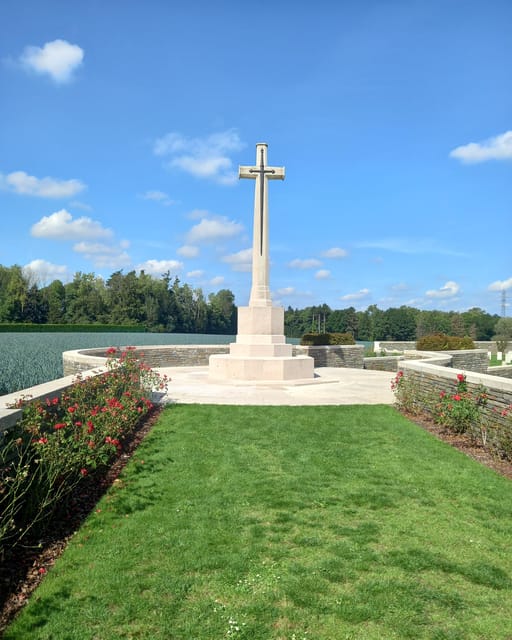
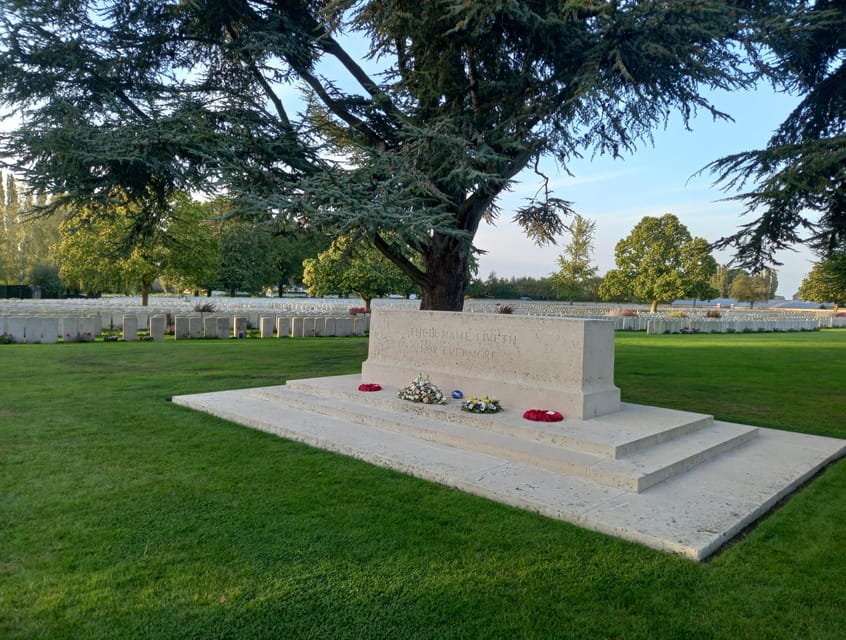
Tyne Cot Cemetery (about 50 minutes) is the kind of place that forces your brain to slow down. It’s one of the biggest Commonwealth cemeteries on the Western Front, and the tour highlights it as a central stop with around 12,000 war dead buried there.
The value here is the guided structure. You get time to read the layout and absorb what the guide explains about how this cemetery fits into the fighting around the Ypres Salient. With a guide, you’re not just standing among names; you’re learning how the battle moved, which makes the burial ground feel connected to the actions rather than placed randomly in time.
If you’re bringing family names into the story, this is often where it hits hardest. One of the strongest themes from the guides’ style is that they will personalize the day if they can—some travelers even had relatives traced and included where possible. You don’t need to have a family link to get a powerful experience, but if you do, Tyne Cot is a major payoff point.
The Brooding Soldier memorial: the gas attack story in one stark scene
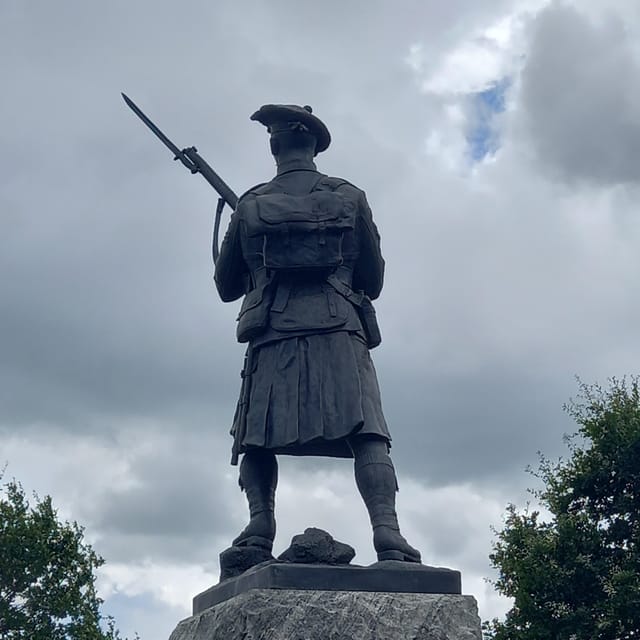
The Brooding Soldier stop is shorter (around 20 minutes), but it’s packed with meaning. The tour points you to the memorial connected with the 1915 first-ever German gas attack, a reminder that the war didn’t only shift through gunfire and mines. It shifted through terrifying new methods that changed what “survival” meant.
What I like about this stop on a tight schedule is that it breaks up the day. After the cemetery’s quiet weight, and before the John McCrae moment, the memorial gives you a different lens. It’s still solemn, but the focus is on a specific turning point in tactics and consequences.
Because the stop is brief, don’t assume you’ll automatically read everything on your own. Give the guide a minute to set the context, then take your own time to look. If you’re photographing, consider doing one wide shot first, then step back and do close-ups only if you’re truly interested in the details.



John McCrae dressing station stop: In Flanders Fields meets the ground
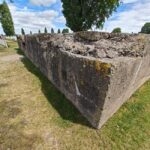
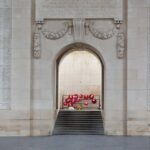
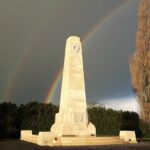
The tour then includes a photo stop at the John McCrae dressing station linked to In Flanders Fields (about 35 minutes). This is where battlefield history connects to literature and public memory. McCrae’s name travels beyond Ypres, but standing at the place connected to his work gives the poem more gravity than reading it at home.
I found this stop especially useful for travelers who want the story to go beyond tactics and into how people processed the experience. Your guide’s storytelling style matters here. Multiple guides (including Søren and Sabine) are praised for making the history feel personal, even when the subject stays respectful and serious.
Practical approach: don’t rush this segment. Use the extra minutes to read the interpretation on-site, then take a slow walk around for angles. If you enjoy connecting culture to place, this is one of the stops that delivers.
Essex Farm Cemetery: a short visit that still deserves attention
Finally, the tour includes Essex Farm Cemetery (about 10 minutes). Ten minutes sounds quick, and it is—but on a tour like this, you often need a “third gear” moment where you slow down again before you head back to Ypres.
This stop can be especially meaningful if you’re watching how the tour builds a picture of the fighting in sections. In a short time, your guide can connect Essex Farm to the broader pattern of movement around the Ypres Salient. Even if you only get a brief guided look, it can give you a sense of breadth: the war wasn’t one place, one date, or one event.
If you know you’re going to want longer time at cemeteries, you can ask your guide to protect a bit of space in the schedule. The most consistent praise across guides is that they don’t rush you, and that flexibility is part of the value.
Tailored national routes: Australia, Canada, and Kiwi focus
One of the smartest parts of this tour is that it’s not locked into a single script. There are three different itineraries available:
- Australian 1917 Ypres Battlefields
- Canadian 1915 and 1916/1917 Ypres Battlefields
- Kiwi 1917 Ypres Battlefields
That matters because the Western Front story shifts depending on which units and periods you focus on. Even if two travelers visit the same general area, the details can change: what you notice, what you emphasize, and which memorials and routes feel most relevant.
On top of that, the tour can be tailored to your interests, and if you have ancestors who fell, your guide aims to include them where possible. That personalization is exactly why a private format is worth it here. A shared-group tour can be fine, but it’s harder to make time for family details, and those details often require pauses.
Guides also add personal context. Your guide may point out a memorial to the missing and a place where a great uncle is commemorated—small moments like that are where the day stops feeling like a checklist and starts feeling like a lived connection.
Price and value: $530 per group, and what you really get
The price is $530 per group up to 4, and the tour runs 4 hours. At first glance, that’s not “budget.” But on a private WWI battlefield tour, it’s easier to judge value by what it buys: a guide who can focus your schedule, a vehicle pickup and drop-off in Ypres, and museum entrance plus mineral water included.
Here’s the practical math: if you fill all four spots, the cost is about $132.50 per person. If you book as a couple, it’s higher per person. Still, you’re paying for time, access, and interpretation, not just transport.
The “highly-rated transport” detail is meaningful. Several recent experiences note a clean, comfortable car, and at least one specifically called out air-conditioning during hot weather. On battlefield days, comfort affects your patience—especially when you’re getting out for short walks and photos.
Is this the best fit if you love doing everything on your own? Maybe not. But if you want to understand what you’re seeing and you want the option to tailor the route, this format is solid value.
What to bring and how to get the most out of each stop
This tour is built around walking segments and reading time, so packing right helps. Bring:
- Comfortable shoes
- Camera
- Weather-appropriate clothing
Also, set your expectations for pacing. The day includes multiple guided stops (not just a drive-by), so you’ll get a rhythm: short walk, guided museum time, cemetery time, memorial time, then the McCrae photo stop and a brief cemetery finish.
If you’re sensitive to heat or wind, plan for it. One thing I learned from recent experiences is that the weather can make a big difference to how comfortable you feel at open-air sites like cemeteries and memorials. Layering helps. And if you’re traveling with older relatives or anyone who prefers minimal walking, tell your guide at the start—private tours can adjust.
Food is not included, so plan a snack or a meal around the tour start and end. With a tight 4-hour window, waiting too long can make you restless before you ever reach Tyne Cot.
Should you book this Ypres WWI private tour?
Book it if you want a focused, emotionally strong Ypres day with the major WWI touchpoints—and you want the day tailored to your nation (Australia, Canada, or New Zealand) or even your family links. It’s also a great pick if you like guides who explain how the fighting connects to the exact places you’re standing, and who keep the schedule humane.
Skip it if you’re looking for a “wander at your own speed all day” style. With only 4 hours and multiple key sites, you’ll spend most of your time doing guided visiting rather than long free-form exploration. If you want that, pair this with extra solo time in Ypres afterward.
If you do book, send your guide the names and connections you already know. Even small details can turn a moving day into a truly personal one.