REVIEW · YPRES
In Flanders Fields and Passchendaele Half Day Morning Tour
Book on Viator →Operated by Ypres Battlefield Tours · Bookable on Viator
Cemeteries, trenches, and the Ypres Salient—condensed into hours. This half-day morning tour uses an air-conditioned vehicle and a tight, thoughtful route so the story makes sense fast, without rushing you.
I especially like the way it starts at Sanctuary Wood to give you the big picture before you see the sites.
A possible drawback: the Sanctuary Wood Museum has a separate entrance fee (€8 per person) and it is not open on Mondays, so you’ll shift to alternative trenches.
In This Review
- Key things that make this tour worth your time
- Ypres Salient in 3½ hours: a smart hit-list format
- How meet-up and the small-group setup change the experience
- Sanctuary Wood: the Ypres Salient map you’ll carry all morning
- Sanctuary Wood Museum and preserved trenches: where you slow down
- Essex Farm Cemetery: the dressing-station story you can feel
- Langemark Cemetery: 44,000 burials and a darker political echo
- Saint Julien Memorial and the first gas attacks: short, sharp, unforgettable
- Passchendaele battlefields: getting the legacy in focus
- Tyne Cot Cemetery: the “simply stunning” finale you can’t rush
- Price and value: what you’re actually buying
- The guide factor: why Roger’s approach gets repeated praise
- Who should book this WWI half-day from Ypres
- Should you book In Flanders Fields and Passchendaele?
- FAQ
- How long is the tour?
- What time does the tour start, and where do we meet?
- Is the Sanctuary Wood Museum included in the ticket price?
- Is the Sanctuary Wood Museum open every day?
- What’s the group size and tour language?
- Are service animals allowed?
Key things that make this tour worth your time
- Small group size (max 8) keeps questions easy and the pace more human
- Roger’s style (respectful, organized, and flexible) helps history land emotionally, not just academically
- Air-conditioned transport gets you to harder-to-reach places around the Ypres Salient
- Multiple cemetery stops where details matter: dressing stations, evacuation, and names you can trace
- Sanctuary Wood Museum adds preserved trenches, with a note that the museum isn’t open on Mondays
- Tyne Cot Cemetery is a major highlight for scale and atmosphere, with time to really take it in
Ypres Salient in 3½ hours: a smart hit-list format
This tour is designed for people who want the meaning behind the names. In about 3 hours 30 minutes, you cover a lot of ground: the Ypres Salient fighting zone, key memorials, and some of the most significant World War I burial sites in the region.
What makes the timing work is that the stops aren’t all the same. You get a mix of outdoor viewpoints, cemetery “readings,” and short memorial moments. Some parts are intentionally brief, so you can keep your energy for the sites that hit the hardest.
For me, the biggest value is structure. You start with context, you see the places where men actually lived and died, and you end with one of the most striking cemeteries in the world. It’s not “see everything.” It’s “see what matters, in an order that helps you understand it.”
You can also read our reviews of more tours and experiences in Ypres.


How meet-up and the small-group setup change the experience
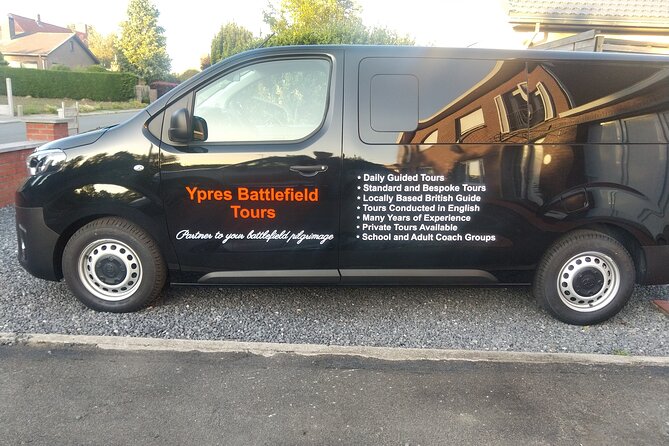
You start at Station Ieper (Colaertplein 35, 8900 Ieper, Belgium) at 10:00 am, and the tour returns you to the same meeting point. You also get a mobile ticket, and the group is capped at 8 people.
That small size matters more than it sounds. This is the kind of tour where questions come up naturally: How did the wounded get out? Why is one cemetery linked to later political history? What does a specific memorial say about chemical warfare? When you’re in a larger crowd, those questions get swallowed. Here, discussion is encouraged and it’s easier to pace the walk so it stays comfortable.
Comfort also gets a nod. The tour uses an air-conditioned vehicle, which helps when you’re heading between Ypres-area sites. It’s a practical win for a half-day outing—especially if you have mobility limits or you simply don’t want long gaps of waiting.
Also, if you like planning with your brain switched on, you’ll appreciate the way this tour keeps things readable and organized. The guide clearly knows the material and presents it in a way that’s easy to follow at roadside stops, not just in a classroom.
Sanctuary Wood: the Ypres Salient map you’ll carry all morning
The tour kicks off at Sanctuary Wood, with an overview of the fighting in the Ypres Salient. It’s a 30-minute start, and it sets expectations for what you’re about to see.
This first stop is important because Ypres without context can feel like a list of tragic names. Sanctuary Wood helps you understand why this area mattered: how it was fought over, why it kept returning to the same battle lines, and how the landscape shaped both survival and suffering. Even though the time here is short, the goal isn’t to drown you in details. It’s to give you a “map in your head,” so the rest of the morning doesn’t feel like random geography.
If you’re the kind of person who likes to understand before you walk, you’ll likely love this opening. It also makes the outdoor moments afterward easier to interpret—especially when you’re looking at cemeteries that represent different parts of the same brutal system.
Sanctuary Wood Museum and preserved trenches: where you slow down
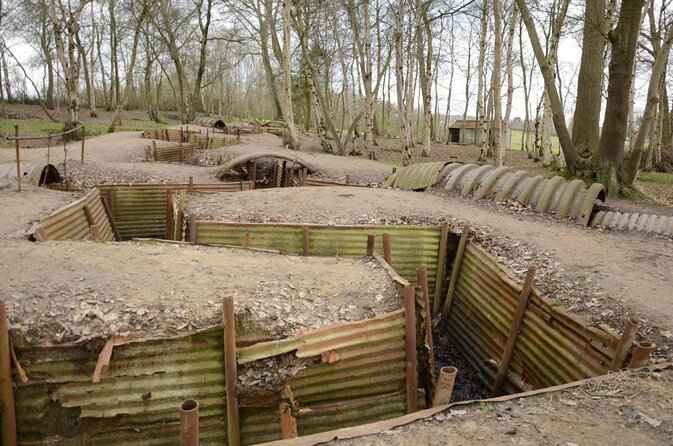
After the orientation, you move into the Sanctuary Wood Museum, a preserved site that includes trench elements. This portion runs about 50 minutes, and the entrance fee is not included (it’s listed as €8 per person).
Here’s the practical trade-off: the museum costs extra, but it’s also the only part of the morning that’s specifically highlighted as a fee-based add-on. You’re paying for access to the preserved material—things you can’t replicate from a quick street view.
One more timing detail to keep in mind: the museum is not open on Mondays, and you’ll visit alternative trenches instead. If your dates land on a Monday, don’t worry about losing the main idea; just expect a shift in the trench experience rather than an exact replica of the usual museum visit.
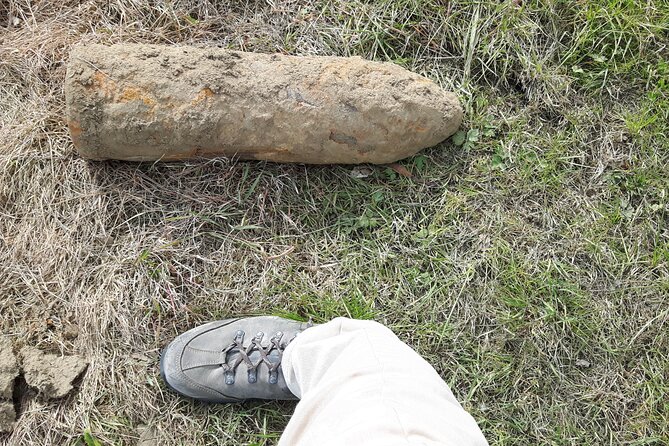
What I like about including the museum is that it turns background into something you can read. You’re not only told about the war—you’re shown physical traces. That tends to make the later cemetery stops feel less abstract.
Essex Farm Cemetery: the dressing-station story you can feel
Next comes Essex Farm Cemetery. This stop lasts about 30 minutes, and admission is free.
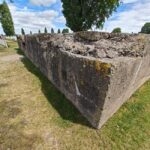
This is one of those cemetery visits that doesn’t treat burial as the only theme. Instead, the focus includes preserved dressing station bunkers, and it discusses the procedure used for the evacuation of the wounded.
That matters because it shifts the narrative from “front line” to “what happened to the men after they were hit.” The war didn’t stop at the moment of injury. There was a whole grim workflow behind it—medical spaces, evacuation routes, and the constant pressure of keeping men alive long enough to reach help.
If you’re sensitive to the subject (and most people are), this is a heavy stop, but it’s also meaningful. It helps explain the system, not just the outcome.


Langemark Cemetery: 44,000 burials and a darker political echo
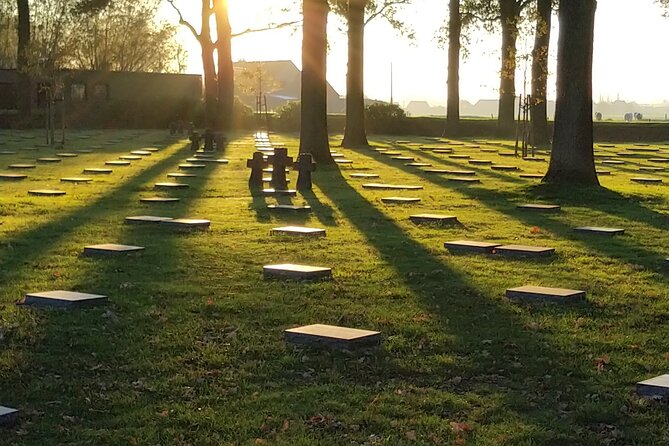
Then you head to Langemark Cemetery, another free stop about 30 minutes long.
This cemetery contains 44,000 burials, and it has strong links to Hitler and the Nazis of World War II. That linkage can be surprising if you came here expecting only WWI memorials. It’s also a reminder that later history didn’t leave these sites untouched.
The practical takeaway: Langemark is not just a solemn burial ground—it’s also a place where memory got reused and reshaped. A good guide helps you hold two ideas at once: the grief of those buried here, and the way post-war politics tried to write new meanings onto old pain.
I like that the tour includes this, because it nudges you past the “tourist WWI loop.” You’re seeing how the past can be repackaged later—intentionally or not—and why that can affect how memorial sites are understood.
Saint Julien Memorial and the first gas attacks: short, sharp, unforgettable
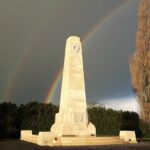
You then get a brief stop at Saint Julien Memorial, about 10 minutes.
Even with that short time, it includes a lot of weight. The stop references the Brooding Soldier Memorial and the story of the first gas attacks.
Ten minutes sounds like a blink, but that’s often how the most shocking moments work: you don’t need long to grasp what chemical warfare meant, and a focused stop can help you process instead of getting shuffled around. The memorial format also encourages quiet reading—something many guides don’t always have time to facilitate on a fast bus tour.
If you’d prefer more time here, you might feel the sting of the brevity. But if you’re glad the day stays paced and you’d rather save time for the bigger sites, this quick hit is a solid approach.
Passchendaele battlefields: getting the legacy in focus
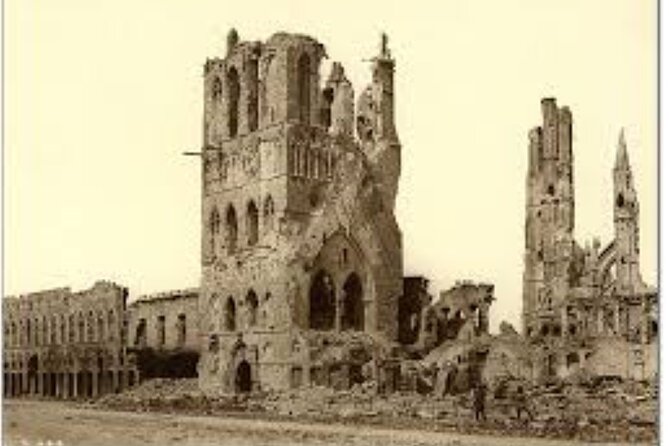
After Saint Julien, the tour visits Passchendaele (listed as Passendale on the summary). This part is about 15 minutes, and admission is free.
Here, the goal is not to pretend you can fully cover a whole campaign in a quarter hour. The value is the framing: you learn about the battlefields of Passchendaele and the legacy of the Great War in that area.
This stop works best if you’re comfortable with an overview. Think of it as the thread that ties early morning context to the final cemetery climax. You’ll likely come away understanding why Passchendaele is remembered the way it is, even if you leave wanting more depth.
Tyne Cot Cemetery: the “simply stunning” finale you can’t rush
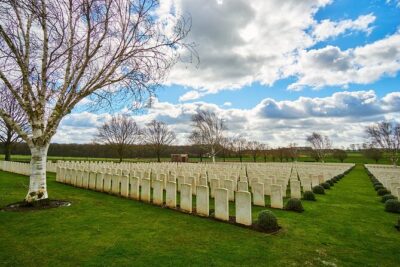
The last major stop is Tyne Cot Cemetery, with about 35 minutes set aside.
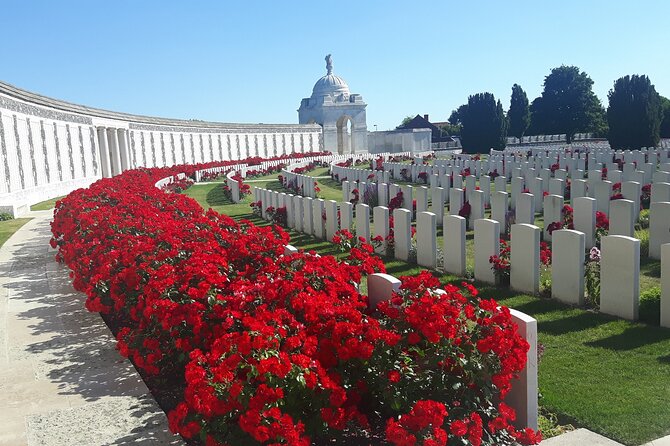
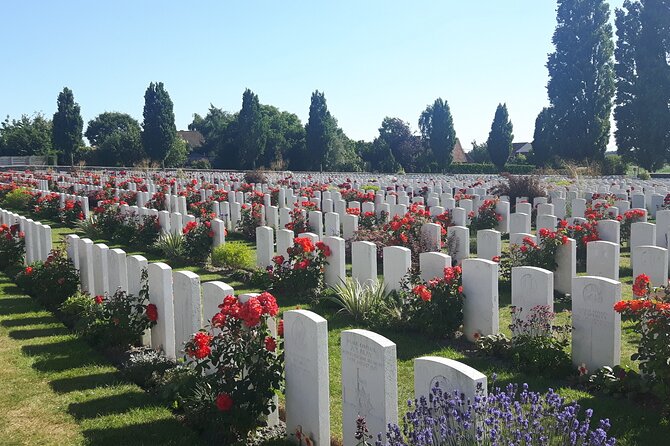
This is the heavyweight. It’s described as the largest British and Commonwealth War Grave Cemetery in the world, and it’s hard to imagine a finale that fits better. The scale alone makes it emotional, and the way it’s laid out makes it feel like a place you can’t speed-walk through.
This is where you’ll feel the difference a guided tour makes. A cemetery like Tyne Cot can be visually overwhelming if you stare at it as just rows and names. A guide’s job here is to help you notice the patterns and the meaning—so you don’t just see grief, you understand how the system worked and how remembrance was organized.
You end where you started, back at the meeting point, still under that guided rhythm. That matters because leaving Tyne Cot and instantly going into “random town time” can make the experience feel scattered. Ending the tour this way keeps the story intact all the way out.
Price and value: what you’re actually buying
The price is $108.84 per person, and the tour runs about 3 hours 30 minutes. For a half-day, you’re not just paying for transportation. You’re paying for:
- a route that covers several high-impact sites without turning it into a road-only day,
- a small-group format (max 8),
- and a guide who helps you interpret what you’re seeing, not just point.
There is one clear extra cost: Sanctuary Wood Museum (€8 per person) is not included. So if you want the museum experience, budget for that add-on. Also, note the museum’s Monday closure and the alternative trenches.
In practical terms, the value is strongest if:
- you want context at each stop,
- you’d rather not try to stitch together meaning on your own,
- and you appreciate the time saved by being driven between sites in an air-conditioned vehicle.
If you’re the type who hates structured timing, the “35 minutes here, 10 minutes there” rhythm might feel too controlled. But for most people, it’s a good trade: short enough to fit a morning, long enough to make the sites feel real.
The guide factor: why Roger’s approach gets repeated praise
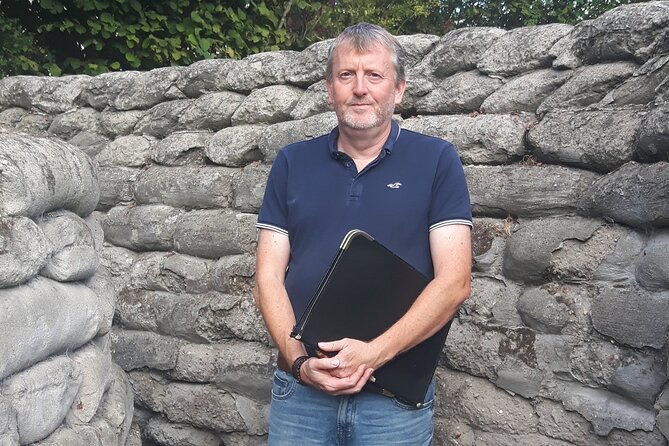
The single most consistent thread in the positive feedback is the guide, Roger.
You’ll see the same themes come up: Roger is friendly, respectful, and very good at giving information in a way you can actually follow while you’re standing outdoors. The pacing also shows up in comments: he’ll let you move at your own pace and still keep the tour moving.
Two standout values for your decision:
- Personal support for family research: If you come with a relative’s name or burial clue, Roger has gone out of his way to help trace connections, including linking people to graves at sites like Hooge Crater.
- Depth you can use: Roger has written books on the subject (including Reclaiming The Salient), so you’re not only getting facts for the moment. You’re getting context that can keep working after you return.
Also, there’s a real-life example of flexibility: when someone arrived late due to a train issue and ended up in the wrong place temporarily, Roger worked around it and helped make sure they didn’t lose the full tour experience. That kind of accommodation matters because tours like this depend on timing.
So yes, the route and stops are important. But with a topic this heavy, the guide’s tone and structure can make the difference between a confusing drive-by and a meaningful morning.
Who should book this WWI half-day from Ypres
This tour is a strong fit if you:
- want a WWI orientation that starts with the right context,
- prefer small-group discussion over crowds,
- and care about cemeteries as memorials with real stories behind them.
It also makes sense if you’re visiting Ypres as part of a longer itinerary and you want a high-impact morning without spending the entire day on the road.
Where it might not fit as well:
- If you want hours and hours at a single site (Tyne Cot especially), this will feel like a taste rather than a long immersion.
- If you’re very sensitive to the subject, you’ll still find it emotionally heavy—even though the timing is controlled and the guide is respectful.
Should you book In Flanders Fields and Passchendaele?
Yes, if you want a tight, meaningful route that helps you understand what you’re seeing—without losing the day to logistics.
Book it if:
- you like the idea of starting at Sanctuary Wood for context,
- you want guided reading at cemeteries like Essex Farm, Langemark, and Tyne Cot,
- and you value a small-group setup where it’s easy to ask questions.
Skip it or consider a different format if:
- you strongly prefer museum-style time blocks with no “next stop” rhythm,
- or you’re already comfortable reading the region independently and don’t need a guide to connect the dots.
If your goal is to leave Ypres with names, meaning, and a clearer sense of the Ypres Salient and Passchendaele legacy, this half-day morning tour is an excellent value play.
FAQ
How long is the tour?
The duration is about 3 hours 30 minutes.
What time does the tour start, and where do we meet?
It starts at 10:00 am. The meeting point is Station Ieper, Colaertplein 35, 8900 Ieper, Belgium.
Is the Sanctuary Wood Museum included in the ticket price?
No. The Sanctuary Wood Museum entrance fee (€8 per person) is not included.
Is the Sanctuary Wood Museum open every day?
No. The museum is not open on Mondays, and the tour visits alternative trenches instead.
What’s the group size and tour language?
The tour is in English, and it has a maximum of 8 travelers.
Are service animals allowed?
Yes. Service animals are allowed.