REVIEW · YPRES
In Flanders Fields and Passchendaele Grand Tour
Book on Viator →Operated by Ypres Battlefield Tours · Bookable on Viator
Trenches change how you see Europe. This Ypres Salient day tour is interesting because you move site to site through real preserved wreckage and memory, with stories tied to specific places, not just dates. I especially love the Sanctuary Wood Museum stop and the max of eight setting, which keeps questions from getting lost in the shuffle with your guide, Roger.
One thing to plan for: this is WW1, so the cemeteries and memorials hit hard. Expect a day that can feel emotionally weighty, even with Roger’s careful blend of clarity, facts, and gentle humor.
In This Review
- Key things I think you will care about
- Why the Ypres Salient became the WW1 story people keep repeating
- The small group and Roger the guide: what that means for your day
- Sanctuary Wood Museum: why this trench stop matters more than a quick photo
- Tyne Cot Cemetery after Passchendaele: scale, names, and silence
- Langemark Cemetery: a German site that also forces difficult questions
- Essex Farm Cemetery and John McCrae: how a poem became part of the map
- German command post bunker: where planning meets the rawness of survival
- Caterpillar Mine Crater (Hill 60 B) and the underground war story
- Hill 60: preserved battlefield, bunkers, and mine craters
- Bayernwald: the preserved German trenches that close the loop
- Price and what you actually get for $344
- Timing and practical prep for a WW1 day that hits emotionally
- Who should book this tour?
- Should you book the In Flanders Fields and Passchendaele Grand Tour?
- FAQ
- How long is the tour?
- What time does it start, and where do we meet?
- How many people are in the group?
- Is lunch included?
- Is admission to Sanctuary Wood Museum included?
- Can I cancel and get a full refund?
Key things I think you will care about
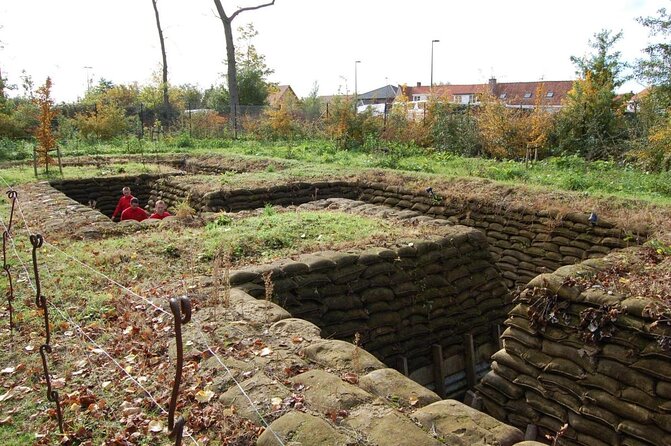
- Sanctuary Wood Museum’s preserved British trench system: artifacts plus the layout you can actually walk through.
- Tyne Cot Cemetery’s sheer scale after the Passchendaele battlefields: Commonwealth remembrance at its biggest.
- Bunkers and command posts still in place: you’ll see how soldiers lived, planned, and suffered underground.
- The Ypres front told in contrasts: Allied sites next to German memorials and preserved trenches.
- Roger’s guiding style: strong command of detail, plus humor that never treats the subject like a sideshow.
Why the Ypres Salient became the WW1 story people keep repeating
Ypres sits in a part of Belgium that turned into a long-running pressure point in World War I. The fighting here wasn’t a quick battle and then done. It was grinding, muddy, and stubborn—an area that kept getting fought over because whoever held it could influence the lines and movement around it.
That’s why this kind of tour works so well for you. You’re not just looking at a monument and moving on. You’re also getting a sense of how the war’s geography shaped decisions. Roads, ridges, and even the ground itself mattered, because so much of the fighting involved positions that could be measured in meters and retaken at a brutal cost.
You can also read our reviews of more tours and experiences in Ypres.


The small group and Roger the guide: what that means for your day
This tour caps at eight people, which makes a noticeable difference when you’re learning on the move. It’s easier to ask questions, and you’re more likely to get straight answers rather than being swallowed by a larger crowd.
The guide for this experience is Roger, and the big plus is his approach. He’s not just reciting facts; he explains the background and then brings the battlefield logic into focus. He also adds humor at the right moments, the kind that helps you stay present without forgetting what you’re looking at.
The tour runs about 7–8 hours and starts at 10:00am from Station Ieper (Colaertplein 35). You return to the same meeting point when you’re done. A mobile ticket is provided, which keeps things simple on arrival.
Sanctuary Wood Museum: why this trench stop matters more than a quick photo
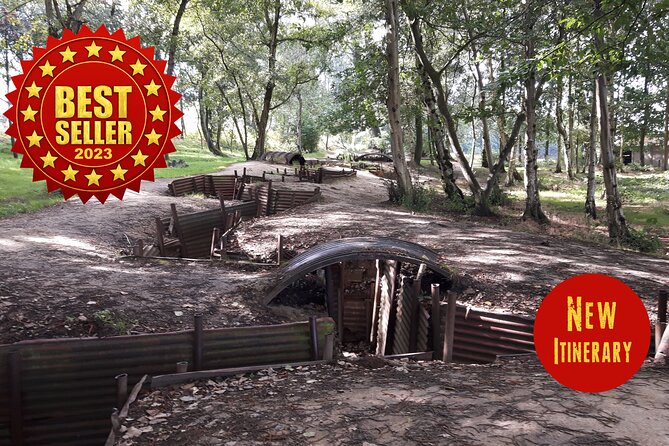
You start at the Sanctuary Wood Museum, with about 40 minutes on site. This is the part of the day that tends to make everything else click. The museum is focused on artifacts and on showing you the preserved British trench system—so you get a physical sense of the war world, not just a theoretical one.
I like this stop because it gives your brain handles. When you later see bunkers, mine craters, and memorials, you’re not guessing what the space was for. You can more easily picture the flow of movement—how units could shelter, how command and communication played out, and why the terrain mattered so much.
One practical note: the information you’ll see around this stop can be a little inconsistent. The tour highlights say Sanctuary Wood admission is included, but the stop details also mention admission ticket not included. I’d confirm the final inclusions when you book so there are no surprises when you arrive.
Tyne Cot Cemetery after Passchendaele: scale, names, and silence
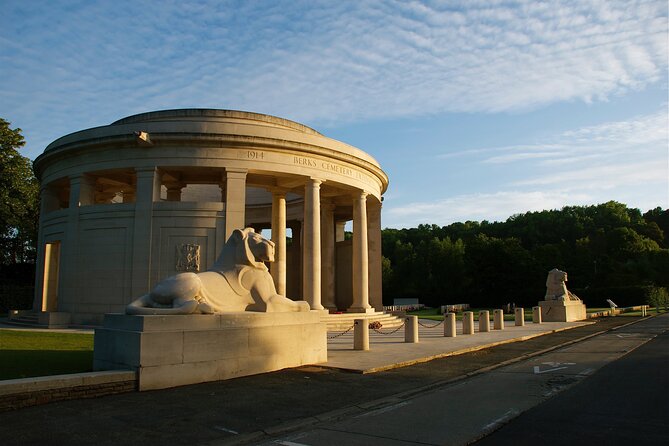
Next you drive through the Passchendaele battlefields, then arrive at Tyne Cot Cemetery for about 20 minutes. This cemetery is described as the largest British and Commonwealth war grave cemetery in the world, and standing there makes that claim feel very real.
What’s valuable here for you is the perspective shift. After moving through battlefield terrain, you’re confronted with the fact that the war’s human cost is recorded in rows, not in abstract maps. Even in a short time, Tyne Cot teaches you to read the place differently—less like a sightseeing stop, more like a record.
If you’re the kind of person who likes to know what you’re looking at, this stop rewards patience. Take your time scanning and locating the patterns in the names and design. It’s one of the places where the tour’s structure works: battlefield context first, then memory at full scale.
Langemark Cemetery: a German site that also forces difficult questions
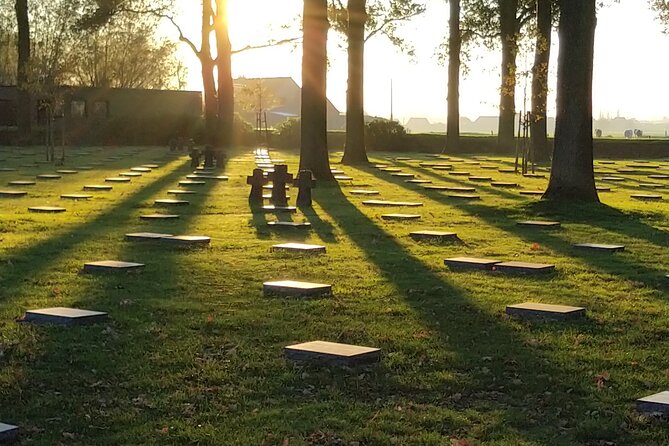
At Langemark Cemetery, you’ll spend about 40 minutes. This is the German cemetery connected to a mass grave, and it’s also linked to the Nazis, which is why it’s so thought-provoking.
I think this stop matters because it refuses to keep WW1 in a tidy, single-story box. You’re seeing a memorial space that later history tried to use and reframe. Even if you’re not getting every political layer explained in minute detail, you’ll leave understanding that memorials don’t live in a vacuum.
There’s also a practical side: this is another “sit with it” stop. If you’ve had a long day and you’re tempted to rush, slow down here. Langemark is one of those locations where getting the facts right in your head is part of respecting the place.


Essex Farm Cemetery and John McCrae: how a poem became part of the map

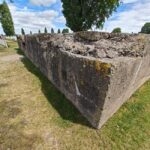
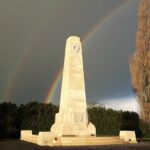
Essex Farm Cemetery takes about 40 minutes. This stop includes preserved dressing station bunkers and a memorial connected to Lt Col John McCrae, along with the story behind the famous poem.
What I like about this arrangement is that it links the emotional pull of literature to the physical reality of the war. A poem can make the loss feel close. The bunkers make it feel real in another way: as shelter systems, as workstations, as places tied to triage and survival odds.
You’ll also probably find yourself thinking about how names, language, and remembrance travel over time. McCrae’s connection turns a battlefield site into something many people recognize even if they’ve never been to the front. That makes Essex Farm a strong bridge between education and meaning.
German command post bunker: where planning meets the rawness of survival
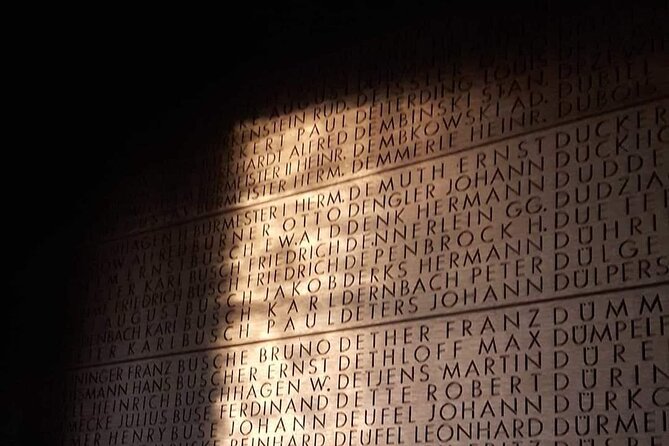
You’ll then visit the German Command Post, a preserved bunker in the Ypres Salient, with about 15 minutes there. It’s one of the shorter stops, but it’s also one of the most “you can see the purpose” visits.
Even without technical details, the shape and size of a command post communicates how power worked on the ground. People needed shelter, protection, and a place to coordinate while the world above was collapsing into artillery fire and chaos. When you see that preserved structure, it becomes easier to understand why the war had such an underground side.
This stop also helps balance the day. After Commonwealth sites and British-focused storytelling, you’re reminded that the front was shared terrain for both sides, even if the memories differ.
Caterpillar Mine Crater (Hill 60 B) and the underground war story

The tour moves to Caterpillar Mine Crater (Hill 60 B), with about 30 minutes here. The focus is on the battle of Messines Ridge and on the idea of war underground—so you can connect mines, craters, and ground shock to the broader front.
This is a good stop for your curiosity. WW1 is often talked about as trenches above ground, but the underground layer changes the whole story. Mines weren’t a side detail. They were strategic events that could reshape the line and the battlefield’s geometry.
If you like “how did they do it” questions, this is where your brain will start building answers. You’ll see the crater and then connect it to why an area could be attacked, defended, and fought for again and again.
Hill 60: preserved battlefield, bunkers, and mine craters
Next is Hill 60, also around 30 minutes. Here you’re guided through preserved battlefield ground, bunkers, and mine craters, with emphasis on the terrible fighting at Hill 60.
Hill 60 works because it gives you a more complete picture of the cycle of attack and adaptation. You’re not only seeing damage. You’re seeing the way the fighting altered the terrain, and how positions were built to exploit whatever remained after explosions, bombardment, and weather.
For a day like this, I love that Hill 60 helps you understand why the land still looks the way it does. You stop treating it as “just fields” and start reading it as a map of decisions made under pressure.
Bayernwald: the preserved German trenches that close the loop
The day ends at Bayernwald, with about 45 minutes. This is described as the only preserved German trenches in the Ypres Salient, and it’s a strong final stop because it gives you one more complete layer: trenches as a system, not just a concept.
This last visit makes the tour feel tighter. Earlier you saw cemeteries, museum artifacts, bunkers, and mine craters. Bayernwald pulls those threads into something you can almost grasp as a day-to-day reality—what soldiers were up against, and how the war’s machinery shaped movement and survival.
Price and what you actually get for $344
At $344, this tour isn’t the cheapest way to see the Ypres area. But I think it’s fairly priced for what you’re packing into a single day.
You’re paying for:
- A small group (max eight), which means more guide time per person
- Multiple major sites spread across Commonwealth and German memorial spaces
- Admission for key locations as listed in the tour description
- Transportation between stops
- Comfort items like bottled water
- A included light sandwich lunch and soft drink
What makes value matter here is efficiency plus interpretation. If you’re trying to do this independently, you’ll spend time figuring out routes, site timings, and what each place means. With Roger and the planned stop order, you get a coherent story that keeps you from bouncing randomly between cemeteries and trenches.
A quick heads-up: alcoholic beverages are not included, so if you plan to toast yourself at the end, budget for that separately.
Timing and practical prep for a WW1 day that hits emotionally
You start at 10:00am and you’ll be out for most of the day. That matters because WW1 sites take longer than you think. Cemeteries and museums aren’t quick photo stops. They ask for a pause, and that pause adds up.
Also, this is heavy subject matter. Even with humor in the guiding, you should expect moments that feel personal. I’d go into the day with realistic pacing—bring a water bottle mindset, keep your stamina steady, and plan to take a breath when you need one.
For clothing, keep it practical. Belgium weather can change fast, and trench sites and outdoor memorials mean you’ll feel the elements. Comfortable shoes are a must, because the experience is built around walking through meaningful spaces.
Who should book this tour?
Book it if you:
- Want a full WW1 Ypres Salient day with both Allied and German memorial context
- Like guided interpretation more than reading plaques alone
- Prefer a small-group format with lots of question time
- Want a single-day plan that includes museums, cemeteries, and preserved bunkers
If you’re looking for light, casual sightseeing, this won’t be that. This is a learning and remembrance day, and it asks you to treat it like one.
Should you book the In Flanders Fields and Passchendaele Grand Tour?
If WW1 is on your “must understand” list, I’d book it. The combination of preserved trench material at Sanctuary Wood, major cemetery scale at Tyne Cot, and the underground battle story around Hill 60 and Caterpillar Mine Crater gives you a rounded picture in one go.
The biggest reason to choose it is the guide. Roger’s style—clear explanation, real expertise, and a humane touch—makes the day easier to hold. You leave with more than photos. You leave with a framework for what the Ypres front was, why it mattered, and how the ground itself still carries the war.
FAQ
How long is the tour?
The tour runs about 7 to 8 hours.
What time does it start, and where do we meet?
It starts at 10:00am. You meet at Station Ieper, Colaertplein 35, 8900 Ieper, Belgium.
How many people are in the group?
The group is limited to a maximum of 8 travelers.
Is lunch included?
Yes. A light sandwich lunch and a soft drink are included, plus bottled water.
Is admission to Sanctuary Wood Museum included?
The tour highlights say Sanctuary Wood Museum admission is included, but the stop details list admission ticket not included. When you book, it’s worth confirming which applies to your specific booking.
Can I cancel and get a full refund?
Yes, you can cancel for a full refund up to 24 hours before the experience starts. If you cancel less than 24 hours before, the amount paid is not refunded.