REVIEW · YPRES
Ypres: An exploration of the deadly salient battlefields
Book on GetYourGuide →Operated by Kimberley Wright · Bookable on GetYourGuide
One sentence can say a lot about Ypres. Then reality keeps talking. This tour strings together the places that explain the First World War in Flanders, from CWGC memorials to actual trench remains, with a guide who makes the stories land.
Two things I really liked: the way the tour connects the big picture (why battles happened and what casualty systems meant) with specific names and locations, and the chance to see both sides through stops like Langemark German Military Cemetery. One thing to consider: it is solemn, and some moments feel heavy even if you come for history.
In a small group (up to 7), you spend less time decoding directions and more time listening, looking closely, and absorbing the terrain. The van pickup and drop-off from your agreed location also cuts hassle, which matters when every stop is on a timetable.
In This Review
- Key points I’d plan around
- Why Ypres feels different once you see the ground
- The 3.5-hour van-and-walk rhythm (and why it works)
- Essex Farm Cemetery and the John McCrae memorial: names over numbers
- Yorkshire Trench and Dug-out: trench warfare that stays real
- St Julien Canadian War Memorial and Vancouver Corner: a quieter punch
- Langemark German Military Cemetery: the war’s other side, respectfully handled
- Tyne Cot Cemetery: when the scale becomes hard to hold
- Passchendaele battlefields drive: reading terrain without the noise
- Guide style, small-group pace, and value for $88
- Who should book this tour (and who might want a different plan)
- Should you book the Ypres deadly salient battlefield tour?
- FAQ
- How long is the Ypres battlefield tour?
- What is the group size?
- What’s included in the price?
- What sites will I visit?
- What should I bring?
- Is there free cancellation?
Key points I’d plan around
- A small group format (7 or fewer) keeps the pace human and the questions answered.
- CWGC sites that scale up fast, including Tyne Cot as the largest CWGC cemetery in the world.
- Trench warfare you can stand in, at Yorkshire Trench and Dug-out.
- Both perspectives matter, with Langemark adding the German viewpoint to the usual Allied story.
- A guide who uses names and visuals, including photos and maps, to connect you to what you’re seeing.
- Thoughtful timing at each location so you get atmosphere without feeling rushed.
Why Ypres feels different once you see the ground
Ypres is one of those places where history isn’t behind glass. It’s underfoot, in stone inscriptions, in the shape of dugouts, and in the careful rows of graves that keep expanding in your mind once you start counting. This tour is built for that shift. It doesn’t just point at sites. It gives you context so the sites make sense.
I also like that the experience balances emotion with explanation. You learn how Commonwealth war burial work was organized through the CWGC and the casualty system, then you’re led to places that put faces and stories behind the facts. And you’re not stuck in one viewpoint either—German cemetery grounds are included, so the war doesn’t get reduced to a single national narrative.
There’s also a simple, practical benefit: you cover a cluster of the most important locations without playing logistics games in a car-scarce battlefield region.
You can also read our reviews of more tours and experiences in Ypres.



The 3.5-hour van-and-walk rhythm (and why it works)
The total time is about 210 minutes, with guided stops ranging from quick hits to longer cemetery visits. The rhythm is intentional: short guided walks where you’re reading the terrain, longer time where you’re absorbing memorials and layout, then van transfers to reset your brain.
The transport is a Dark Blue Mercedes van with Kims Battlefield Tours branding, and the guide leads in English. With a group capped at 7, you’re less likely to feel like you’re being moved along on rails. In multiple accounts, the pace is described as comfortable—enough time at each stop to take in the atmosphere—rather than a sprint where the names blur together.
A practical consideration: this is mostly walking and standing. Bring comfortable shoes and plan for the fact that cemeteries and trenches are not where you go to relax. They’re where you focus.
Essex Farm Cemetery and the John McCrae memorial: names over numbers
The tour begins with Essex Farm Cemetery, a place that teaches you a key lesson fast: the First World War wasn’t just events. It was a repeated process of loss. Spending time here gives you an early grounding in how Commonwealth graves and memorials are organized, and why the CWGC system matters to families and researchers even today.
What makes this stop especially meaningful is the focus on the casualty system and the personal imprint left behind. You also stand at the John McCrae memorial—an anchor point that connects the battlefields to the words many people already associate with Flanders. It’s one of those stops where the setting does half the storytelling.
Even if you’ve read about McCrae before, this is where it becomes concrete. The memorial isn’t a concept. It’s a location in a landscape that once supported relentless movement, shelling, and burial work that had to keep going under pressure.
If you care about genealogy or family history, this is also the moment to think about what you want to ask. More than one person described the guide as going out of her way to help with relatives’ details and last-known whereabouts—so bringing a name or a simple clue can turn a cemetery visit into something personal and unforgettable.
Yorkshire Trench and Dug-out: trench warfare that stays real
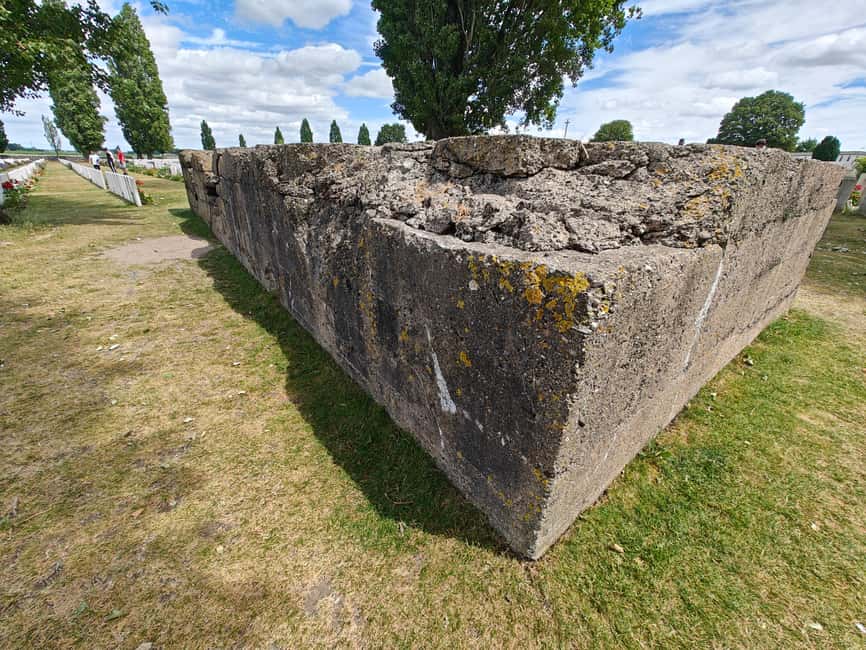
Next comes the part history books rarely get right: scale and physical reality. At Yorkshire Trench and Dug-out, you get a hands-on sense of what it meant to live in crowded, defensive spaces where survival was tied to small angles, narrow lines of movement, and the brutal math of exposure.
The guided time here is about 25 minutes, which might sound short until you realize the point isn’t to cram facts. The point is to stand where a soldier would have had to think about every second—where visibility could be limited, where “cover” wasn’t comfort, and where the ground itself shaped what was possible.
I like that the tour treats the trench as more than a photo backdrop. You’re guided to understand trench warfare as a system—positions, constraints, and the human cost of repeatedly trying to push through. Even with minimal walking, it hits hard because you can’t mentally edit the environment the way you can when you’re reading a description.
St Julien Canadian War Memorial and Vancouver Corner: a quieter punch
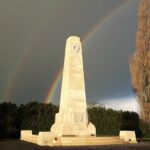
From there you head toward the St Julien area, including the Canadian War Memorial and the Brooding Soldier at Vancouver Corner. This is the kind of stop where the guide’s narration makes a big difference. The memorials are designed to hold grief in a controlled way. With the right context, they also show you what nations chose to remember, and what they chose to emphasize in the decades after the fighting.
This is a shorter guided segment (around 25 minutes), but it works because the tone changes. If the trench stop made the war feel immediate, this one makes it feel intentional—like remembrance as an act of policy and humanity.
The Brooding Soldier is one of those images you’ve probably seen reproduced online. But standing near it, with an explanation of what Vancouver Corner represents, helps you notice details you’d otherwise skip.


Langemark German Military Cemetery: the war’s other side, respectfully handled
One of the best parts of this tour is that it doesn’t pretend the war only happened one way. Langemark German Military Cemetery brings in the German perspective through a guided visit lasting about 45 minutes. This matters because many battlefield tours default to Allied narration. Here, you’re given space to understand the Great War’s impact as a shared catastrophe, not a one-sided script.
In practice, the stop does two things:
- It broadens your understanding of how burial and commemoration shaped identity after the war.
- It forces you to notice how different cemeteries can communicate loss differently, even when the underlying story is tragic and similar.
It’s not about excusing anything. It’s about understanding the full historical picture—including the fact that families on multiple sides are living with the same kind of absence.
Tyne Cot Cemetery: when the scale becomes hard to hold
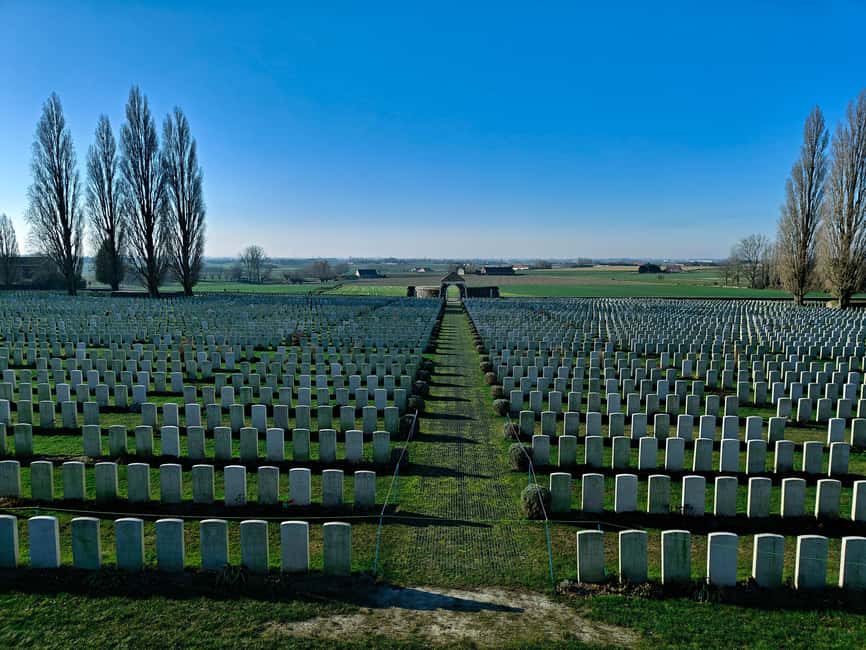
Then comes Tyne Cot Cemetery, one of the most powerful stops in the region. It’s widely known as the largest CWGC cemetery in the world, and seeing it in person makes that statistic do something unusual: it becomes emotional rather than just impressive.
You get around 45 minutes here, which is the right amount of time. Too short, and you only get an overview. Too long, and you can feel overwhelmed. This is one of those places where the guide’s job is to keep your attention moving between layout, meaning, and the casualty system behind the names.
I also appreciate that the tour doesn’t treat Tyne Cot like a spectacle. The atmosphere is solemn, and the tour keeps the focus on remembrance and the human cost. The scale is the story: once you’re in the middle of it, the number of graves stops being an abstract fact and becomes a physical sense of loss across time.
If you’re the type who likes structure, ask yourself as you walk: What does this cemetery tell you about how the post-war world tried to organize mourning?
Passchendaele battlefields drive: reading terrain without the noise
Between the stops, the tour includes a drive across the Passchendaele battlefields area, with time to see the terrain and understand why the ground mattered. This is where you connect the dots between trenches, cemeteries, and the movement patterns that made battles so stubborn.
Since you’re not spending hours hiking, you’re not wearing yourself out. Instead, you get orientation: how low ridges, fields, and routes influenced what armies could do and what they couldn’t. It’s a smart way to add geographic thinking without turning the day into a long endurance test.
For me, this driving segment is the glue. It helps you stop seeing each cemetery as a separate chapter and start viewing the region as one connected battlefield system.
Guide style, small-group pace, and value for $88
This tour lives or dies on the guide, and the pattern in people’s feedback is consistent: the narration is clear, engaging, and paced well, with photos and maps used to bring places and battles to life. The personality is described as cheerful in tone while still handling the subject matter with respect, which is exactly what you want for sites that are heavy.
You’ll also benefit from the small group size. When a group is capped at 7, questions don’t get trapped. And the tour can adjust to the audience—more than once, people mention the ability to tailor the experience based on who’s in the van.
As for the price—$88 per person—I think it’s fair given what you’re actually buying:
- pick up and drop off from an agreed location
- a dedicated minivan for transfers between multiple WWI sites
- live English guiding at every major stop
- time allocation that doesn’t feel rushed at key cemeteries
For a short, high-impact battlefield day, that’s good value. Battlefield regions can be awkward to navigate on your own, and cemeteries are the kind of places where random wandering wastes time and misses context.
Who should book this tour (and who might want a different plan)
I’d suggest this tour if you want:
- a focused WWI experience without needing to plan routes
- cemetery time with explanation, not just sightseeing
- trenches and memorials, plus a German cemetery perspective
- a guide who uses visuals like photos and maps and speaks clearly
You might choose something else if you:
- want a long, hike-heavy day in the field (this isn’t that kind of tour)
- prefer very light subject matter and minimal emotional intensity
And if you’re booking close to your travel dates, keep in mind that it may not always be feasible to accommodate short-notice bookings. When in doubt, contact the operator to check what’s possible.
Should you book the Ypres deadly salient battlefield tour?
Yes, if you want a compact day that teaches you the war in Flanders through the places that still hold it. The strongest reason to book is the combination: trenches plus major CWGC cemeteries, with both Allied and German commemoration. That makes it more complete than the usual Ypres circuit.
If you’re drawn to names, memorial design, and how remembrance works over time, you’ll get a lot out of Essex Farm and Tyne Cot. If you want the war’s human scale, Yorkshire Trench and Langemark do that job quickly and clearly.
If you’re ready for a day that’s educational but also sobering, this is a solid choice—and the small-group format keeps it personal enough to matter.
FAQ
How long is the Ypres battlefield tour?
The tour duration is 210 minutes (about 3.5 hours).
What is the group size?
It is a small group limited to 7 participants.
What’s included in the price?
The price includes pick up and drop off at an agreed location, and you’ll be driven between sites in a minivan. You also get a live English tour guide.
What sites will I visit?
You’ll visit Essex Farm Cemetery, Yorkshire Trench and Dug-out, Langemark German Cemetery, St Julien Canadian War Memorial (including the Brooding Soldier at Vancouver Corner), and Tyne Cot Cemetery, plus a drive across the Passchendaele battlefields area.
What should I bring?
Bring comfortable shoes.
Is there free cancellation?
Yes. You can cancel up to 24 hours in advance for a full refund.