REVIEW · YPRES
From Ypres, The Christmas Truce to Passchendaele Ypres Based WW1 private tour
Book on Viator →Operated by A Foreign Field WW1 Tours · Bookable on Viator
Truces, tunnels, and memorials in one long day. This private WW1 tour around Ypres is built for context, with a professional guide who ties each stop to what happened, where you are on the map, and what soldiers would actually have experienced.
I especially love how the day mixes headline sites with specific, human details—like the Christmas Truce moment at Messines Ridge and the named stories behind the cemeteries. I also like the customizable feel: your route is shaped to your knowledge level and interests, and the pace stays practical for an 8-hour outing.
One consideration: there’s no lunch included, so plan ahead with snacks or a plan for a meal after the tour so you don’t end the day hungry and rushed.
In This Review
- Key things you’ll notice on this WW1 private tour
- The value of a private WW1 day around Ypres (and why it’s not just sightseeing)
- Starting at 9:00am: how the day flows across multiple battlefields
- Stop 1: Messines Ridge and the mine craters, Christmas Truce, and the crypt
- Stop 2: Hooge Crater Cemetery and Pat Bugden VC on Menin Road
- Stop 3: The Black Watch site and the shift from 1914 to 1917
- Stop 4: Walking Polygon Wood—concrete bunkers, the cemetery, and the 5th Division monument
- Stop 5: Hill 60 and the mine blown at 3.10am, 7 June 1917
- Stops 6 and 10: Broodseinde and Zonnebeke—driving the line of the Australian advance
- Stop 7: Tyne Cot Cemetery—12,000 buried, only 3,000 named, and two Australian VCs
- Stop 8: John McCrae site—where In Flanders Fields was written
- Stop 9: Menin Gate Memorial and 55,000 missing names
- Stop 11: Sanctuary Wood Museum—original trenches plus an included trench museum visit
- Who should book this Ypres WW1 private tour
- Practical price take: what you’re really paying for
- Should you book this private WW1 tour around Ypres?
- FAQ
- What is the duration of the Ypres WW1 private tour?
- How much does the tour cost per person?
- Is the tour private?
- Is pickup included?
- What language is the tour offered in?
- Is bottled water included?
- Are tickets included for the sites?
- Is lunch included?
- Is there a minimum number of travelers?
- When do I get confirmation after booking?
Key things you’ll notice on this WW1 private tour
- Messines Ridge connections that reach from mine craters to the Christmas Truce and a famous underground crypt
- Hooge Crater Cemetery and a Victoria Cross story tied to one of the most recognizable parts of the Passchendaele assault
- Concrete bunkers and Australian monuments at Polygon Wood, plus a walk through the woods
- Hill 60 at 3.10am, 7 June 1917—a tunnelling story that you can see in the ground today
- Tyne Cot Cemetery’s scale: 12,000 buried, only 3,000 named, plus Australian VC connections
- Sanctuary Wood Museum with original trenches and a museum included in the tour time
The value of a private WW1 day around Ypres (and why it’s not just sightseeing)
This is the kind of tour where you can see the places from a distance, but the real payoff comes from understanding the logic behind them. In the Ypres Salient, everything is close together, and the front line shifted constantly. Without a guide, it’s easy to miss the meaning of a bunker, a crater, or a cemetery row.
You’ll get that meaning from a guide who’s local to the region and focuses on clarity. The tour runs in English, and it’s designed for the group in front of them, not some generic script. That matters when you’re trying to connect what you read in books to what you’re actually standing in.
Price-wise, $420.49 per person can look steep until you break down what you’re paying for: private driving, a full day of interpretation, bottled water, and included trench museum time at Sanctuary Wood. Most stops listed on the route are marked as free entry, so you’re not paying site-by-site fees just to get through gates.
You can also read our reviews of more private tours in Ypres

Starting at 9:00am: how the day flows across multiple battlefields
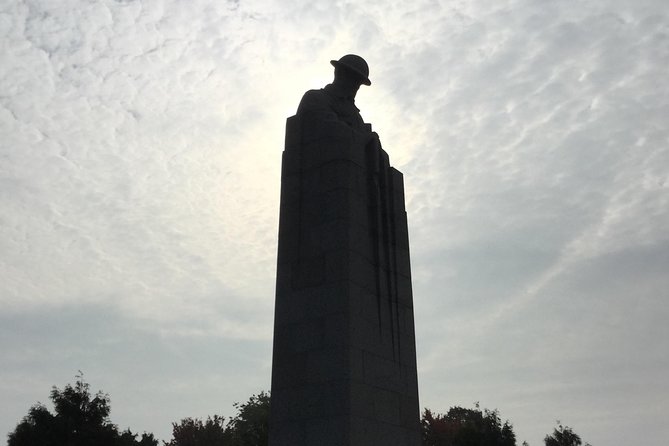
You start at 9:00am, and the tour is private for you and your party. Pickup is available from select hotels, and the experience offers bottled water during the day, which is a real comfort on a long, emotional route.
Time is handled like this: some stops are brief (think 15–30 minutes) and focused, while others are longer because they need it—cemeteries and major battlefield points take time to absorb. You’ll also do some “driving through” stretches along the line of advance, which is useful for orientation even if you don’t step out at every point.
Most people can participate, and service animals are allowed. Still, it’s a packed day of standing, walking around memorial spaces, and spending time outdoors in battlefield terrain, so wear shoes you trust.
Stop 1: Messines Ridge and the mine craters, Christmas Truce, and the crypt
Messines Ridge is where the tour sets its tone. You’ll hear the story of the Battle of Messines and walk through mine crater terrain—places where the ground itself carries evidence of what was planned and exploded.
From there, the route reaches one of the most striking moments of the war: the Christmas Truce scene. Even if you already know the general story, seeing it placed into the geography of this front makes it feel less like a legend and more like something that happened to real people in a real landscape.
Then comes the unusual, lesser-known stop: the crypt where Adolf Hitler was treated for his wounds. The point here isn’t sensational trivia. It’s the reminder that the war’s events intersected in unexpected ways, and the Ypres region held moments that didn’t always fit neatly into the simplified versions of WW1 you see elsewhere.
Stop 2: Hooge Crater Cemetery and Pat Bugden VC on Menin Road
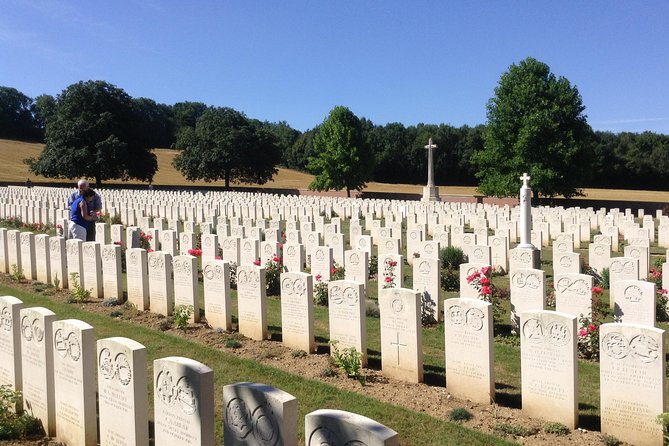
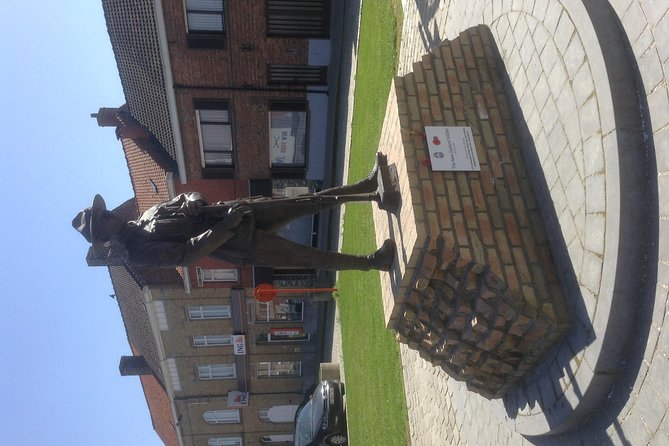
Hooge Crater Cemetery is short on time but heavy on meaning. You’ll visit Pat Bugden VC, the 20-year-old Victoria Cross recipient tied to this ground. It’s the kind of stop where the guide’s job is essential—connecting the name on the monument to the action behind it.
You’ll also stand on the Menin Road alongside where Australian gun pits were positioned for the assault on Passchendaele. That roadside framing matters because it helps you build a mental model: who was where, what they could see, and how the terrain shaped the attack.
Because this is only about 15 minutes, you’ll want to keep your eyes up and your questions ready. This is one of those stops where the guide’s explanations make the short time feel complete.
Stop 3: The Black Watch site and the shift from 1914 to 1917
At The Black Watch, you’re taught to read the same ground across different years. This is where the Australian HQ was located in September 1917, and you’ll also hear about earlier actions from November 1914 on the same site.
That time-travel effect is a big part of why guided WW1 trips work. The Ypres Salient doesn’t just have one “war moment.” It has layered moments, and the front line kept returning to and reusing the same corridors.
If you like geography and timelines, this stop tends to click. If you’re only expecting big battle highlights, it might feel more “interpretive,” but it gives you a better mental map for everything after.
You can also read our reviews of more tours and experiences in Ypres

Stop 4: Walking Polygon Wood—concrete bunkers, the cemetery, and the 5th Division monument
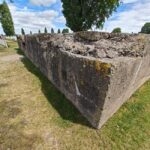
Polygon Wood is one of the stops that turns explanation into physical experience. You’ll walk through the woods and visit concrete bunkers that were present when Australian forces captured the area.
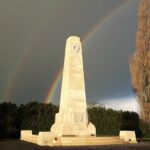
Along the way, you’ll also visit the cemetery and the Australian 5th Division monument. These are not just plaques—they’re reference points that help you anchor what the guide is talking about to visible features you can return to in your mind later.
The time here is about 30 minutes, which is enough for a gentle walk and a focused stop at key markers. The only drawback is that once you’re in the woods, the day is still moving—so you may wish you had more time to read everything slowly.
Stop 5: Hill 60 and the mine blown at 3.10am, 7 June 1917
Hill 60 is the “you can still see it” stop. You’ll hear the story of Captain Woodward and the 1st Australian Tunnelling Coy, and you’ll get the specific moment the mine was blown: 3.10am on 7 June 1917.
The tour then points you to the crater from that mine. Standing near it is where the tunnelling story stops being abstract. You’re looking at the result of planning and engineering under pressure, right in front of you.
This stop is about 45 minutes. That extra time helps because tunnelling stories often need a bit of patience. The guide’s job is to keep it clear and connected to what happened on the surface battlefield at the same time.
Stops 6 and 10: Broodseinde and Zonnebeke—driving the line of the Australian advance
Not every meaningful part of the day is a museum entrance or cemetery gate. At Broodseinde, you’ll drive through following the line of the Australian advance. At Zonnebeke, you’ll do something similar.
These “driving through” segments are valuable for one reason: they build the route in your head. After you’ve visited multiple markers in different places, it helps to see the wider movement patterns instead of feeling like you’re bouncing from stop to stop with no big picture.
If you prefer frequent breaks outside the vehicle, these stretches may feel a bit more like transit. Still, the guide uses them to keep the day coherent.
Stop 7: Tyne Cot Cemetery—12,000 buried, only 3,000 named, and two Australian VCs
Tyne Cot is where the tour becomes genuinely intense. You’ll visit the world’s largest Commonwealth War Graves Commission cemetery, with 12,000 soldiers buried. Only about 3,000 have names, which creates a special kind of silence when you’re standing among rows where identity is both present and missing.
The stop also includes two Australian VC recipients buried here. The names and the VC connections give you a way to think about the cemetery beyond numbers—how bravery, death, and record-keeping connect in one place.
You’ll have about 45 minutes here. That’s enough time to slow down, find a few relevant names, and let the scale hit you without feeling rushed.
Stop 8: John McCrae site—where In Flanders Fields was written
At the John McCrae site, you’ll see the hospital location connected to Lt Col John McCrae, where he composed the poem In Flanders Fields. It’s a short stop (about 30 minutes), but it adds emotional context to the names and dates you’ve been seeing all day.
For me, this is where the tour helps you connect WW1 history to language and memory. You’re not just learning facts. You’re learning why those facts became part of how later generations understood the war.
If you’re a poetry fan, you might want to take a moment to reflect before moving on. The guide’s explanations help you see the poem’s power in its original setting.
Stop 9: Menin Gate Memorial and 55,000 missing names
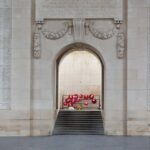
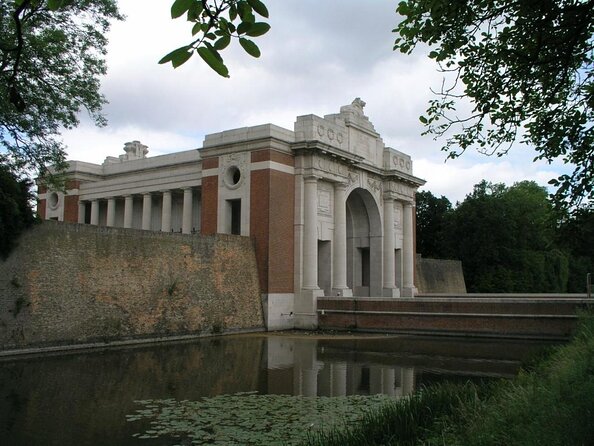
Menin Gate is a classic for a reason. Here, you’ll hear the story of how the memorial came about and you’ll learn about 55,000 missing names listed there.
This stop is about 20 minutes, which means it’s less about reading every panel and more about understanding what the memorial represents: absence given a physical place.
If you want to photograph, do it quickly and respectfully. This is one of those memorial areas where your best experience is a quiet walk and a short pause with the guide’s narrative.
Stop 11: Sanctuary Wood Museum—original trenches plus an included trench museum visit
Sanctuary Wood Museum is included in the tour, and it’s a nice balance after the big memorial stops. You’ll see poignant original WW1 trenches along with a quaint WW1 museum.
The value here is in contrast. Cemeteries and gates can overwhelm. A trench-focused visit helps you get back to the soldier-level details—how close things were, how practical survival looked, and why the ground mattered so much.
You’ll have about 40 minutes here. That’s enough time to take in the trenches and still read a few key exhibits with the guide’s explanations in mind.
Who should book this Ypres WW1 private tour
This tour fits best if you want a full-day route that links battlefields, cemeteries, and memorials into one understandable story. It’s also a strong choice for family history—your guide can tailor the day to your interests and (if you share names) can connect stops to people associated with the war.
It’s ideal for:
- First-time WW1 visitors to the Ypres Salient who want the major sites with real context
- People who care about Australian role points, from gun pits to tunnelling stories
- Travelers who like a guide that adjusts to your knowledge level and asks good questions
It may not be ideal if you want long, unstructured free time at museums or if you’re hoping lunch is included (it isn’t). Also, because it’s a packed 8-hour day, plan for a comfortable pace rather than a leisurely wander.
Practical price take: what you’re really paying for
At $420.49 per person for an 8-hour private tour, you’re paying for three things: private access, interpretation all day, and included value at the trench museum. You’re also getting bottled water, which sounds small until you’re outside for hours.
Many listed stops are marked as free entry, so the money isn’t going mainly to tickets. It’s going to the guide’s work: explaining why each location mattered, keeping the geography clear, and making sure the emotional weight doesn’t turn into noise.
If you were to drive yourself, you’d still reach many of the same sites. But you’d likely miss the “why this spot” layer that makes the route feel connected instead of scattered.
Should you book this private WW1 tour around Ypres?
Yes, if you want one guided day that pulls together mines, truce-era moments, tunnelling, cemeteries, and memorials into a single narrative you can actually follow. This is the sort of tour that helps you slow down without losing the big picture.
I’d especially recommend it when you care about details and context—like the Christmas Truce location at Messines Ridge, Pat Bugden VC at Hooge, and the tunnelling story at Hill 60. And if family connections matter to you, tell your guide what you know so the route can be shaped around your questions.
If you hate long days or you need lunch handled for you, you may want to plan your own food break after the tour and treat the day as a full itinerary, not a casual drive.
FAQ
What is the duration of the Ypres WW1 private tour?
The tour runs for approximately 8 hours.
How much does the tour cost per person?
The price is $420.49 per person.
Is the tour private?
Yes. It’s a private tour/activity for only your group.
Is pickup included?
Pickup from select hotels is included. The meeting instructions specify Ieper based pickup only.
What language is the tour offered in?
The tour is offered in English.
Is bottled water included?
Yes. Free bottled water is included.
Are tickets included for the sites?
Most stops are listed as admission ticket free. The Sanctuary Wood Museum/trench museum admission is included.
Is lunch included?
No, lunch is not included.
Is there a minimum number of travelers?
Yes. There is a minimum of 2 guests.
When do I get confirmation after booking?
Confirmation is received within 48 hours of booking, subject to availability.