REVIEW · LIEGE
The Battle of the Bulge Experience – A day tour from Brussels
Book on Viator →Bookable on Viator
WWII routes have a way of sticking. This private day tour strings Brussels to the Ardennes with the kind of story-ordered stops that make the Battle of the Bulge easier to grasp, led by guide Levi. I also love how it balances famous landmarks with quieter places where the war feels real.
I also love the emotional anchor points: the foxholes at Bois Jacques and the Bastogne HQ moment tied to NUTS. One consideration: the day rate is pricey, and the war museum ticket is extra, with lunch on your own.
In This Review
- Key highlights worth planning for
- A WWII day tour that moves like a guided timeline
- Brussels warm-up: Gestapo HQ and Jean de Selys Longchamps
- Namur’s Citadelle view: why geography mattered in the offensive
- Dinant and the Adolphe Sax stops along the Meuse
- Celles tank and Bastogne center: first contact with the battlefield story
- Bastogne War Museum plus McAuliffe HQ: where the story locks in
- Bizory and E-Company country: Misory, memorials, and what remains
- Bois Jacques foxholes and trenches: cold winter reality in a short time
- Foy: the village cost, and the bullet hall wall
- Recogne cemeteries: respect for both sides
- Houffalize and the restored Panther tank: the German engineering angle
- Price and value for a private 12-hour car-and-guide day
- Who should book this tour, and who might prefer a DIY day
- Should you book this Brussels-to-Bastogne private tour?
- FAQ
- How long is the Battle of the Bulge day tour from Brussels?
- What group size is this tour for?
- Is pickup from Brussels included?
- Is the tour in English?
- Do I need to buy the Bastogne War Museum ticket?
- What does the 24€ museum ticket cover?
- Is lunch included in the price?
- What’s included in the tour price besides transportation?
- Can I cancel for a full refund?
- Are service animals allowed?
Key highlights worth planning for
- Levi’s high-engagement guiding style that keeps a long day from dragging
- A logical route that connects Brussels, the Meuse River, and the Ardennes battlefield
- Bois Jacques foxholes and trenches paired with short films, so you get context fast
- Foy and the bullet-hall moment tied to Easy Company’s story
- Bastogne Barracks and McAuliffe’s HQ for the famous ultimatum response
- The museum ticket bundles key entries, including additional battlefield sites
A WWII day tour that moves like a guided timeline
A Battle of the Bulge tour can either feel like a checklist, or it can feel like you’re watching events connect. This one works best when you let the day unfold in order: you start in Brussels, transition through the Meuse River region, then work your way toward the places where fighting and survival overlapped.
The biggest reason this tour is such good value is simple: you’re paying for a full day of private transport plus a guide who stitches the stops together. I love that you’re not only seeing what happened, you’re also hearing why those locations mattered in the German offensive and in the Allied defense.
You’ll also notice the pacing. Most stops are short—often 15 to 40 minutes—so you stay focused. The main time commitment is the war museum, which is where the story clicks into place.
You can also read our reviews of more tours and experiences in Liege.

Brussels warm-up: Gestapo HQ and Jean de Selys Longchamps
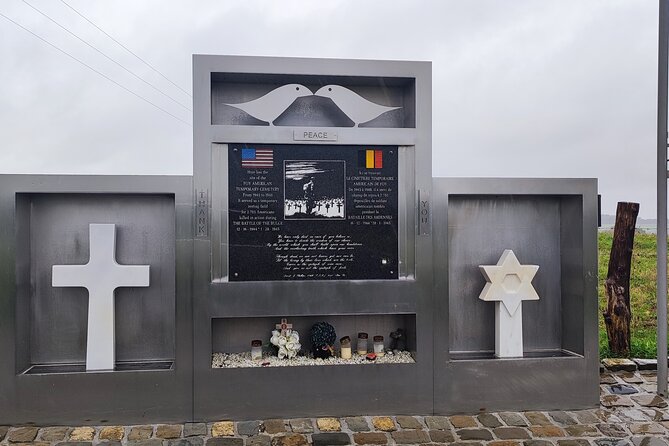
You begin in Brussels at a place tied to the Gestapo HQ experience, then move to the Baron de Selys Longchamps statue and plaque. The highlight here is the human story: a RAF pilot (Jean de Selys Longchamps) bombed the Gestapo HQ in January 1943, and you hear what drove the mission and what happened afterward, including his demotion in rank.
This is a smart opening for a Bastogne day trip because it reminds you that the war wasn’t only fought with tanks and uniforms. It was fought with intelligence, risk, and consequences—often far from the front lines.
Tip for your visit: this first stop is brief, so if you want deeper context, ask Levi one or two questions before you move on. It helps you track later references when the day shifts into Ardennes geography.
Namur’s Citadelle view: why geography mattered in the offensive
After about an hour south of Brussels, you stop near the Citadelle of Namur. This is a quick viewpoint moment, but it’s not just for photos. You get the reason it mattered: the Meuse River and surrounding ground created lines of movement, observation, and pressure during the German offensive.
Even if you don’t remember every military detail, you’ll remember the feel of the terrain. You can look across the wider region and understand how small advantages could turn into big ones.
The practical upside: this stop is free and short, so it doesn’t eat into your main time. The downside is that weather can make viewpoints chilly—plan for it, especially if your trip is in winter.
Dinant and the Adolphe Sax stops along the Meuse
Then you head to Dinant, with a scenic drive along the Meuse River. The city is tied to Adolphe Sax, and you’ll see the cathedral and the famous Saxophone bridge. Even though this is not a wartime site, it helps you remember you’re visiting real towns where people lived—and suffered—long before the war faded into textbooks.
Dinant is also a useful breather in the day. You get around 40 minutes, which is enough time to stand back, absorb the river setting, and reset your mind before the day turns sharply toward battlefield memorials.
If you’re hoping for time to grab a snack, don’t assume there’s long free time at every stop. Bring something small with you so you’re not hunting during tight schedules.
Celles tank and Bastogne center: first contact with the battlefield story
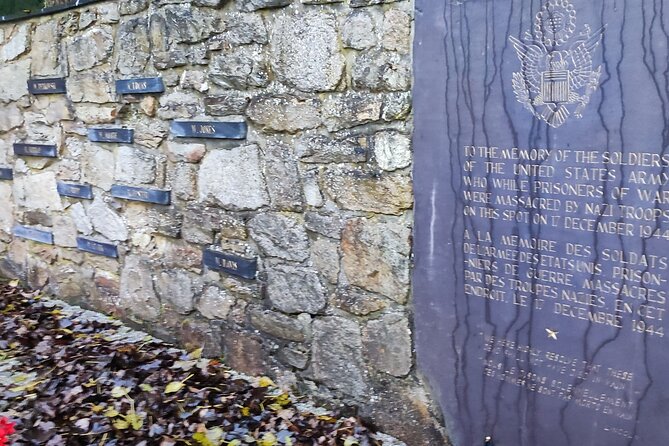
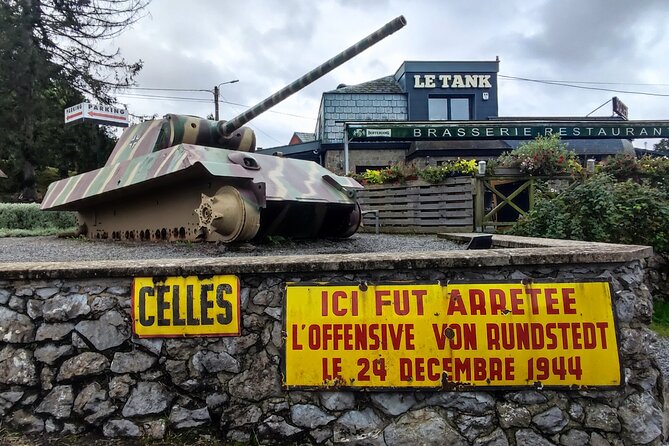
Next comes Celles, where you stop at the Tank of Celles. This is tied to the furthest advance point of the Wehrmacht in the Ardennes offensive. The focus isn’t just the object—it’s the crew and the tragic story connected to that advance.
A tank monument can turn into a “look but don’t feel” stop. Here, you’ll get the crew angle, which makes it harder to treat like a prop. The visit is brief, but it sets a tone for the rest of the day.
From there you reach Bastogne’s Place McAuliffe area near the tank monument. It’s another short stop, about 15 minutes, but it’s positioned like a doorway into the bigger Bastogne chapters you’ll spend real time on later.

Bastogne War Museum plus McAuliffe HQ: where the story locks in
Bastogne is the core of this day. You’ll spend about 2 hours at the Bastogne War Museum (the main museum). The presentation is described as interactive and built to explain context, causes, events, and consequences, so it’s not only a room of artifacts.
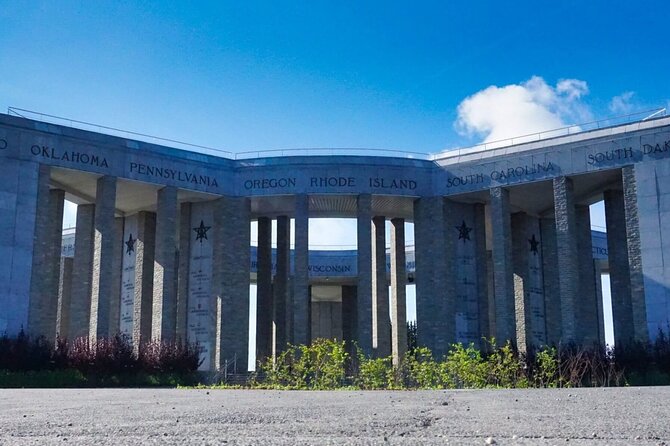
Here’s the key value point for planning: the museum ticket costs 24€ per person and also lets you enter other sites tied to the day. Based on how the stops are set up, that pass covers entry at multiple locations, including Bois Jacques and Bastogne Barracks.
After the museum, you also go to Bastogne Barracks. This is where the tour becomes extra specific. You’ll enter the barracks where General McAuliffe set up HQ during the encirclement, and you’ll hear how he wrote his famous response to the German ultimatum to surrender with NUTS.
This is the kind of place that benefits from listening closely. Even if you’ve heard the term before, the location and story make it feel grounded, not catchy.
Bizory and E-Company country: Misory, memorials, and what remains
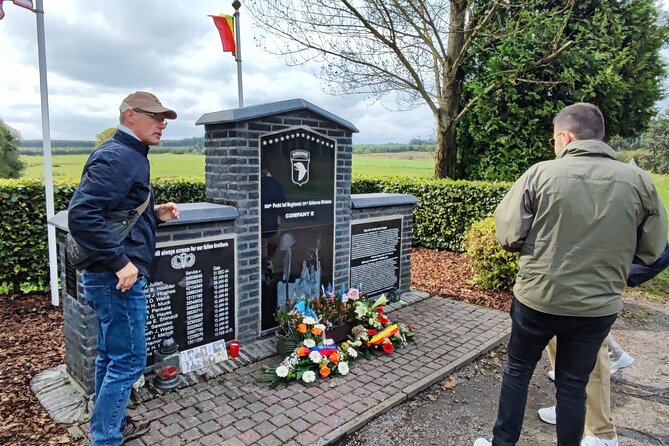
After lunch break time, you continue to Bizory. You’ll see the church of Bizory, nicknamed Misory by soldiers of Easy-Company. Nearby is a monument for E-Company, created with donations tied to Tom Hanks and Steven Spielberg.
This stop matters because it shows how memory gets shaped. Soldiers, locals, and later supporters leave marks that help later generations understand what the place meant. It’s not just wartime geography—it’s a long chain of remembrance.
Time here is about 20 minutes, which is enough to take in the setting and connect it to what you’ll see next.
Bois Jacques foxholes and trenches: cold winter reality in a short time
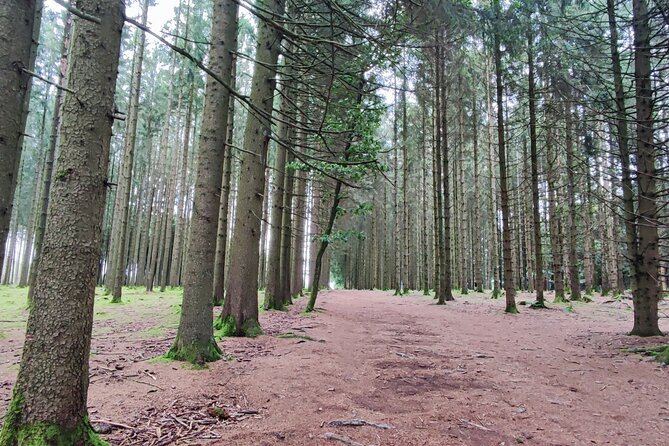
Bois Jacques is where the tour slows emotionally. You enter the wood where E-Company and other 506PIR companies stationed and fought. You’ll see foxholes and trenches, and short films help explain what you’re seeing in context.
Because admission here is included in the museum ticket, you don’t have to solve the ticket puzzle mid-day. It also means you’re more likely to spend the full time you’re given, instead of worrying about whether you already paid enough.
What I like about this stop is that it’s practical for understanding. You see the ground-level arrangement, then hear the story behind it. That combination makes it easier to picture why winter conditions were so punishing.
Foy: the village cost, and the bullet hall wall
Next is Foy, a village Easy Company had to take at high cost. You’ll also see the bullet hall wall from the famous Band of Brothers scene.
This is another brief stop—around 20 minutes—but it’s very effective if you’re a visual learner. The wall acts like a reference point you can carry in your mind when the tour talks about specific actions and losses.
Quick advice: if you’re a fan of the series, you’ll appreciate the connection. If you’re not, you’ll still get the wartime meaning behind what you’re standing in front of.
Recogne cemeteries: respect for both sides
Then comes Recogne (Bastogne), where you visit the cemeteries site. This stop is about paying respect for fallen soldiers from both side.
This is one of those moments where the “how long do we stay?” question doesn’t matter much. The time is around 15 minutes, but it’s built to be quiet and respectful rather than rushed.
I find it helpful when a tour includes this. It keeps the day human and grounded, even when the story gets intense.
Houffalize and the restored Panther tank: the German engineering angle
On the way north, you stop at an old 506PIR monument to pay respect. Then you visit the restored Panther tank monument at Houffalize.
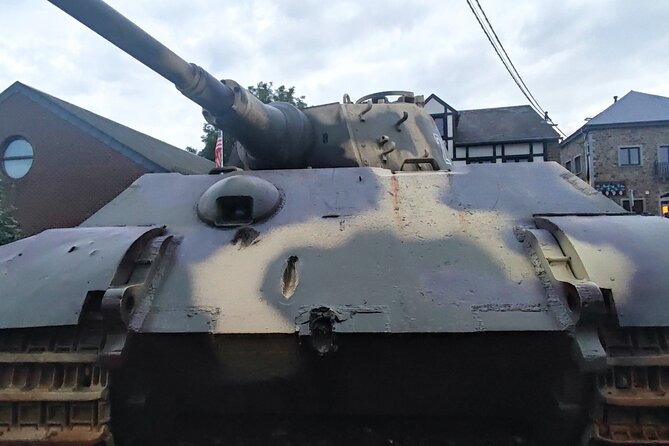
This stop gives you a different angle. You’ll learn about German ingenuity and engineering, and you’ll also hear about the tragic end of the tank crew. So it’s not hero worship and it’s not propaganda—it’s a mechanical story tied to real lives.
This also closes a loop in the tour. Earlier you saw the Celles tank tied to the farthest advance. Here you see another kind of German equipment tied to outcomes, setbacks, and loss.
Price and value for a private 12-hour car-and-guide day
The listed price is $1,084.31 per group (up to 4) for about 12 hours. That means the cost can feel steep if you’re traveling as a solo pair and you’re comparing it to train-and-ticket DIY. A separate museum visit alone can’t replicate what you get here: private transport across multiple towns plus a guide who keeps the entire day connected.
For a reality check, at full capacity (4 people) the private price works out around $270 per person for car + guide for a whole day. Then you add the 24€ per person museum ticket. You’re also responsible for lunch since it’s not included.
So what’s the value? You’re buying three things:
- Distance handling: you’re covering a lot of ground, with multiple short stops
- Time handling: you’re using the day efficiently, especially around the museum
- Meaning handling: the guiding makes the stops coherent, not random
One more practical note: the tour includes bottled water and a chocolate tasting, which is a nice perk when you’re in a long travel day. It doesn’t replace meals, but it does help you keep going between sites.
Who should book this tour, and who might prefer a DIY day
This is a great fit if you:
- want a WWII-focused day with story-connected stops rather than one big attraction
- like the Band of Brothers connections, since Foy and the Easy-Company story appear in the route
- value a private format where Levi can adapt to your pace and questions
- are traveling in a group of 3 or 4 and want to spread the private-transport cost
You might consider a DIY approach instead if:
- you mainly care about the Bastogne War Museum and don’t want to spend the day driving to other battlefield-adjacent sites
- you’re cost-sensitive and don’t want to add the museum ticket on top of the private tour fee
- you prefer lots of free time for wandering without structured stops
Even if the day is long, the guide focus is what keeps it from feeling like you’re stuck in a van. In cold weather, that matters even more.
Should you book this Brussels-to-Bastogne private tour?
If you’re serious about the Battle of the Bulge—especially the Bastogne story—this tour is a strong choice. The combination of short memorial stops, a major museum session, and battlefield-area visits like Bois Jacques and Bastogne Barracks gives you both context and place.
Just go in with eyes open: it’s not a bargain day trip. The payoff is the guided coherence of many locations in one day, plus the chance to see memorial sites that would be harder to stitch together on your own.
FAQ
How long is the Battle of the Bulge day tour from Brussels?
It runs for about 12 hours.
What group size is this tour for?
It’s priced for up to 4 people per group.
Is pickup from Brussels included?
Yes. Pickup is offered from any address or hotel in Brussels Capital, from any train station, or from BRU International Airport.
Is the tour in English?
Yes, the tour is offered in English.
Do I need to buy the Bastogne War Museum ticket?
Yes. The museum ticket costs 24€ per person and is not included.
What does the 24€ museum ticket cover?
The museum ticket includes entry to the main museum site and also covers other sites included in the day, such as Bois Jacques and Bastogne Barracks.
Is lunch included in the price?
No. Lunch is not included.
What’s included in the tour price besides transportation?
The tour includes private transportation, bottled water, a chocolate tasting, and an in-person guide.
Can I cancel for a full refund?
Yes. Cancellation is free up to 24 hours in advance for a full refund.
Are service animals allowed?
Yes, service animals are allowed.