REVIEW · BRUGES
Australian Battlefields Private Tour in Flanders from Bruges
Book on Viator →Operated by Ploegsteert Sector Battlefield Experience · Bookable on Viator
A single day, many hard truths. This private Australian WWI battlefields trip from Bruges strings together the sites Australians remember most—Fromelles, Messines, Passchendaele, and finally Menin Gate for the Last Post ceremony.
I like the small-group, personal feel, especially with hotel pickup and drop-off and a driver/guide who can explain what you’re seeing as you go. I also like that lunch is included, so you don’t lose time hunting for food between cemeteries and museums.
One drawback to plan for: it’s a long day (about 12 hours), and some of the locations are outdoors. If it is chilly or wet, dress for it—this route spends plenty of time standing still, looking over fields and memorials.
In This Review
- Key things you will notice on this Australian WWI route
- Why Flanders battlefields hit differently than a museum day
- The 12-hour game plan: pickup, minivan comfort, and timing
- Fromelles Museum: where the story starts (and why 250 matters)
- Pheasant Wood and the Australian approach to remembrance
- Armentières, Ploegsteert Memorial, Hill 63, and Messines Ridge
- Hill 60 and the Caterpillar Mine Crater: the underground war
- Polygon Wood: memorials and the ANZAC Day connection
- Passchendaele Museum: the one longer indoor stop you’ll appreciate
- Tyne Cot: the scale of CWGC remembrance
- Ypres Cloth Hall and Cathedral area: time to switch gears
- Menin Gate and the Last Post: the emotional finish
- Price and value: what you are really paying for
- Who should book this Australian battlefields day trip
- Final verdict: should you book from Bruges?
- FAQ
- What does the tour duration look like?
- Is lunch included?
- How are admission fees handled at the stops?
- Do I get hotel pickup and drop-off?
- Is this a private tour?
- Do they provide cancellations and refunds if plans change?
Key things you will notice on this Australian WWI route
- Fromelles Museum explains the Battle of Fromelles and the exhumations and reburials tied to 250 soldiers
- You’ll visit multiple Australian cemeteries and memorial points, not just one big stop
- You stand where attackers formed and where Australians launched assaults, including sights tied to 19 July 1916 and the 1917 offensives
- There are mine-crater and tunnel stories in the mix, including Hill 60 and the Caterpillar Mine Crater
- You’ll get the emotional punctuation of Menin Gate and Last Post, plus time to breathe in Ypres afterward
- The day is structured for comfort: air-conditioned minivan, bottled water, and lunch included
Why Flanders battlefields hit differently than a museum day
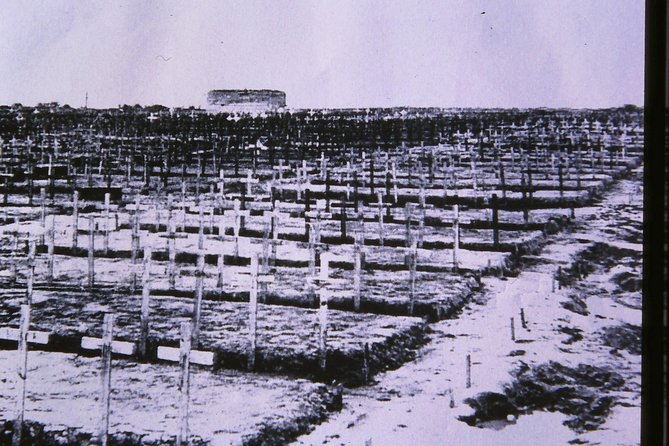
Flanders is small, but the scars are huge. On this tour, the distances between places can feel short on the map, yet each stop has its own weight—cemetery rows, memorial walls, museum rooms, and the open sightlines across the terrain. That mix matters. A building can explain; a field can judge you with its silence.
I also like that the focus stays on Australian service and the specific places where Australians fought, dug, attacked, and were later remembered. You’re not just collecting names on stone—you’re learning why those places mattered in the overall war story.
And the tour does something practical: it keeps moving at a pace that fits a day trip from Bruges, with regular time blocks at each site. You can absorb one place, then move on before your attention burns out.
You can also read our reviews of more private tours in Bruges

The 12-hour game plan: pickup, minivan comfort, and timing

The tour starts at 9:00 am and runs for about 12 hours. You’ll travel by air-conditioned minivan, with bottled water provided, and you get hotel pickup and drop-off in Bruges. That’s not just convenience. With WWI sites spread across the region, the transport piece protects your energy for the standing and walking.
It’s also a private tour, meaning only your group participates. Reviews of the experience highlight how the guide can keep things calm and organized, including safe driving through long stretches. You’ll feel that professionalism when you’re trying to concentrate while the day gets long.
One small note: the schedule includes a number of stops with shorter visits (often around 30 minutes) and a couple of longer ones (like the Passchendaele Museum and the Fromelles museum). That rhythm is a good match for most people, but you should expect a busy day.
Fromelles Museum: where the story starts (and why 250 matters)
Your first stop is the Museum of the Battle of Fromelles. You get about 45 minutes and the museum ticket is included.
This is the anchor stop for understanding the trip, because it puts the Battle of Fromelles into context and explains the later work of exhuming and reburied remains, tied to 250 soldiers. In other words, you learn not only what happened in 1916, but also how the present-day battlefield landscape connects to discovery and identification.
Practical tip: museum rooms can be warm or stuffy, then you step back outside to cold air and big sky. Plan layers so your body feels steady as you switch between indoor explanation and outdoor sightlines.
Pheasant Wood and the Australian approach to remembrance
Fromelles is followed by a series of cemetery and memorial stops that keep you close to what’s most real: the graves.
Next up is Pheasant Wood Military Cemetery, with a 30-minute visit and no admission fee listed for this stop. Standing in a cemetery like this changes how you read the battlefield. It’s no longer abstract. The ground has a purpose, and the names and numbers carry the story in a way a battlefield photo never can.
Then you move to the Australian Memorial Park. Here you stand on the German lines and look toward where no man’s land sat, including the direction connected to the Australian attack on 19 July 1916. That viewpoint piece is powerful. It turns the land into the timeline.
You also stop at the VC Corner Australian Cemetery. One unique detail here: it is described as the only exclusive Australian cemetery in France. Even if you don’t memorize the location from the ride, you’ll remember the feeling of that exclusivity—an Australian imprint in a place where graves often become international and dispersed.
You then visit Rue Pettilon Military Cemetery, another resting place where many Australian soldiers are now laid to rest. Short stop, heavy message. This part of the day is less about ticking off sites and more about keeping your attention anchored in remembrance.
Armentières, Ploegsteert Memorial, Hill 63, and Messines Ridge
Between the structured cemetery and museum stops, the day includes driving segments that add texture.
You’ll drive through Armentières and see where the pub tied to Mlle from Armentières was. That detail helps break the monotony of memorial stops and grounds the war story in civilian culture too—songs, slang, and everyday places around the conflict.
You’ll also pass near Ploegsteert Memorial and Hill 63. There’s something useful about seeing these points from the road. You catch the scale of the region, then your guide can connect it to the larger story of where fighting concentrated.
After that comes Messines Ridge, a stop with about 30 minutes and no admission fee listed. You’ll stand where the Australians attacked in June 1917. Ridge fighting matters in WWI because higher ground changes observation, artillery targeting, and movement. Even without technical history, you can usually feel it when you’re standing in the right place.



Hill 60 and the Caterpillar Mine Crater: the underground war
At Hill 60, you get around 45 minutes. This stop includes time at the Caterpillar Mine Crater and a memorial dedicated to the 1st Australian Company.
Hill 60 is the kind of place that makes the war feel three-dimensional. We often picture trench lines and soldiers moving above ground, but the story here also includes underground work—mines, tunnels, and the engineering side of battle.
If you’re a history buff, this is one of the most satisfying stops. It gives you a concrete landmark and a human connection at the same time: the crater is the physical result, and the memorial ties it to the people who carried out the operation.
Polygon Wood: memorials and the ANZAC Day connection
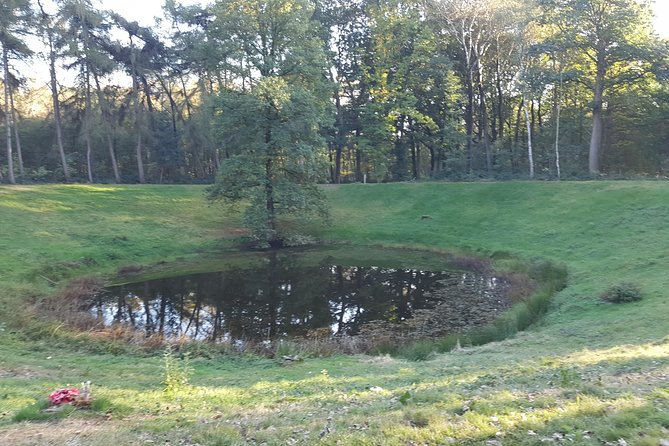
Next comes Battle of Polygon Wood, with about 30 minutes. There’s a memorial to the 5th Australian Division and also the NZ Memorial.
This stop has a special emotional hook because it is identified as where Dawn service happens on ANZAC Day. Even if you’re not attending a service, knowing that tradition is tied to the same ground you’re standing on changes your mood. You’re not only looking back—you’re looking at a living ritual.
The downside to this part of the day is simple: with only about half an hour, you’ll want to decide what you care about most—memorial names and layout, or the wider view lines across the battlefield area. The guide’s job here is to point you toward the best way to spend your time at each exact moment.
Passchendaele Museum: the one longer indoor stop you’ll appreciate
At Passchendaele Museum, you’re given about 1 hour. Admission is included.
This is described as one of the more interesting WWI museum stops in Belgium in the experience overview. I like longer museum time on a battlefields day trip because it gives your brain a place to reset. Cemeteries and memorials are emotionally steady but repetitive; museums add context and pacing.
In practical terms, this stop works well for first-timers because you can ask your guide questions and get a bigger picture while you’re inside. If you’re the type who likes to connect the dots—what happened, why it happened, and how it ended—this is the place where you’ll feel your understanding clicking into place.
Tyne Cot: the scale of CWGC remembrance
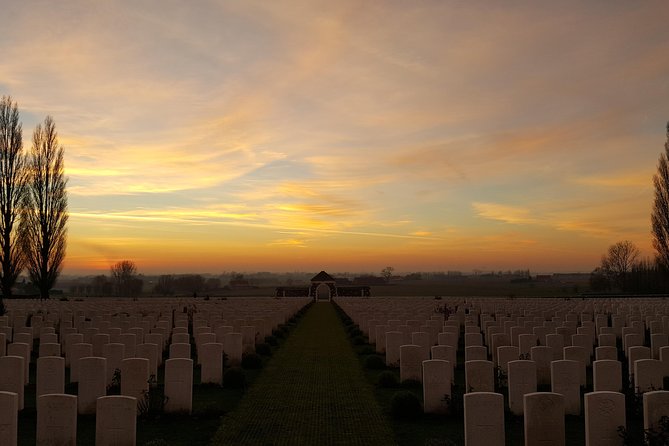
Then you head to Tyne Cot Cemetery, with about 30 minutes. Tyne Cot is described as the largest CWGC cemetery, and it features a memorial bearing the names of 35,000 soldiers who have no known grave.
This is one of those places where scale matters more than any single detail. Rows stretch out; names become a pattern; absence becomes a fact you can count. The “no known grave” part is especially important because it clarifies what remembrance can mean when identification doesn’t happen.
If you like photography, use caution and choose your spots carefully. You’ll probably find yourself wanting to photograph, then pausing because the place asks for quieter attention.
Ypres Cloth Hall and Cathedral area: time to switch gears
After Tyne Cot, you get back toward Ypres and stop at the Ypres Cloth Hall area. The schedule includes about 1 hour of free time, and admission for this stop is listed as free.
This is not a random break. After hours of cemeteries and battlefields, Ypres gives you city context—square life, the visible architecture, and a chance to grab a drink or snack if you want one (alcohol isn’t included, and you can purchase it if you choose).
It also helps you avoid fatigue. A day like this can run emotionally heavy. Having a bit of time in town is a pressure release.
Menin Gate and the Last Post: the emotional finish
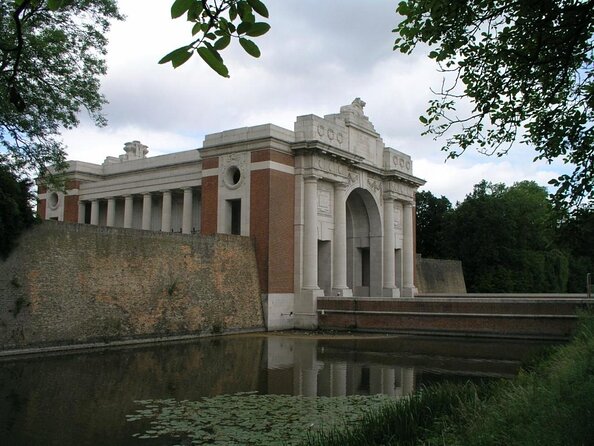
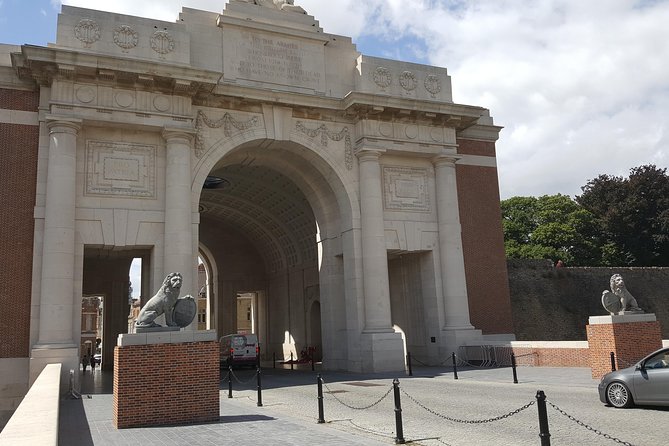
The final big moment is Last Post ceremony at Menin Gate. You stand under the gate for about 1 hour, and the ceremony admission is listed as free. After the service, your guide brings you back to your hotel.
This is the kind of stop that becomes the memory anchor for many people. The Menin Gate ceremony is not just a performance; it ties the names you saw on memorial stones to a shared act of remembrance.
Practical tip: ceremonies can mean waiting outside or standing for a set period. Bring layers even if it seems mild in Bruges. The day’s most outdoor time tends to happen late, when you’ve already been on the road for hours.
Price and value: what you are really paying for
At $545.94 per person, this is not a budget day trip. But you are buying a package that adds up quickly:
- Hotel pickup and drop-off in Bruges
- Air-conditioned transport by minivan for a long regional route
- A driver/guide to explain the sites as you go
- Lunch included
- Entrance fees included where relevant (for example, the Fromelles museum and the Passchendaele museum)
- Private tour for only your group
- Bottled water and local taxes included
If you tried to do this on your own, you’d spend time planning routes, lining up admissions, and figuring out where to stand for the most meaningful viewpoints. You’d also need the energy to drive yourself while keeping the day structured.
The value also shows in the way the itinerary is balanced: museums for context, cemeteries for grounding, and memorial viewpoints for spatial understanding.
Who should book this Australian battlefields day trip
This tour fits best if you:
- Care about World War I and specifically Australian involvement
- Want a structured day that hits major sites without you playing map-game all day
- Like guided context at memorials, not just roaming on your own
- Appreciate an experience that is emotionally serious, not casual sightseeing
It may be less ideal if you:
- Struggle with long days and lots of standing time (about 12 hours)
- Want purely upbeat or scenic stops
- Prefer very free-form travel with no set schedule
If you can handle a heavy theme and you like clear, guided explanations from a professional like Claude (named in the experience’s guide feedback), you’ll likely feel the day is worth it.
Final verdict: should you book from Bruges?
I’d book this if your goal is a focused Australian WWI day trip with real context and a meaningful finale. The route is built around the most emotionally and historically important places in the Flanders area, and it stays practical with pickup, transport, lunch, and clear time blocks.
If you want a WWI day that feels organized, respectful, and guided—without turning into a rushed checklist—this is a strong choice.
FAQ
What does the tour duration look like?
The tour runs for about 12 hours, starting at 9:00 am, with the Last Post ceremony at Menin Gate as the late-day highlight.
Is lunch included?
Yes. Lunch is included in the tour price.
How are admission fees handled at the stops?
Some stops include admission tickets (like the Museum of the Battle of Fromelles and Passchendaele Museum). Other stops list admission as free.
Do I get hotel pickup and drop-off?
Yes. The tour includes hotel pickup and drop-off.
Is this a private tour?
Yes. It is a private tour/activity, and only your group participates.
Do they provide cancellations and refunds if plans change?
Cancellation is free up to 24 hours before the experience’s start time for a full refund.