REVIEW · BRUSSELS
Evening Tour: The Dark Side of Brussels
Book on Viator →Operated by Legends of Bruges Free & Private Tours · Bookable on Viator
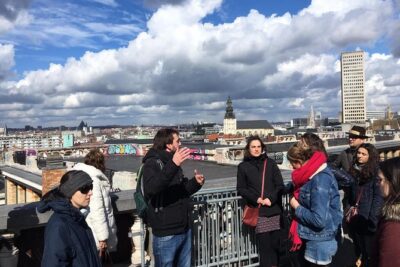
Brussels gets darker after sundown. This is a guided evening walk that stitches together Brussels landmarks with the kind of stories you do not hear on daytime sightseeing. I love how the route starts at Grand Place, then keeps moving into real neighborhoods instead of stopping at the same photo spots. I also like that the guide keeps the tone human: political context, crime and punishment themes, and architecture in plain language.
One thing to keep in mind: the name Dark Side can sound like a horror tour, but it is really a night history walk with darker episodes mixed in. Expect a lot of walking, and some stops will feel more reflective than scary. If you want a purely seedy, adrenaline-style evening, this may not match your mood. Also, the meeting area is busy—arrive a few minutes early so you do not lose time.
In This Review
- Key highlights worth planning for
- Grand Place to Kapellekerk: the route makes sense at night
- Dark Side of Brussels: what the “dark” part really means
- Stop 1: Grand Sablon area and the market vibe
- Stop 2: Place Saint-Jean and St. John the Baptist Church
- Stop 3: Tour Anneessens and the story behind the district
- Stop 4: Rue de Rollebeek for cobblestones and character
- Stop 5: Notre Dame du Sablon and its stained-glass glow
- Stop 6: Palais de Justice for scale, law, and city views
- Stop 7: Petit Sablon garden square and 48 bronze statues
- Stop 8: Place du Jeu de Balle and the daily flea market feel
- Stop 9: Kapellekerk (and what happened in 1134)
- Price, value, and how tipping fits the real cost
- What kind of guide experience you might get
- Practical logistics that will save you frustration
- Who should book this tour, and who should skip it
- FAQ
- FAQ
- How long is the Evening Tour: The Dark Side of Brussels?
- What language is the tour offered in?
- Where do I meet, and where does the tour end?
- Is the ticket mobile?
- Are there admission fees for the stops?
- What is the group size limit?
- Can I cancel for free?
- Should you book this evening Brussels walk?
Key highlights worth planning for
- Grand Place meetup: a clear, central starting point right by the iconic square
- Sablon’s church-and-statues stretch: gothic details plus Petit Sablon’s bronze guild statues
- Palais de Justice at night: a huge landmark with views from its hilltop setting
- Marolles flea-market atmosphere: Place du Jeu de Balle and its everyday second-hand energy
- Kapellekerk linked to 1134: a satisfying finish in the vernacular Marolles neighborhood
- Small group feel: a group size capped at 35, with a guide who can adapt to questions and pace
Grand Place to Kapellekerk: the route makes sense at night
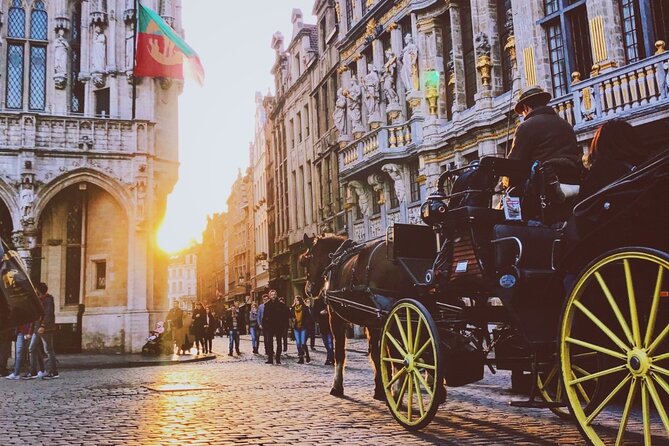
This tour runs for about 2 hours, moving at a steady walking pace through central Brussels. The start is Grand Place (Grote Markt), 1000 Brussel, and the walk ends near Kapellekerk on Rue des Ursulines, 1000 Bruxelles. That end location is handy because you finish in the Marolles area, where you can keep strolling, grab a late drink, or connect easily to the rest of your evening.
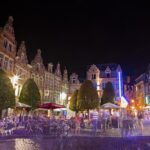
Night walking is where Brussels changes its personality. Daytime, you can skim sites. After dark, you start noticing scale—how buildings “sit” on the street, how churches light up, and how big civic spaces feel when the crowds thin out.
You can also read our reviews of more evening experiences in Brussels


Dark Side of Brussels: what the “dark” part really means
The title grabs your attention, and it delivers on the idea of punishment, crime, and the less-flattering corners of the city’s past. But this is not a jump-scare show. More than once, people describe it as not all dark, and that tracks with the experience you should expect: a story-led walk where the darker topics are part of a bigger picture.
In practice, the guide talks through the way Brussels became Brussels—laws, power, social tensions, and the streets where those stories took shape. Some guides are especially good at balancing the grim bits with humor and pacing, so the walk feels watchable instead of heavy. If you like history that explains why things happened (not just dates on a wall), you’ll probably enjoy the format.
Stop 1: Grand Sablon area and the market vibe
The walk begins near Place du Grand Sablon, a part of town that’s tied to the Sablon’s market culture. You get a brief look at the kind of street life that makes this area feel local. Even if you are only stopping for about 10 minutes, it helps you set context fast: Brussels is not just monuments, it is daily commerce, crafts, and people moving through the same blocks for centuries.
One practical tip: if you want photos, take them quickly here. Markets and central squares can get crowded, and the tour keeps you moving.
Stop 2: Place Saint-Jean and St. John the Baptist Church
Next comes Place Saint-Jean, a historic square known for its old-world feel and café corners. The real anchor is St. John the Baptist Church, which gives the square a sense of symmetry and gravity even when the area is busy.
Why this stop matters: a square like this teaches you how Brussels organizes public space. You are looking at a place that works for locals—meet, relax, watch life happen—while the church provides the visual “weight” that keeps everything grounded.
Stop 3: Tour Anneessens and the story behind the district
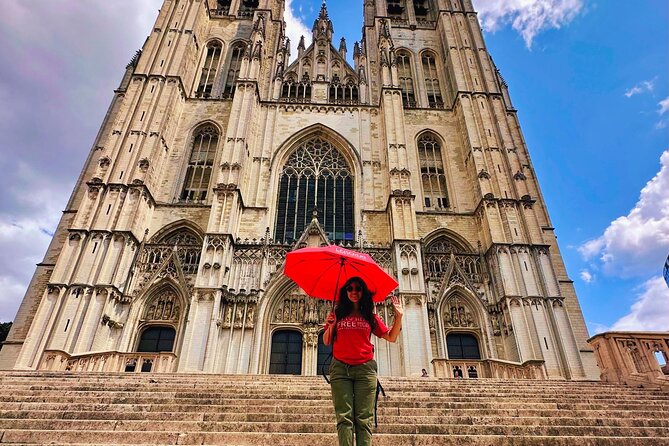
Tour Anneessens is your jump from postcard Brussels into a more neighborhood-style lens. You are not just seeing a street; you are seeing the idea of how places change and how communities shape a district. This stop is described as having a blend of architectural styles and a modern, lived-in atmosphere.
A good move here is to listen closely to the guide’s thread. The tour works best when each stop connects to the next: markets and squares lead into social history, then into the heavier civic landmarks later on.


Stop 4: Rue de Rollebeek for cobblestones and character
Rue de Rollebeek is the kind of street you walk slowly on purpose. Cobblestones, small cafés, and boutique-style storefronts make it feel intimate compared to the huge civic spaces ahead.
This stop is short—about 10 minutes—but it is useful. It resets you. After the story districts, you get a breather where the city feels human-scaled again. If your feet are already complaining, this is the moment to slow down and let the tour do the work for you.
Stop 5: Notre Dame du Sablon and its stained-glass glow
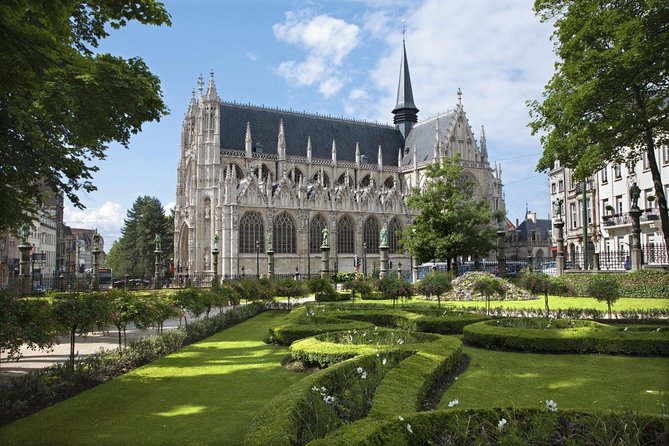
Then the tour reaches Notre-Dame du Sablon, a gothic church in the Sablon area. What you are aiming to notice: the church’s detailed architecture and stained glass windows, which tend to read especially well at night. Even with limited time, a good guide will point out the visual cues you would miss if you were just walking past.
This is one of the moments where the tour earns its name. Not because it turns into a horror tale, but because gothic churches in Brussels are tied to power, institutions, and the long timeline of rule and punishment that shaped daily life.
Stop 6: Palais de Justice for scale, law, and city views
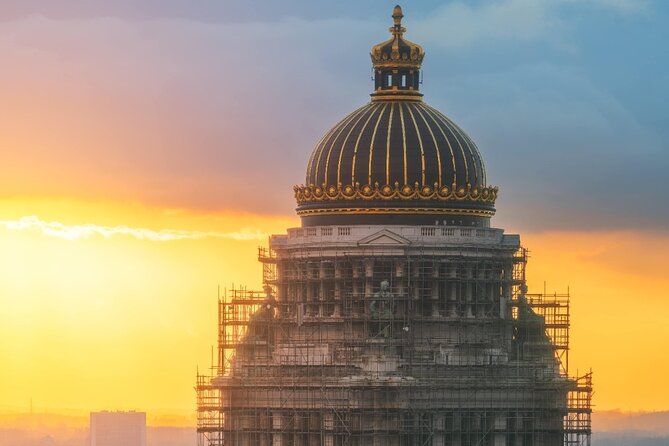
The walk swings to the Palace of Justice, one of the most iconic buildings in Brussels. It is known for its grand neoclassical architecture, and it dominates the hilltop setting with commanding presence.
Why you should care: the courthouse is more than a building. It is a symbol of how the city organized authority. You get that in the physical experience too—standing there at night makes you understand why people treated the law like something bigger than everyday life. The tour also notes that the courthouse sits on a hill, so you may get a sense of sweeping views depending on the lighting and your exact position.
If you are the type who likes architecture that tells a story, this stop will probably become a highlight.
Stop 7: Petit Sablon garden square and 48 bronze statues
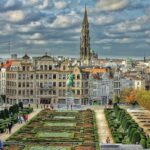
Next is Square du Petit Sablon, a garden square with a very specific feature: 48 small bronze statues representing medieval guilds. That is a rare kind of detail—this is not just greenery. It is a guided walk through how Brussels organized trades, status, and community.
At night, a garden square can feel surprisingly calm. Take a minute here to look at the statues as a set. If you have not thought about medieval guilds before, this is one of the most “click” moments of the whole route: you see how the city’s social structure had literal form.
Stop 8: Place du Jeu de Balle and the daily flea market feel
Then the tour reaches Place du Jeu de Balle, tied to the Marolles area and its flea market culture. The market happens every day, which helps explain the neighborhood’s “always in motion” energy. Here you can expect an atmosphere that feels welcoming and informal—second-hand clothing, old photos, vintage items, and the general bustle of people searching for treasures.
This stop is a reminder that the so-called dark side of a city is not always grim. Sometimes it is human: ordinary lives, small deals, and the everyday recycling of objects and stories. It is the kind of stop that makes the tour feel less like a lecture and more like a walk through living Brussels.
Stop 9: Kapellekerk (and what happened in 1134)
The tour finishes at the Kapellekerk, a church in the vernacular Marolles neighborhood. The name connects to an older chapel founded here in 1134, which gives the end point real historical weight.
This is a smart way to close the evening: you end not at another big monument, but at a neighborhood place that feels local. It also gives you an easy finish for dinner nearby, rather than sending you back to a crowded central square.
Price, value, and how tipping fits the real cost
The stated price is about $3.62 per group (up to 6), offered in English, with a mobile ticket. On paper, it looks almost too low—because it is. In a “small booking fee” model, the guide’s income often depends on tips from guests.
So what is the value? For most people, it comes down to this: you are paying for a storyteller plus a structured night walk that gets you into neighborhoods you might not choose on your own. If you enjoy learning how a city thinks—politics, justice, social dynamics—this can be an efficient use of your evening.
A few practical notes:
- Bring cash euros for tipping if you can. You want it simple.
- If you are sensitive to walking time, wear comfortable shoes. The tour is described as a bit more strenuous than some people expect, though it is still doable for most travelers.
What kind of guide experience you might get
The tour is led by a professional guide, and the experience can vary a bit based on the group and the guide’s choices. That does not mean it is random, but it does mean you should be open to the flow of the evening.
You might hear different storytelling styles depending on who is leading. Names that have shown up include Sebastian, Den, Gunny, Rahiem, Ian, David, and Rahim. Some guides lean funnier, some lean more historical, but the common thread is that you get city context, not just a list of sights.
Practical logistics that will save you frustration
Here’s how to make the evening go smoothly:
- Meet at Grand Place on time. The square can be packed, and finding a guide can take longer than you think.
- Plan your route to the meeting point earlier than your instinct says. Metro and tram connections are near the area, but evening crowds slow you down.
- If you are traveling solo, you still have a good shot at joining. The tour is built for small groups, capped at 35.
One more reality check: while this is marketed as an evening tour, it may feel more like “night history with darker themes” than a fully themed, scary, all-dark experience.
Who should book this tour, and who should skip it
Book it if:
- You want a walk that explains Brussels, including the political and justice side of the city.
- You like gothic architecture, squares, and the Marolles neighborhood rhythm.
- You are okay with darker topics, but not looking for pure shock value.
Consider skipping (or pairing it with something else) if:
- You want a “seedy after-dark” tour with strictly dark locations and vibes.
- You dislike walking or want a lighter evening with minimal time on your feet.
- You prefer strict stop-by-stop rigidity. The guide may adjust based on the group, and some guests feel that the “dark side” angle varies by evening.
FAQ
FAQ
How long is the Evening Tour: The Dark Side of Brussels?
It’s about 2 hours.
What language is the tour offered in?
The tour is offered in English.
Where do I meet, and where does the tour end?
Meet at Grand Place (Grote Markt), 1000 Brussel, Belgium. The tour ends at Kapellekerk on Rue des Ursulines, 1000 Bruxelles.
Is the ticket mobile?
Yes, you receive a mobile ticket.
Are there admission fees for the stops?
The stop details show admission ticket free for each listed location.
What is the group size limit?
The tour has a maximum of 35 travelers.
Can I cancel for free?
Yes. You can cancel up to 24 hours in advance for a full refund.
Should you book this evening Brussels walk?
If you want an evening that blends architecture, politics, and the more uncomfortable chapters of city life without turning it into a scary movie, this is a strong pick. The value is excellent for the low group fee, especially if you’re willing to tip the guide like you mean it.
Just go in with the right expectations: it is not a full-on fright festival. It is a guided night history stroll where the dark topics are mixed into a broader story of Brussels—and that balance is exactly what makes it work.