REVIEW · BRUSSELS
Visite guidée : Bruxelles, 1000 Ans de Luttes
Book on Viator →Operated by Brussels By Foot · Bookable on Viator
Brussels has a tougher side. This 2-hour walk through the Marolles quarter turns everyday survival into a story you can follow street by street, not from a screen. I love how guides like Francois and Thomas tell the city like a living place, and I love the hands-on stops, from a 12th-century church with Sunday Polish Mass to the view from the Marolles elevator. The one possible drawback: the Palais de Justice section doesn’t shy away from stalled renovation and public-money waste, so if you only want pretty postcards, you might find it a bit heavy.
You’ll also like the practical format: English-only, a mobile ticket, and a small group capped at 25 people. With free admission to the featured sites, the value feels strong once you see what’s included versus what’s just suggested.
One more consideration before you go: the tour ends in a lively square area, so it’s smart to plan for a post-walk drink or snack right after, rather than rushing off immediately.
In This Review
- Key highlights you’ll notice right away
- Why this Brussels walk works: politics you can picture
- Notre-Dame de la Chapelle: a 12th-century church with a living present
- Palais de Justice: the Belgium-style scandal of unfinished work
- Ascenseur des Marolles: a short ride to a very useful view
- Marolles on foot: quiet poverty, tight streets, and real stories
- Place du Jeu de Balle: flea market energy and a good landing spot
- Price and value: why this feels like a smart buy
- Guides you’ll actually want to listen to: Francois, Simon, Thomas
- Practical tips so you enjoy it more
- Who should book this tour?
- Should you book this Brussels By Foot tour?
- FAQ
- How long is the Brussels 1,000 Years of Struggles tour?
- What language is the tour offered in?
- Do I need to buy tickets for the stops?
- Where does the tour start and end?
- How much does it cost?
- How big is the group?
- Is there a confirmation when I book?
- Is the tour near public transportation?
- What’s the cancellation policy?
Key highlights you’ll notice right away
- A “1,000 years of struggles” theme that focuses on ordinary people, not just big names
- Notre-Dame de la Chapelle with a 12th-century setting and Polish Mass every Sunday
- Palais de Justice as a real-world Brussels controversy about a renovation that never finished
- Ascenseur des Marolles for a top-of-the-elevator view of the city
- Marolles streets and blind alleys that make the district’s past feel tangible
- Place du Jeu de Balle to wrap up near the daily flea market atmosphere
Why this Brussels walk works: politics you can picture
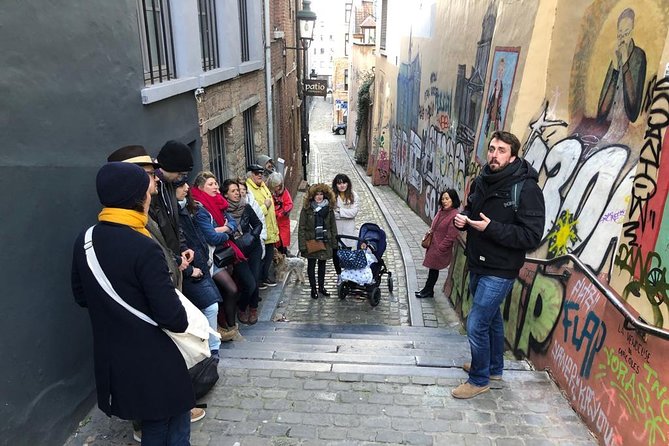
Brussels can feel divided if you only skim monuments and museum rooms. This tour keeps bringing you back to lived life: who had power, who didn’t, and how people pushed back anyway. The tone stays human, with stories tied to specific corners and buildings instead of general lecturing.
I like that it doesn’t treat history as dusty dates. You get the sense that today’s city shape grew from older pressures—economic stress, housing constraints, and the stubborn independence of the people who lived here. And when the guide hits a big symbol like the Palais de Justice, it’s not abstract. It’s about time, money, and promises that didn’t hold.
If your goal is to understand Brussels beyond the usual highlights, this kind of tour pays off fast. You’ll leave with a clearer mental map of how Marolles fits into the wider city, and why certain places carry meaning even when they look ordinary from the street.
You can also read our reviews of more tours and experiences in Brussels.


Notre-Dame de la Chapelle: a 12th-century church with a living present
The morning (or late-morning) start is at Rue de la Chapelle 21, right by Église Notre-Dame de la Chapelle. It’s a strong opening because it’s both old and active. The church dates back to the 12th century, and you’re not just looking at architecture—you’re hearing about how it’s used today, including mass in Polish every Sunday.
That detail matters. It hints at how immigrant communities and faith traditions have been part of Brussels life for a long time, not only in the most recent decades. You also get a sense of continuity: the building survives, and the community keeps returning.
One practical note: the visit here is short—about 10 minutes—so don’t expect a long sit-down. Think of it as a warm welcome into the tour’s bigger question: what does it mean for a neighborhood to keep functioning through change?
Palais de Justice: the Belgium-style scandal of unfinished work
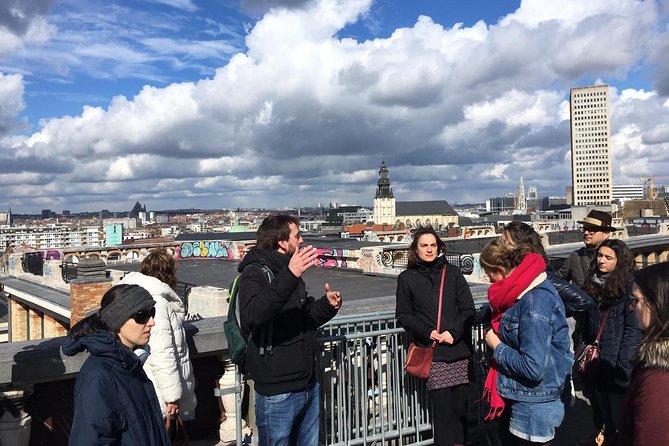
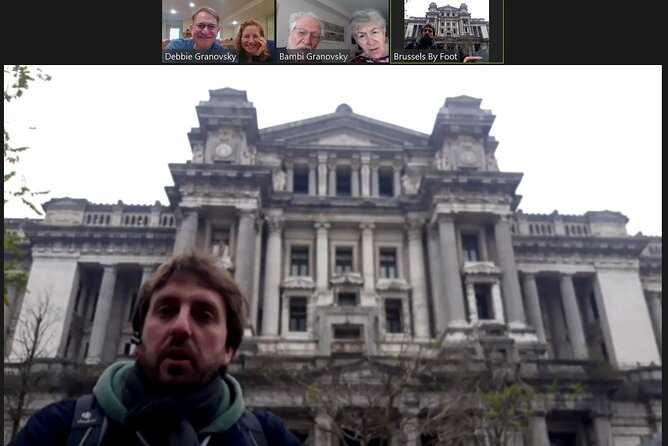
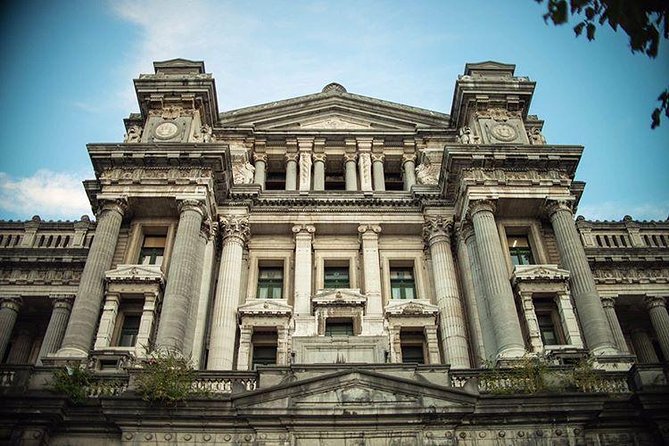
Then you move to the Palais de Justice, a place people love to photograph—but the story here is about something less photogenic: renovation started around 40 years ago and never finished. That’s the hook the guide uses, turning the building into a symbol of stalled progress and wasted public money.
This stop is only around 15 minutes, but it’s a high-impact moment. Big civic structures can feel grand and untouchable. Here, you get the other angle: how governments spend, how delays happen, and how citizens experience the consequences when construction becomes a long-running saga.
If you’re the type who asks what’s behind the scenes, you’ll appreciate the “why should I care?” framing. It makes the Palais de Justice feel less like a backdrop and more like a case study in how systems shape daily life.
Ascenseur des Marolles: a short ride to a very useful view
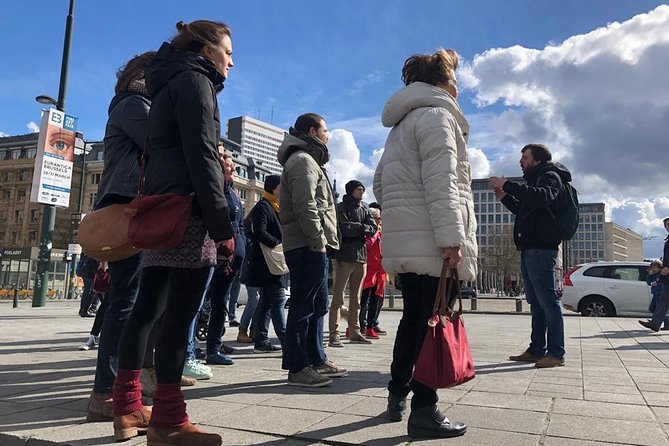
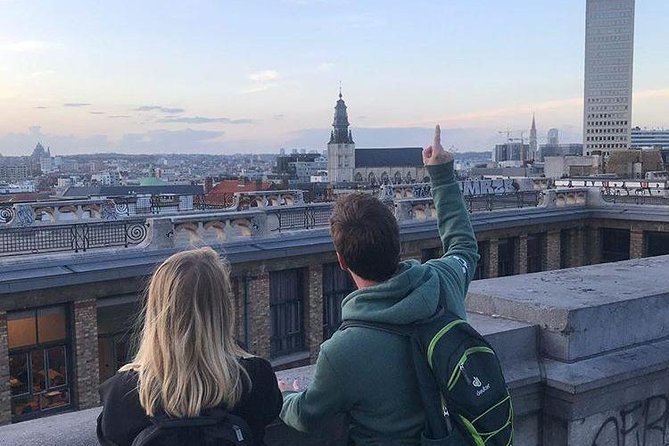
Next comes the Ascenseur des Marolles, where you get about 5 minutes at the top. It’s a small time investment with a big payoff because views help you understand what you’ve been walking through. Instead of staying in street level confusion—tiny lanes, corners that lead nowhere—you get height, direction, and a better sense of geography.
This is also where the tour stays practical. When you later wander through Marolles streets, you’ll recognize the layout more easily. The elevator moment gives your brain a reference point.
It’s also a nice contrast: after the Palais de Justice controversy, this stop is simpler and more immediate. You’re not arguing about budgets now—you’re looking out over Brussels and taking in how the district sits in the city.
Marolles on foot: quiet poverty, tight streets, and real stories
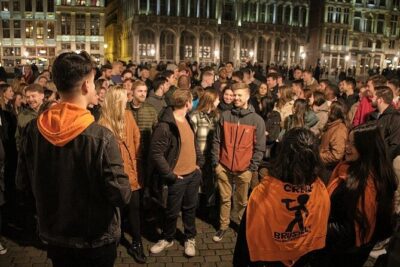
The heart of the experience is the time spent in Quartier Marolles—about 20 minutes. This is the part that tends to change people’s minds. Many visitors come expecting one version of the city. Marolles challenges that by showing how a central neighborhood can also feel tucked away, with small streets and blind alleys that make it easy to get lost—in a good way.
The tour frames Marolles as a district that’s historically been poor but independent, with a social history shaped by constraints and community resilience. The guide ties those ideas to what you can actually see around you, which is key. You’re not asked to imagine everything. The environment gives clues: the street tightness, the odd turns, the sense of living close together.
This section is also where different guides shine. In the interviews from past guests, people praised how the storytelling connected living conditions and long-term progress for disadvantaged communities. That connection is what turns a walk into a lesson you remember.
And here’s the balanced part: you’ll likely feel the weight of the subject matter. It’s not cheerful history, but it’s the kind that helps you read a city more honestly.



Place du Jeu de Balle: flea market energy and a good landing spot
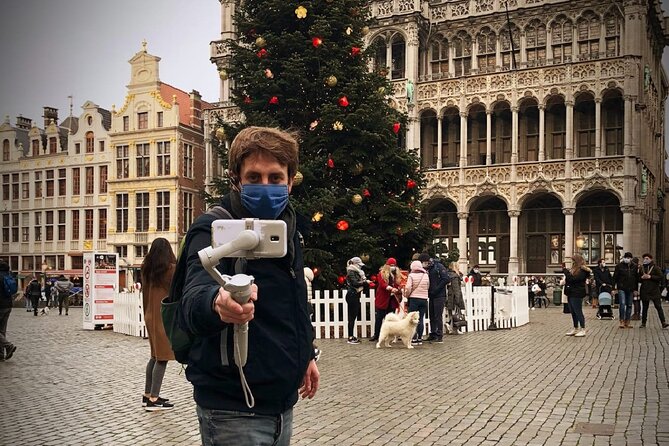
The final stretch lands at Place du Jeu de Balle, where you get about 10 minutes near the daily flea market. The area is a fitting finish because it’s about everyday commerce, survival, and reuse—values that match the tour’s theme of long struggle and practical independence.
This stop isn’t presented as a quick photo op. You learn why the market matters and how people have worked to keep this place conserved over time. It’s a good reminder that preservation isn’t only about museums. Sometimes it’s about continuing a tradition in a public square, day after day.
The tour ends at Pl. du Jeu de Balle 64, in the middle of the square. That matters because you can immediately transition into your own rhythm—coffee, beer, snacks, and lingering if you want. It’s one of those endings that helps the experience feel complete without forcing you into another scheduled stop.
Price and value: why this feels like a smart buy
The listed price is $3.62 per person, with entrance fees included. That’s unusually low for an organized, English-guided experience that also covers admission to the featured stops. Even if you factor in the suggested gratuity of €10.00 per person (not included), you’re still likely to feel like you got more than you paid for—especially if you care about real neighborhood context.
Timing also supports the value. You’re getting about 2 hours of guided walking and interpretation, with a maximum group size of 25. That’s enough time to connect the dots between sites, without turning the day into a long haul.
Just be realistic about what this price level usually implies: it works best if you’re there for the storytelling and the local perspective, not if you’re expecting a fancy production with lots of entry time. Here, the strength is the narrative pace and the selection of places.
Guides you’ll actually want to listen to: Francois, Simon, Thomas
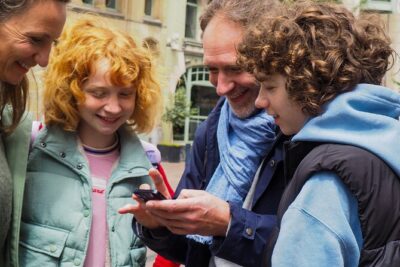
A big reason this tour gets such strong ratings is the quality of the guide work. You’ll see names like Francois, Simon, and Thomas show up in guest feedback, and the consistent theme is storytelling with structure. People appreciated guides who can explain visible details while also making the invisible boundaries—social and spatial—feel real.
What that looks like on the ground is this: the guide points out something you can see, then attaches it to a wider story. That’s especially important in Marolles, where the street pattern can feel confusing at first. A good guide helps you interpret the chaos.
If you like asking questions, this type of tour also gives you space for it. Small-group size helps, and the tour duration is long enough that your curiosity won’t feel rushed.
Practical tips so you enjoy it more
Here are a few things that can help you get the most out of the two hours:
- Start time matters because the walk is tight and the stops are short, so arrive on time at Rue de la Chapelle 21.
- Since it’s English, make sure you’re comfortable following a guided explanation throughout, not just for the big landmarks.
- Plan to spend a little time after the walk near Place du Jeu de Balle, since the finish is in the middle of the square and the market vibe is part of the payoff.
- Bring your questions. The tour’s theme invites that, especially around why certain public projects and social systems shaped the neighborhood.
Also, if you’re sensitive to topics around inequality and public spending, it’s good to know that the tour doesn’t treat those subjects like trivia. It’s framed as real life history, attached to real places.
Who should book this tour?
This one fits best if you want more than sights-on-a-map. I’d recommend it to you if you’re:
- the type who enjoys local perspectives and neighborhood stories
- interested in how communities adapt under pressure
- curious about why Brussels looks the way it does, at street level
It may feel less ideal if you prefer a purely monumental route with light, mostly scenic commentary. The Marolles and Palais de Justice parts lean into struggle and social context, not just architecture.
That said, even if you consider yourself a “simple tourist,” the format is still approachable. The duration is short, the group size stays manageable, and the stops are concrete enough to keep things moving.
Should you book this Brussels By Foot tour?
Yes, if you want Brussels that feels human. The combination of a small group, English guidance, free admission to the featured sites, and a theme that connects buildings to real life makes this a strong value. I’d especially book it if you’re curious about Marolles and want to understand it without guessing.
If you’re only here for headline monuments, you might prefer a different style of tour. But if you want to leave with a sharper sense of how Brussels works—socially, historically, and street by street—this one is a smart choice.
FAQ
How long is the Brussels 1,000 Years of Struggles tour?
The tour lasts about 2 hours.
What language is the tour offered in?
It’s offered in English.
Do I need to buy tickets for the stops?
Entrance fees are included as part of the experience. You also get a mobile ticket.
Where does the tour start and end?
It starts at Rue de la Chapelle 21, 1000 Bruxelles, Belgium. It ends at Pl. du Jeu de Balle 64, 1000 Bruxelles, Belgium, in the middle of the square.
How much does it cost?
The price is $3.62 per person, and gratuities of €10.00 per person are not included.
How big is the group?
The tour has a maximum of 25 travelers.
Is there a confirmation when I book?
Yes. Confirmation is received at the time of booking.
Is the tour near public transportation?
Yes, it is near public transportation.
What’s the cancellation policy?
Free cancellation is available. You can cancel up to 24 hours in advance for a full refund. The refund depends on canceling at least 24 hours before the start time, and changes within 24 hours aren’t accepted. The experience may also be canceled if a minimum number of travelers isn’t met, with an option for a different date/experience or a full refund.