REVIEW · BRUSSELS
Bruges and Ghent Day Trip from Brussels
Book on Viator →Operated by Buendía · Bookable on Viator
Bruges and Ghent in one long day. This trip is a strong way to see two UNESCO city centers without dealing with trains or transfers, with an English-speaking guide steering you through the highlights and the stories behind them (I’ve seen praised names like Angie and Antonio show up on different departures). The biggest thing to keep in mind is that it’s a walking day with lots of short stops, so you’ll want solid shoes and patience.
What I like most is the structure: guided sightseeing in both cities, then set free time so you can eat, browse chocolate shops, or linger for photos on your own. The other big win is the round-trip bus comfort for a day that can feel like a lot on paper—especially when you’re moving between cities. If you want a grab-and-go taste of Belgium’s medieval heart, this format hits well; if you’re craving slow, sit-down wandering, the schedule may feel tight.
In This Review
- Key Points to Know Before You Go
- Price and Value: What $56.72 Really Buys You
- Morning Logistics From Carrefour de l’Europe (and How Not to Lose Time)
- Bruges on a Time Budget: The Perfect Highlights Route
- Bargeplein to Minnewater: getting your bearings fast
- Begijnhof: a quiet dose of medieval social life
- Chocolalino: tasting chocolate and learning what to buy
- Walplein to Stoofstraat: beer history and medieval buildings
- Photo break: the little bridge moment
- Old St. John’s Hospital and Our Lady Church: faith meets systems
- Gruuthusemuseum to Boniface Bridge: power and legend
- Rozenhoedkaai and Huidenvettersplein: the postcard riverfront and the trade behind it
- Burg Square and Markt: medieval power in stone
- Bruges free time: what to do with about 1.5 hours
- Ghent Guided Walk: Town Hall, the Belfry Dragon, and the Mystic Lamb
- Stadhuis and Belfort: architecture and the famous dragon
- St. Bavo’s Cathedral: the one interior stop that matters
- Small church and guild details: what you notice after the main sights
- Korenmarkt and Saint Michael’s Bridge: old postal stories and big views
- Graslei and Korenlei: the Lys riverbank in one walk
- OOOST and Kleine Vismarkt: covered market past and candy talk
- Sint-Veerleplein: wrap-up square and bus timing
- Ghent free time: about an hour to breathe
- Bus Comfort, Group Size, and the Radio-Guide Reality Check
- A/C bus helps, but headphones can be a factor
- The bus might park a little away
- Group size is capped
- Who This Day Trip Works Best For (and Who Might Prefer Another Plan)
- Should You Book Buendía’s Bruges and Ghent Day Trip?
- FAQ
- What time does the Bruges and Ghent day trip start, and where do I meet?
- How long is the trip?
- Is the tour guided in both Bruges and Ghent?
- How much free time do I get?
- Do I need headphones for the radio guide?
- What’s included in the price?
- Is food included?
- Does the tour run in bad weather?
Key Points to Know Before You Go
- English-guided city walks in both Bruges and Ghent so you’re not just looking at sights, you’re picking up the why behind them
- Timed free time (about 1.5 hours in Bruges, about 1 hour in Ghent) for lunch and shopping, though it’s not designed for a long meal
- Photo stops are built into the route at classic corners like Rozenhoedkaai, Boniface Bridge, and the St. Michael’s Bridge area
- Radio guidance happens in some cases, so bring a 3.5 mm non-wireless jack or plan on buying disposable headphones for €1
- The bus may park a bit away from the exact center, so you should expect a short walk to meet up with your group again
- Group size is capped at 45, and many departures run smaller, which helps you move through crowds
Price and Value: What $56.72 Really Buys You
At about $56.72 per person for a full day (around 10 hours) from central Brussels, the value comes from what’s bundled, not from one single attraction. You’re paying for round-trip A/C transportation, a professional English guide, and two separate guided walking tours—Bruges first, then Ghent.
What you’re not paying for is where day trips often get expensive: meals, drinks, and entry fees (most stops here are view-and-walk style). Also note that the tour includes free time, so you still control your own spending on chocolate, beer, and lunch—just don’t count on the schedule to support a long, relaxed sit-down.
If you’re deciding between doing Bruges and Ghent solo, this tour can save time and stress. If you’re the type who loves wandering with no time limits and picking your own pace, it can feel a bit structured. That’s not bad—just know what you’re buying.
You can also read our reviews of more tours and experiences in Brussels
Morning Logistics From Carrefour de l’Europe (and How Not to Lose Time)
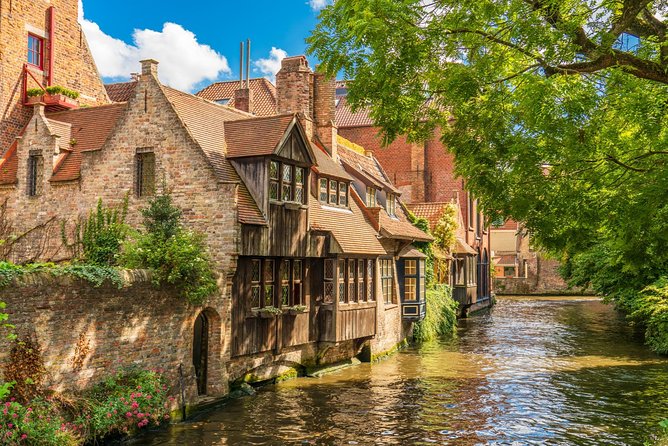
The meeting point is Carrefour de l’Europe in Brussels, with a start time of 8:30 am. The tour ends back at the same meeting point, so the day has a clear loop.
Two practical tips help a lot:
- Arrive early enough to find your exact bus. One review specifically warned that multiple buses can leave from the same area, and boarding the wrong one is an easy mistake to make.
- Use the first bathroom break at Bargeplein/Katelijnparking rather than waiting. The stop is short (about 10 minutes) and the guide will tell you when to be back.
This matters because the itinerary runs on a rhythm of quick orientation stops. If you lose a few minutes early, it snowballs into the free time later—especially if you want lunch and shopping in Bruges.
Bruges on a Time Budget: The Perfect Highlights Route
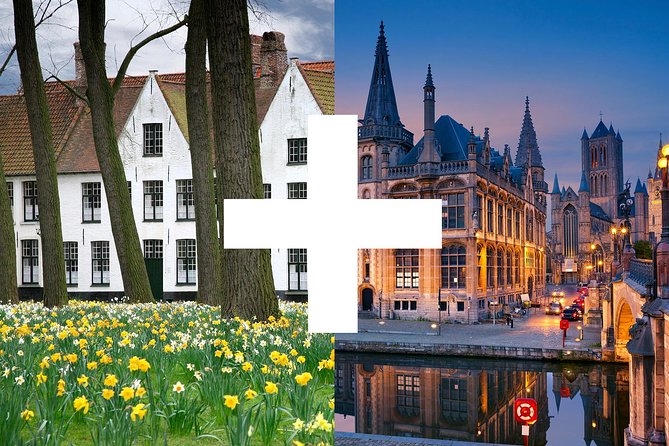
Bruges is where this day trip shines. The route is built around recognizable medieval scenes, with short stops where your guide ties together trade, faith, and everyday life.
Bargeplein to Minnewater: getting your bearings fast
You kick off at Bargeplein (Katelijnparking) with a quick bathroom break and a reminder of when to return to the bus. Then the walk begins with Minnewater, often called the Lake of Love. Expect photos with the lake in the background and a short story about how the place fits into Bruges’ legends and reputation.
It’s a good first stop because it gives you a visual anchor. After that, you’ll move into more history-heavy stops.
Begijnhof: a quiet dose of medieval social life
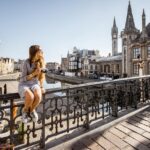
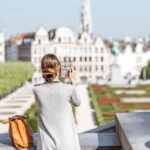
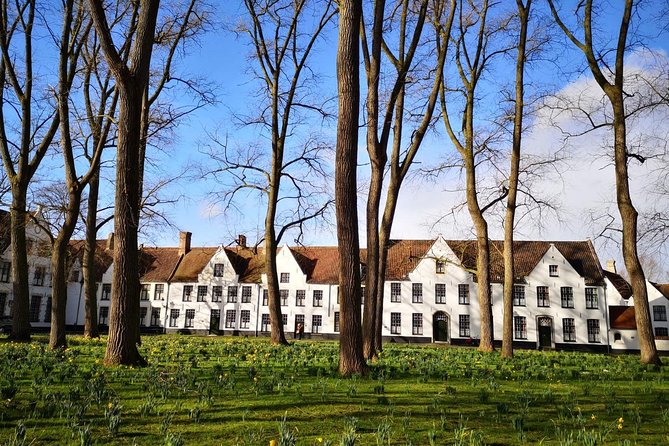
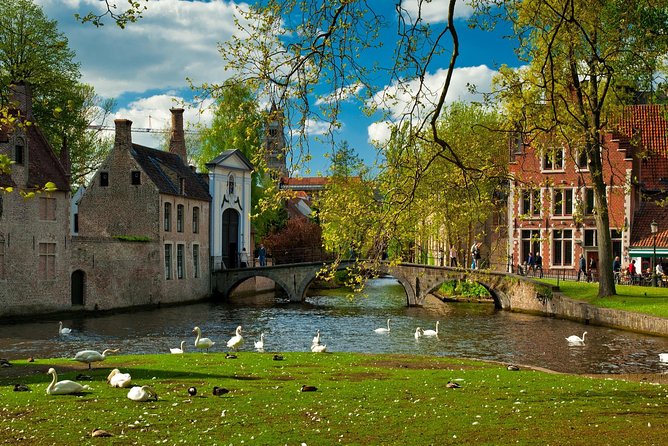
The Begijnhof, founded in 1245, is next. This is not a flashy stop on the postcard level, but it’s a meaningful one: it’s about the women’s community there and how it worked as part of medieval society. If you like your history grounded in real people, this stop delivers.

Chocolalino: tasting chocolate and learning what to buy
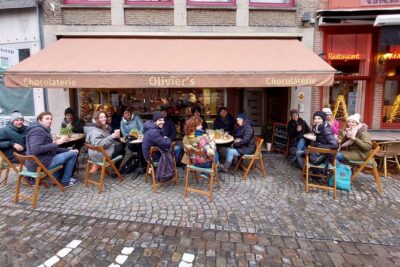
Next comes Chocolalino, a certified artisan shop. You get a taste and, just as important, you get a quick guide on distinguishing handmade chocolate from more industrial options. That tiny lesson pays off later, because Bruges chocolate shopping can be overwhelming.
Practical note: the tasting is short (around 5 minutes), so if you have strong preferences—dark, filled, fruity—keep that in mind when your free time starts.
Walplein to Stoofstraat: beer history and medieval buildings
At Walplein, your guide explains the history of Bruges beer. Then you move to Stoofstraat, where the focus shifts to how to spot original medieval houses. This is one of those stops that feels small, but it changes how you look at streets later. You start seeing clues in façades instead of just admiring them.
Photo break: the little bridge moment
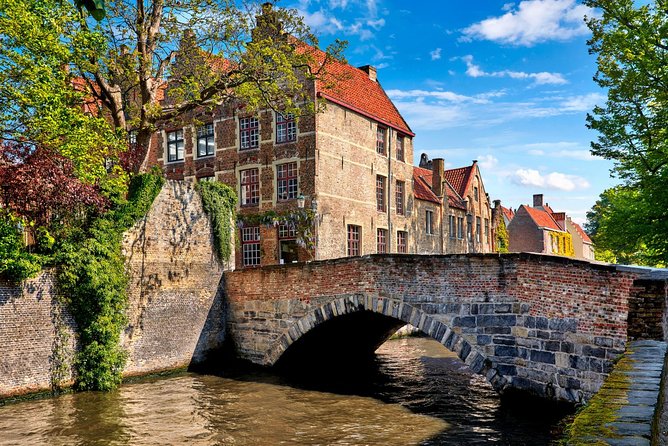
There’s also a short stop for photos from a little bridge. It’s quick, but it’s placed well for golden-hour type shots and for that postcard feeling Bruges is known for.
Old St. John’s Hospital and Our Lady Church: faith meets systems
Then you get a bigger history moment at Saint John’s Hospital. Your guide explains how the medieval health system worked—how care was organized long before modern hospitals.
Right nearby, you stop at Onze-Lieve-Vrouwekerk (Church of Our Lady) from the outside. Your guide points out curiosities about the white marble Madonna and Child by Michelangelo, said to be inside the church. Even if you don’t plan on entering, the outside explanation sets up what you’d be looking for if you do go in later on your own.
Gruuthusemuseum to Boniface Bridge: power and legend
At Gruuthusemuseum (outside the front of the museum), the story turns to one of Bruges’ most powerful families between the 17th and 18th centuries. After that, Boniface Bridge brings in a legend (and gives you time for photos).
Rozenhoedkaai and Huidenvettersplein: the postcard riverfront and the trade behind it
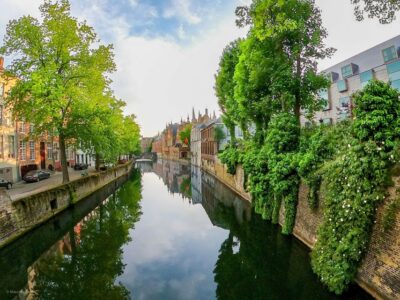
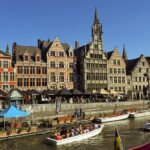
Then comes Quai du Rosaire / Rozenhoedkaai, one of Bruges’ most photographed spots. Your guide explains the history behind the Pier of the roses and gives you another photo window.
Next is Huidenvettersplein, the tanners square. It’s a reminder that medieval Bruges wasn’t just churches and canals—it was also jobs, crafts, and production.
Burg Square and Markt: medieval power in stone
At Burg Square, you’ll see the Gothic Town Hall, the Old Court House, and the Basilica of the Holy Blood area, with context from your guide about what each represents.
Then it’s on to The Markt (Grote Markt), Bruges’ big central square. This is where your guide typically gives practical advice on where to eat and where the best chocolate shops are, plus clear reminders about where and when you need to meet the bus for the trip to Ghent. This timing tip is crucial—one review noted the free time can feel a bit tight if you want a full sit-down lunch, so don’t assume you can wing it.
Bruges free time: what to do with about 1.5 hours
You get about 1.5 hours of free time in Bruges (it can vary with traffic and group pace). This is your chance to turn guided seeing into personal wandering.
If you want the best use of the time:
- Plan a simple lunch near the center first, then shop.
- If you buy chocolate, buy a small selection early so you’re not carrying it around in the last 10 minutes.
- If you want extra photos, head back toward Rozenhoedkaai or the bridge viewpoints while you still have time to return to the bus calmly.
Ghent Guided Walk: Town Hall, the Belfry Dragon, and the Mystic Lamb
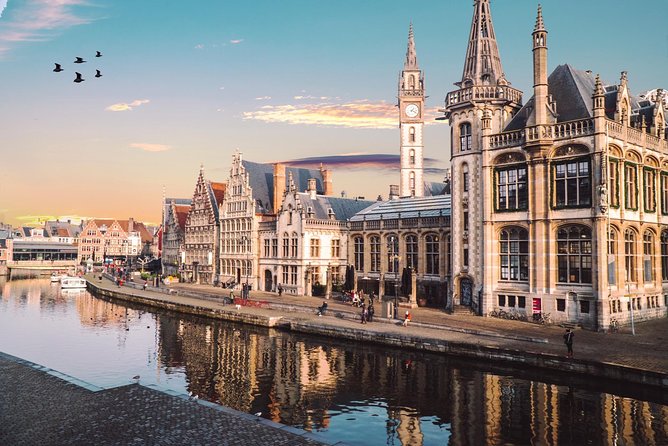
After Bruges, you jump back on the bus and continue to Ghent. The tour arrives and then walks into the center where the guided portion begins.
Stadhuis and Belfort: architecture and the famous dragon
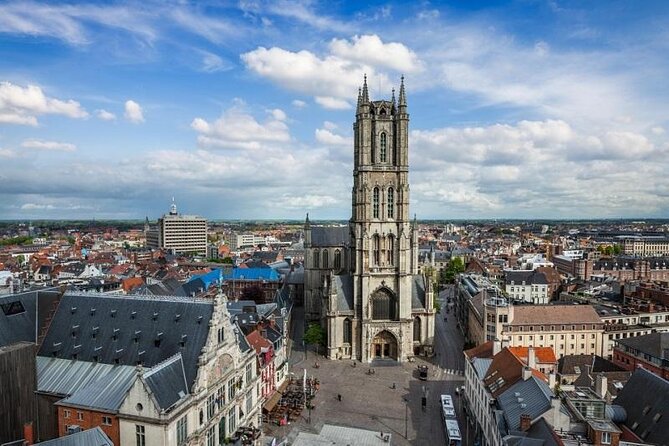
Your Ghent walk starts in front of Ghent Town Hall (Stadhuis), where your guide explains different architectural styles. Then it’s the Belfort van Gent, with the story of the tower and its famous dragon connection.
These two stops help you read Ghent quickly. You see authority in stone and symbolism in the skyline.
St. Bavo’s Cathedral: the one interior stop that matters
Next is St. Bavo’s Cathedral. Here, the tour includes both outside and inside viewing. Your guide points out the cathedral’s connection to the Van Eyck brothers’ painting The Adoration of the Mystic Lamb, often highlighted as the most stolen painting in history. The interior time is set (around 25 minutes), so even if you’re not a museum person, this is still the anchor “must see.”
Small church and guild details: what you notice after the main sights
You then pass by St. Nicholas Church (referred to in the itinerary as St. Nicolau). The point is simple: Belgian churches often host concerts and events, so they’re not just silent buildings.
At the Masons’ Guild Hall, you’ll learn what guild houses are and what makes this one distinctive, based on the original façade.
Korenmarkt and Saint Michael’s Bridge: old postal stories and big views
At Korenmarkt, your guide tells you about the history of the building that used to serve as the post office. Then you reach Saint Michael’s Bridge, where you get a classic photo perspective and a quick story about the nearby St. Michael’s Church tower.
Graslei and Korenlei: the Lys riverbank in one walk
The route continues along the Graslei and Korenlei area on the Lys riverbank. You’ll get context for the buildings lining the water, including the Masons’ Guild House and mention of a current hotel landmark in that stretch. This is one of those “now you get it” moments: the riverfront isn’t just pretty; it explains how trade and power shaped Ghent.
OOOST and Kleine Vismarkt: covered market past and candy talk
At OOOST (the Great Butchers), your guide explains that it dates to the 15th century and was originally a covered market. Then at Kleine Vismarkt, you get a short stop at a market stall where the seller talks about Ghent’s famous candy, cuberdon.
If you like food culture stories, this part is small but memorable.
Sint-Veerleplein: wrap-up square and bus timing
The final guided stop is Sint-Veerleplein Square, where your guide shares the story of the square and offers tips on where to drink traditional beer and where to shop for souvenirs. You’ll also get the reminder for when to be back for the bus.
Ghent free time: about an hour to breathe
You finish with about 1 hour of free time in Ghent. This is enough time to grab a drink, walk the riverfront one more time, and maybe duck into one shop—if you keep it focused.
One warning from experience-like feedback: the bus parking and pickup point can mean extra walking at the end of the day, so don’t linger too far into the corners during free time.
Bus Comfort, Group Size, and the Radio-Guide Reality Check
This tour uses a mix of short guided stops and guided walking, which is exactly why it’s efficient. It’s also why audio and group management matter.
A/C bus helps, but headphones can be a factor
Round-trip bus transport includes A/C. Some departures run smoothly with clear audio. But multiple comments point out cases where:
- radio static or headphone issues made it hard to hear
- instructions while moving weren’t always loud enough when the group got separated in crowds
The fix is simple: if you have the option, bring your own 3.5 mm non-wireless jack headphones. If you don’t, the tour offers headphones for €1.
The bus might park a little away
At least one common theme: the bus sometimes parks about 15 minutes away from the intended tour spots in both cities. That doesn’t mean you’re being stranded—it means you should plan for short extra walks and always follow the guide’s timing signals.
Group size is capped
The operator caps groups at 45. Some departures feel smaller in practice, which helps you stay together while walking through busy streets.
If you don’t handle crowds well or you’re sensitive to frequent regrouping, this is worth factoring into your decision.
Who This Day Trip Works Best For (and Who Might Prefer Another Plan)
This is a great fit if you want:
- a fast, organized way to see UNESCO Bruges and Ghent in one day
- guided storytelling with practical tips (I’ve seen praise for guides like Angie, Antonio, and Harris/JC for being organized and fun)
- a blend of sightseeing and time to shop and eat on your own
It may feel less ideal if you:
- need long meal breaks or slow wandering (the free time windows are set: about 1.5 hours in Bruges and about 1 hour in Ghent)
- struggle with cobblestones and lots of short walking segments
- expect major museum-style entry into multiple buildings (the itinerary is mostly view-and-walk, with a confirmed inside stop at St. Bavo’s Cathedral)
Should You Book Buendía’s Bruges and Ghent Day Trip?
Book it if you want the highest value for time: guided highlights plus real free time in both cities, starting and ending in central Brussels with A/C transport. It’s especially smart for your first trip to Belgium or if Bruges and Ghent are both must-dos.
Pass or choose a different style if your top priority is a relaxed day with lots of independent exploring, or if you strongly dislike group walking and regrouping. This tour is designed to move. When it runs well with clear audio and tight pickup/drop-off timing, it’s a very efficient way to tick off two medieval favorites.
FAQ
What time does the Bruges and Ghent day trip start, and where do I meet?
You meet at Carrefour de l’Europe in Brussels at 8:30 am. The tour ends back at the same meeting point.
How long is the trip?
The duration is about 10 hours.
Is the tour guided in both Bruges and Ghent?
Yes. You get a guided walking tour in Bruges and a guided walking tour in Ghent, plus free time in each city.
How much free time do I get?
You get about 1.5 hours free time in Bruges and about 1 hour free time in Ghent (timing can vary with traffic and group pace).
Do I need headphones for the radio guide?
Radio guides may be used on some occasions due to regulations. You can use your own 3.5 mm jack headphones that are not wireless, or buy disposable ones for €1.
What’s included in the price?
Included items are a professional English-speaking guide, city tips, round-trip A/C transport, and the guided walking tours in Bruges and Ghent.
Is food included?
No. Food and drinks are not included, but the guide can point you to good places.
Does the tour run in bad weather?
It operates in all weather conditions, but if it’s canceled due to poor weather, you’ll be offered another date or a full refund.
If you tell me your travel dates and your walking comfort level, I can suggest whether this “two-cities-in-one-day” format fits your style.