REVIEW · BRUGES
Bruges Private 2-Hour Walking Tour
Book on GetYourGuide →Operated by Omnia Travel · Bookable on GetYourGuide
A good guide turns Bruges into a story you can walk through. This 2-hour private tour strings together the city’s key squares and churches in a way that feels organized, not rushed, and you get to ask questions as you go. I especially like the focus on big-picture Bruges—trade, civic power, and religion—without needing a museum ticket. I also like that it’s built for real people at real pace; I’ve seen guides named Jan, Theo, and Dirk keep families and mixed ages engaged. One thing to consider: you’ll be on your feet for two hours, and it’s a walking plan, so plan comfy shoes and take breaks if you need them.
With a price set per group up to 20, the value swings fast depending on how many of you are in your party. If you’re a group of 6 to 10, it often lands in the sweet spot where you’re paying for expertise and good routing, not just sightseeing. If it’s just you and one other person, it’s still a great experience—but it’ll feel more like a premium tour, not a bargain.
In This Review
- Key points before you go
- Walking Tour in Bruges: Why this route works so well
- Meeting point and pacing: how a 2-hour plan fits real time
- St. Savior Cathedral and the walk toward Markt: your first sense of Bruges
- Marktplein and Jan van Eyck Square: trade power in plain sight
- Burg square: City Hall, Basilica of the Holy Blood, and civic justice
- Fish Market, Tanners Square, and Dijver: canals with a job to do
- St. John’s Hospital: a brief stop with long historical reach
- Minnewater and the Princely Béguinage: finishing with calm
- Price and value: $223 per group up to 20 people
- Who should book this, and who might skip it
- Should you book this Bruges Private 2-Hour Walking Tour?
- FAQ
- What’s the duration of the Bruges Private 2-Hour Walking Tour?
- How much does the tour cost?
- Is the tour private?
- Where does the tour start?
- Is pickup included?
- What languages are available for the live guide?
- What’s included in the price?
- Are entrance fees included?
- Can I cancel for a refund?
Key points before you go
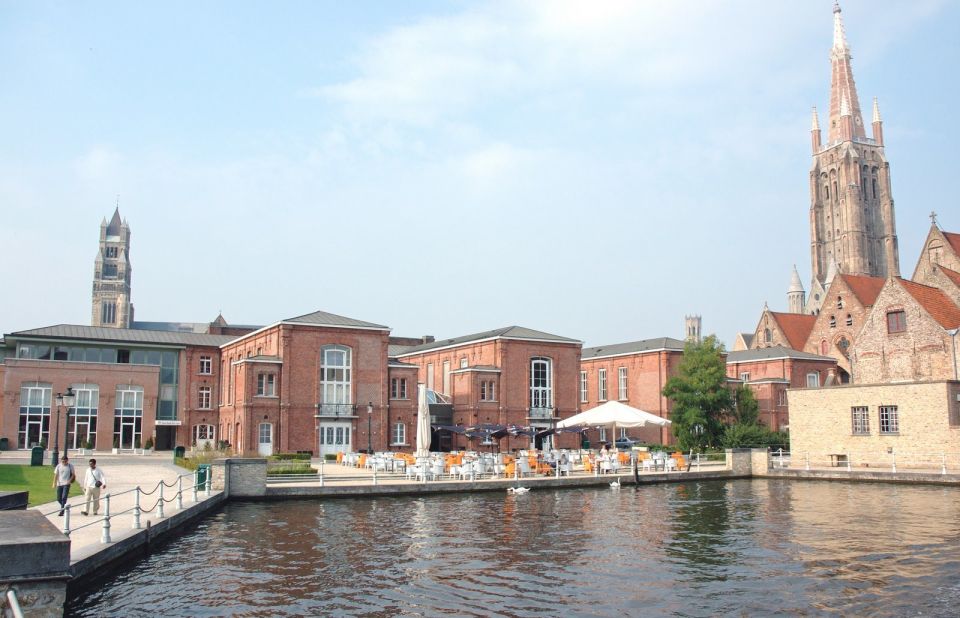
- UNESCO center route: you hit the essentials around Marktplein, Burg, and canal-side Dijver.
- Big landmarks, short stops: belfry-area views, Holy Blood Basilica area, and a quick look at St. John’s Hospital.
- Private guide, flexible pacing: guided for teens, parents, and even groups adjusting for wheelchairs.
- Nice language coverage: Spanish, Dutch, English, French, and German.
- Easy start points: pickup at hotel lobby (historic center), Bruges train station, or the Tourist Office In & Out at ’t Zand.
Walking Tour in Bruges: Why this route works so well
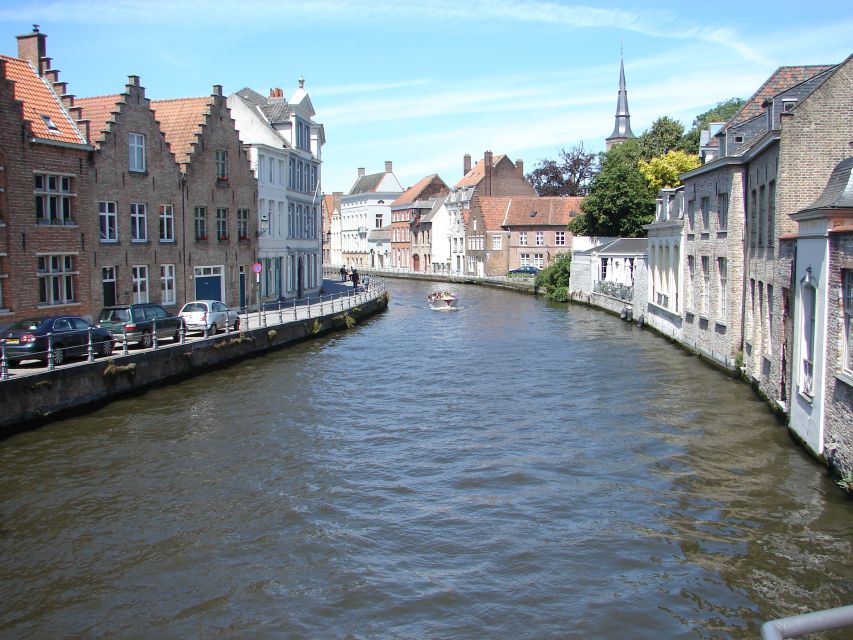
Bruges can feel like one long photo spot. The trick is knowing where to start, what to connect, and what details matter when you’re surrounded by medieval buildings. This tour does that for you. In about two hours, you get a guided thread through markets, money, and religion—the three themes that explain why Bruges looks the way it does.
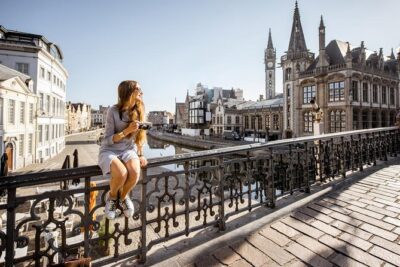
You also avoid the classic DIY problem: you’ll see a lot, but you won’t always understand the relationships between places. Here, you’ll be walking through the historical heart from ’t Zand Square toward Market Square, then around to Burg and the canals, finishing at Minnewater and the Princely Béguinage.
The best part is the private setup. When a guide is working just with your group, they can slow down for questions or speed up when you’re ready. Reviews point to guides like Jan, Theo, and Erik tailoring the pace, and even handling weather better than you’d expect for a walking plan.
You can also read our reviews of more walking tours in Bruges

Meeting point and pacing: how a 2-hour plan fits real time
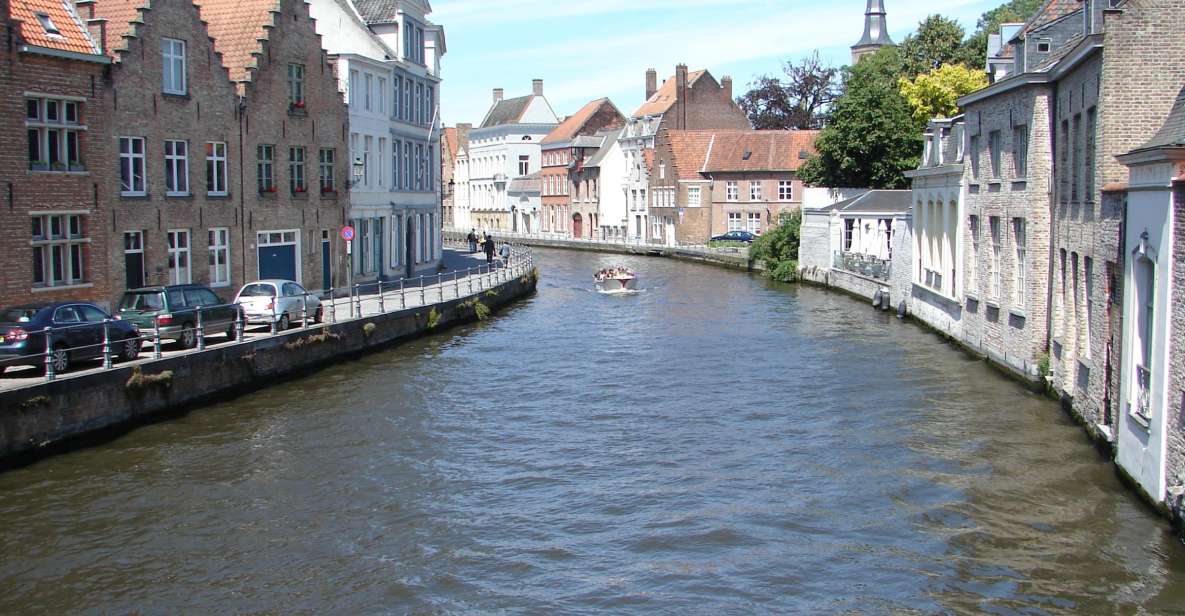
The tour starts at ’t Zand Square, at the Concert Hall area. If you’re staying near the historic center, pickup can happen at your hotel lobby. Otherwise, you’ll meet at the Bruges train station or the Tourist Office In & Out at ’t Zand 34, 8000 Brugge.
Why this matters: with Bruges, “central” can still be a maze of lanes. Having a clear start point means you don’t lose your first 20 minutes wandering, checking maps, and then rushing the good stuff.
As for pace, two hours is long enough to cover several major areas, but short enough to keep energy up. The route is a tour of highlights, not a marathon. Still, it’s city walking on uneven pavement in spots, so bring shoes you trust.
St. Savior Cathedral and the walk toward Markt: your first sense of Bruges
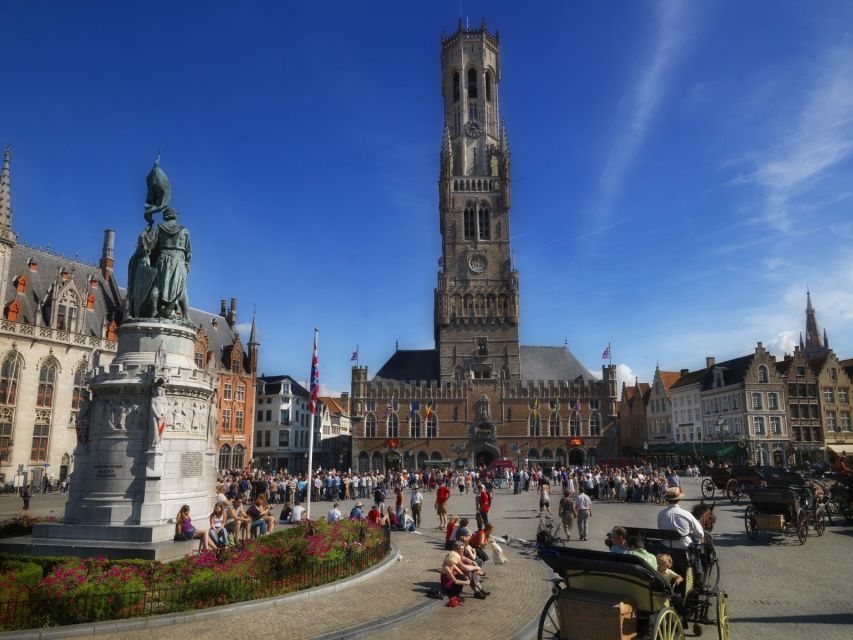
From ’t Zand Square, the route heads along the main shopping street toward Market Square. Along the way, you’ll stop at St. Savior Cathedral.
This is a helpful first anchor. The cathedral gives you a sense of Bruges’ religious center, then the walk continues you toward the civic and commercial spaces that made the city so powerful. It’s also a good way to start gently, since you’re not immediately stuck in crowds at the very busiest corners.
When you reach the Market Square area, you’ll be close to the visual landmark that defines the scene: the 83-meter-tall belfry. Even if you don’t go inside, seeing it from street level helps you understand how the city presented its authority.
What to watch for here:
- How the square opens up into big views around the belfry
- Architectural details on the surrounding facades that make Bruges feel taller and older than it looks in postcard photos
If you’re the type who likes your stops with context (not just photos), this is where a good guide can quickly turn the square into a timeline.
Marktplein and Jan van Eyck Square: trade power in plain sight
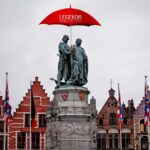
From Market Square you continue to Jan Van Eyck Square, once the center of Hanseatic Bruges. This is where Bruges shifts from “pretty city” to “European business hub.”
Your route passes important reminders of that trading era, including:
- Saaihalle (1399), the city theater building tied to the cloth trade
- Huis ter Beurze, noted as the first stock exchange
- Toll House, tied to the money side of moving goods
This part of the tour is valuable because it explains why Bruges became wealthy enough to build and maintain the kind of buildings you’re admiring. You’re not just seeing structures; you’re seeing how commerce shaped design.
One practical tip: if you care about photos, this is a great zone to pause and look back at earlier streets. The buildings often frame the canals and squares in ways you miss when you keep moving.
Burg square: City Hall, Basilica of the Holy Blood, and civic justice
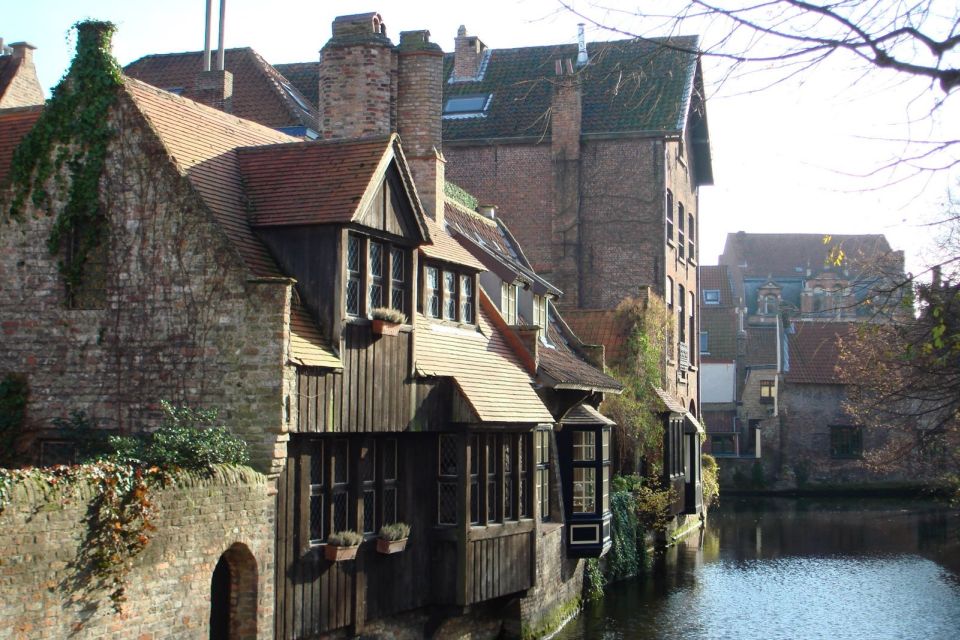
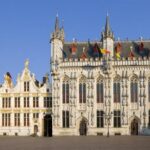
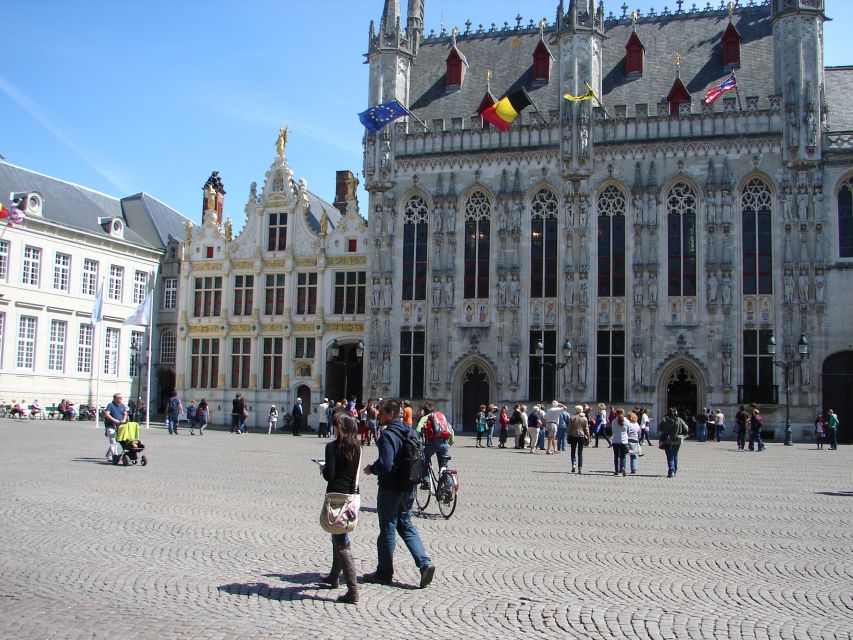
Next comes Burg, one of the charming squares in town—and one of the key areas where Bruges shows its political and religious weight. You’ll see the Gothic City Hall, the Basilica of the Holy Blood, and the Liberty of Bruges, which today houses the Municipal Archives (and historically served as the courthouse).
This is the “power map” part of the tour. If you’ve ever wondered why medieval cities feel like they’re run by buildings—this explains it.
Here’s why it’s worth it even if you’re not a church-and-government person:
- You’ll see how civic power and spiritual authority sit side by side.
- You’ll get a clearer sense of what the city measured, enforced, and celebrated.
And yes, guides often mix in practical local info. One review highlights how Daniel pointed the way to a waffle house just outside the Burg, with specific recommendations for fries and chocolate. That kind of heads-up is the difference between “sightseeing” and actually eating like you live here.
You can also read our reviews of more private tours in Bruges

Fish Market, Tanners Square, and Dijver: canals with a job to do
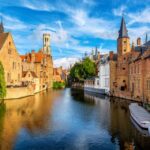
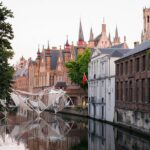
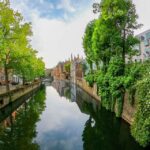
After Burg, the route goes toward the waterfront world of daily work and neighborhood life. You’ll walk through the Fish Market, Tanners Square, and along the picturesque Dijver canal area. You’ll also pass St. Mary’s Church.
This segment is fun because the names themselves tell you what went on here. In other words, you’re not only seeing canals and bridges—you’re seeing the working systems that once fed and clothed the city.
A guide can help you spot the subtle things that make canal cities feel different:
- how streets slope toward water
- where people likely gathered for trades
- how the canal edge creates a rhythm to walking
If you’ve got a weather-sensitive day, this section can be great because you’ll have lots of short photo opportunities without needing to commit to one long indoor stop.
St. John’s Hospital: a brief stop with long historical reach
One of the nicest pacing choices on this tour is the brief stop at St. John’s Hospital. It’s described as one of the oldest preserved hospital buildings in Europe.
You’re not here for a full interior visit on this tour plan; you’re here to understand why this building mattered. Hospital architecture tells you a lot about how communities took care of people before modern medicine. And in a city loaded with grand buildings, a surviving healthcare site adds balance.
If your group likes stories that connect daily life to major history, this is often a memorable pause. One review mentions how a guide also connected this stop with other cultural stops like the Groeningemuseum, showing how guides help you build a second day plan if you want one.
Minnewater and the Princely Béguinage: finishing with calm
The walk ends at Minnewater and the Princely Béguinage. This is a strong closer because it changes the mood. You go from civic and commercial centers into quieter, reflective space.
Even if you’ve never heard of a Béguinage before, you’ll understand why this final stop sticks in your mind. The Princely Béguinage represents a distinct chapter of religious and community life—one that’s less about big public power and more about structured devotion.
Minnewater itself (often linked to swans and calm canal views) is the kind of setting that makes your “last walk photos” feel worth it. It’s also a natural endpoint: you can finish your tour and then decide what to do next without feeling like you’re adding more heavy walking.
Price and value: $223 per group up to 20 people
The price is $223 per group up to 20 for the full 2-hour private experience. That setup is worth thinking about.
- If you book as a small group (say 2 to 4 people), the tour costs more per person because you’re paying for the guide time rather than splitting it widely.
- If you book as a larger group (6 to 10+), the per-person cost can drop into a reasonable range, and suddenly you’re paying for convenience and good routing.
Either way, you’re not just buying a walk. You’re buying:
- a guided loop through the UNESCO-listed historic center
- a guide who can explain what you’re seeing, not just name it
- a private setup that fits your pace (including adjustments when someone in the group needs mobility support)
In short: it’s priced like a premium private tour, but the value grows when you fill the group.
Who should book this, and who might skip it
This tour is a great match if you:
- want to see the highlights without getting lost
- care about meaning behind the sights (trade, civic power, church life)
- have kids or mixed ages and want someone to keep attention
- prefer private over joining a larger group bus-walk
You might consider a self-guided day instead if:
- you love wandering without structure
- you’re comfortable mapping Bruges on your own
- you only need a quick photo sweep rather than historical context
If you’re staying short and want maximum signal-to-noise, this two-hour plan is a smart way to get oriented fast.
Should you book this Bruges Private 2-Hour Walking Tour?
Yes, if you want Bruges to make sense quickly. The route hits the core squares—Market Square with the belfry, Jan Van Eyck Square, and Burg—then rounds it out with canals and a gentle close at Minnewater and the Princely Béguinage. It’s also the kind of private tour where the guide can flex to your group, even in rougher weather, which matters in Belgium.
If you’re traveling as a small couple and you’re happy with “good enough” sightseeing, you might decide to DIY. But if you want a guide who can connect the dots and help you plan what to do next, this tour is an easy yes.
FAQ
What’s the duration of the Bruges Private 2-Hour Walking Tour?
The tour lasts 2 hours.
How much does the tour cost?
It’s $223 per group, up to 20 people.
Is the tour private?
Yes. It’s a private group tour.
Where does the tour start?
It departs from ’t Zand Square, at the Concert Hall.
Is pickup included?
Yes. Pickup is included if your hotel is located in the historic center, or you can meet at the Bruges train station or the Tourist Office In & Out at ’t Zand 34, 8000 Brugge.
What languages are available for the live guide?
The live guide is available in Spanish, Dutch, English, French, and German.
What’s included in the price?
A private guide for 2 hours is included.
Are entrance fees included?
No. Entrance fees are not included.
Can I cancel for a refund?
Free cancellation is available up to 24 hours in advance for a full refund.