REVIEW · BRUSSELS
Tell Me About Brussels! | First Day Must-Do | Local Storytellers
Book on Viator →Operated by Ambassadors Tours & Activities · Bookable on Viator
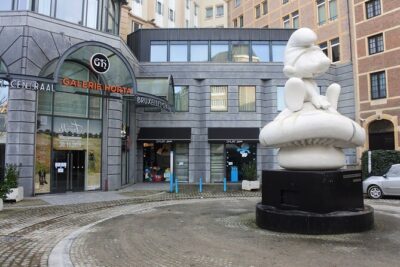
Brussels begins with a silly statue and good stories. This 2.5-hour walking loop (English guide, mobile ticket) is a smart first-day way to stitch together the city center without museum overwhelm. I especially like how it blends famous stops with quick context you can remember later, and I like the practical local recommendations that guides such as Tom and Tristan seem to sprinkle in as you go.
My only real consideration is the hillier finish in the Mont des Arts area and the general pace of a walking tour. If you have limited stamina, plan on taking it slower, and keep comfortable shoes on your feet.
In This Review
- Quick hits before you go
- A perfect first-day Brussels walk centered on real orientation
- Start at Grand Place, end near Mont des Arts, and keep your shoes ready
- Manneken Pis and La Bourse: two icons, two very different Brussels moods
- Delirium Café stop: beer culture as a history and identity shortcut
- Les Galeries Royales Saint-Hubert: an arcade you’ll want to walk through again
- St. Michael and St. Gudula Cathedral, then Warandepark: seriousness with breathing room
- Royal Palace at the end: the regal payoff near Mont des Arts
- What makes this tour feel worth it: the guide style and the local tips
- Price and tipping: a low booking fee, so your contribution matters
- Who should book (and who should pick a different option)
- Should you book this Brussels first day tour?
- FAQ
- How long is the Brussels First Day must-do tour?
- What languages are available?
- Where do I meet, and where does the tour end?
- How much does it cost?
- Do I need to pay admission fees at the stops?
- What group size should I expect?
- Does the tour run in bad weather?
- What if the minimum number of people isn’t reached?
- Is it suitable if I have only moderate walking ability, and are service animals allowed?
Quick hits before you go
- Pay-what-you-want style tips: the booking fee is small, and what you give beyond that is part of the deal.
- A tight center-city route: top sights on foot, so you get oriented fast.
- Beer culture gets a stop: Delirium is built into the walk, not tacked on as an optional detour.
- Great guide energy: stories and humor from guides like Conor, Adelin, and Pascal show up again and again in the feedback.
- Small booking groups inside a bigger cap: limited group sizes help keep the experience from feeling chaotic.
A perfect first-day Brussels walk centered on real orientation
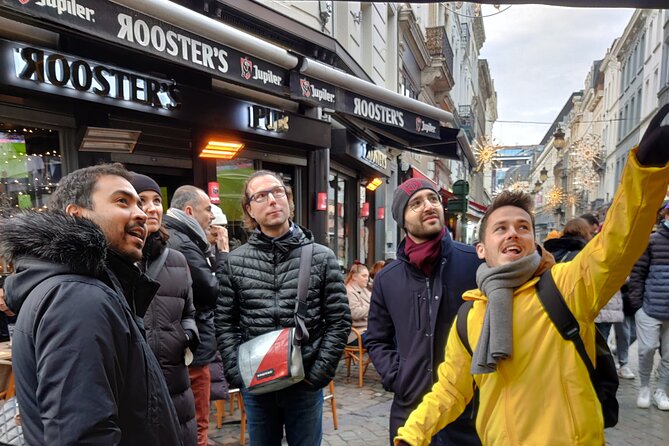
Brussels can feel like a city of contrasts: ornate squares, comic little statues, serious stone buildings, and then a beer bar where the whole place seems to shout your attention list. This tour is designed for your first hours, when you want two things at once: a quick route through the center and a few story hooks that turn landmarks into something you can actually place.
The price is where the value jumps out. You pay a small booking amount (listed at $3.62), then you have the pay-what-you-want part beyond that. In practice, that means you’re not buying a rigid product. You’re hiring a guide to help you understand what you’re looking at, and you decide what it’s worth to you. If you like your first day to feel like it was planned by someone who actually lives there, this fits.
You can also read our reviews of more tours and experiences in Brussels.
Start at Grand Place, end near Mont des Arts, and keep your shoes ready
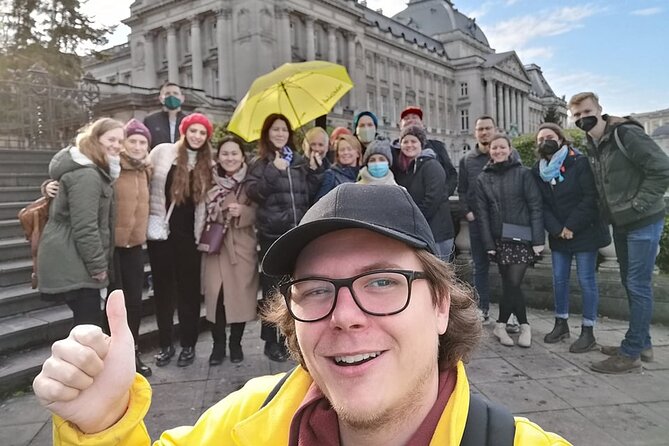
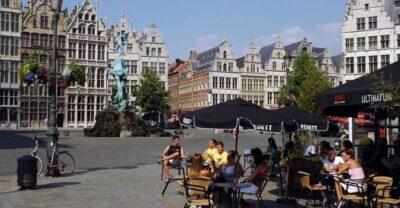
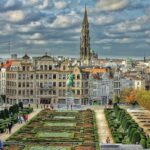
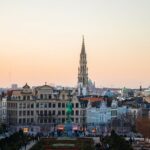
The meeting point is at Grand Place (Grote Markt), and the walk finishes at Mont des Arts (Mont des Arts 24). That route matters because it keeps you in the city’s most connected pedestrian zone for most of the time. It also means you’re not stuck traveling between far-flung neighborhoods on your first day.
Timing-wise, expect about 2 hours 30 minutes on the move. That sounds short until you remember it includes multiple stops for quick explanations. It’s not a slow stroll where you linger at every corner; it’s paced like a guided introduction. The good news: the route is compact, so you’re not spending the day on buses or trains.
Also note the moderate physical fitness level. This is a walking tour, and one section ends up going uphill toward the Mont des Arts side. I’d treat that as your biggest “logistics check” before you book.
Manneken Pis and La Bourse: two icons, two very different Brussels moods
You start with Manneken Pis, the famous little boy. It’s one of those landmarks that’s instantly recognizable, but it helps to get the context behind why it became a symbol and how people interpret it over time. You get a short stop here, around ten minutes, which is perfect: you can see the statue, get the story, and move on before the whole thing turns into a photo line and nothing else.
Next comes La Bourse de Bruxelles, the stock exchange. On the outside, it reads like grand architecture and civic confidence. With a guide, you get the sense of what this kind of building represents in Brussels’ story—how wealth, trade, and power show up in stone and design. The stop is brief (about 15 minutes), so you’re not being forced into a long building visit. You’re being given a landmark meaning so you can recognize it later from across the street.
If you like walking tours that don’t take you on a “marker hop” with no payoff, these two early stops are a strong start. One is playful, one is formal. Brussels in miniature.
Delirium Café stop: beer culture as a history and identity shortcut
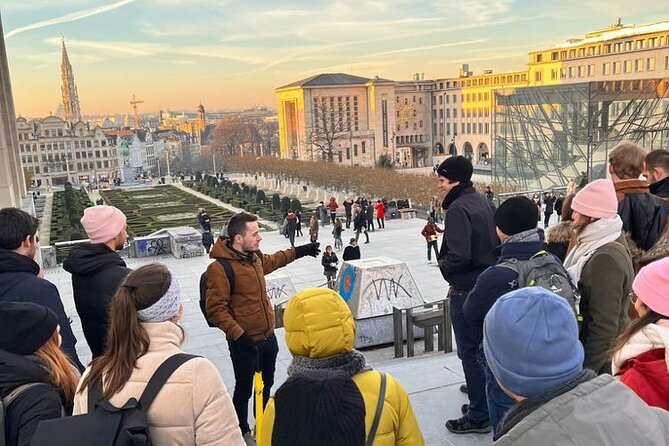
Then you hit Delirium, the famous beer place where beer seems to be everywhere. The tour is timed so you see it as a culture stop, not just a bar break. Even if you don’t plan to order a drink, the experience helps you understand why Brussels is famous for beer beyond the usual clichés.
In this kind of stop, the guide’s job is to connect the dots: why places like this become social hubs, how Belgian beer culture ties into everyday life, and what kinds of beer fans usually look for. You get a quick visit (about ten minutes), so it doesn’t eat the day. It’s more like a taste of how the city behaves when it gets to the subject it’s proud of.
Les Galeries Royales Saint-Hubert: an arcade you’ll want to walk through again
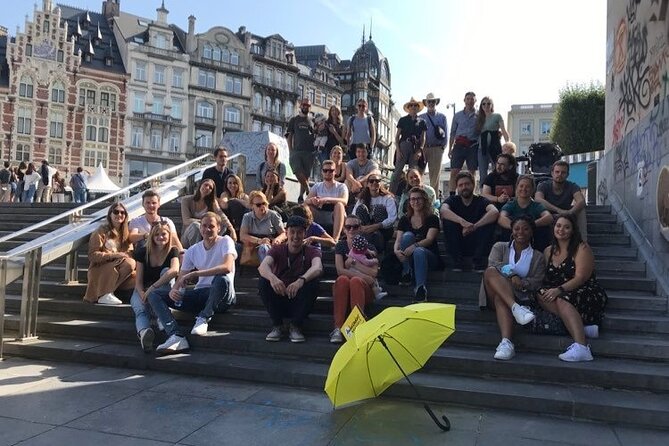
After the beer stop, the walk turns toward Les Galeries Royales Saint-Hubert, one of Brussels’ most photogenic shopping galleries. These covered arcades are more than just places to browse. They show you how cities used to handle public life: sheltered walking, elegant storefronts, and a sense that commerce and beauty can be in the same frame.
This stop is another short one (around 15 minutes), but it’s timed well. You’re already in the “Brussels looks like a postcard” mood, and the gallery gives you a different kind of detail to notice—glass, ironwork, and the way the passage shapes movement.
If you have a sweet tooth or a snack schedule already in mind, this is also a logical moment for your guide’s food advice to land. Several guides in the feedback style their tours with practical suggestions for what to try next (and where), and galleries like this are where you tend to find the best follow-on options.

St. Michael and St. Gudula Cathedral, then Warandepark: seriousness with breathing room
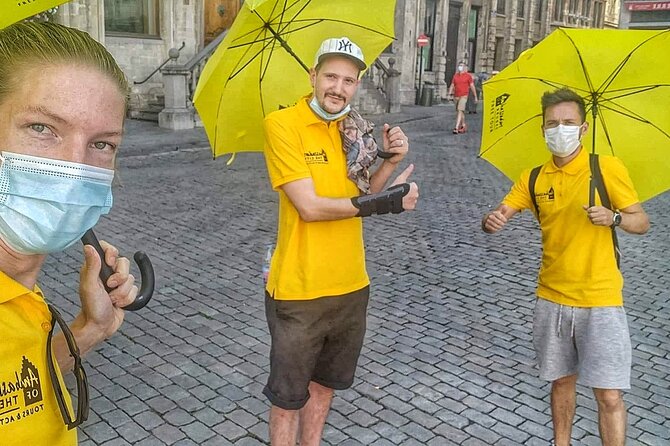
Next you reach St. Michael and St. Gudula Cathedral. Even with a short stop (about ten minutes), a cathedral like this changes your perspective. You start noticing how the city’s identity leans on faith, power, and community. It’s also a good contrast after the playful and commercial stops. Brussels has a serious side, and this is one of the clearest places to see it.
Then you head to Parc de Bruxelles (Warandepark). This is your breather in the middle of a walking introduction. Parks don’t just look nice; they help you absorb scale. You get space to reset your pace and scan the area around you without a constant churn of street views. It’s also part of the “royal city” feel, which matters later when you see the palace zone.
If you want your first day to feel comfortable rather than frantic, these two stops do the job of balancing out the earlier sights.
Royal Palace at the end: the regal payoff near Mont des Arts
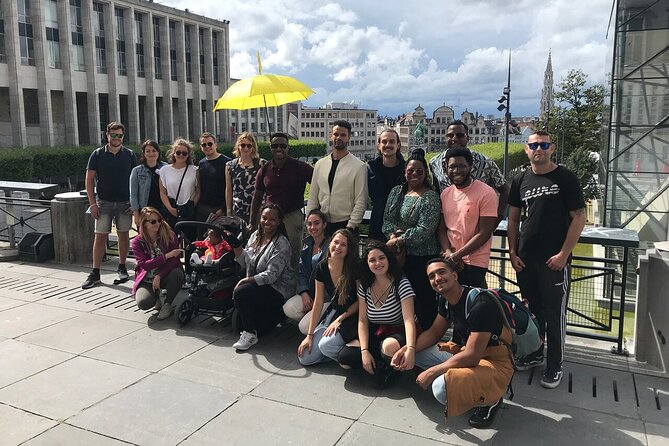
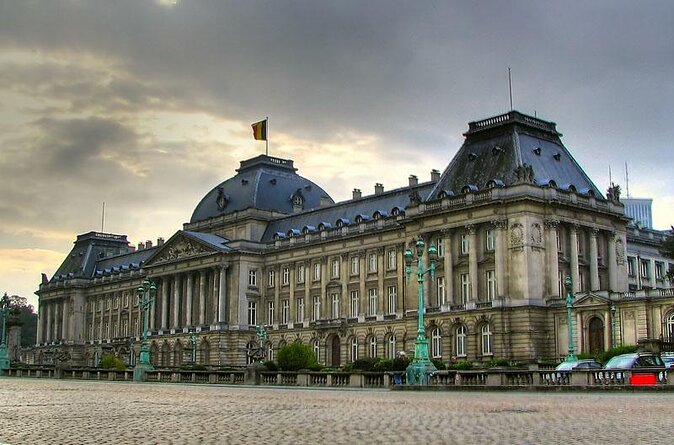
Finally, you arrive at the Royal Palace (Palais Royal) for a longer look (about 20 minutes). This is one of those landmarks that benefits from guidance because the palace area isn’t just a building. It’s the stage Brussels places itself on—how royalty, tradition, and state power show up at street level.
Ending near Mont des Arts is also a practical win. After the guided portion, you can keep exploring at your own pace in the direction the tour naturally leads you. It’s a sensible finish point for turning the guided context into your own mini itinerary.
One more pacing note: because the last segment goes uphill, treat the final stretch as the moment to take a slower walk if you need it. The stops are planned, but your body is in charge.
What makes this tour feel worth it: the guide style and the local tips
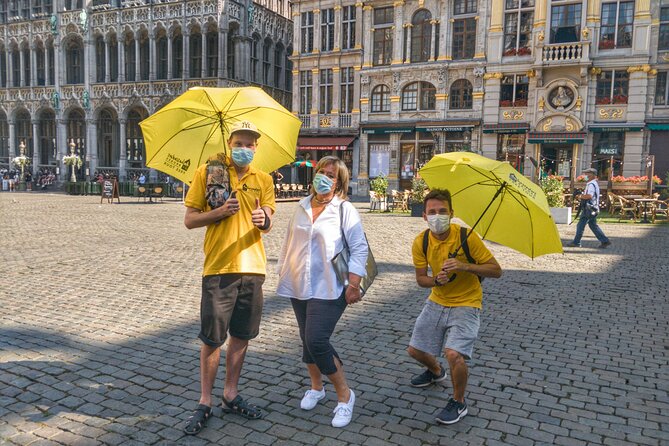
This tour earns its high rating for one main reason: it tends to feel like a conversation with a local storyteller, not a scripted lecture. Guides such as Tom, Tristan, Conor, Pascal, and Quinton are repeatedly described as funny, welcoming, and quick to share useful context. You’ll hear historical explanations, yes, but also the kind of street-level details that help your next steps feel easy.
A few of the most useful patterns I’d look for on a tour like this:
- Ask questions. When you do, you often get the best personal insights, not just the facts.
- Listen for the “where to eat and drink” guidance. It’s not an afterthought here; it’s part of how the tour helps you navigate the city.
- Watch the balance between stops. Some people prefer shorter explanations at every stop and more variety. This tour aims to cover major highlights without dragging, but you’ll still feel it’s an intro with multiple locations packed in.
Another small but real advantage: groups are kept limited. The operator caps the overall size (maximum 40), while booking is restricted to smaller group caps (including a max of 6 people allowed to book in a group for a balanced mix). That usually helps with pacing and makes it easier to ask questions without shouting over everyone.
Price and tipping: a low booking fee, so your contribution matters
At $3.62 per person for the booking fee, this is priced like a gateway to a guided orientation. The pay-what-you-want element is the key to understanding the true value. You’re effectively paying for a guide’s time and expertise, and tipping is how that value shows up directly.
If you want a rule of thumb: tip in proportion to how much the guide helped you understand what you saw and made you feel confident to explore on your own right after. Guides described as energetic and humorous, like Tom and Tristan, tend to deliver that kind of “I’m ready to go” feeling fast.
Also, the tour is free of admission ticket costs at each listed stop. That’s great for budget control because you’re not constantly pulling out a wallet for entries.
Who should book (and who should pick a different option)
This tour is a strong match if you:
- Want a first-day overview of central Brussels.
- Like a walking route that covers major landmarks without making you sit through long museum sessions.
- Enjoy humor and story-based explanations, not just dates and names.
- Want practical advice for food and beer right away.
It might be a tougher fit if you:
- Have trouble with longer walking routes or the uphill finish.
- Need lots of time at each stop. The experience is paced, so it’s not designed for slow drifting.
- Are traveling with very young kids. The pace and walking time have been flagged by people who expected something calmer.
If you’re the type who likes to get your bearings fast and then wander, this tour gives you a strong framework. If you’d rather do fewer stops with deeper time at each one, you might prefer a longer, single-sight focus tour afterward.
Should you book this Brussels first day tour?
Yes, if your goal is to start your Brussels trip with confidence. The combination of a tight center-city walking route, free-entry stops, and guides who mix humor with practical local recommendations makes it one of the best ways to turn your first day into more than random sightseeing.
Book it especially if you’re hoping for an English guide who can explain what you’re looking at and point you toward what to do next. Just remember the walking pace and the uphill finish, and you’ll be set.
FAQ
How long is the Brussels First Day must-do tour?
It runs for about 2 hours 30 minutes.
What languages are available?
The tour is offered in English and includes an English-speaking guide.
Where do I meet, and where does the tour end?
You meet at Grand Place (Grote Markt), and you end near Mont des Arts 24, both in central Brussels.
How much does it cost?
The booking fee is $3.62 per person, and you can pay-what-you-want beyond that booking fee.
Do I need to pay admission fees at the stops?
The listed stops show admission ticket free.
What group size should I expect?
The overall experience has a maximum of 40 travelers. Group booking is limited to a smaller cap (including a max of 6 per booking group), and group sizes are capped at 20.
Does the tour run in bad weather?
It requires good weather. If it’s canceled due to poor weather, you’ll be offered a different date or a full refund.
What if the minimum number of people isn’t reached?
If the tour is canceled because the minimum isn’t met, you’ll be offered a different date or a full refund.
Is it suitable if I have only moderate walking ability, and are service animals allowed?
The tour requires a moderate physical fitness level. Service animals are allowed.
If you want, tell me your travel dates and what you like most (beer, architecture, history, or food). I can suggest a tight follow-up plan for the rest of your Brussels day.