REVIEW · GHENT
Bicycle tour in historic Ghent
Book on Viator →Operated by CityCycling.Gent · Bookable on Viator
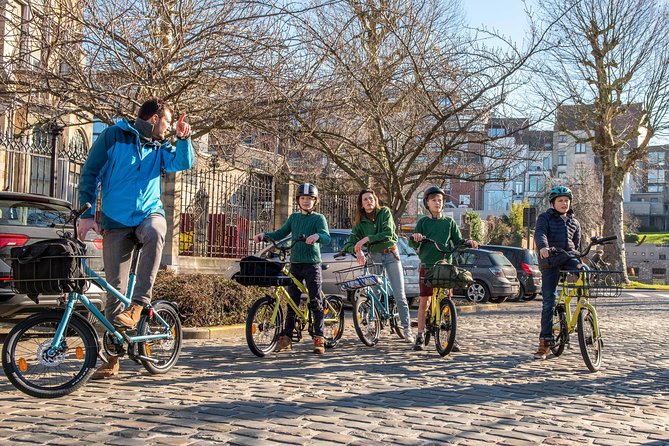
Ghent is best seen on two wheels. This small-group bike tour links major medieval sites with university architecture, street art areas, parks, and a stop at a working brewery. You’ll pedal through the parts of the city that most people skip when they stay trapped in the center.
Two things I really like: the tight 2.5-hour format (so you get a real overview without burning your whole day), and the smart mix of neighborhoods that shows Ghent isn’t just one picturesque pocket. The route is designed to fit in parks, historic landmarks, and cultural spots close to the action, not far-off detours.
One consideration: the ride moves at a fairly steady pace, and there can be limited time for photos at each quick stop. If you want long photo breaks or you’re newer to group cycling, it’s worth going into this ready to keep things moving.
In This Review
- Key takeaways before you go
- Cycling historic Ghent: why this route works
- Price and timing: what $54.31 gets you
- Meeting point and logistics that actually matter
- The route in context: how historic Ghent tells its story
- Stop-by-stop: what you’ll see and why it’s worth the pedal
- Stop 1: Sint-Pieters-abdij (St. Peter’s Abbey) inner garden
- Stop 2: De Boekentoren (The Tower of Books)
- Stop 3: Bijloke Music Centre
- Stop 4: Groot Begijnhof Sint-Elisabeth
- Stop 5: Prinsenhof and Charles V
- Stop 6: Dok Brewing Company (break time)
- Stop 7: Portus Ganda Marina (Leie meets Scheldt)
- Stop 8: St Bavo’s Abbey
- Stop 9: Our-Lady Ter Hooyen (UNESCO beguinage)
- Stop 10: Muinkpark (from old zoo area to art deco streets)
- The pace: how fast you’ll move and how to handle it
- The guide experience: what you get from Tim
- Who this tour suits best
- Should you book this bicycle tour of historic Ghent?
- FAQ
- FAQ
- What is the duration of the bicycle tour in Ghent?
- How much does the tour cost?
- What’s included in the price?
- Is the tour in English?
- How big is the group?
- Can I cancel for a full refund?
Key takeaways before you go
- Small group up to 16 means you’re not stuck in a huge crowd bottleneck at every stop
- All the big names, no big fees: the itinerary stops are listed as admission ticket free
- English tour with guide Tim gives context for buildings like De Boekentoren and St Bavo’s Abbey
- A brewery break at Dok Brewing Company adds a modern Ghent pause, not just medieval scenery
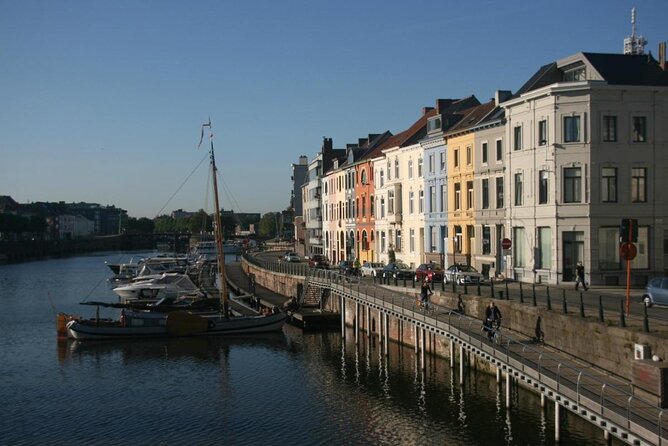
- Riverside history: you’ll see the Leie and Scheldt confluence area where Ghent’s wealth story starts
- Helmets and a bicycle are included, so you can travel lighter
Cycling historic Ghent: why this route works
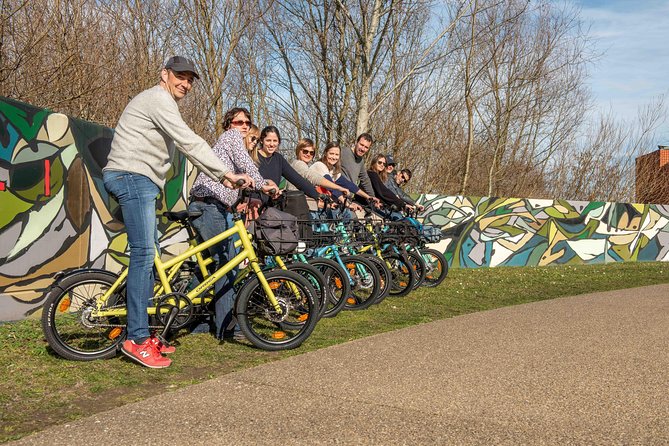
Ghent can feel like a lot on foot. The streets are charming, but distances add up fast, and you end up walking the same “greatest hits” corridor. This bicycle tour solves that. You get momentum, and you also get a guided path that threads together very different sides of the city.
The best part is that the route doesn’t lock you into the oldest streets only. You’ll still hit major medieval anchors, but you’ll also roll through university modernism, arts and culture venues, quiet beguinages, and a park area that used to belong to the Ghent Zoo. That broader feel is what makes the tour useful on a first visit.
You can also read our reviews of more historical tours in Ghent
Price and timing: what $54.31 gets you
At about $54.31 per person for roughly 2 hours 30 minutes, the value comes from three places.
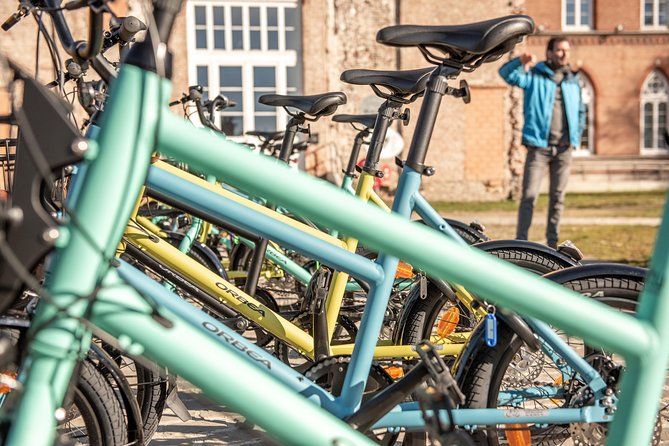
First, you’re getting guided time plus transportation. The bike and helmet are included, which matters in a city where rentals can add up and where basic safety gear is easy to forget.
Second, the stops themselves are quick and listed as admission ticket free. That keeps the cost from turning into a “surprise fees” situation.
Third, the tour is a good length for planning. It’s long enough to feel like an experience, short enough that you can still enjoy Ghent the rest of the day. If you’re on a tight schedule and you want a map in your head by the end, this fits the bill.
One practical note: the tour is often booked about 22 days in advance on average, so if you’re aiming for a specific time window, don’t wait until the last minute.
Meeting point and logistics that actually matter
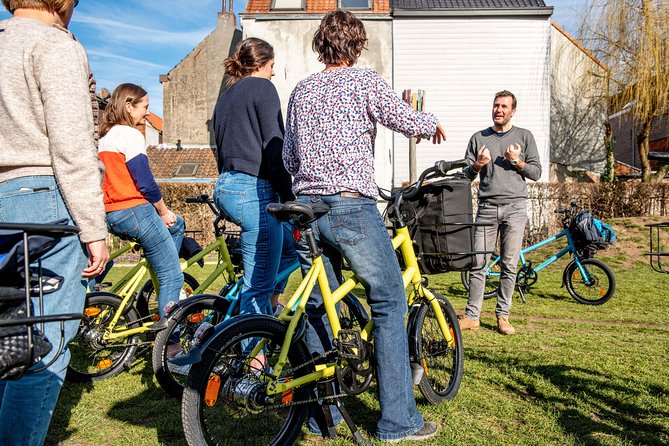
You start at Voetweg 46, 9000 Gent, Belgium, and the ride ends back at the same meeting point. That “back to the start” layout is a nice way to avoid the late-day transit scramble.
It’s also described as near public transportation, so if you’re coming by train or tram, you’re not forced into a long walk before you even get on the bike.
You’ll get a mobile ticket, and confirmation is provided at booking time. The tour runs in English, and it’s capped at 16 travelers, which helps keep turns smoother and explanations clearer.
Also, the experience lists “most travelers can participate.” That’s the right kind of wording if you want to avoid overthinking it, but still be honest with yourself about comfort riding a bicycle in a group.
The route in context: how historic Ghent tells its story
This bike tour is basically three themes moving one after another.
1) Ghent’s religious and medieval core
You’ll start with St. Peter’s Abbey and then work through major abbey landmarks, including St Bavo’s Abbey.
2) Ghent as a learning and culture city
You’ll pause at the university library De Boekentoren and at the Bijloke Music Centre area.
3) Ghent as a rivers-and-identity city
The Leie and Scheldt confluence is the key geography lesson, and you’ll see it at Portus Ganda Marina while learning how rivers helped shape wealth.
Then you end with the “liveable city” feeling: quiet courtyards, beguinages that still calm the pace, and a park area with distinctive home styles from different eras.
Stop-by-stop: what you’ll see and why it’s worth the pedal



Stop 1: Sint-Pieters-abdij (St. Peter’s Abbey) inner garden
The tour kicks off in the beautiful inner garden of St. Peter’s Abbey. Even if you don’t linger, this moment sets the tone: Ghent’s history isn’t just on facades. It’s also about how space feels—enclosed, peaceful, and intentionally ordered.
Admission is listed as free, so you can focus on the setting rather than timing your budget.
Stop 2: De Boekentoren (The Tower of Books)
Next is De Boekentoren, the university library landmark of 20th-century modernism. This stop is smart because it breaks the “only medieval” rhythm. Ghent didn’t stop at the Middle Ages; it grew into the modern era with architecture that’s still recognizable and worth understanding.
This is also the kind of place you’ll remember later when you realize how universities anchor cities long after their founding myths fade.
Stop 3: Bijloke Music Centre
At Bijloke Music Centre, you’re in a cultural hub: music, visual arts, and culture. The same area connects to the Stam (city museum), which is a strong reminder that Ghent’s creative scene isn’t just street-level—it’s institutional too.
If you like seeing how cities organize arts, you’ll appreciate this stop. It gives you a “where to go next” angle for later.
Stop 4: Groot Begijnhof Sint-Elisabeth
Then the tour slows the mood with Groot Begijnhof Sint-Elisabeth. This is one of those places that feels quiet even though you’re in a busy city. Beguinages are a Ghent specialty, and this stop works because it shows how community and religion created compact, human-scale spaces.
Admission is listed as free, and the stop is quick, but the setting is the payoff.
Stop 5: Prinsenhof and Charles V
At Prinsenhof, you learn that one of the most powerful leaders in the world—Emperor Charles V—was born here in the 16th century. That’s the kind of fact that makes a building feel like a historical hinge.
This stop is short, so you’ll want to listen closely during the explanation. Even a basic understanding of Charles V ties together a lot of European power history, and Ghent sits in that big story more than many first-timers realize.
Stop 6: Dok Brewing Company (break time)
Now for the most modern-feeling part: Dok Brewing Company. It’s located on an old industrial site in the north of Ghent, described as hip and cool. This is where the tour earns its “you’ll remember this” factor, because you’re not just touring monuments—you’re stepping into a re-used city space.
There’s a 15-minute break here. Admission is listed as free, but soda/pop is not included, and you’ll likely pay for any drinks or food you order on your own. In the best case, you’ll use the time to reset—short walk around, quick look at the surroundings, and maybe a casual bite or beer if that’s your style.
Stop 7: Portus Ganda Marina (Leie meets Scheldt)
The tour reaches one of the most important geographic ideas in Ghent: Portus Ganda Marina, where the Leie and the Scheldt meet. Ghent owes a lot of its wealth and history to those rivers, and this stop is the lesson made visible.
If you tend to enjoy history that’s connected to real locations, this is a key moment. Once you understand the river confluence, you start seeing the city differently—less like random streets, more like a system that grew because boats and trade mattered.
Stop 8: St Bavo’s Abbey
Next is St Bavo’s Abbey, at the confluence area and described as the oldest building in the city and one of the most important medieval sites in Flanders. This is where you’ll likely feel the “big church energy,” even if the stop is brief.
This is a good place to take your time within the time limit. The architecture is the point, and quick explanations are easiest to absorb when your eyes are scanning the main forms.
Stop 9: Our-Lady Ter Hooyen (UNESCO beguinage)
Then you get a UNESCO setting: Our-Lady Ter Hooyen, described as a beautifully preserved beguinage and a UNESCO World Heritage Site. This is a standout because the beguinage is the type of place you can’t easily fake with photos. It’s calm, preserved, and made for slow observation.
Because it’s UNESCO, you’ll also hear why it matters beyond being pretty—how it represents a specific kind of historical community life.
Stop 10: Muinkpark (from old zoo area to art deco streets)
The last stop is Muinkpark. It used to be part of the Ghent Zoo, and around it you’ll find homes in Art Deco, Modernism, and Burgundian style. This is the “wrap-up” stop that turns the medieval-city story into a lived-in city story.
If you still have energy for one more look, use this stop to notice how the city layers eras. Ghent doesn’t erase its past; it builds on it.
The pace: how fast you’ll move and how to handle it
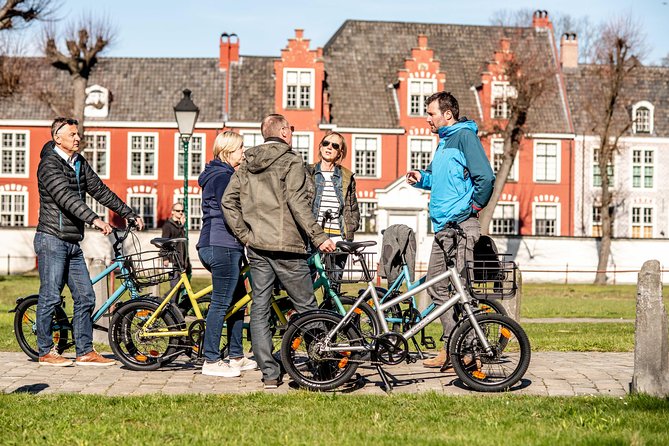
This is a cycling tour, not a walking tour. That means you should expect a steady flow from stop to stop. The whole schedule is built around short stop lengths—about 10 minutes at most locations, plus the 15-minute break at Dok Brewing Company.
Here’s the trade-off. Quick stops keep the tour moving and let you cover more ground, but they can make it harder to take long photo sessions. Also, in any group cycling situation, someone who’s new or slower can feel pressure.
My practical suggestion: if you care a lot about photos, plan to grab the best wide shots during the main stop moments and use the ride segments for extra angles. And if you’re the kind of rider who needs extra time, give yourself a little buffer and don’t hang back.
The guide experience: what you get from Tim
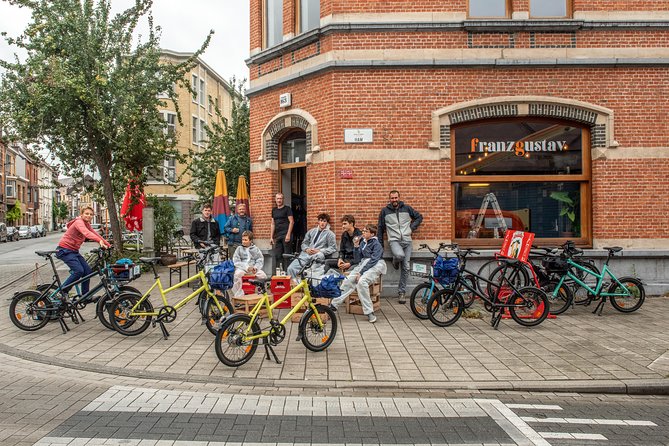
The tour is led by a guide named Tim. The overall feel is local and friendly, with a focus on helping you understand what you’re seeing rather than just reading plaques.
The best guide moments here are when Tim connects the sites to bigger stories: why a place like De Boekentoren signals a modern Ghent identity, why river geography mattered at Portus Ganda Marina, and why beguinages show a different side of city life.
There’s also a fair warning from your perspective: if you prefer very detailed, layered explanations at every stop, you might find the spoken history stays a bit high-level. The upside is that the pacing stays smooth and you don’t get stuck in a long lecture while the rest of the group waits.
Who this tour suits best
This tour is a great match if you:
- want a fast, guided overview of Ghent that covers more than just the old center
- like history tied to actual places, especially rivers and medieval sites
- enjoy cycling as a way to travel between neighborhoods without fatigue
- want a cultural mix: abbeys, beguinages, university architecture, and a modern brewery stop
It’s also ideal for couples and solo travelers who want a small-group vibe but don’t want to plan a route.
It might be less ideal if you:
- need lots of time for photos at every stop
- get stressed in group cycling with moving momentum
- want extremely deep historical lectures at each landmark
Should you book this bicycle tour of historic Ghent?
Yes, if you want a smart first-pass tour. The combination of short time, included bike and helmet, and a route that covers medieval anchors plus modern and cultural Ghent makes the $54.31 feel grounded in value rather than just convenience.
Book it especially if this is your only organized activity in Ghent. You’ll leave with a clearer mental map and a handful of places that make you want to return on your own later.
Consider a different option if you know you’ll be unhappy with quick stops, limited photo time, or a pace that assumes you can keep up with a group.
FAQ
FAQ
What is the duration of the bicycle tour in Ghent?
It runs for about 2 hours 30 minutes.
How much does the tour cost?
The price is $54.31 per person.
What’s included in the price?
You get a bicycle and a bicycle helmet. Soda/pop is not included.
Is the tour in English?
Yes, it’s offered in English.
How big is the group?
The maximum group size is 16 travelers.
Can I cancel for a full refund?
Yes. You can cancel up to 24 hours in advance for a full refund. If you cancel less than 24 hours before the start time, the amount paid isn’t refunded.