REVIEW · ANTWERP
Antwerp: Help the Lost Boy – Self-Guided Mystery Walk
Book on Viator →Bookable on Viator
A boy vanishes, and Antwerp becomes a puzzle. I like how the game uses smartphone directions to keep you moving, and I like the lost-boy story that turns famous streets into something you actually care about. One thing to weigh: if your group has mobility limits, you may not have an easy sense of how much walking remains until you’re partway through the challenges.
This is a self-guided experience, not a sit-and-listen tour. You’ll solve 14 puzzle challenges at your own pace, with the app guiding you from point to point while the storyline unfolds about a frightened boy who can’t remember his name or where he is.
You start at Groenplaats and, after you finish the final clue, you end back there. It’s timed at about 3 hours 33 minutes, and you’ll want a fully charged smartphone because the whole thing runs through your phone—pause when you want for photos or a coffee.
In This Review
- Key Highlights You’ll Actually Feel While Playing
- A Self-Guided Mystery Walk That Changes How You See Antwerp
- Groenplaats Start: Where the Story Gets Personal
- The App-Driven Flow: How the Clues Control Your Route
- Antwerp Old Town Between Stops: A Purposeful Wander
- Cathedral of Our Lady: A Landmark With a Job in the Story
- Vlaeykensgang: Following the Passageway Clue Trail
- The 14 Challenges: Plan Your Pace Around Thinking Time
- No Live Guide: What You Gain and What You Lose
- Price and Value: Why This Costs So Little
- Timing Tips: When to Play Without Feeling Rushed
- Who Should Book This Mystery Walk
- Should You Book Antwerp Help the Lost Boy?
Key Highlights You’ll Actually Feel While Playing

- 14 puzzle challenges that reveal the story step by step, not all at once
- Phone-led navigation that tells you where to go next as you solve each task
- Antwerp Old Town landmarks built into the route, including the Cathedral of Our Lady and Vlaeykensgang
- Pause/resume freedom so you can take breaks without falling behind
- A low price point for a long, structured walking activity at about $4.62 per person
A Self-Guided Mystery Walk That Changes How You See Antwerp
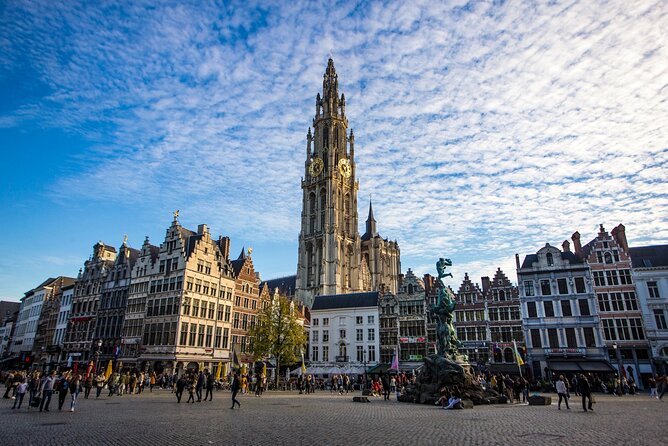
Antwerp is a great walking city, but this game makes you look twice. The premise is simple and slightly eerie: a young boy is lost on Groenplaats, confused and scared, and you’re drawn into the mystery as you uncover clues. The magic is that you don’t just pass through the historic center—you’re always moving toward the next bit of truth.
What I like most is the pacing. With 14 challenges, you get regular moments to stop, think, and check your phone, then get back on your way. That structure matters in a city like Antwerp because it gives your day a shape, not just wandering.
This is also built for variety. You can treat it like a light outdoor escape game, a treasure hunt, or a story walk that happens to include iconic places. And because it’s self-guided, you control the tempo.
You can also read our reviews of more walking tours in Antwerp


Groenplaats Start: Where the Story Gets Personal
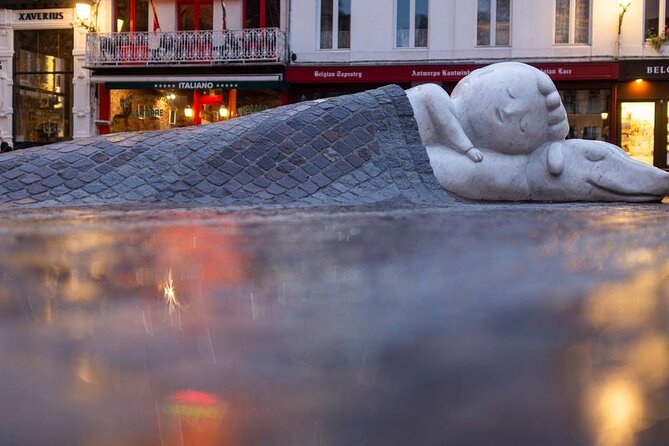
You begin at Groenplaats, 2000 Antwerpen. That matters because Groenplaats is the kind of central spot where you naturally orient yourself in Antwerp, so you’re not starting out lost before the game even begins.
The opening scene is emotional and direct: a boy stands alone, afraid, and doesn’t know his name or where he is. As the story develops, you’re not just solving puzzles for points—you’re trying to bring him home. That framing turns everyday street corners into “clue corners,” and it’s one reason this kind of activity can feel more memorable than a standard sightseeing loop.
Practical tip: arrive with time. The game runs roughly 3 hours 33 minutes, and that duration includes time spent making sense of clues and walking between stops. If you’re rushing, you’ll feel it fast.
The App-Driven Flow: How the Clues Control Your Route

The experience works like this: after you book, you get an email with instructions to download and play the game on your smartphone. You’ll use the app with the same email you used for purchase, and you’ll need to create an account first. Once you’re in, the app delivers exact directions and the next storyline beat as you complete challenges.
Because it’s phone-led, your biggest job is battery management. Bring a fully charged smartphone, and if your battery tends to drain fast, consider a small power bank. You don’t want the game stopping mid-route because you hit low battery.
Another smart move is to be honest about your group’s style. Some people enjoy puzzle thinking. Others just want to follow directions and read the story. The game supports both, but the difference shows up in pace—puzzle-heavy groups can naturally run longer than groups that move quickly.
Antwerp Old Town Between Stops: A Purposeful Wander
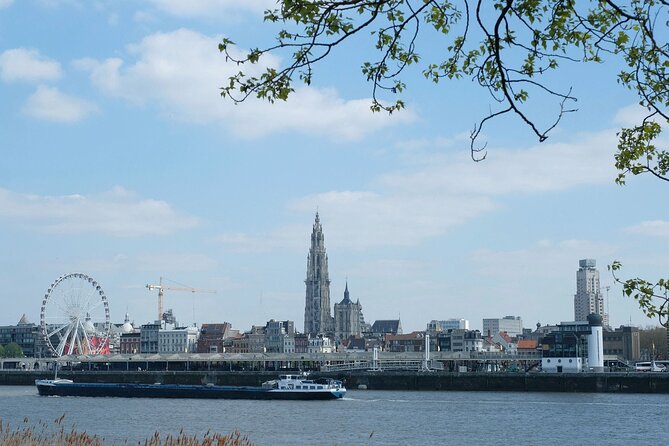
Beyond the named landmarks, the route is described as running through Antwerp’s charming Old Town. The experience is built so that each clue point is a reason to turn, walk a little deeper, or pause and look again.
This is where the game can change your perception of the city. One of the recurring themes from feedback is that you end up seeing Antwerp differently—spotting details you’d otherwise walk right past. That’s the value of any clue-based route: it forces attention, but you’re doing it on your feet, in real streets, not in a museum setting.
You’ll also want to remember the format is flexible. You can stop for coffee, take photos, or pause whenever you need. That’s a big deal in a real city day, because rain, crowds, or hunger can always change your plans.
Cathedral of Our Lady: A Landmark With a Job in the Story
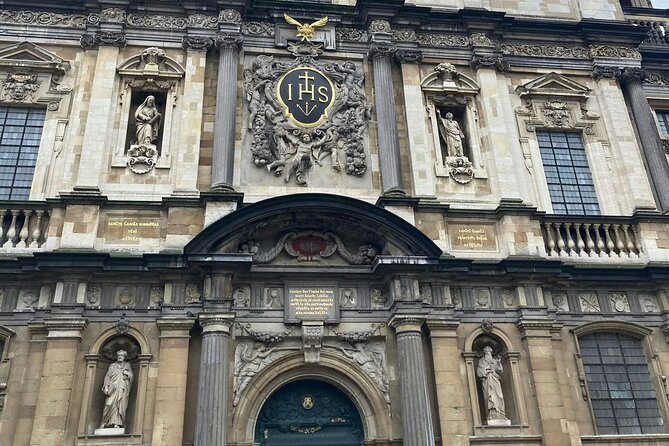
As you solve challenges, the route includes the Cathedral of Our Lady. In a typical sightseeing visit, a cathedral is a stop you look at and then move on. In this game, it’s part of the story engine—meaning you’ll likely slow down, focus on what the clue wants from you, and connect the place to the larger narrative of the lost boy.
This kind of “place as plot point” is often why mystery walks feel more satisfying than passive tours. You’re not just staring at a famous building. You’re using the environment as part of the puzzle-solving process.
Potential drawback to consider: cathedral-area walking can be busy, depending on time of day. The game is self-guided, so you can move around crowds at your own speed, but it’s still smart to choose a time when you’re not stressed about moving fast.
You can also read our reviews of more guided tours in Antwerp






Vlaeykensgang: Following the Passageway Clue Trail
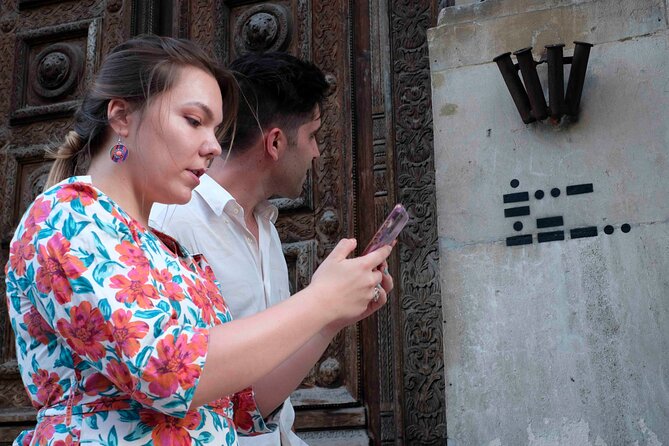
Another named stop is Vlaeykensgang. Again, the experience uses this kind of distinctive city area as a storyline waypoint. That’s practical because it gives you a strong reason to go somewhere that might not be on your standard first-time itinerary.
Vlaeykensgang also fits the mystery theme well. When you’re in a narrower or more specific-feeling space, your attention naturally tightens on the details that the game encourages you to notice.
If you’re traveling with kids or people who get distracted easily, this type of stop can help. It turns “we’re walking” into “we’re solving,” which is usually easier to sustain for about three and a half hours.
The 14 Challenges: Plan Your Pace Around Thinking Time
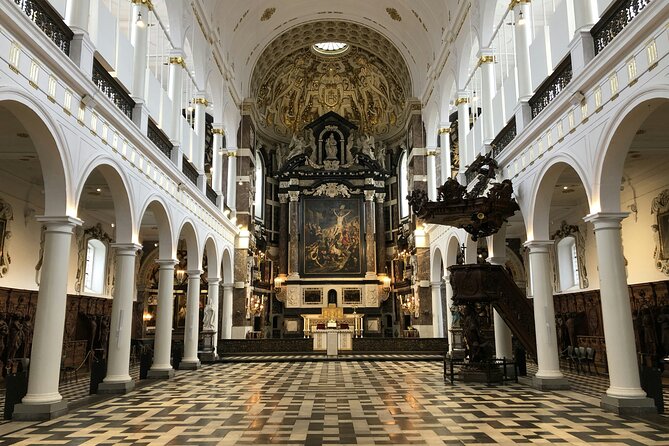
The experience includes 14 puzzle challenges, and the total time is about 3 hours 33 minutes. Even without knowing the exact difficulty level, you can estimate the structure: on average, you’re allowing about a quarter hour per challenge including walking and puzzle time. Some challenges will take less, some more, but the average gives you a useful pacing baseline.
If you like puzzles, expect a satisfying rhythm: read clue, work it out, get the next direction. If you don’t, you’ll still get value from the city time and story beats, but you may want to keep your group aligned so nobody gets stuck on a clue and then the whole day drags.
Here’s the key practical point: the game is designed so you can pause and resume. If you hit a confusing moment, you can step away, reset, then come back. That’s better than pushing through frustration while you’re standing in the street.
No Live Guide: What You Gain and What You Lose
This is a private experience for your group, and there’s no live guide. That has two sides.
The good side: you avoid the “we must stay together” problem that sometimes happens with guided tours. You can slow down at the exact moments you care about—often the best parts of a city walk.
The tradeoff: there’s nobody on-site to explain if you’re stuck on a clue. The app provides exact directions, but puzzles are still puzzles. If your group dislikes problem-solving, you may find yourselves moving slower than you expected.
The best way to make this work is to treat it like a shared activity, not a solo exam. If you have multiple people, split tasks: one reads, one navigates, one checks the app prompts. You’ll keep the energy up and avoid one person feeling stuck.
Price and Value: Why This Costs So Little
At about $4.62 per person, this is priced like an affordable attraction rather than a premium guided tour. That price makes sense because the “guide” is the app and storyline content, not a human escort. You’re paying for structure: 3+ hours of route planning, 14 challenges, and storyline direction.
You also get flexibility baked in. You can pause/resume, and you can stop for coffee or photos without coordinating with a group leader. That flexibility often saves money and time later, because you’re not locked into rigid tour pacing.
Group discounts are included, which can be a big win if you’re traveling with friends or family and want something interactive that doesn’t cost like a guided excursion.
Timing Tips: When to Play Without Feeling Rushed
The activity is listed as available Monday through Sunday from 8:00 AM to 6:00 PM, across the stated date range. A morning start gives you smoother walking and more relaxed puzzle time. Later in the day, you can still play—just expect more foot traffic near major sights.
Because the experience ends where it starts, you’re building a loop with a known return point. That helps with logistics in a city center: if you want a simple plan afterward, Groenplaats is a natural place to regroup and continue exploring.
Also, bring patience for the human factor. Even when everything is self-guided, you’re still on city sidewalks. If you’re playing with kids, build in short breaks every so often. If you’re playing with adults who want to move fast, agree early on how you’ll handle tricky clues.
Who Should Book This Mystery Walk
This is a strong fit if you want Antwerp time with a mission. It’s described as ideal for families, friends, couples, and curious travelers who want an immersive story without needing a live guide. Even if you’re a first-time visitor, the route includes major name landmarks, so you don’t feel like you’re missing the “big” sights.
I’d especially recommend it if:
- You like puzzles, scavenger-hunt style games, or story-led walking
- Your group can share tasks and keep moving together
- You want flexibility for coffee, photos, and pacing
One consideration for accessibility and planning: the experience is built around completing challenges. If someone in your group has a mobility limitation, it’s worth thinking ahead. You may not easily know how much walking remains until you’re deeper into the game, so bring extra time and plan for shorter turn-around options if needed.
Should You Book Antwerp Help the Lost Boy?
I’d book it if you want a low-cost, structured way to see Antwerp’s Old Town while solving a real mystery on real streets. The main strength is the combination of 14 phone-guided challenges and a storyline anchored by a lost boy, plus the fact that you can pause whenever you need.
I would hold off or plan carefully if your group needs very predictable, short walking segments. Since the route depends on completing tasks, it’s easier to get stuck with time and distance expectations if someone can’t move as long as the game requires.
If you’re comfortable thinking in short bursts and you want a city day that feels like an adventure instead of a checklist, this is a great choice.