REVIEW · GHENT
Evening Tour of the Dark Side of Gent
Book on Viator →Operated by Gent Free Walking Tour · Bookable on Viator
Ghent at night is a different storybook. This 1 hour 45 minute walking tour mixes medieval trade, power struggles, and the darker side of everyday life, with humor that keeps the mood from getting too heavy. I love that it stays very practical and paced for real people, not marathon trekking, and I also love how many landmarks you actually cover for the price.
Two big pluses for me are the storytelling style and the route. You’ll hear gruesome legends and political drama tied to recognizable places, from St Michael’s Bridge to Patershol, and you’ll get good photo angles along the way. One thing to consider: the “dark side” theme includes murder and torture details, so if you prefer lighter history, you may want to gauge your comfort level first.
In This Review
- Key highlights at a glance
- Night in Ghent: how the dark-theme tour really feels
- Where you start, where you end: Sint-Michielsplein to Patershol
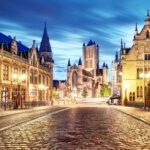
- Stop 1: St Michael’s Bridge and the “three towers” skyline moment
- The cathedral’s Devil’s Tower nickname: why it earned that label
- Stop 2: Graslei and Korenlei, the medieval harbor that made fortunes
- Stop 3: Appelbrugparkje and the father-son execution legend
- Stop 4: The Castle of the Counts and the Viking-raiding purpose
- Stop 5: Rabot Sluice and Ghent’s medieval defense wall
- Stop 6: Keizer Karel V and the Bridge of Imperial Delights
- Stop 7: Patershol, Industrial Revolution social change in Monk’s hole
- Walking time, comfort level, and night logistics that matter
- English tour, group size, and why the guide style is a big deal
- Price and value: why $3.62 can feel almost unreal
- Who should book the Dark Side of Gent (and who might skip it)
- Should you book this evening Dark Side walk?
- FAQ
- Is the tour offered in English?
- How long is the Dark Side of Gent evening tour?
- Where do I meet, and where does it end?
- Do I need to print anything, or can I use a mobile ticket?
- How large is the group?
- What happens if the weather is bad or too few people book?
Key highlights at a glance
- Dark legends tied to real Ghent landmarks, not vague ghost talk
- A mostly level pace with lots of stops for stories and night views
- Multiple city “power centers” in one loop: harbor, defenses, courts, quarters
- Common photo spots like bridges and bridge-over-hall viewpoints
- English tour with a smallish group size (up to 35)
- Ends in Patershol, where you can keep the night going
Night in Ghent: how the dark-theme tour really feels
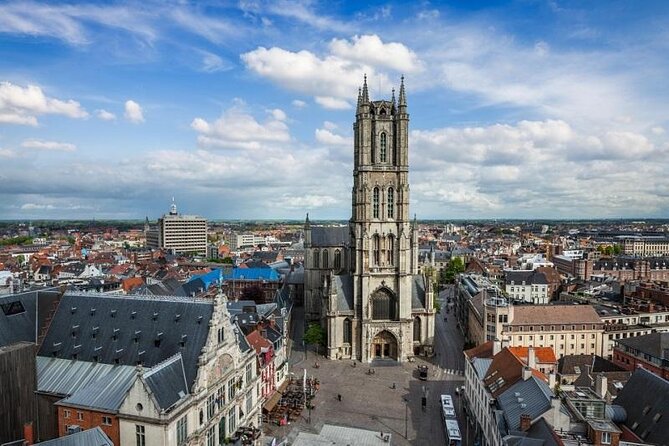
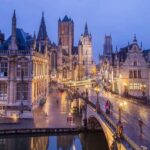
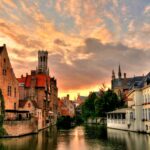
This tour works because you see Ghent the way locals do at street level: dimmer light, calmer streets, and monuments that look more serious than they do in daylight. The guide connects each stop to a theme—trade, punishment, defense, religion, and social change—so the stories don’t float in space.
I also like the tone. The jokes don’t erase the brutality; they just keep things moving. It’s the kind of tour where the guide’s delivery matters as much as the facts, and guides like Kenny and Isabel have been praised for exactly that sharp mix of humor and history.
A good expectation to set: you’ll walk, you’ll stop often, and you’ll hear unsettling details. That’s the point of the title. If you’re sensitive to graphic medieval punishment topics, you can still enjoy the places—but go in with your eyes open.
You can also read our reviews of more tours and experiences in Ghent.
Where you start, where you end: Sint-Michielsplein to Patershol
You begin at Hostel Uppelink, on Sint-Michielsplein 21 (9000 Gent). That’s a smart launch point because it puts you close to the historic center quickly, so you aren’t burning your evening on long transit.
The tour finishes in the Patershol area (9000 Ghent), right where you’ll find plenty of bars and restaurants. I like that ending plan: you don’t get dropped in an empty spot, and you don’t have to invent your next step after the last story.
One small practical note: the tour starts and ends within the city center walking zone, so comfortable shoes are a must. Even with a slower pace, you’ll still cover real ground over nearly two hours.
Stop 1: St Michael’s Bridge and the “three towers” skyline moment
The walk kicks off at St Michael’s Bridge, where your guide sets the stage. This is where you get the big picture: Ghent as a medieval trading hub, and why the city’s shape and symbols mattered.
This stop is also your skyline intro. From here, the guide points out the three towers of the Ghent skyline—an easy win for your night photos. If you’re the type who likes to orient yourself fast, this first stop does that job early.
Why this stop matters: before you get pulled into executions, legends, and courts, you need the “how did power work here” context. St Michael’s Bridge gives you that background, so later stories land better.
The cathedral’s Devil’s Tower nickname: why it earned that label
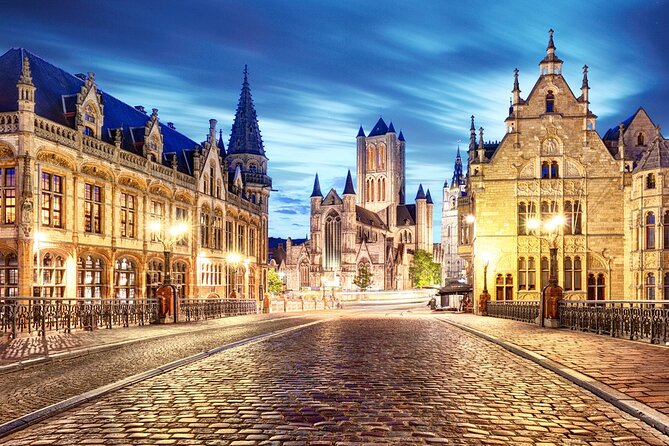
Right after the bridge intro, you’ll hear the gruesome story behind why a cathedral is also known as the Devil’s Tower. The tour leans into myth and medieval interpretation—part legend, part dark reputation—so you’ll be listening for both the symbolism and the plot.
I like tours that explain nicknames instead of pretending they don’t exist. A nickname like Devil’s Tower usually came from something people saw, feared, or repeated. Here, the guide ties that reputation to the place so it’s not just spooky branding.
Possible drawback: if you were hoping for mostly architectural facts and light legends, the tone shifts toward darker storytelling earlier than you might expect. That’s not a flaw; it’s just the theme starting strong.
Stop 2: Graslei and Korenlei, the medieval harbor that made fortunes
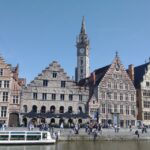
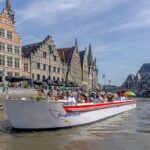
Next come Graslei and Korenlei, the heart of Ghent’s medieval harbor. This is where the tour shifts from city identity to money and movement: how trade created wealth, influence, and the kind of political tension that often turns ugly.
You’ll be shown the “center of it all” feeling of the harbor area, and you’ll hear about lucrative trading activity and how Ghent became an economic powerhouse in Europe. Night lighting helps here. The harbor area feels less like a postcard and more like a working city at rest.
What to watch for: don’t treat this as just a pretty stop. The guide uses these locations to explain why certain people had power—and why others paid for it when power broke down.


Stop 3: Appelbrugparkje and the father-son execution legend
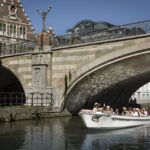
At Appelbrugparkje, you stand on a bridge with a view over the Butchers’ Hall. Then the tour turns to a legend connected to the execution of a father and son—and a miraculous event said to have saved them.
This is one of those stops where the geography does real work. Seeing the area from the bridge viewpoint helps the story feel tied to place, not just told at you. Also, bridge-over-building angles are excellent for night photos, and the pace gives you time to frame shots.
Small consideration: the story is dramatic by design. If you’re trying to keep your evening light, you may feel a bit of emotional whiplash from the harbor wealth talk to punishment and miracle lore. If you’re here for the “dark side,” this is one of the best moments.
Stop 4: The Castle of the Counts and the Viking-raiding purpose
Then you head to the Castle of the Counts, built by Count Baldwin in the 9th century to protect the inhabitants from Viking raids. That defensive purpose matters, because it changes how you think about the city’s growth.
This stop also explains the logic of urban development. Fortification first, settlement next—around the castle, the city started to develop. I like that the guide doesn’t only talk about what the building is; it explains why it existed at all.
One drawback to keep in mind: fortress history is sometimes less “wow” if you expect big-scale ruins. Still, for night sightseeing, the storytelling and context turn a smaller-feeling site into something memorable.
Stop 5: Rabot Sluice and Ghent’s medieval defense wall
At Rabot Sluice, the tour shows you the only remaining tower of a defense wall that once stretched about 14 km around Ghent in the Middle Ages.
This stop is valuable if you enjoy infrastructure history—the kind of planning that doesn’t look dramatic until you realize what it was meant to prevent. The guide makes the surviving piece matter by framing it as the remainder of a much bigger defensive system.
Photo tip based on the concept: towers and water-linked structures usually photograph well at night. Even if you don’t chase technical shots, you’ll likely find at least a couple of frames here that don’t look like tourist-day daytime photos.
Stop 6: Keizer Karel V and the Bridge of Imperial Delights
Next is Keizer Karel V, tied to the Bridge of Imperial Delights. This bridge is flanked by four sculptures that depict legendary scenes from the life of Charles V, and your guide explains what those scenes are getting at.
This is where the tour can feel extra fun, because sculpture reading is detective work. You’re not just hearing a story—you’re matching figures to scenes, learning what each depiction is meant to communicate, and seeing how imperial imagery served power.
If you’re the type who likes when a tour gives you something to look for on your own later, this stop delivers. After the guide points out the sculpture themes, you’ll be able to interpret similar symbolism around town.
Stop 7: Patershol, Industrial Revolution social change in Monk’s hole
The finale is Patershol, nicknamed Monk’s hole. Here the guide connects the quarter to the Industrial Revolution and explains the social impact it had, along with how it helped revive the city’s economy.
Ending with a neighborhood story instead of one last “dark legend” is a smart move. It gives your brain a fresh angle: not only who hurt whom in medieval times, but how the city changed socially and economically when the industrial era arrived.
And yes, you’ll end in a spot where you can unwind. Patershol is where it’s easy to grab a drink or a meal without looking up where to go next.
Walking time, comfort level, and night logistics that matter
The tour duration is about 1 hour 45 minutes, and it’s a walking experience. Reviews consistently point out that you should bring comfy shoes, because you do walk enough to feel it by the end.
The pace is described as slow and mostly level, which helps. Still, you’ll want to wear something you can stand in for long stretches—night tours tend to have more stop-and-go than daytime museum visits.
Another real-world factor: it’s an evening tour. You’ll be outside, so wind and rain matter. The experience notes that it requires good weather, and if weather forces a change, you’ll be offered a different date or a full refund.
English tour, group size, and why the guide style is a big deal
The tour is offered in English, and it keeps group size capped at 35 travelers. That’s large enough that you’ll never feel like you’re the only one, but small enough for a guide to still work the crowd and keep the stories flowing.
This is also a “storytelling first” tour. Many guides on the route have been praised for humor and animated delivery, with names like Kenny, Ben, Julian, Isabel, and others showing up in past feedback. If you enjoy guides who make you picture medieval life through scenes and character-driven storytelling, you’re in the right place.
One caution: the tour title promises darkness, and the content leans into executions, torture methods, and religious conflict themes. It’s not just spooky. If you prefer neutral history facts with minimal grim detail, you might find some parts too heavy for your taste.
Price and value: why $3.62 can feel almost unreal
At $3.62 per person, this is priced like a budget-friendly evening stroll, not a premium ticketed experience. And because the itinerary covers multiple major parts of Ghent—harbor area, bridges, defense sites, imperial imagery, and Patershol—you get a lot of “city reading” in under two hours.
Also, the tour includes all fees and taxes, so you’re not getting hit with surprise add-ons at the end. Mobile ticket convenience is a small thing, but at night it matters. Less friction means more time listening to stories and looking around.
Where the low price can be a drawback: the tour format is what you’re paying for—walking + guided storytelling. It’s not a ride, not an indoor museum pass, and not a deep academic seminar. Think of it as a high-value nighttime orientation to Ghent’s darker medieval layers.
Who should book the Dark Side of Gent (and who might skip it)
This tour is a great match for you if you want:
- An evening plan that’s easy to fit into a sightseeing day
- Medieval legends tied to specific places you can later find on your own
- Humor mixed into darker stories, especially about punishment and power
You might want to skip or adjust expectations if:
- You dislike graphic violence themes in historical storytelling
- You want mostly architecture, with minimal grim narrative
It’s also family-friendly in the sense that some people have brought kids and said they enjoyed it. But again, the subject matter is medieval and includes violent elements, so use your judgment for your own group.
Should you book this evening Dark Side walk?
Yes, if you want a low-cost way to see Ghent after dark and you like stories that connect legend and real places. I’d book it early in your trip too, because the skyline notes, harbor context, and neighborhood finish help you understand what you’ll see the rest of your stay.
I’d hesitate only if you’re very sensitive to execution and torture descriptions, or if you prefer history without a “dark theme” framing. Otherwise, this is one of those simple, walkable tours that turns ordinary street corners into a reason to stop and look up.
FAQ
Is the tour offered in English?
Yes. The tour is offered in English.
How long is the Dark Side of Gent evening tour?
It runs for about 1 hour 45 minutes.
Where do I meet, and where does it end?
You meet at Hostel Uppelink on Sint-Michielsplein 21, 9000 Gent, Belgium. The tour ends in the Patershol area in the city center.
Do I need to print anything, or can I use a mobile ticket?
It uses a mobile ticket.
How large is the group?
The tour has a maximum of 35 travelers.
What happens if the weather is bad or too few people book?
This experience requires good weather. If it’s canceled due to poor weather, you’ll be offered a different date or a full refund. It also requires a minimum number of travelers, and if that minimum isn’t met you’ll be offered a different date or a full refund.