REVIEW · ANTWERP
Private Antwerp’s Diamonds and Jewellery Old City Center Historic Tour
Book on Viator →Operated by De gouden straatjes · Bookable on Viator
Antwerp’s diamond streets have a pulse. This private 2-hour old-city center tour links the big-name jewelry industry to specific corners you can actually walk to, starting at DIVA and moving through the lanes where trading, silver work, and goldsmith craft took shape.
What I really like is the mix of big-picture context plus real atelier time. You get designer-studio visits (not just storefronts) and you also see why places like the Grote Markt and Wisselstraat mattered for visiting merchants and buyers.
One thing to consider: it’s a short walk with many quick stops, and not every site is a deep-dive museum moment. Also, DIVA’s admission isn’t included, so plan a little extra if you want to spend more time inside.
In This Review
- Key takeaways before you go
- Antwerp’s diamond story starts at DIVA’s doorstep
- Grote Markt: where merchants came for diamonds
- Wisselstraat: money exchange, language clues, and the meaning of “bankrupt”
- Saint Paul’s Church: a treasury with 3,000+ diamonds
- Zwartzustersstraat and Zirkstraat: when shopping and cutting lived above each other
- Pascale Masselis: 18-carat gold, custom pieces, and atelier access
- Lange Koepoortstraat: the nation house of silver and goldsmiths
- Wijngaardstraat: multiple jewelers, different techniques, and a real sense of variety
- What the private 2-hour format feels like in practice
- Price and value: $234.93 per group up to 15
- Who should book this tour?
- Should you book? My honest call
- FAQ
- How long is the private Antwerp Diamonds and Jewellery Old City Center Historic Tour?
- How much does the tour cost?
- Is the tour in English?
- Where does the tour start and end?
- Is this a private tour?
- Do I need to buy tickets for the stops?
- What’s the meeting point address at the start?
- Do I get a mobile ticket?
- Is confirmation provided after booking?
- Is there free cancellation?
- Is the tour affected by weather?
Key takeaways before you go
- Private guiding for your group: limited to your party, so the pace can match your interests.
- Atelier visits, not only shop windows: you’ll step into creative workspaces tied to Antwerp jewelry making.
- DIVA sets the stage: you start in front of the diamond, jewelry, and silversmithing museum at Suikerrui.
- Historic street clues: Wisselstraat, Zirkstraat, and Zwartzustersstraat connect language and craft to the old trade routes.
- Church stop with a specific payoff: Saint Paul’s Church includes a treasury with over 3,000 diamonds.
- Price is per group, up to 15: good value if you have a small crew traveling together.
Antwerp’s diamond story starts at DIVA’s doorstep
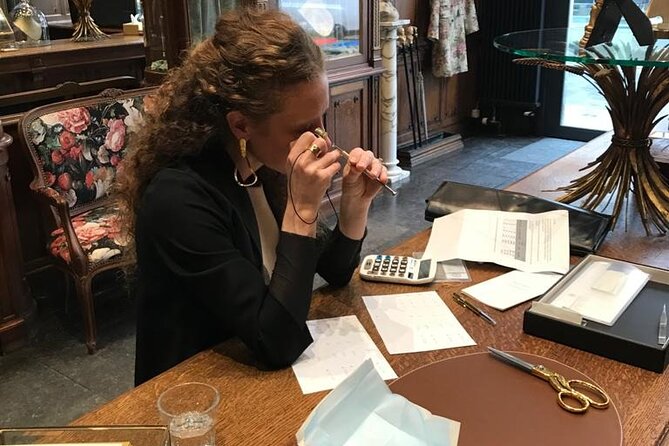
The tour begins right in front of DIVA, museum voor diamant, juwelen en zilver on Suikerrui (Suikerrui 17/19). Before you even hit the streets, your guide gives you the thread that ties Antwerp together: how the city built its identity around diamond trading and jewelry/silversmith work.
I like this start because it makes the walk make sense. Without that opener, you’d just be seeing a neat old neighborhood with jewelry shops. With it, each street name and each church connection feels like a clue.
And here’s a practical note: DIVA’s admission is listed as not included for the tour. If you want to linger after the walk begins (or on your own later), budget for it. The upside is you can keep your tour time focused, then decide how much museum time you want.
After your opening context, you start heading into the old city neighborhood for creative jewellers and designer spaces—so you’re not bouncing between random attractions. It’s guided “connect-the-dots” Antwerp.
You can also read our reviews of more city tours in Antwerp

Grote Markt: where merchants came for diamonds
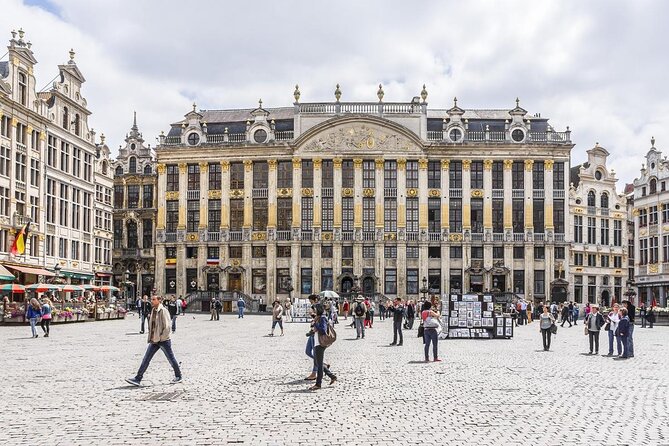
Your next stop is Grote Markt, and the story is very direct: Antwerp’s identity as a diamond capital starts right here. During the annual fairs, foreign merchants would arrive in force to trade and buy diamonds and jewelry.
This is one of those moments where the city looks like it’s doing what cities usually do—old stone, big square, easy photo angles—but the trade history changes how you interpret it. When a guide points out that this is where visiting buyers gathered, the square feels less like scenery and more like a marketplace you could almost picture from the past.
This stop is brief (about 10 minutes), but it’s a helpful hinge. If your attention span is short, you’ll still get the key idea: Antwerp’s diamond story is not just craft. It’s also commerce, networks, and timing.
Wisselstraat: money exchange, language clues, and the meaning of “bankrupt”
Then you move to Wisselstraat. The key detail is right in the name: Wissel means exchange. This is described as the place where foreign buyers used to exchange their money.
What makes this stop memorable is the tour’s tone: not all was glitter and gold. Your guide connects the trade scene to where financial trouble showed up—and even where the word bankrupt comes from.
I appreciate this because it balances the romance. Antwerp’s jewelry industry isn’t only elegant ateliers. It’s also pressure, risk, and the economic reality behind every “sparkle” story.
Like Grote Markt, this is a free stop and designed to be quick (around 10 minutes). Think of it as a short history lesson you can walk through, not a long guided lecture.
Saint Paul’s Church: a treasury with 3,000+ diamonds
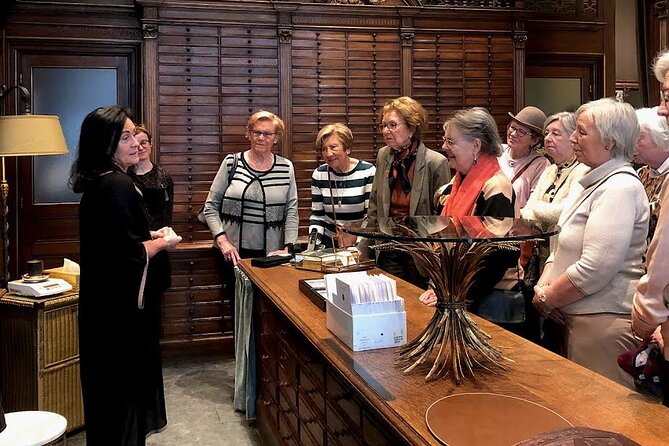
Next up: Saint Paul’s Church. This is where the tour gives you something specific and tangible. The church ties back to silversmithing and jewelry, and it still has a treasury listed as containing over 3,000 diamonds.
Even if you don’t go deep on the church side, the guide’s link between religious space and jewelry craft makes sense. Antwerp’s jewelry identity wasn’t just in shops. It also sat inside institutions that held valuables, symbols, and elite craftsmanship.
This stop is around 15 minutes, which feels like the right amount of time to absorb the story without rushing. If you love details—materials, ownership, and how diamonds moved through society—this is one of the highlights.
Zwartzustersstraat and Zirkstraat: when shopping and cutting lived above each other

From there you shift into the old workshop streets: Zwartzustersstraat and Zirkstraat.
At Zwartzustersstraat, the tour notes you wouldn’t guess it now, but the street used to be a shopping lane where jewelry shops were on the ground floor, with diamond cutters’ ateliers above. That vertical arrangement is a huge part of how old trade districts functioned. You don’t just sell products—you coordinate making, repairing, and trading right where customers could find you.
Then at Zirkstraat, the focus becomes diamond cutting history. The stop points out that the first diamond cutter lived here in the 15th century and explains the history of diamond cutting and the craft itself.
One careful expectation-setting point: the tour is framed around jewelry industry context and designer ateliers, not as a guaranteed “watch diamond cutting in action” workshop experience. You’ll get the history and the craft story tied to Antwerp streets, but the hands-on feel is more about entering design studios than seeing a live cutting operation in a manufacturing room.
If you’re a total diamond-nerd and want machinery and process demonstrations, you might want to pair this with another specific diamond workshop experience later. Still, for an old-city walk with good context, this pairing of street history + atelier access works well.
You can also read our reviews of more private tours in Antwerp



Pascale Masselis: 18-carat gold, custom pieces, and atelier access
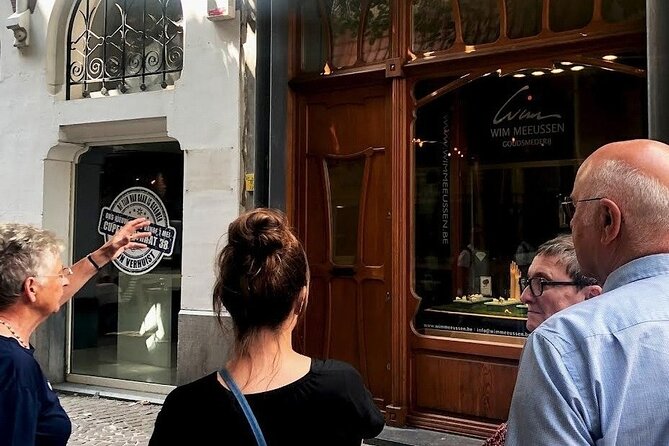
A highlight stop in the route is Pascale Masselis. The description ties her to the Royal Academy of Antwerp (graduated in 1983) and emphasizes her atelier practice.
You’ll be invited into her atelier, with details that she works exclusively with 18 carat gold, and that every piece is unique and handcrafted. The tour also notes that she can make pieces especially to order, and even transform old, out-of-date jewelry into modern pieces.
This stop is one of the reasons the tour feels personal. It’s not only “history on a street sign.” It’s craft practice, materials, and a designer’s approach to updating and building jewelry.
If you’re shopping, this is also the moment to ask the most practical questions: What does custom work typically change? How do repairs or redesigns get handled? How does a designer’s style translate into one-off commissions? The setting makes it easier to get straight answers.
Lange Koepoortstraat: the nation house of silver and goldsmiths
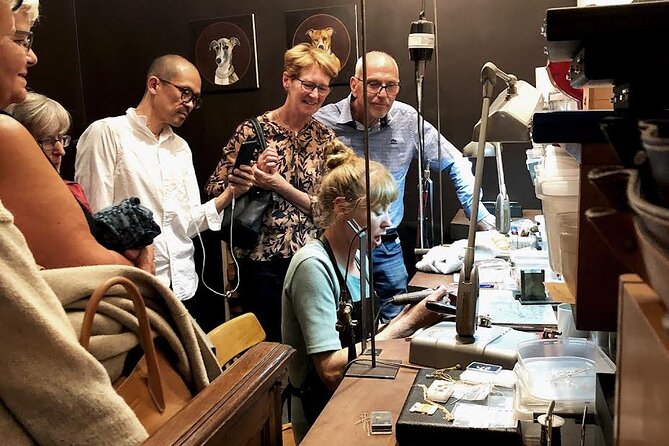
Next: Lange Koepoortstraat. This is described as a former nation house of silver and goldsmiths.
This matters more than it sounds. A “nation house” is about organization: where tradespeople had a shared identity, representation, and structure. When you hear that Antwerp’s craftsmen had a place tied to their community, it reframes the neighborhood as an ecosystem, not a random cluster of shops.
You’ll get the story from your guide about why there was a need for a nation house, which helps connect the craft to city governance and trade rules. It’s the kind of stop that quietly upgrades your understanding of how craft industries actually survive over centuries.
Wijngaardstraat: multiple jewelers, different techniques, and a real sense of variety
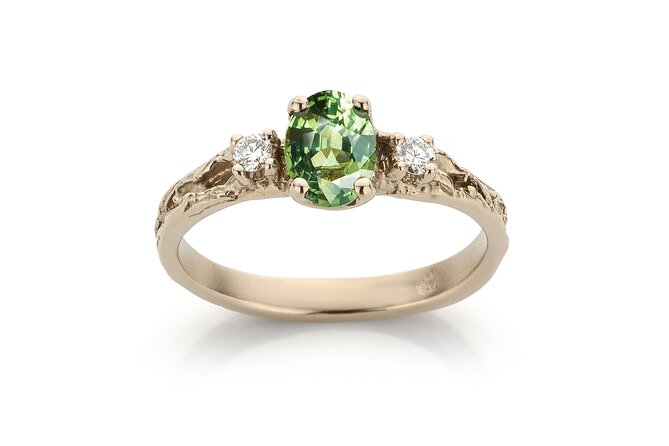
The route spends time in Wijngaardstraat, described as a picturesque street with at least five jewelers, each with their own creative vision and techniques.
This is where you start to feel the “designer Antwerpen” side of the story. Instead of a single style dominating, you see different approaches: modern jewelry sensibilities, wedding-ring specialties, constantly evolving techniques, and a retro-romantic look with a feminine touch.
The route includes several named ateliers/studios:
- Gerda De Vrij, linked to modern jewelry training in Pforzheim and a family business that continued through the next generation.
- Wim Meeussen, known for his distinctive collection of jewelry and wedding rings, plus a second location focused on silver jewelry.
- Hanne Schoofs, noted for seeking new techniques so the collection keeps evolving.
- Eva Crauwels, described as a goldsmith with a retro-romantic, feminine style.
You’ll also visit Rembrandt Jodan in a multidisciplinary space that includes an art gallery, atelier, and jewelry shop.
This cluster of stops is a big reason the tour works for both buyers and history lovers. You don’t have to care about every designer to enjoy the variety. Seeing how many different styles exist in a small area makes Antwerp feel like a living jewelry hub.
What the private 2-hour format feels like in practice
This tour is listed as about 2 hours and it uses short segments—often 10 minutes, sometimes 15 or 20. That pacing is good for city walking because it keeps energy up. It also means you’re moving through the neighborhood with context, not stuck in one place for too long.
The “private” part is key: it’s limited to your group, and the guide can tailor timing to what you’re excited about. In past tour accounts, guides like Margaret and Vivien have been praised for being engaging and flexible, including adjusting pace to family interests or tailoring history details.
So if you love craft stories, lean into the atelier questions. If you love trade history, ask about how diamond cutting shifted and how global competition affects local businesses. The route is set up to support those different angles without feeling off-theme.
Logistics-wise, the start and end points are within the old center, and the tour is near public transportation. It uses a mobile ticket, and service animals are allowed.
One more practical note: the experience description says it requires good weather. Antwerp can be great for walking, but rain changes everything. If the weather turns, plan for alternatives on your schedule.
Price and value: $234.93 per group up to 15
The price is listed as $234.93 per group, up to 15 people. That pricing structure is often misunderstood, so here’s how I’d think about value.
If you’re traveling as a couple or small group, the cost is relatively “tour-like” for a private guide plus multiple atelier visits. The value jumps when:
- you have more than 2 people sharing the cost,
- you care about insider access to specific studios (not just street photos),
- you want a guide to translate the neighborhood’s craft/trade story into something you can feel while walking.
If you’re a solo traveler, it’s still doable, but it’s best when you’re the type who wants guided context and direct access. For people who want only free wandering and shop browsing, a self-guided route may feel cheaper. For people who want this exact sequence—DIVA opener, historic street clues, church treasury stop, then designer atelier visits—a private group experience often ends up feeling worth it.
Who should book this tour?
This tour is a strong fit if you:
- like the intersection of craft + commerce,
- want a guided walk through Antwerp’s diamond and jewelry neighborhood without guessing which streets matter,
- enjoy atelier access and talking with creators in a setting that feels real, not staged.
It’s also a good family option, since guides have been praised for engaging kids (including teens) while still keeping the adult history points interesting.
If you only want heavy museum time, you might feel the stops are short. And if your dream is a hands-on diamond cutting demonstration, know that the route emphasizes historical context and designer studio visits rather than a dedicated industrial cutting floor.
Should you book? My honest call
If you want a high-value private way to understand Antwerp’s diamond and jewelry identity—starting at DIVA, walking the trade-linked streets, and ending with atelier access—this is an easy yes.
Book it if you like structure with freedom: quick stops, clear stories, and studio visits where you can ask questions. I’d pass on it only if you’re mainly shopping for a brand without caring about history, or if you prefer spending most of your time inside one museum rather than walking between multiple stops.
FAQ
How long is the private Antwerp Diamonds and Jewellery Old City Center Historic Tour?
It’s listed as about 2 hours.
How much does the tour cost?
The price is $234.93 per group (up to 15 people).
Is the tour in English?
Yes, it’s offered in English.
Where does the tour start and end?
It starts at DIVA, museum voor diamant, juwelen en zilver on Suikerrui 17/19, 2000 Antwerpen, Belgium, and it ends at Rembrandt Jordan, Wijngaardstraat 18, 2000 Antwerpen, Belgium.
Is this a private tour?
Yes. Only your group participates.
Do I need to buy tickets for the stops?
DIVA’s admission ticket is not included (about a 10-minute stop). Other listed stops in the route are marked as free.
What’s the meeting point address at the start?
DIVA, museum voor diamant, juwelen en zilver, Suikerrui 17/19, 2000 Antwerpen, Belgium.
Do I get a mobile ticket?
Yes, the tour includes a mobile ticket.
Is confirmation provided after booking?
You should receive confirmation within 48 hours of booking, subject to availability.
Is there free cancellation?
Yes. You can cancel up to 24 hours in advance for a full refund.
Is the tour affected by weather?
The experience requires good weather, and if it’s canceled due to poor weather, you’ll be offered a different date or a full refund.