Bruges looks like a postcard. This 2-hour-plus walk gives you the stories behind the pretty façades, led by a professional English-speaking guide who mixes humor with real context. You’ll also get practical city tips as you go, so the day doesn’t end at the last photo.
Two standouts for me are the artisan chocolate tasting stop (plus guidance on how to spot handmade vs. industrial bars) and the way the route hits major sights without wasting your time stuck in the densest crowd lanes. One thing to watch: the meeting point is closer to the train-station area than the historic center, so you’ll want to arrive on time and be ready for a bit of extra walking before the first iconic viewpoints.
You finish right where you should be finishing in Bruges: at Markt (Grote Markt). From there, you’re set up to eat well and shop smarter—especially if you’re after traditional chocolate.
In This Review
- Key highlights before you go
- Price and what makes it worth $26.43
- Meeting point near the station: plan your first 10 minutes
- Minnewater Lake and the Begijnhof: Bruges’ heart before the crowds
- Chocolalino and the art of tasting chocolate (not just eating it)
- Walplein, Rue de l’Étuve, and the medieval “street decoder” lesson
- Saint John’s Hospital and the Michelangelo connection you can see from outside
- Gruuthusemuseum and the bridges that turn into stories
- Huidenvettersplein, Burg Square, and the Grote Markt finish
- Hearing and pace: how to make it work in real Bruges streets
- Who this tour suits best (and who should choose differently)
- Should you book this Bruges Walking Tour?
- FAQ
- What language is the tour offered in?
- How long is the Bruges Walking Tour?
- How much does it cost?
- Where does the tour start and end?
- Is admission included for the stops?
- Do we get chocolate on the tour?
- Are headphones provided?
- How big is the group?
- What happens if it rains or weather is bad?
- Can I join the tour if I arrive late?
Key highlights before you go
- Love stories at Minnewater Lake: history first, then romance.
- Begijnhof founded in 1245: you’ll see why this community mattered for centuries.
- Chocolatier break at Chocolalino: tasting and simple rules to tell handmade from industrial.
- Medieval street-reading clues: learn what to look for on Rue de l’Étuve and around tanners’ square.
- Big-photo stops without a fight: Boniface Bridge and Rozenhoedkaai (Pier of the Roses).
- Ends at Markt: you get on-the-ground tips for food and chocolate shopping right at the finish.
Price and what makes it worth $26.43
At $26.43 per person for about 2 hours (often closer to 2.5 with the guide’s flow), this tour isn’t just a stroll for motion. It includes a professional English-speaking guide, city tips, and a route packed with Bruges landmarks that are listed as free to enter at the stop points.
The value jumps because you’re also getting a chocolate experience rather than a “pass by the shop” photo moment. The tour includes a tasting at Chocolalino, and there are also exclusive discounts for tour members in chocolate shops around Bruges. If you’re planning to buy chocolate anyway, that part alone can help tip the math in your favor.
Finally, the small-group feel matters. With a cap of 24 travelers, it’s easier to keep up with the guide and actually hear the stories—when the street noise cooperates.
You can also read our reviews of more walking tours in Bruges
Meeting point near the station: plan your first 10 minutes
The tour starts at Carrefour Express Brugge Station (Hendrik Brugmansstraat 6/0002, 8000 Brugge). That’s handy because it’s near public transportation, but it also means the meet isn’t inside the postcard-core of Bruges.
Why this matters: if you’re arriving late from elsewhere, or if you’re still rounding up your bearings, you can lose momentum before you even start. One of the clearest pieces of practical advice I’d follow is this: aim to be there early, then you get to settle into the group before the first stop.
The tour uses a mobile ticket, and you’ll receive confirmation at booking. So once you have your phone ready, you’re mostly set.
Minnewater Lake and the Begijnhof: Bruges’ heart before the crowds
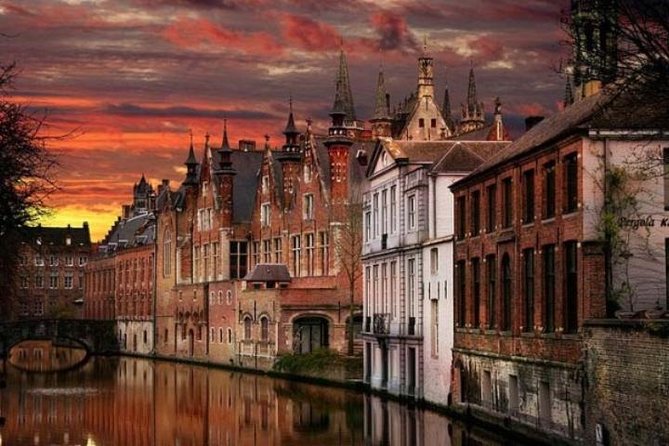
Your first major mood shift comes at Minnewater Lake, known as the Lake of Love. The guide sets the scene with Bruges history and the romantic story tied to the water. Even if you’ve seen pictures of Minnewater, the storytelling helps the place feel less like scenery and more like a lived-in part of the city.
From there you move to the Begijnhof. This community dates back to 1245, and the focus is on the women who lived there and the role that group played in the wider city. It’s a calm, historic pocket—so it works as a reset after the busier streets.
A practical tip: bring your camera, but don’t spend the whole time hunting angles. I’d rather you pause for the guide’s context first, then grab photos while the moment is fresh.
Chocolalino and the art of tasting chocolate (not just eating it)
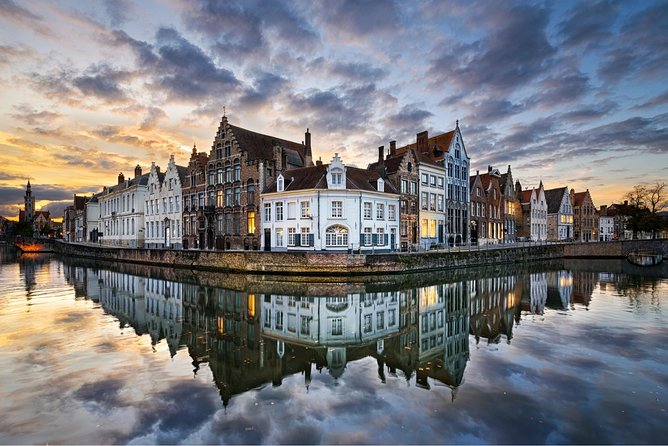
The chocolate stop at Chocolalino is one of the tour’s main reasons to book. You’ll taste artisan chocolates and learn what makes Bruges chocolate special. The guide also shares practical tips for distinguishing handmade chocolate from industrial versions.
That matters because it changes how you shop afterward. When you understand what to look for (and what to avoid), you’re less likely to buy a pretty bar that’s basically mass-produced sweetness.
Also, this is one of your easiest points to slow down. The tour gives you roughly 7 minutes here, but that’s long enough to taste, ask a quick question, and leave with a real plan for the rest of your chocolate shopping.
Walplein, Rue de l’Étuve, and the medieval “street decoder” lesson
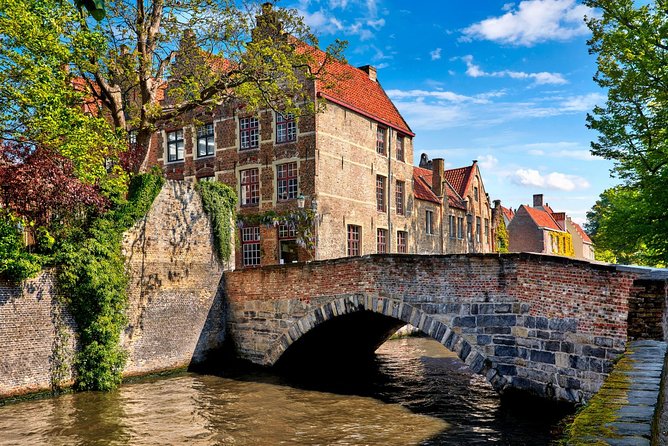
Next up you’ll hit a few spots that are about reading the city instead of just photographing it.
At Walplein, the guide explains the history of Bruges beer. That turns an otherwise simple square into something with character and timeline—so when you pass a pub later, you’ll know there’s more behind it than modern décor.
Then comes Rue de l’Étuve, where the focus is on how to identify original medieval houses. This is the kind of tour moment I love because it makes you a better observer. After the guide points out the clues, you start noticing details on buildings that you’d normally walk right past.
You’ll also get a short pause for photos from a little bridge. In Bruges, bridges are basically checkpoints for great city light, so treat that moment as your “grab the skyline” break.


Saint John’s Hospital and the Michelangelo connection you can see from outside
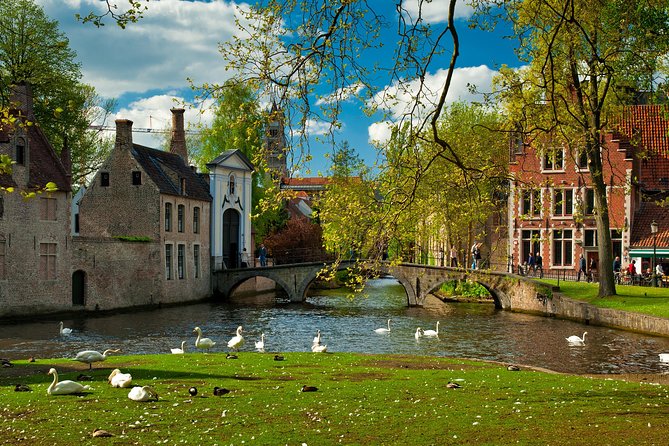
A standout stop is Saint John’s Hospital. From the outside, the guide explains how the health system in medieval Bruges worked. It’s not a museum deep dive, but it gives you a believable picture of how care functioned in earlier times.
Just nearby is Onze-Lieve-Vrouwekerk (Church of Our Lady). Even from outside, you’ll hear curiosities about the white marble Madonna and Child by Michelangelo found inside the church. You’re not going to be stuck inside on a walking tour—but you’ll come away knowing that what you see outside connects to something major inside.
Here’s the practical value: the guide links the city’s places together. Instead of “church, then hospital,” you get “these institutions show how Bruges thought about life, order, and community.”
Gruuthusemuseum and the bridges that turn into stories
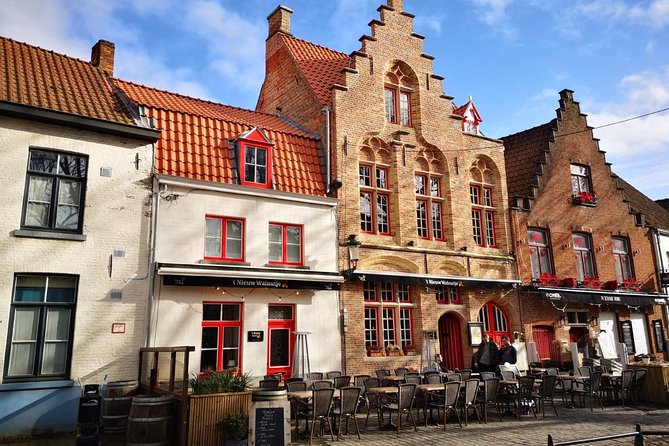
You’ll pass the Gruuthusemuseum, which connects to the most powerful Bruges family between the 17th and 18th centuries. The guide uses that reference point to explain how influence worked in the city, so it’s not just a name on a building.
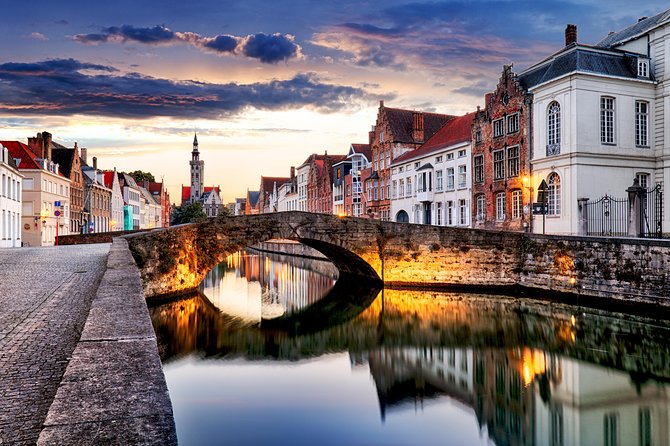
Then you reach Boniface Bridge, one of Bruges’ charming spots for photos. The guide shares an interesting legend tied to the bridge, and you get a little time to take pictures. Legends might sound fluffy, but in a city like Bruges they make the streets feel less random.
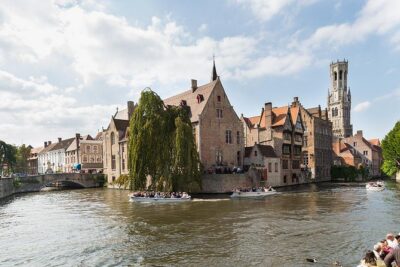
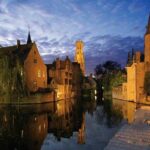
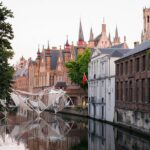
Finally, your route brings you to Quai du Rosaire / Rozenhoedkaai, often called the Pier of the Roses. This is the city’s most photographed riverside angle, and the guide explains the history around the pier. If you plan to come back later (and many people do), you’ll understand what you’re looking at instead of just capturing it.
Huidenvettersplein, Burg Square, and the Grote Markt finish
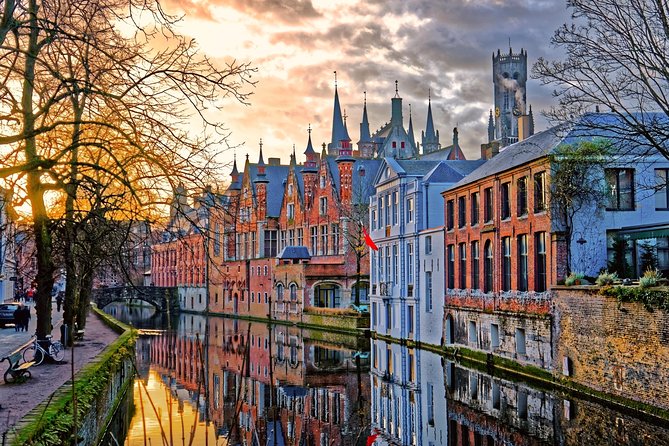
You’ll also stop at Huidenvettersplein (Tanners’ Square). The guide explains how tanners worked in medieval Bruges. It’s a reminder that Bruges wasn’t only lace and legends—it was also industry, labor, and craft.
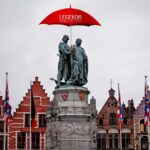
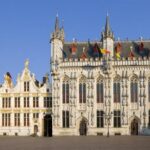
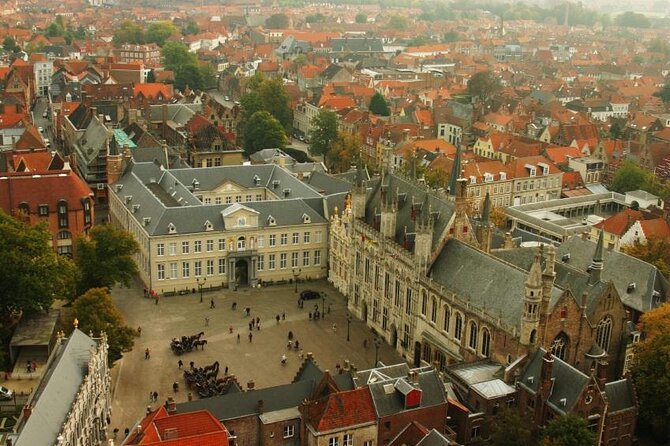
Then you end in style at Burg Square. Here you’ll see key civic and religious landmarks, including the Gothic Town Hall, the Old Court House, and the Basilica of the Holy Blood. The guide helps you connect the different buildings to how the city was organized and governed.
The tour’s final stop is The Markt / Grote Markt. This is where the guide shifts from telling to directing. You’ll get tips on where to eat and which shops to use if you want traditional chocolate. After two hours of stories, this is the best possible finish because you’re standing in the right place to turn knowledge into a good meal and good souvenirs.
Hearing and pace: how to make it work in real Bruges streets
Bruges streets can be noisy, and weather can change everything. If it’s busy or raining, hearing the guide can be harder, even with guidance. My advice is simple: position yourself where sound carries—usually mid-front rather than way at the back.
This tour may use radios/headsets due to tourist regulations. If you have your own headphones, you can use them, and if you don’t, they can be offered for €1. If you care about clean audio, bring headphones if you own a pair.
Pace is generally smooth, but it’s still a walking tour. One reason people like it is that you move between key sights without dead time. The flip side is that you can’t treat it like a slow wander.
Who this tour suits best (and who should choose differently)
This is a strong fit if you want:
- A fast Bruges overview that hits major highlights in a logical route
- A guide who adds humor and story so the city feels alive
- A built-in reason to stop for artisan chocolate and learn what you’re buying
It’s less ideal if you:
- Hate walking distances around historic streets
- Need a quiet, low-stimulus experience (busy lanes can make audio tough)
- Want a long stop-time at every sight (this tour prioritizes coverage and flow)
One more thought: because the tour includes tasting and chocolate discounts, it’s extra good for first-time Bruges visitors who plan to snack and shop.
Should you book this Bruges Walking Tour?
I’d book it if your goal is to get your bearings fast and leave with a chocolate strategy. For about $26.43, you’re paying for an organized route, a real human guide, and an actual tasting moment—not just a scenic walk.
I’d think twice if the idea of starting near the station and handling street noise sounds annoying. But if you show up on time, bring headphones (if you have them), and plan to move with the group, this tour gives you a smart, enjoyable introduction to Bruges in a short window.
FAQ
What language is the tour offered in?
The tour is offered in English, with a professional English-speaking guide.
How long is the Bruges Walking Tour?
It lasts about 2 hours (the usual experience can run closer to 2.5 hours, depending on the guide and group).
How much does it cost?
The price is $26.43 per person.
Where does the tour start and end?
It starts at Carrefour Express Brugge Station (Hendrik Brugmansstraat 6/0002, 8000 Brugge) and ends at Markt / Grote Markt in 8000 Brugge.
Is admission included for the stops?
The stops on the route are listed as free admission (ticket-free) at the locations visited.
Do we get chocolate on the tour?
Yes. There’s an included stop at Chocolalino for an artisan chocolate tasting, plus exclusive discounts for tour members in chocolate shops around Bruges.
Are headphones provided?
The tour may use radios with headphones due to tourist regulations. You can use your own headphones, and if you don’t have any, headphones can be provided for €1.
How big is the group?
The tour has a maximum of 24 travelers.
What happens if it rains or weather is bad?
This experience requires good weather. If it’s canceled due to poor weather, you’ll be offered a different date or a full refund.
Can I join the tour if I arrive late?
If you arrive late, you can join half way in, based on the tour’s guidance in the provided information.