REVIEW · BRUGES
Evening Tour: The Dark Side of Bruges
Book on Viator →Operated by Legends of Bruges Free & Private Tours · Bookable on Viator
Bruges looks different after dark. This evening walking tour uses centuries-old streets as the backdrop for tales, superstition, and a few spine-tingling legends that fit the city’s shape perfectly.
I love how it keeps you moving through less-touristy lanes while still hitting the big names like the Markt and Jan van Eyckplein. I also like the ending: an informal stop at an old-school bar scene, then a complementary beer deal at Bauhaus to help you stretch your night in a local way.
One thing to keep in mind: this is a night walk with limited downtime, and if you’re sensitive to cold or sound, you’ll want to plan for brisk pacing and clear visibility. Weather can also matter, since it runs best in decent conditions.
In This Review
- Key highlights to know before you go
- Bruges at night: why this 90-minute route works
- Where the tour begins: the Markt and the “main square” kickoff
- Stop 1: the Historic Centre of Brugge and the “less seen” parts
- Stop 2 and beyond: Markt to Jan van Eyckplein
- Choco-Story square: trade history that feels like a city map
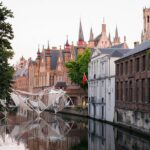
- Langerei and the Golden Hand Canal name
- Vlissinghe: a bar stop with real age (1515)
- Adornes Domain and the Church of the Holy Sepulchre connection
- Sint-Janshuismolen: windmills, a medieval gate, and night photos
- Ending at Bauhaus Bar: the beer deal and how to plan your next hour
- Pace, group size, and how the guide style affects your night
- Value for money: what you’re really paying for
- Who should book this Dark Side of Bruges tour
- Quick checklist for a comfortable night walk
- Should you book Evening Tour: The Dark Side of Bruges?
- FAQ
- How long is the Evening Tour: The Dark Side of Bruges?
- Where does the tour start and where does it end?
- What language is the tour offered in?
- Is there a beer included at the end?
- How big is the group?
- What happens if the weather is bad?
Key highlights to know before you go
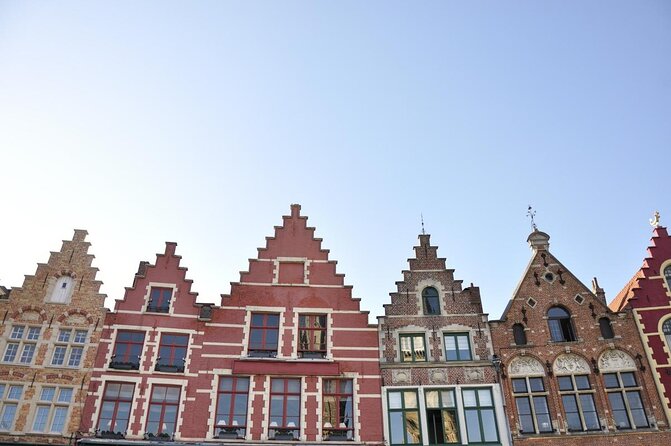
- After-dark Bruges route that takes you beyond the postcard lanes without feeling random
- Legends and folklore tied to specific corners, like Langerei and the Golden Hand Canal story
- Historic drinks stop at Vlissinghe, noted as Belgium’s oldest bar dating to 1515
- Windmill and medieval gate views around Sint-Janshuismolen for great evening photos
- Bauhaus Bar finale with a beer deal to round out the experience
- Small group size (max 6) which usually makes questions and interaction easier
Bruges at night: why this 90-minute route works
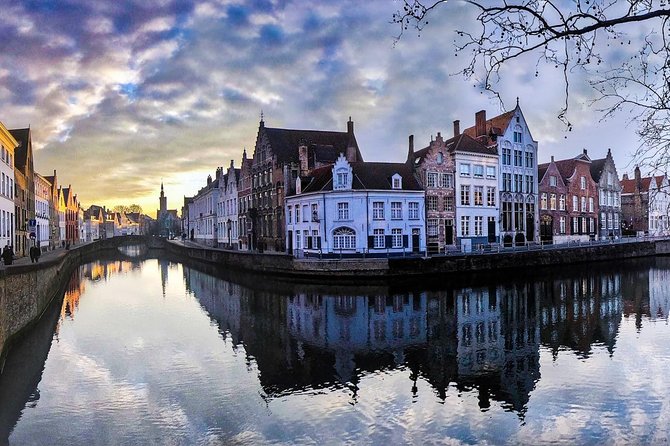
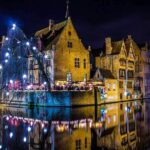
Bruges is gorgeous in daylight, but at night it changes texture. Shadows cut across canals, the buildings look taller, and the quiet streets make the old stories feel less like theater and more like local memory.
This tour works because it doesn’t just point at monuments. It threads the city’s timeline into the places you’re standing, from medieval harbour-adjacent history to later trading wealth. And it keeps you walking long enough to feel like you’ve actually shifted neighborhoods, not just toured the same square again with candles for atmosphere.
If you want a simple plan that pairs well with other activities, this also fits nicely after a main sightseeing block. In many Bruges itineraries, you’ll hit the big sights early. This tour gives you a second lens: the darker side, the local “why is that there?” details, and the darker legends that match the crooked streets.
You can also read our reviews of more evening experiences in Bruges
Where the tour begins: the Markt and the “main square” kickoff
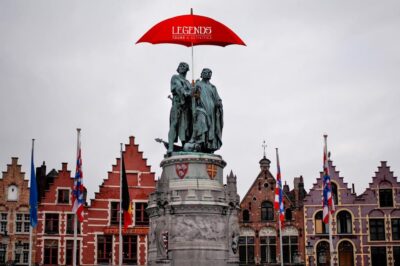
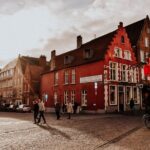
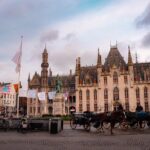
The start point is at the Markt area (Pieter de Coninck en Jan Breydel on the square). That matters. Starting at the city’s big public room helps the guide set the timeline fast, before you peel away into quieter streets.
From here, the tour builds momentum in short segments: a quick historical intro at the main square, then movement toward the places that connect Bruges’ past trading power to today’s layout. If you’ve ever gotten turned around in Bruges, this type of kickoff is useful. The guide gives you mental landmarks so the evening walk stops feeling like wandering.
Expect a mix of:
- short explanations
- quick photo stops
- stories that explain why certain streets and buildings feel linked
Also, since it’s offered in English, you can settle in without switching brain modes. Even if your French or Dutch is minimal, this is built to be accessible.
Stop 1: the Historic Centre of Brugge and the “less seen” parts
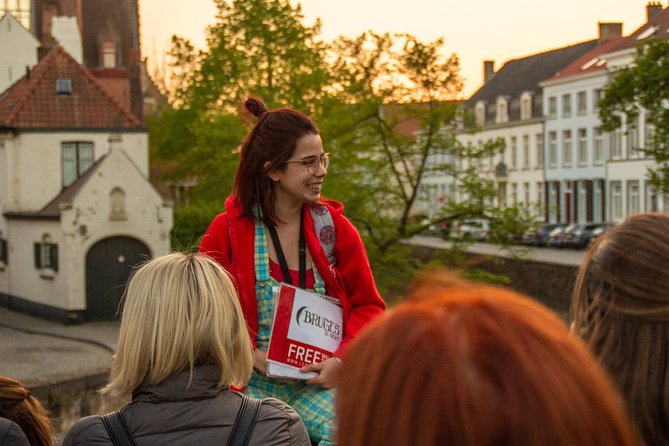
The heart of the experience is your time in the Historic Centre of Brugge, where the tour focuses on areas tourists often skip. This is where the evening theme really makes sense, because the narrower lanes and older building fronts give the legends somewhere to land.
You’ll hear old tales, legends, and ghost stories that connect to the city’s centuries of life. The goal isn’t to scare you for the sake of it. It’s to make the city’s history feel human. Bruges has plenty of impressive buildings, but the stories give you context: who lived here, what people feared, and what rumors people repeated until they became part of the street’s identity.
A practical note: because this portion carries much of the walking, wear shoes you trust. Bruges sidewalks are often uneven, and at night your pace tends to speed up. Slowing down for footing helps more than you’d think.
Stop 2 and beyond: Markt to Jan van Eyckplein
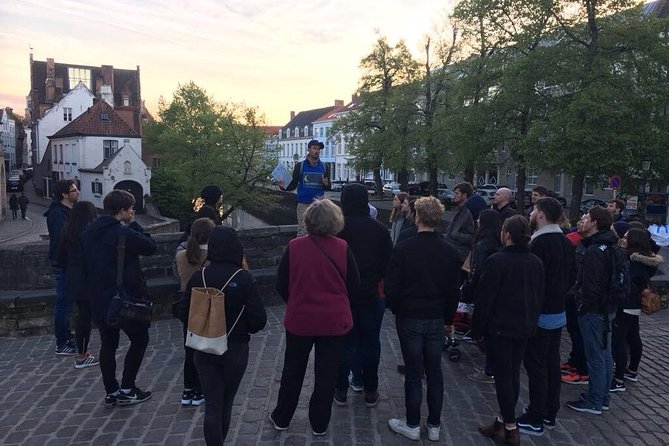
After the main square intro, you move toward Jan van Eyckplein, described as the old harbour area of medieval Bruges. That’s a key idea for the whole tour. Bruges’ fame didn’t just come from pretty architecture. It came from trade, shipping, and the money that flowed through.
At Jan van Eyckplein, the guide’s job is to help you read the city layout like a map. The harbour connection is useful because it explains why Bruges looks the way it does, with corridors and waterfront-adjacent patterns that still echo medieval logistics.
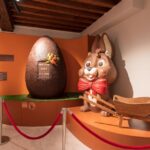
Then the route heads toward the Choco-Story (Chocolate Museum) area, connected to the former Italian trading houses and mentioned as a historic stock exchange market dating back to the 13th century. Even if you don’t go inside the museum, this is the kind of stop that helps you see why Bruges became such a magnet for merchants.
Choco-Story square: trade history that feels like a city map
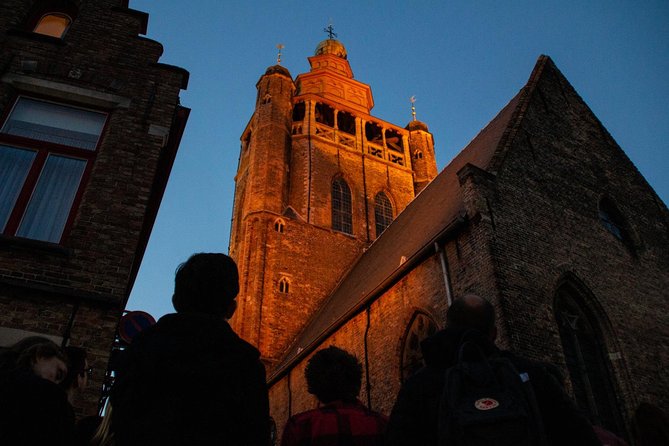
This segment is a smart bridge between “night stories” and “why Bruges mattered.” You’ll hear how trading houses shaped the city, and how this square area ties into early market activity.
The value here isn’t a museum visit. It’s the context you gain while standing in the same public space that once mattered for international commerce. You start connecting the dots: canals weren’t just views, and squares weren’t just gathering points. They were tools for business and communication.
If you’re the type who likes history to explain real geography, you’ll probably enjoy this portion. If you only want spooky stuff, you might still find it worth it, because the trade details make the darker legends feel more plausible. People don’t get obsessed with wealth and risk for no reason.
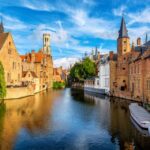
Langerei and the Golden Hand Canal name
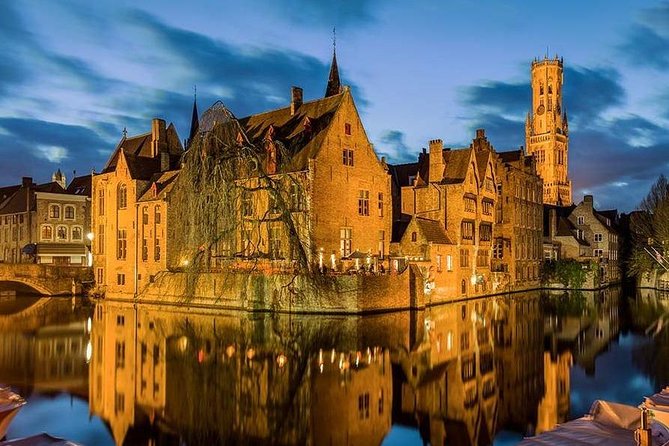
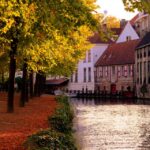
Next comes Langerei, tied to the story of how the Golden Hand Canal got its name. This is one of the more story-driven segments, and it’s built around devil imagery, tragedy, and superstition.
This is where you should slow down and listen. The canal-side views can be tempting, and if you multitask too hard (scrolling, walking fast, taking photos), the story loses power. The guide’s job is to connect the legend to what you’re looking at. When you give it full attention, the canal becomes more than a pretty line on the map.
One practical thing: since it’s evening, keep an eye on where you’re stepping near canal edges and uneven paving. It’s a short segment, but your focus will be split between story and footing.
Vlissinghe: a bar stop with real age (1515)
Then you reach Vlissinghe, described as the oldest bar in Bruges and Belgium, with a beer-drinking tradition dating back to 1515. This isn’t an “optional detour” stop. It’s a thematic hinge: history becomes lived culture.
Even if you don’t drink at that exact moment, the idea is strong. Bruges’ nightlife isn’t just modern. It has roots in long-standing social routines. A centuries-old bar tells you that people have always gathered—through wars, economic swings, and changing fashions.
From a value standpoint, this stop also improves the tour’s balance. You’re not only hearing stories in the abstract. You’re getting a real-world link to how locals pass time.
Adornes Domain and the Church of the Holy Sepulchre connection
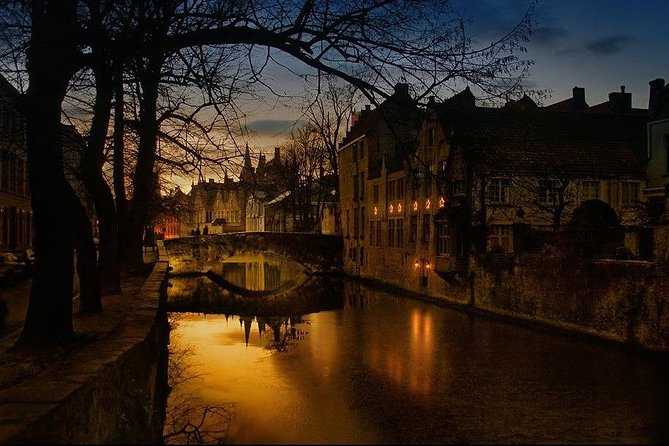
The route then takes you toward Adornes Domain, where the focus is a legendary church story: it was built as a copy of the Church of the Holy Sepulchre in Jerusalem.
This is one of those moments where Bruges shows its big ambition. Religious and political stories traveled, and wealthy patrons wanted symbolic connections to far-off sacred sites. The tour’s framing helps you understand why this kind of “world connection” can exist even in a small city.
Drawback to consider here: the stop is brief, so if you’re the kind of person who loves reading every plaque, you may want to do quick follow-up browsing afterward on your own.
Sint-Janshuismolen: windmills, a medieval gate, and night photos
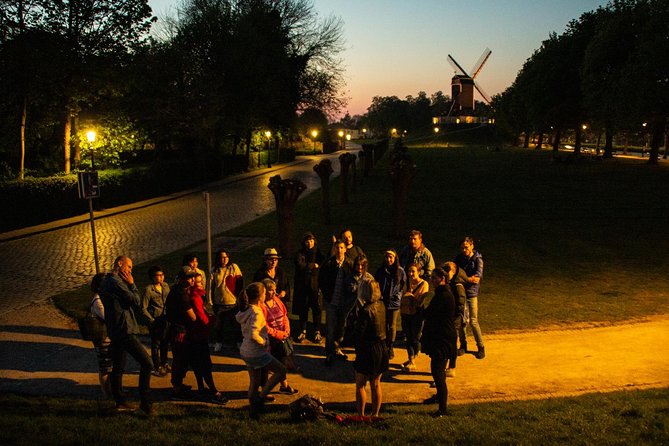
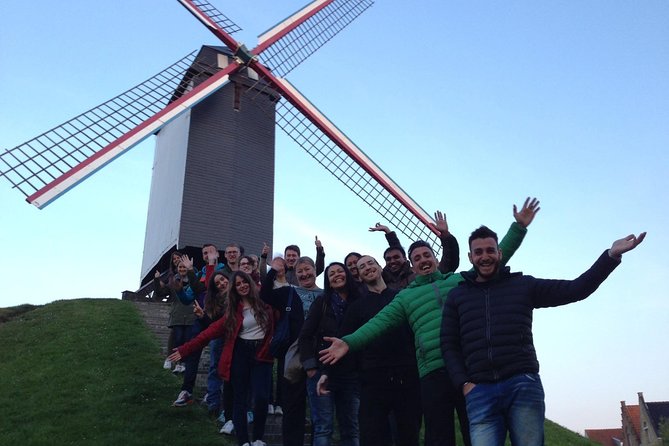
The tour heads to Sint-Janshuismolen, which includes snapshot opportunities of the majestic mills on the outskirts and the presence of a remaining medieval city gate.
For many people, this is a highlight because it breaks the feeling that you’re only trapped in the central grid. Even in one evening, you get a sense of Bruges’ defensive past and its working landscape.
At night, the key is timing and stability. Bring your phone in a ready position and take photos at natural pauses rather than while walking. Windmill views can be stunning but also a little dark—your camera may need a second to focus.
Ending at Bauhaus Bar: the beer deal and how to plan your next hour
The tour finishes at the Bauhaus Bar in Bruges (Langestraat 121). You get a ticket for a complementary beer deal at the bar, described as buy 1 drink, get 1 free beer. The final stretch is about 20 minutes, which is enough to relax without dragging your night into a whole second plan.
This ending is smart because it gives you a place to reset. You’ve walked, learned, and listened. Now you can ask a few questions, compare favorite stories, and decide whether you’re craving dinner, another pint elsewhere, or something sweet.
A practical consideration: some people report that the beer part didn’t match expectations on their specific day, while the tour description clearly includes a beer deal. I’d plan for the beer as part of the experience, but if you’re already hungry, don’t count on it to replace dinner.
Pace, group size, and how the guide style affects your night
This tour is capped at a maximum of 6 travelers, which usually means you’ll stay close to the guide and the conversation can actually land. It also makes it easier to hear at night, though sound issues can still happen with accents or cold air.
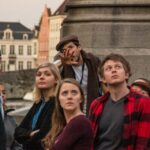
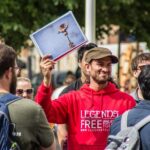
Guide delivery matters a lot on story-based walks. Strong storytellers keep the group hooked with humor and clear pacing. Names like Martin, Louis, Hilde, Patrick, and Bram show up often for entertaining delivery and good storytelling in the feedback.
If your group happens to include someone who dominates questions, you’ll still likely be fine because the tour is small. But if you personally need breaks, understand that the tour is built around walking and short stops. Bring layers, and keep water in your bag. Bruges evenings can feel sharp even when the day was mild.
Value for money: what you’re really paying for
The price is listed as $3.62 per person with a walking format. That might sound almost too low, but the value is not about “big-ticket attractions.” It’s about the hour-and-a-half structure, the guided route, and the storytelling that turns Bruges into a narrative city.
You’re paying for:
- a curated route through major and lesser-known corners
- a guide who ties places to stories
- a short payoff at the end with the beer deal option
Compared to paid museum entries or big attraction tickets, the cost is tiny. The tradeoff is that you need to engage: you’ll get the most if you listen, look up, and slow down at key stops.
If you’re on a budget, this is one of the easiest ways to add meaning to your Bruges trip without squeezing your wallet or your schedule.
Who should book this Dark Side of Bruges tour
This tour fits best if you want your Bruges sightseeing to feel like a story with location-based stops. Book it if:
- you already plan to see the main sights and want an added angle
- you like legends, superstition, and the why-behind-the-street feeling
- you prefer walking tours that feel small-group rather than cattle-herd
- you want a fun night activity that helps you orient yourself for the rest of the trip
It may be less ideal if:
- you hate walking at night or dislike uneven surfaces
- you need lots of seated downtime
- you’re expecting a heavy ghost-horror show rather than folklore + history with darker edges
Quick checklist for a comfortable night walk
A few small things make a big difference:
- Wear grippy shoes with good tread.
- Bring a light layer for wind, especially if you’re near open canal areas.
- Keep your phone charged for windmill and gate photo moments.
- If you’re sensitive to hearing, stand closer to the guide during louder story parts.
Also, because it’s in a compact time window, eat beforehand if you’re hungry. This tour ends in time for an easy dinner choice.
Should you book Evening Tour: The Dark Side of Bruges?
Yes, if you want a guided way to see Bruges after dark that doesn’t repeat the daytime route. I like how the tour balances recognizable landmarks (like the Markt and Jan van Eyckplein) with story-driven stops that feel more local: Langerei, Vlissinghe, and the Sint-Janshuismolen views.
Skip it only if you’re not a fan of walking or you’re expecting a full-on scary ghost production. This is more folklore and city texture than jump-scare horror.
If you’re booking for the first night in Bruges, this can be a smart move. It gives you orientation, context, and a reason to notice the details you’d otherwise walk past.
FAQ
How long is the Evening Tour: The Dark Side of Bruges?
It runs for about 1 hour 30 minutes.
Where does the tour start and where does it end?
The tour starts at Pieter de Coninck en Jan BreydelMarkt (8000 Brugge) and ends at Langestraat 121, Brugge (at the Bauhaus bar).
What language is the tour offered in?
The tour is offered in English.
Is there a beer included at the end?
The tour description includes a complimentary beer deal at the end at Bauhaus Bar (buy 1 drink, get 1 free beer).
How big is the group?
The tour has a maximum of 6 travelers.
What happens if the weather is bad?
The tour requires good weather. If it’s canceled due to poor weather, you’ll be offered a different date or a full refund.