REVIEW · BRUSSELS
Best of Brussels : Private Luxury Tour
Book on Viator →Operated by FIRST CLASS TOURS & LIMO SERVICE · Bookable on Viator
Brussels can feel like a lot at first. This private luxury tour gives you a smooth, high-comfort way to see the main sights fast, with pickup and drop-off so you’re not hunting for trams. I like that it’s truly just your party, so the guide can slow down for photos or questions, and I really enjoyed how the stops connect the city’s quirks to its real stories. One thing to weigh: you’re moving through nine highlights in about four hours, so you’ll be doing quick, focused viewing rather than long museum wandering everywhere.
The best part is the pacing. You start with a classic Brussels icon, then you pivot to big Gothic and royal architecture, and end with the European Quarter. If it’s raining, you may spend more time inside the vehicle between short walks, which can be good for comfort but means less lingering at each site.
In This Review
- Key highlights you’ll feel right away
- Luxury Pickup And How The 4-Hour Plan Actually Works
- Manneken Pis Without The Queue Choreography
- St. Michael and St. Gudula Cathedral’s Towering Gothic Moments
- Place Royale, The Royal Palace And The 2:30pm Guard Change
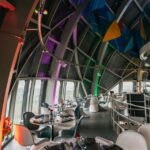
- Atomium Inside The Molecule Of Human Life
- Mont des Arts And The Slope-Top Views
- Sablon’s Notre-Dame du Sablon And The Thurn und Taxis Chapel
- Parc du Cinquantenaire And The Museums You Can Choose
- Basilique Nationale du Sacré-Cœur: Scale You Feel
- The European Quarter And The EU Council Quick Glance
- Price And Value For A Private Luxury Brussels Orientation
- Who This Tour Fits Best (And Who Should Adjust Expectations)
- Final Call: Book It Or Build Your Own Day
- FAQ
- How long is the Best of Brussels Private Luxury Tour?
- Is this tour private or shared?
- Do you pick up from the airport or just hotels?
- Is the tour in English?
- Are tickets included for all stops?
- What is the main highlight sequence you’ll see?
- Is it refundable if plans change?
Key highlights you’ll feel right away
- Private, just your group: no waiting for other schedules, no feeling rushed by a bigger crowd
- Hotel or airport pickup: helps a lot if you land and want Brussels handled immediately
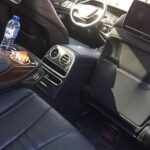
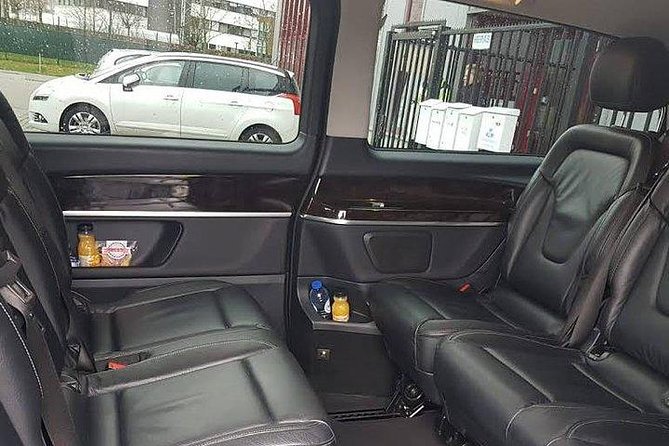
- Luxury vehicle comfort: useful for both distance between areas and bad weather
- Landmarks chosen for contrast: quirky (Manneken Pis) to grand (Palaces and cathedrals) to surreal (Atomium)
- Guide-led context: you’ll get the why behind what you’re seeing, not just the name
- Free-site cluster + a few ticket add-ons: most stops are free; Atomium and the basilica aren’t
Luxury Pickup And How The 4-Hour Plan Actually Works
This is set up for people who want Brussels orientation without friction. You get pickup from anywhere in the Brussels area, including the airport, and you’ll be dropped back at your hotel when you’re done. That sounds simple, but it matters. Brussels is spread out, and public transit can be fine—until you’re tired, hauling bags, or trying to line up your first day.
The tour runs about 4 hours, which is long enough to get a real sense of the city but short enough that you’ll keep a brisk rhythm. Your guide drives you around in a comfortable vehicle, then you step out for short visits and photo stops. You don’t need to plan your routes or figure out which sights are closest. You also don’t need to translate your way through signage—your guide does the explaining.
A final practical note: the ride is luxury-comfort oriented. One guide I saw praised for patience and another for covering lots of territory helped make this feel like a smart first-day strategy, even with delays. Still, because the schedule is tight, you should expect quick looks at some places unless you’re willing to trade a bit of time at one stop for another.
You can also read our reviews of more private tours in Brussels


Manneken Pis Without The Queue Choreography
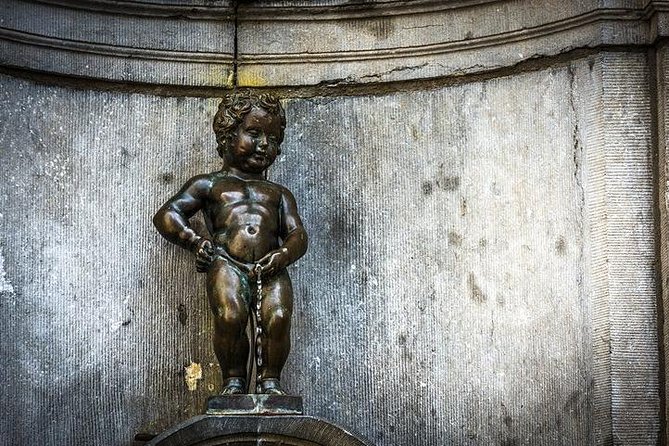
Manneken Pis is a magnet. Even when the weather is kind, it’s usually crowded because it’s famous and small—so people cluster and funnel around it. The payoff of this stop on a private tour is that you’re not stuck in a long day-of-sightseeing buildup. You get there with a guide who can explain what you’re looking at before you even raise your camera.
You’ll hear the basic story: the statue is tied to early records (dating back to at least 1388) and people call him Brussels’ oldest citizen. But the real interest is the legends. One version frames the fountain as a memorial to a courageous infant who prevented a fire. Another links it to a count’s son who couldn’t hold back during a procession. The current statue dates to 1619, made by Jérôme Duquesnoy the Elder, and it’s been stolen more than once—though it has always been recovered.
During Brussels celebrations, the figure is dressed in costumes. That’s the kind of detail that turns a tiny landmark into something you’ll actually remember.
Time tip: this stop is about 20 minutes. If you want a photo, aim to be ready when you arrive. The area can get congested fast.
St. Michael and St. Gudula Cathedral’s Towering Gothic Moments
Next comes a totally different mood: the Cathedral of St. Michael and St. Gudula. The exterior hits you immediately—especially the twin towers that rise to 69 meters. This is Gothic architecture at full scale, designed by Jan van Ruysbroeck and built over centuries.
The guide explanation helps you read the cathedral like a story. Founded in 1225 but only completed in the 15th century, it’s a lesson in how Brussels grew into its cultural muscle. Inside, the cathedral stretches about 108 meters by 50 meters, and it’s not shy about decoration. You can look for standout stained glass windows by Bernard van Orley.
If you head toward the transepts, you’ll find major works including images tied to Charles V and Isabella of Portugal (south transept) and the Hungarian royal pair Louis II and Mary (north transept). There’s also the Chapel of the Holy Sacrament, where a window illustrates the Miracle of the Host.
This is a great stop for anyone who thinks churches are all the same. It’s not. It’s about scale, craft, and history layered into light.
Practical note: it’s about 30 minutes, and the admission is free. That’s perfect timing—enough to appreciate without feeling trapped in “church hours.”
Place Royale, The Royal Palace And The 2:30pm Guard Change
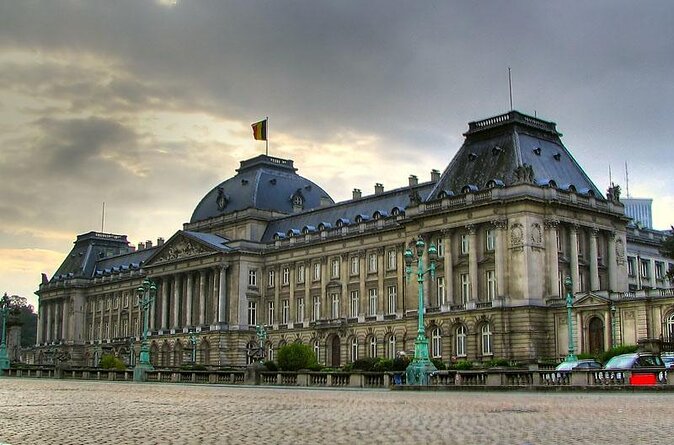
Then you shift to royal Brussels at Place Royale. This square is famous because it’s built for the long view: the Royal Palace anchors the space, and the royal family uses it as an official residence. When you look up, you’ll see that Belgium’s flag is flown when the sovereign is present.
One of the most useful details here is the daily Changing of the Guard around 2:30pm. Even if you don’t catch it perfectly, it’s worth knowing because it turns the square into a living stage rather than just a backdrop.
Around the palace, the surrounding cultural buildings bring in Neoclassical form. Two names stand out if you want to sound like you’ve done homework: the Palais des Académies and the Palais des Beaux-Arts. The latter ties to Victor Horta’s work from the 1920s—something you’ll appreciate more once you see the harmony between buildings and space.
Time here is 30 minutes, and admission is free. You’ll get photos, a quick orientation to the royal layout, and a better understanding of where power and culture overlap in Brussels.
Atomium Inside The Molecule Of Human Life
The Atomium is pure Brussels theater. The 102-meter-high steel and aluminum structure is designed by André Waterkeyn for the 1958 Brussels World Exhibition. It’s meant to represent a molecule of iron magnified 165 million times—so yes, it’s unreal on purpose.
This stop is the one where you’ll need to plan ticket budgeting. Admission is not included. The value is that you can go inside and experience the spheres and exhibits. Part of the interior includes a presentation show called Biogenium, focused on human life.
You’ll only have about 30 minutes here, which means you’ll probably want to decide quickly: do you want a walk-through and exhibit time, or do you want maximum outside views and photos? If you’re traveling with kids, or you just love weird architecture, consider prioritizing the interior so the Atomium isn’t only a distant photo moment.
Also, it’s not the closest stop geographically from central areas—so it’s smart that the tour puts it into the drive-and-pause rhythm instead of making you figure it out yourself.
You can also read our reviews of more tours and experiences in Brussels

Mont des Arts And The Slope-Top Views
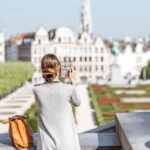
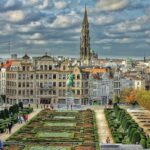
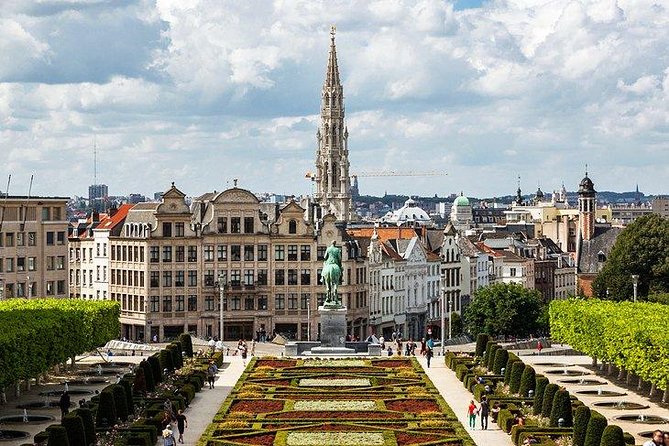
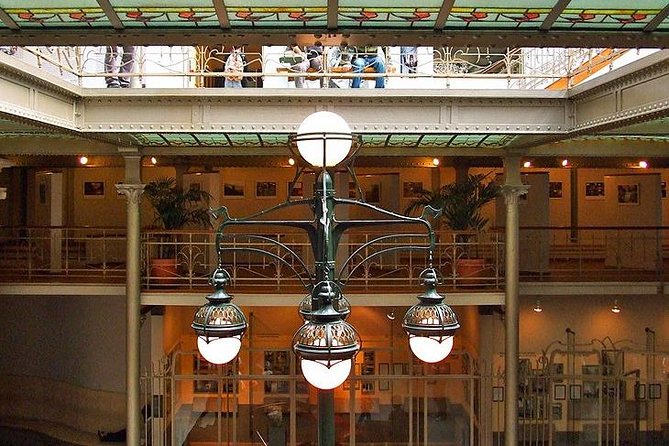
Mont des Arts is a mid-century design bridge between Brussels’ “old core” and the city’s modern planning. It was created between 1956 and 1958, occupying elevated land between Place Royale and Place de l’Albertine.
What you’ll notice quickly is the structure’s intent: buildings and public space stacked into layers so you can look down and across the lower central city. The tour stop is short (about 20 minutes) but it’s a good breather between bigger, more complex sites.
If you want a name to remember, the Bibliothèque Albert I sits here, with more than three million volumes plus manuscripts and related museums. The area is also tied to the Palais de la Dynastie and Palais de Congrès, including a view point that makes the whole geography of Brussels easier to understand.
This is one of those stops where the guide’s pacing helps. You’ll see the area as a platform—less about one building and more about how the city is built.
Sablon’s Notre-Dame du Sablon And The Thurn und Taxis Chapel
Next, you head to one of Brussels’ most beautiful Late Gothic interiors: Notre-Dame du Sablon (Onze-Lieve-Vrouw op de Zavel). This church dates to the 15th–16th centuries and is widely considered one of Belgium’s loveliest Late Gothic churches.
The setting matters. The church is built as a replacement for an earlier chapel from 1304, erected on sandy ground by the Crossbowmen’s Guild. Inside, the focus is stained glass—very much a “stop and stare” situation.
There’s also the burial chapel of the Thurn und Taxis family, where part of the work is credited to Luc Fayd’herbe. If you’re curious about legend, the sacrarium houses a figure of the Virgin, described as a copy of a Madonna supposedly brought to the chapel in 1348 by a woman from Antwerp named Baet Soetens, who claimed the Virgin appeared to her.
This stop is about 20 minutes, and it’s free to enter based on the tour’s included admission. Because the time is limited, I’d treat it like this: let yourself pick one visual thing to anchor on—stained glass, burial chapel details, or the Virgin figure—rather than trying to take in everything at once.
Parc du Cinquantenaire And The Museums You Can Choose
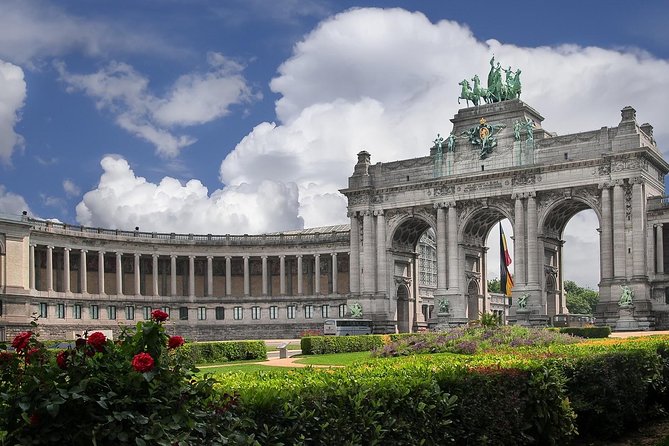
Parc du Cinquantenaire is where Brussels shifts into grand national commemoration. The park was established in 1880 to mark Belgium’s 50th anniversary.
At the center is the monumental Palais du Cinquantenaire. The two wings are linked by a massive triumphal arch designed by Charles Girault, built in 1905. Even if you don’t go into museums, the architecture explains Belgium’s self-image: strong, ceremonial, and proud.
The tour stop (about 20 minutes) is designed to give you a feel for the setting. You’ll be near two museum spaces: the Royal Art and History Museum with an extensive tapestry collection, and the Belgian Army Museum / Museum of Military History, focused on military technology and campaigns fought on Belgian soil.
Admissions are listed as free on this experience, which is a plus. But the big word to remember is “near.” The schedule doesn’t promise deep museum time. So if you want museum interiors, you might have to trade time at other stops, depending on your guide’s pacing and what you’re prioritizing.
Basilique Nationale du Sacré-Cœur: Scale You Feel
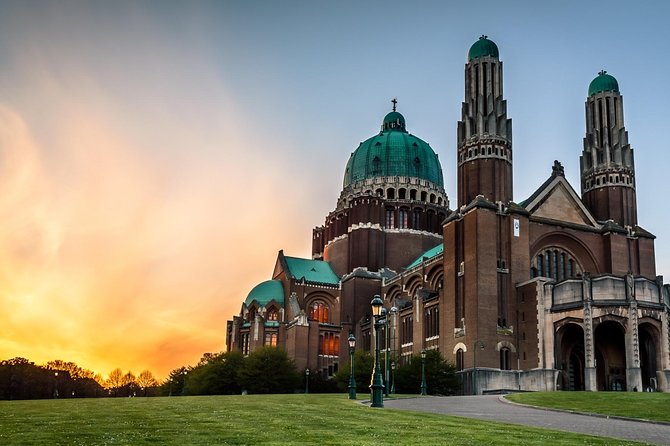
Then it’s up into the Koekelberg district for the Basilique Nationale du Sacré-Cœur (Nationale Basiliek van het Heilig Hart). This church is built to be seen from far away—one of the biggest in the world, listed as the fifth largest, with dimensions of 141 meters by 107 meters.
The story is also big. Commissioned by Leopold II to mark Belgium’s 75th anniversary, construction started in 1905 and the basilica wasn’t completed until 1970. That’s a long timeline, which helps explain why you’ll see a mix of styles inside and out.
Inside, there’s an art collection and an ongoing exhibition about the basilica’s history. The picture of Christ giving his blessing above the altar is attributed to Georges Minne.
This is another stop where admission is not included. Time is about 20 minutes, so again you’ll want to decide quickly: do you want a quick interior look, or do you want to focus on the basilica as a “stop-and-stare” spectacle from the entrance area? Either way, the scale does the heavy lifting.
One more practical thought: this district feel is part of why the luxury ride helps. Brussels isn’t just compact squares; getting up to Koekelberg without stress is a win.
The European Quarter And The EU Council Quick Glance
Finally, you end in the European Quarter, including a stop near the Council of the EU. This is about 15 minutes, and ticket entry isn’t included.
Think of it as a contrast chapter. After royal palaces and churches, the European Quarter makes sense: Brussels is also a diplomatic hub. You’re not signing up for a long tour here; you’re getting a brief, guided orientation to the area so you know where you are and why it matters.
If you like architecture and world politics side by side, this quick stop is useful. If not, it still serves as a clean ending point because it’s easy to understand—big institutions, big buildings, a different Brussels personality.
Price And Value For A Private Luxury Brussels Orientation
At $505.73 per person, this isn’t a budget day. But “expensive” can still be good value if it buys you time, comfort, and competent guiding.
Here’s what you’re paying for, practically:
- Private experience: just your party, not shared pacing
- Luxury vehicle: useful for distance, comfort, and easier movement when it rains
- Pickup and drop-off: from any location in Brussels area, including airport pickup
- English-speaking guide: with context that helps the landmarks click together
For many people, that’s worth it on day one—especially if you’re arriving tired or managing a tight schedule. In the feedback you’ll see names like Andrea and Patrick praised for strong storytelling and patient logistics. Mary and Bilel also come up with compliments for friendly guiding and wide coverage, though one mention notes English was a little challenging, which is a reminder to keep your questions ready and be ready to concentrate.
The one caution is that not every experience is identical. A couple of negative notes mention disorganization or, in one worst case, a no-show/cancellation issue. Those are rare in context, but they’re important enough that you should confirm your exact pickup time and location clearly before you go.
Also note what’s not included in admission: Atomium, the basilica, and the EU Council stop. The rest of the stops are listed as free admissions, which helps your budget stay predictable.
Who This Tour Fits Best (And Who Should Adjust Expectations)
This tour fits best if you want a smart first day in Brussels. It’s also great if:
- you value comfort and don’t want to fight transit on arrival
- you like having a guide connect the dots between sites
- you’re traveling as a group and want your schedule respected
It might feel less satisfying if you want a slow, deep museum day. With nine highlights in four hours, you’re looking at short visits, not long, hands-on time. If you’re the type who wants to spend an hour inside each building, you’ll need to plan a second day for deeper exploration.
Bad weather is another adjustment factor. One comment highlights that rain made the pacing more “stay in the van and watch,” which makes sense. If you hate losing outside viewing time, bring a good rain layer and keep expectations realistic.
Final Call: Book It Or Build Your Own Day
Should you book? If it’s your first time in Brussels and you want the major landmarks lined up with low stress, this private luxury format is a strong choice. The pickup/drop-off alone can turn a messy arrival into a smooth day. The guides named—Andrea, Patrick, and others—were repeatedly credited for making the stops make sense, and that’s exactly what transforms a checklist into a real city orientation.
You may want to reconsider if you’re chasing museums and interiors as your main goal, since a ticket add-on like the Atomium plus the Sacré-Cœur means you’ll spend some of your limited time deciding what to do inside. Also, if you’re very sensitive to strict timing, make sure your pickup details are crystal clear so you don’t lose momentum on day one.
FAQ
How long is the Best of Brussels Private Luxury Tour?
It runs for about 4 hours.
Is this tour private or shared?
It’s private. Only your group participates.
Do you pick up from the airport or just hotels?
Pickup is offered from any location in the Brussels area, including the airport.
Is the tour in English?
Yes, the tour is offered in English.
Are tickets included for all stops?
No. Manneken Pis, the cathedral, Place Royale, Mont des Arts, Notre-Dame du Sablon, and Parc du Cinquantenaire are listed as free admissions. Atomium, the National Basilica of the Sacred Heart, and the Council of the EU stop are listed as not included.
What is the main highlight sequence you’ll see?
You’ll see Manneken Pis, St. Michael and St. Gudula Cathedral, Place Royale, Atomium, Mont des Arts, Notre-Dame du Sablon, Parc du Cinquantenaire, the National Basilica of the Sacred Heart, and a stop in the European Quarter near the Council of the EU.
Is it refundable if plans change?
Yes. You can cancel up to 24 hours in advance for a full refund.