REVIEW · GHENT
Ghent: Guided Walking Tour and Canal Boat Trip
Book on GetYourGuide →Operated by buendía · Bookable on GetYourGuide
Ghent clicks into focus on water and stone. I like the canal boat trip for that instant change of perspective, and I like how the guide helps you decode the art in St. Bavo Cathedral instead of just pointing at it. The only real watch-out: if weather turns, you’re outside for both the walking and the boat portion.
This is a tight, well-paced central-city tour that layers major sights with the everyday medieval rhythms that made Ghent wealthy. I’ve also seen how much personality the guides bring—people I spoke with on departures led by Ariel, Peter, Juliana, and Eros all seemed to hit the right tone: clear English, good pacing, and the kind of commentary that keeps you listening through the details.
For the money, you’re getting more than “see the buildings.” You’re getting context that makes the skyline and the canals make sense, all for a set 150 minutes and a price that stays reasonable even without food included.
In This Review
- Key points worth knowing before you go
- Meet at Sint-Baafsplein and the Belfort Tower: start with the skyline clue
- Belfort viewpoints and Ghent Town Hall: civic power in stone
- St. Bavo Cathedral and The Adoration of the Mystic Lamb: symbols made simple
- Saint Nicholas’ Church: another anchor of Ghent’s religious map
- Graslei and the old market system: why the city ran on trade
- Patershol (weavers’ quarter) and Gravensteen: the fortress side of Ghent
- From the street to the water: Leie and Lieve canal boat cruise
- How the 150-minute timing and pace actually feel
- Price and value: what you get for about $32 per person
- Should you book the Ghent guided walking tour plus canal boat?
- FAQ
- How long is the Ghent guided walking tour and canal boat trip?
- Where do we meet for the tour?
- Is the tour offered in English?
- What is included in the $32 price?
- Do I need to bring anything?
- Are food and drinks included?
Key points worth knowing before you go
- Three-tower skyline focus: you’ll connect the view to why Ghent grew the way it did.
- St. Bavo Cathedral and the Mystic Lamb: symbolism explained in plain language, not art-class jargon.
- Markets and guild trades: you’ll learn why the Meat and Fish markets mattered so much.
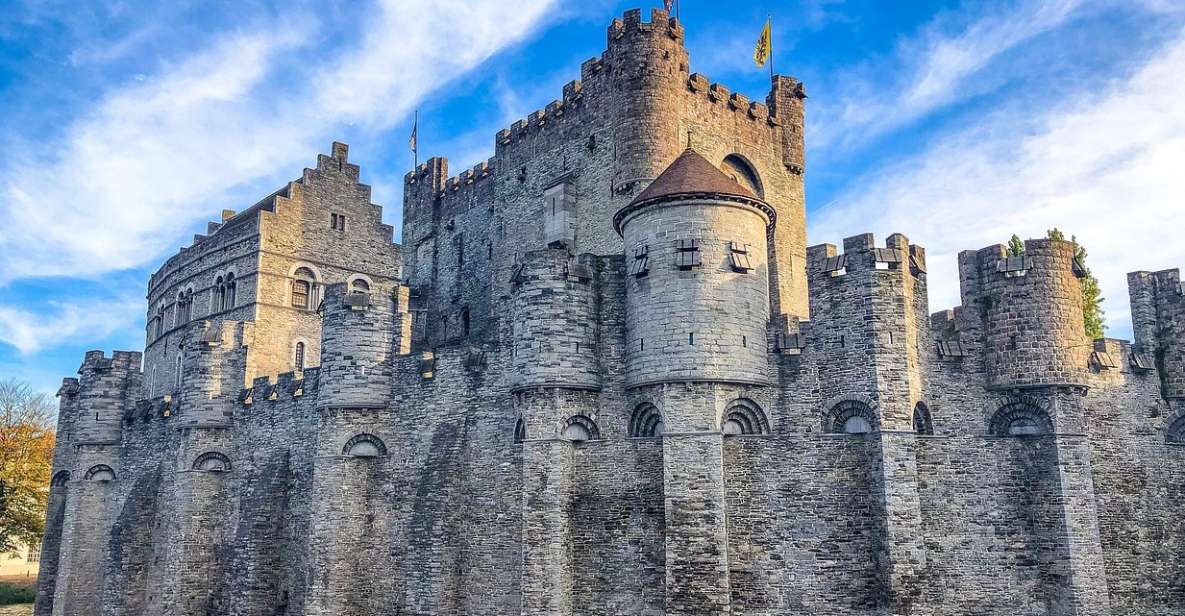
- Patershol and Gravensteen: weaving quarter energy plus the Counts of Flanders’ fortress vibe.
- Leie and Lieve canal boat time: 30 minutes that you can’t get from the street.
- Audio support on the boat: illustrated translation helps you follow along.
Meet at Sint-Baafsplein and the Belfort Tower: start with the skyline clue
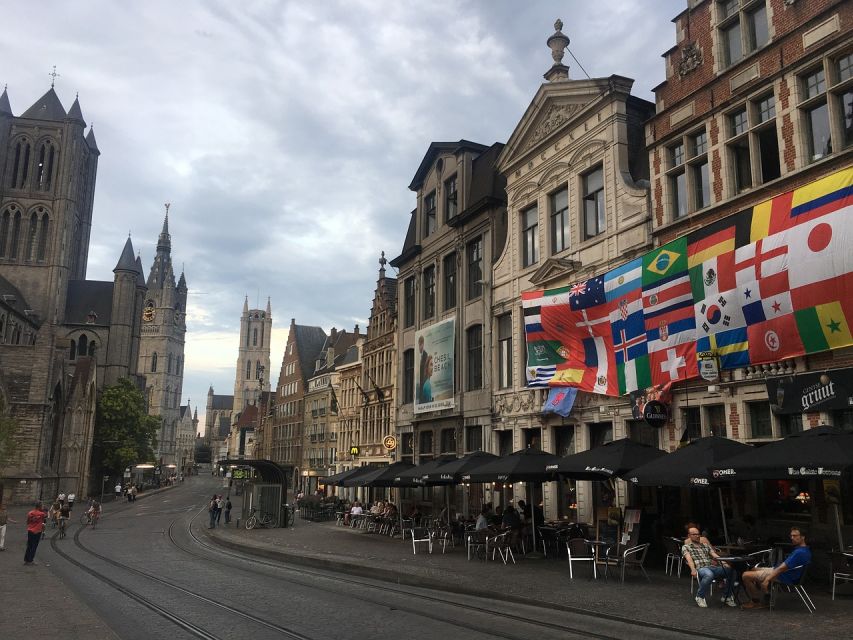
You’ll meet outside the Belfort of Ghent at Sint-Baafsplein 12. Your guide will be holding a large black umbrella, which makes finding the group quick even if it’s busy around the square.
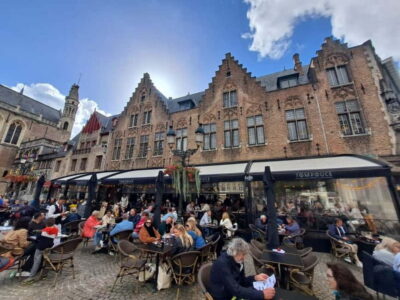
Starting here is smart because the Belfort isn’t just a pretty vertical landmark. It’s tied to civic pride and power. Ghent’s skyline has that unmistakable “three towers” look, and this walk sets you up to actually notice how they frame the city instead of just passing them.
The tour begins with short stops—around 15 minutes each for the main monuments—so you don’t get stuck in one place. You get enough time to look closely, listen to the story, and still move on to the next big clue.
You can also read our reviews of more walking tours in Ghent


Belfort viewpoints and Ghent Town Hall: civic power in stone

After your initial Belfort time, you’ll circle through key civic landmarks, including the Ghent Town Hall. The guide’s job is to connect architecture to the real forces that shaped Ghent: trade, guilds, and the city’s confidence in governing itself.
You’ll also spend a moment with the idea of the bell tower as a lookout point. That matters because it turns the tower from an object into a tool—something built for watching, signaling, and keeping an eye on the city’s fortunes.
If you love figuring out how cities work, you’ll enjoy how the guide keeps linking what you see (facades, towers, public buildings) to how people lived and organized themselves in medieval times.
St. Bavo Cathedral and The Adoration of the Mystic Lamb: symbols made simple
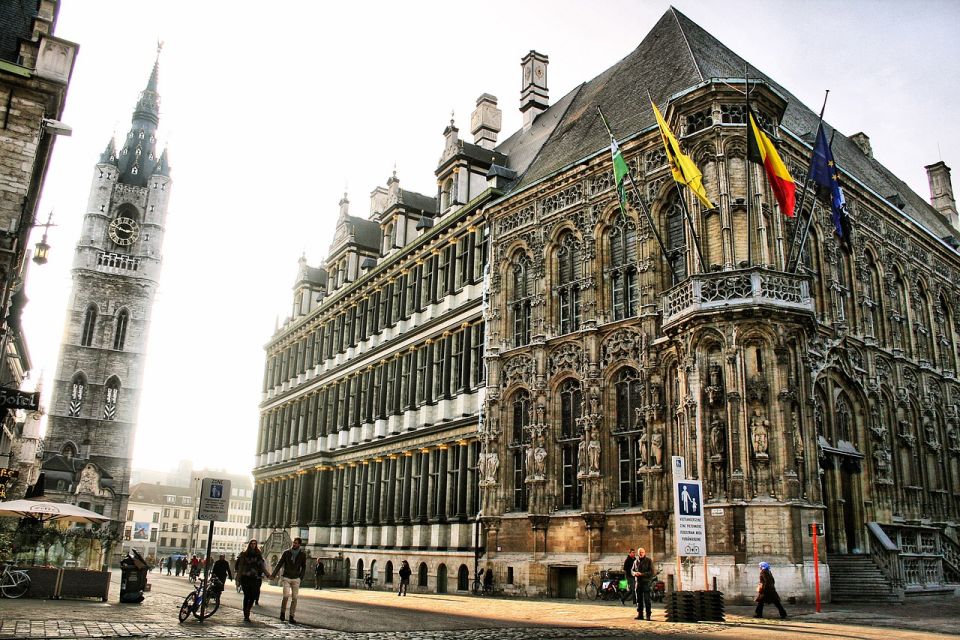
This is one of the biggest reasons to book the tour. You’ll visit St. Bavo Cathedral and learn about The Adoration of the Mystic Lamb by the Van Eyck Brothers.
Here’s what I find useful: the guide doesn’t treat the painting like a locked museum object. You’ll get explanations designed to make the symbols feel understandable. That means you won’t stand there thinking, I’ll just wait for the caption—because you’ll already know what to look for as you see it.
If you’re even casually interested in European art, this stop upgrades your whole day in Ghent. You’re not just touring a church; you’re getting a guided “how to read it” moment.
Saint Nicholas’ Church: another anchor of Ghent’s religious map
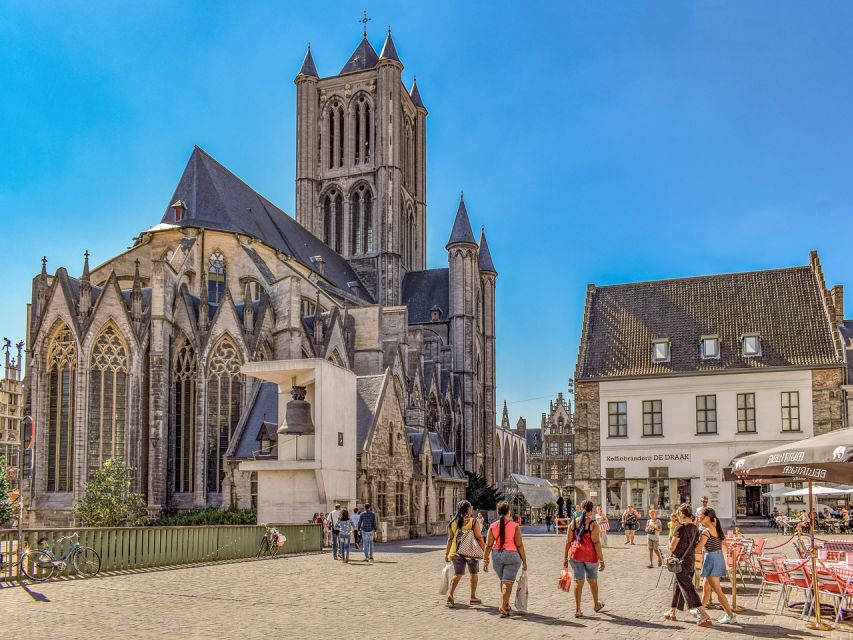
Next up is Saint Nicholas’ Church, another stop that gives your walk balance. The cathedral is the star for art, but Saint Nicholas helps round out the story of Ghent’s sacred landscape.
Even if you’re not a church-tour person, this stop can still work because the guide uses it to connect the broader picture: what Ghent valued, who shaped community life, and how important these buildings were to identity.
The time here is short—about 15 minutes—so it’s enough to absorb a few key details without draining you before the medieval trading stops begin.
Graslei and the old market system: why the city ran on trade
Once you reach Graslei and the trading areas near the quay, the tour shifts from monuments to momentum. You’ll visit the Herb and Grain Quay, described as a key trading post in Ghent during the time when goods and guilds helped define the city’s status.
The guide also brings in the old guild trades, which is a big deal because Ghent wasn’t only about nobles and churches. It was about workshops, merchants, and the practical systems that kept money moving and jobs stable.
Then comes the Meat and Fish markets—often described as the supermarket of the era. This is where the tour gets especially practical: the guide explains why those markets mattered for development, so you can see the city as an economy, not just a postcard.
If you like walking tours where you can feel the logic of a place, this segment is where it clicks.
You can also read our reviews of more boat tours in Ghent



Patershol (weavers’ quarter) and Gravensteen: the fortress side of Ghent
From trading life, you move into character districts—starting with Patershol, the weavers’ quarter. This area gives the tour its human texture. Instead of only big institutions, you get a sense of the working neighborhoods where fabric-making and daily labor shaped the city’s look.
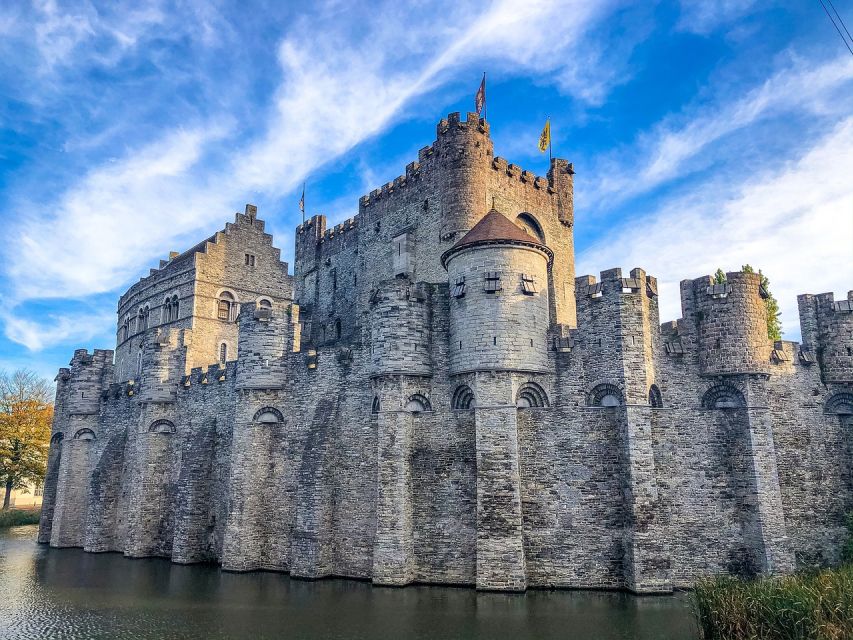
Then you’ll head to the Castle of the Counts of Flanders, Gravensteen. This fortress stop helps you understand why Ghent needed protection and power structures, not just commerce. The guide includes legends and curiosities tied to the castle, so it’s not a lecture-style stop. It’s more like history with hooks.
Time here is again about 15 minutes, which keeps it snappy. You’ll likely appreciate the pacing because it gives you just enough to want to come back and explore on your own afterward.
From the street to the water: Leie and Lieve canal boat cruise
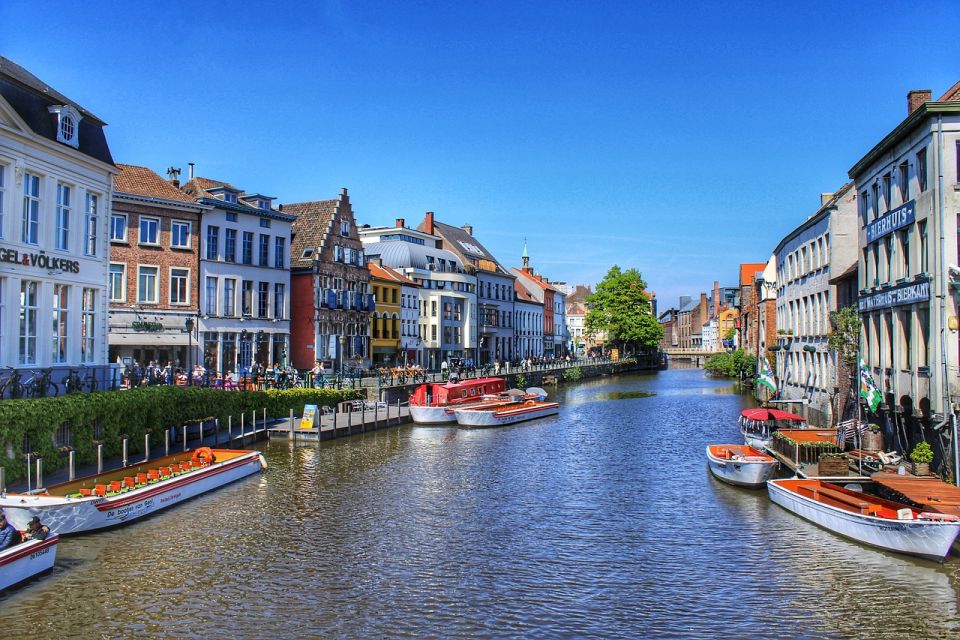
The second half of the tour is the boat portion, about 30 minutes. You’ll cruise along the river Leie and the Lieve canal, with a wide view of both banks and the daily life along the water.
This is the part that makes the combo worth it. You can walk by canals in Ghent, sure, but a guided canal ride gives you angles, sightlines, and context that are hard to replicate on foot.
You’ll also have an audio guide with illustrated translations during the cruise. That’s helpful because it keeps the story flowing without you needing to guess what you’re seeing. In some departures, boat guides also provide multi-language narration—for example, one guide noted as Juliana reportedly offered narration in four languages—so you may find the communication especially clear.
And yes, the boat is a nice break from walking. If your feet start protesting, this is your moment to sit back, focus on the views, and still keep learning.
How the 150-minute timing and pace actually feel
The full tour runs about 150 minutes. The structure is built around shorter guided segments—around 15 minutes at major sights—plus the 30-minute canal ride. That pacing helps you absorb a lot without turning it into an all-day slog.
In practice, it can feel like:
- quick stops for the big monuments,
- a shift into trade and neighborhood context,
- and then a calmer sit-down segment on the water.
One practical consideration: the tour is outdoors for portions, and rain can happen. On at least some departures, there was rain for about an hour. You’ll want to wear shoes that handle wet cobblestones and stay comfortable if you get a light soaking.
Also keep in mind that meeting and start timing can shift slightly if people are arriving from elsewhere. If you’re connecting from another city, build in a little cushion so you don’t stress about a tight schedule.
Price and value: what you get for about $32 per person
At $32 per person, the value comes from the blend of access, guidance, and time efficiency. You’re paying for:
- a professional guide through central Ghent,
- the walking route that ties the skyline, churches, and markets together,
- and a canal boat trip included in the same price.
Also, food and drinks aren’t included, which is normal for a 150-minute tour. You’ll likely want a snack plan afterward, especially if your day in Ghent includes museums or a longer lunch.
What makes the price feel fair is that the guide doesn’t just point at famous places. The interpretation—especially for The Adoration of the Mystic Lamb—is the kind of knowledge that’s hard to get from wandering alone. You end the tour with a clearer map of how Ghent works: art, religion, civic power, trade, neighborhoods, and water all linked together.
Should you book the Ghent guided walking tour plus canal boat?
You should book if you:
- are visiting Ghent for the first time and want the central highlights without overthinking a self-guided plan,
- care about learning what you’re looking at, especially in St. Bavo Cathedral,
- want both medieval city landmarks and a perspective change from the Leie and Lieve canals,
- prefer a tight time window over a half-day or full-day tour.
Skip it or adjust expectations if you’re:
- already deeply familiar with Ghent’s art and medieval economy and you prefer slow, independent wandering,
- sensitive to walking pace and short outdoor segments when weather isn’t cooperating,
- hoping for a tour that includes lunch or drinks.
My take: it’s a smart choice for first-timers and art-interested visitors who like practical context, not just sightseeing checklists.
FAQ
How long is the Ghent guided walking tour and canal boat trip?
The total duration is about 150 minutes, with a mix of guided walking stops and a 30-minute canal cruise.
Where do we meet for the tour?
Meet outside the Belfort Tower, at Sint-Baafsplein 12. The guide will be holding a large black umbrella.
Is the tour offered in English?
Yes. The live tour guide provides the tour in English.
What is included in the $32 price?
The package includes the walking tour, a professional guide, and the canal boat trip.
Do I need to bring anything?
Bring comfortable shoes since you’ll be walking on city streets and stopping at several sights.
Are food and drinks included?
No. Food and drinks aren’t included. You’ll want to plan for a snack or lunch on your own after the tour.