REVIEW · GHENT
Ghent: Guided Walking Tour
Book on GetYourGuide →Operated by BUENDIA TOURS · Bookable on GetYourGuide
Medieval Ghent feels close on foot. This 2-hour guided walk helps you read the city fast, from the Belfry to Gravensteen, and the Spanish or English guide turns landmarks into clear stories. You’ll connect Charles V, the Van Eyck brothers, and the city’s medieval power with places you can point at.
One thing to plan for: museum and church entrance fees aren’t included, so you mainly get guided viewing and context—then you decide what’s worth paying for on your own.
In This Review
- Key highlights at a glance
- Ghent in 2 hours: what this walk really gives you
- Price and value: is $17 a good deal?
- Before you go: timing, language, and what to wear
- Starting at Sint-Baafsplein: orienting yourself fast
- Belfry of Ghent: the bell tower that tells a civic story
- Saint Bavo Cathedral: Gothic facade plus the Van Eyck connection
- Ghent Town Hall and Saint Nicholas: civic pride meets faith
- Graslei and the embankment: Castle battlements and river energy
- Old Fish Market and Friday Market Square: local life without the stress
- Patershol and the Great Butchers’ Hall roof: look up
- Gravensteen: Castle of Gerald the Devil, up close
- Lunch, Belgian beer, and picking what’s worth your time
- Who should book this tour, and who should skip it?
- Should you book this Ghent walking tour?
- FAQ
- How long is the Ghent guided walking tour?
- What languages is the guide available in?
- Is food included in the tour price?
- Are museum or church entrances included?
- Where do I meet the guide, and where does the tour end?
- Do I need to bring anything special?
- Are pets allowed on the tour?
Key highlights at a glance
- Van Eyck context made practical: you’ll hear how The Adoration of the Mystic Lamb fits into Ghent’s identity
- Power icons, in order: Belfry, Town Hall, Saint Bavo area, Graslei, and finally Gravensteen
- Local life stops: Old Fish Market and Friday Market Square, not just monuments
- Patershol and the Butchers’ Hall roof: look up—Ghent does woodwork well
- Beer and Flemish food guidance: you’ll get recommendations to step away from the busiest tourist pockets
- Multiple guide styles, same goal: you may meet guides like Pablo, Mark, Bruno, or Lucas, known for being engaging
Ghent in 2 hours: what this walk really gives you
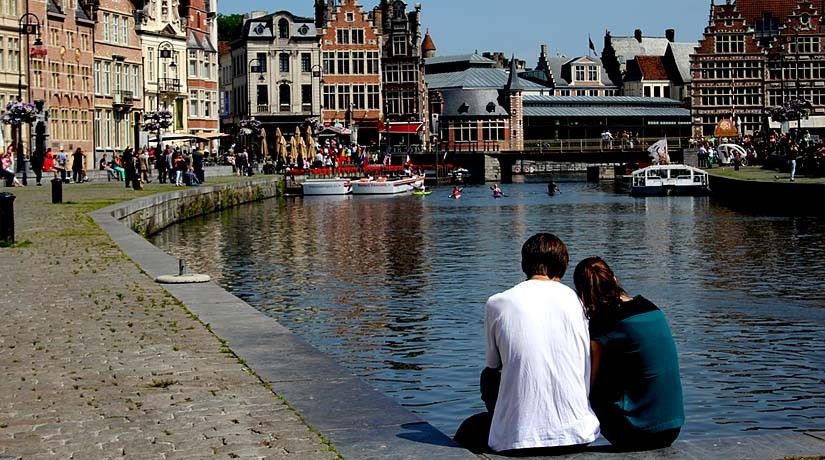
Ghent is one of those cities where you can wander for hours and still feel like you missed the plot. This tour is built to fix that. You’ll cover the core medieval sights in a tight loop and learn what to notice—so later, when you return on your own time, the city makes sense.
The tour’s biggest win is how it links people and places. You won’t only hear dates; you’ll get the why. Charles V (a Ghent native who became Holy Roman Emperor and King of Spain) shows up in the story, and you’ll also hear the local nickname history tied to the city’s rulers and identity. Then the guide anchors that bigger context in stone and brick: the Belfry, the Town Hall, the cathedral area, and Gravensteen.
Another big plus is that you’re not left standing there with a list. You’ll get recommendations for what to do next—especially for lunch and for Belgian beer—plus tips on which monuments or museums are most worth your limited time. It’s ideal if you’re the type who wants the best “after” plan before you start exploring.
The rhythm is also right for most visitors. Each major stop gets about 15 minutes, so you’ll see a lot without the tour turning into one long lecture.
You can also read our reviews of more walking tours in Ghent



Price and value: is $17 a good deal?
At $17 per person for a 2-hour guided walk, this is solid value—mainly because you’re paying for orientation, not entrances. You get a live guide in English or Spanish, plus guidance on where to eat and what to prioritize next.
If you were doing this solo, you could certainly visit the major sights. But paying for a guide matters in Ghent, because so many buildings are tied to specific historical figures and civic power. The tour makes you look up and connect the dots. That’s hard to do quickly on your own, especially if you don’t already know the Van Eyck story or why Ghent’s medieval institutions are so distinctive.
One cost caution: the tour does not include museum entrances or food. So your total trip budget depends on what you choose to add after the walk.
Before you go: timing, language, and what to wear
The tour runs about 2 hours. Starting times vary, so you’ll want to check availability for the slot you can actually use.
Language options are English and Spanish. If you’re comfortable with either, you’ll be fine. Guides are described as engaging and interactive—names that come up include Pablo, Mark, Bruno, and Lucas—so you can expect a personality-driven walk, not a silent march.
Wear comfortable shoes. Ghent’s medieval center is walkable, but you’ll be on uneven old streets and cobbles, plus some uphill angles as you reach Gravensteen. Also, pets aren’t allowed on this tour.
Finally, plan for a small reality check on timing. The tour starts at a specific meeting point, but group logistics (like day trips) can nudge the start later than the listed time. If you have a firm dinner reservation, keep some wiggle room.
Starting at Sint-Baafsplein: orienting yourself fast
You begin at the Sint-Baafsplein area, at options listed as Sint-Baafsplein 2. This is a smart starting choice. The square puts you right in the “Ghent center” zone, where the big landmarks are close enough to connect in your head.
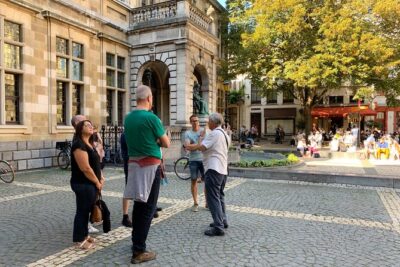
From here, the guide sets up what you’ll see next: Ghent’s civic power and religious influence, braided together. You’ll start learning how to read the buildings rather than just seeing them. That means when you reach the Belfry and later the Town Hall, you’ll know what role those structures played and what features to focus on.
This early orientation also helps you during your free time afterward. Once you know where the medieval core sits, you stop walking in circles. You just go where you want.
Belfry of Ghent: the bell tower that tells a civic story
Stop 2 is the Belfry of Ghent, with about 15 minutes of guided time. The Belfry isn’t just a pretty tower. It’s tied to Ghent’s identity as a city that governed itself with pride.
When you’re standing there, don’t only look at the tower. Look at the surrounding space and how the tower anchors the skyline. A good guide will point out why this kind of civic monument mattered. In a medieval city, it wasn’t only churches that announced power—town governments did too.
This is also a moment where you’ll learn what to prioritize if you want to go deeper later. If you decide you want more than the exterior view, you’ll know where your money and time are most likely to pay off.
You can also read our reviews of more guided tours in Ghent





Saint Bavo Cathedral: Gothic facade plus the Van Eyck connection
Next comes Saint Bavo Cathedral, again about 15 minutes guided. You’ll focus on the Gothic facade and the big cultural landmark housed there.
The tour highlights the painting The Adoration of the Mystic Lamb by the Van Eyck brothers. Even if you don’t enter museums or special exhibits on your own, the guide’s explanation helps you understand why this artwork is part of Ghent’s reputation. It’s not just a famous painting. It’s a reason people build their whole visit around this city.
You’ll also hear more about how Ghent’s former residents and famous names shaped the city’s story. This stop is great if you like art history, but it also works if you mostly want to be able to say, I know why this matters.
Because entrances aren’t included, treat this as your “learn and decide” moment. If the painting pulls you in, you can plan a return with tickets later.
Ghent Town Hall and Saint Nicholas: civic pride meets faith
The Ghent Town Hall stop lands next, with another 15 minutes. Here, you’ll see the peculiar mix of Gothic and Renaissance elements. That mix is a clue that Ghent wasn’t stuck in one era. The city kept evolving, and the architecture tracks those shifts.
Then you move to Saint Nicholas’ Church, and the nearby Masons’ Guild House. This is one of those stretches where it helps to listen for the patterns. The tour connects the religious power of churches to the professional power of guild buildings.
If you’re the type who enjoys details, this is where the guide can help you “read” what you’re seeing. Why is a church designed this way? Why does a guild house look like it does? Those answers make your photos better, too, because you’re capturing meaning, not just facades.
Graslei and the embankment: Castle battlements and river energy
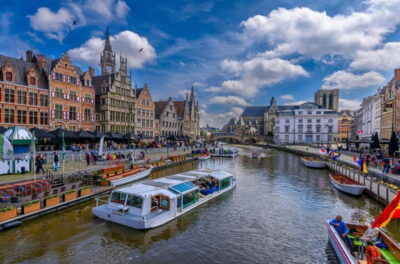
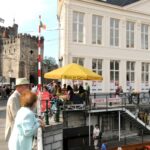
Stop 6 is Graslei, where you’ll see the embankment and the battlements of the Castle of the Counts. This is where Ghent starts to feel like a living place instead of a museum.
Graslei is all about the riverfront setting—long views, old masonry, and a sense of how the city handled trade and power. The guide’s job here is to show how the city’s defensive and civic structures relate to the waterway. That’s key, because medieval cities often functioned like networks, not isolated points.
You’ll also get an instinct for where the best walking lines are. After this stop, you’re well positioned to hit the markets and the neighborhood streets without feeling lost.
Old Fish Market and Friday Market Square: local life without the stress
Stop 7 is the Old Fish Market, and you’ll also hear about the Friday Market Square. These areas help you understand Ghent as a city that still runs on everyday routines.
If you’re worried the tour will feel too rigid, this is the section that loosens things up. Markets make history tangible. You can picture medieval commerce as you walk past stalls and open space.
The practical value here is also real: once your guide points out what to look for, you’ll be able to choose where to eat later without guessing. And since food isn’t included, the guide’s recommendations become extra useful.
Patershol and the Great Butchers’ Hall roof: look up
Stop 8 takes you into Patershol, a neighborhood known for its character and old-street charm. This is where Ghent’s medieval look feels more intimate.
You’ll also see the open wooden truss roof of the Great Butchers’ Hall. Don’t rush this moment. A wooden roof like this isn’t only pretty; it’s a reminder that medieval industry and craft had real visual identity.
Patershol is also a good setup for what comes next. After the markets, you’re ready for one of Ghent’s strongest “finish strong” moments: the castle.
Gravensteen: Castle of Gerald the Devil, up close
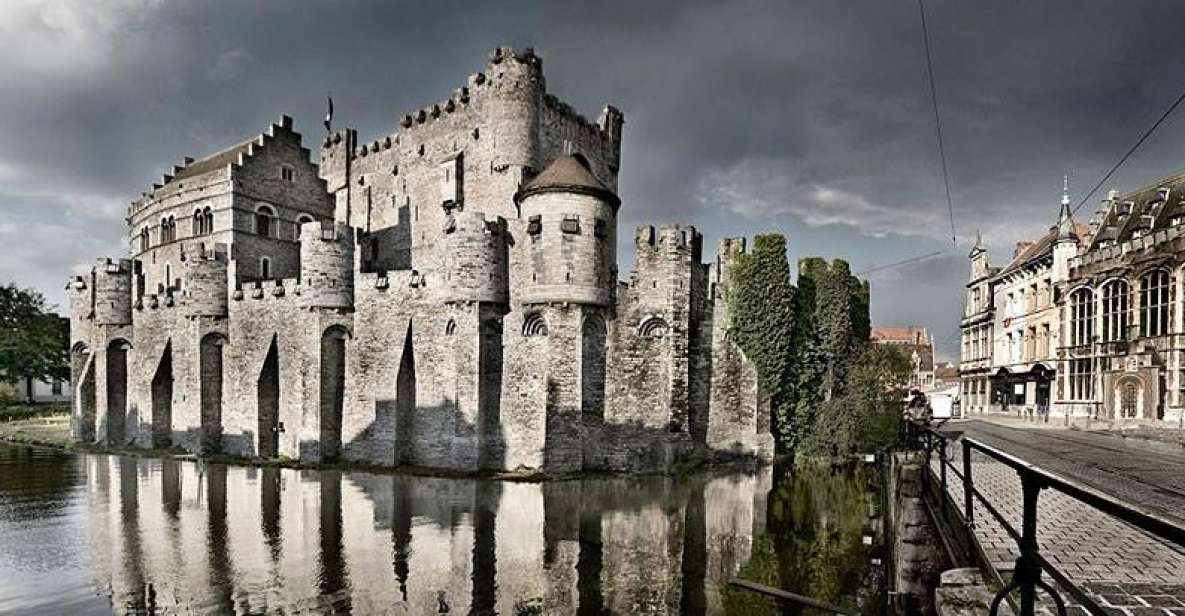
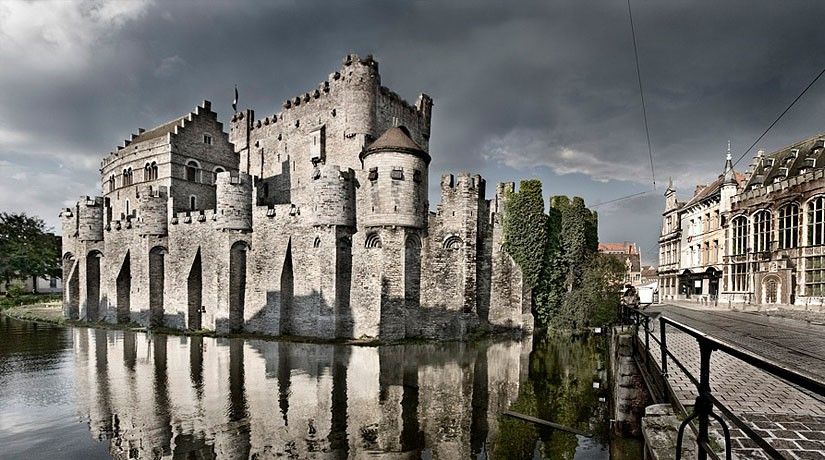
Stop 9 is Gravensteen, with a guided stop and then the tour finishes at Gravensteen as well. This is the 13th-century Castle of Gerald the Devil, a fortress that still feels like a statement even from street level.
Gravensteen is the natural climax of the route. By now, you’ve already learned about Ghent’s civic power, its guild structure, and its religious identity. So when you arrive at a defensive castle, it clicks: this city built institutions because it had to protect them.
If you want to go beyond the outside impressions, the tour doesn’t include entrance, so you’d handle that separately. But even if you don’t, you’ll leave with a strong mental picture of why this site matters and what to notice on future visits.
This is also where your guide’s advice for your remaining hours or next day is useful. If you’re deciding between more monuments or a museum, the castle helps you prioritize.
Lunch, Belgian beer, and picking what’s worth your time
One of the quietly great parts of this tour is the focus on choices after it ends. You’ll get recommendations for places to eat lunch outside the most touristic areas, plus Belgian beer advice.
That matters because Ghent can be easy to overpay for if you don’t know where locals go. A guide can help you aim for quality and value, not just convenience.
The tour also mentions a Kwak beer stop option at the shoe pub, De Dulle Griet. Even if you don’t fit it into your day, knowing what to search for gives you a fun, very Ghent-style plan. Ghent has a knack for turning traditions into experiences—beer is one of those.
For food, the tour points you toward typical Flemish options. Again, since food isn’t included, the goal is simple: you get ideas and direction, then you choose based on your appetite and budget.
Who should book this tour, and who should skip it?
This tour is best if you:
- Want a fast, readable introduction to medieval Ghent
- Like history when it’s tied to real places, not just dates
- Enjoy art and want context around the Van Eyck brothers and The Adoration of the Mystic Lamb
- Appreciate practical guidance for lunch and beer after the walking part ends
You might skip it if:
- You already know Ghent well and only want museum-style deep time
- You prefer independent exploring with no guide interpretation
- You’re hoping the tour includes food or paid museum entrances (it doesn’t)
Should you book this Ghent walking tour?
If you’re visiting Ghent for a day—or even half a day—this walk is a smart way to get oriented and get answers. For $17, you’re buying time savings, clearer context, and a guide who can steer you toward better lunch and beer choices.
Go in with one mindset: use the tour to decide what you want to do next. Since entrances and meals aren’t included, your freedom afterward is part of the value. When you finish at Gravensteen, you’ll know what you saw, why it matters, and where to spend extra time if any of it really grabs you.
FAQ
How long is the Ghent guided walking tour?
It lasts about 2 hours.
What languages is the guide available in?
The tour is offered with live guides in English or Spanish.
Is food included in the tour price?
No. Food is not included, but the guide can recommend where to try typical Flemish food or where to enjoy a Kwak beer.
Are museum or church entrances included?
No. Entrance to museums is not included.
Where do I meet the guide, and where does the tour end?
The meeting point can vary depending on the option booked. The listed start is at Sint-Baafsplein (Sint-Baafsplein 2). The tour finishes at Gravensteen, and the activity ends back at the meeting point.
Do I need to bring anything special?
Bring comfortable shoes for walking.
Are pets allowed on the tour?
No, pets are not allowed.