REVIEW · BRUSSELS
Excursion to Bruges and Ghent by bus from Brussels
Book on Viator →Operated by Buendía · Bookable on Viator
Bruges and Ghent in one day works. This full-day bus tour strings together postcard canal corners and major medieval sights, with a Spanish-speaking guide keeping the stories moving. I like the mix of guided stops plus real free time in both cities, and I also love how specific the guided moments are (from Minnewater Lake to St. Bavo’s Cathedral). One thing to consider: it’s a long day with lots of walking, and if your group moves slowly, the free time can feel a bit tighter.
The best part for most people is the value: you get round-trip air-conditioned coach from central Brussels and a guide who explains what you’re actually seeing. The second love is the way the tour hits big-name highlights without turning into only photo-op chaos, like Burg Square and Rozenhoedkaai in Bruges, then the Stadhuis and Belfort in Ghent. The main drawback to plan for is timing sensitivity—some people noted the order or pace can shift—so build in extra flexibility and come with comfortable shoes.
In This Review
- Key points to know before you go
- The day-trip math: squeezing Bruges and Ghent into 10.5 hours
- Brussels meeting point and bus comfort: start clean and simple
- Bruges canal lanes and medieval stops you’ll remember
- From Bargeplein to Minnewater: the quick setup that helps you look smarter
- The Holy Blood zone and town squares: big landmarks without the confusion
- Rozenhoedkaai, St Bonifacius, and the bridge-and-water photo plan
- Begijnhof to Michelangelo’s Virgin and Child: what the guide adds
- Bruges free time plus Chocolalino: chocolate with a logic lesson
- Ghent: a slower-feeling city that still moves fast with the guide
- Stadhuis, Belfort, and St. Bavo’s Cathedral: the big three
- Smaller stops that make the city feel alive
- Graslei, Korenlei, OOOST, and the cuberdon street moment
- Timing, walking, and the realistic day-trip fatigue factor
- Price and value: does $54.45 make sense?
- Who this tour suits best (and who should pick something else)
- Should you book this Bruges and Ghent day trip?
- FAQ
- What time does the tour start, and where do I meet?
- How much free time do I get in Bruges and Ghent?
- Is lunch or food included?
- Do I need headphones or a radio guide?
- How long is the full day tour?
- What happens if I cancel, or if the weather is bad?
Key points to know before you go
- Spanish-speaking guide with lots of scene-setting, from medieval Bruges to Van Eyck’s Mystic Lamb in Ghent
- Free time in both cities (about 1.5 hours each), so you’re not stuck only in a walking line
- Hands-on Bruges detail stops: Minnewater Lake (Lake of Love), Begijnhof (founded 1245), and the Holy Blood area
- Ghent walk that actually maps the city, including Graslei and Korenlei along the Lys River
- Photo-friendly bridges and canals like St. Bonifacius Bridge and St. Michael’s Bridge
- An artisan chocolate tasting stop in Bruges, plus tips on how to spot handmade vs industrial
The day-trip math: squeezing Bruges and Ghent into 10.5 hours
This is designed as a classic two-city hit from Brussels. You’ll start with Bruges, then switch to Ghent, using coach time to cover the distance and guided walking time to make the most of each medieval core. The total time is about 10 hours 30 minutes, which is long enough that you’ll want to treat it like a full workday: plan your energy, not just your photos.
The structure also matters. In Bruges, you get short, focused stops that act like a guided “orientation,” then you get a chunk of independence. In Ghent, it’s similar: a guided walk through key squares and monuments, then free time to explore your way. That balance is usually what keeps a day trip fun instead of exhausting.
You can also read our reviews of more tours and experiences in Brussels.
Brussels meeting point and bus comfort: start clean and simple
You meet at Carrefour de l’Europe, 1000 Bruxelles at 8:30 am. The tour ends back at the same meeting point. There’s no hotel pickup included, so if you’re staying outside central Brussels, give yourself buffer time to reach the meeting spot.
The bus is an air-conditioned coach, and the group cap is up to 45 travelers. I’ve found that size matters on day trips: too many people can turn guided walking into a slow shuffle. Here, the group is usually small enough that the guide can keep things organized and still get you moving.
Comfort is a mixed bag across any bus day trip, and a couple of reports mentioned seat comfort issues. Still, most of the overall feedback points to a smooth ride—especially when the bus and driver are on time.
Bruges canal lanes and medieval stops you’ll remember
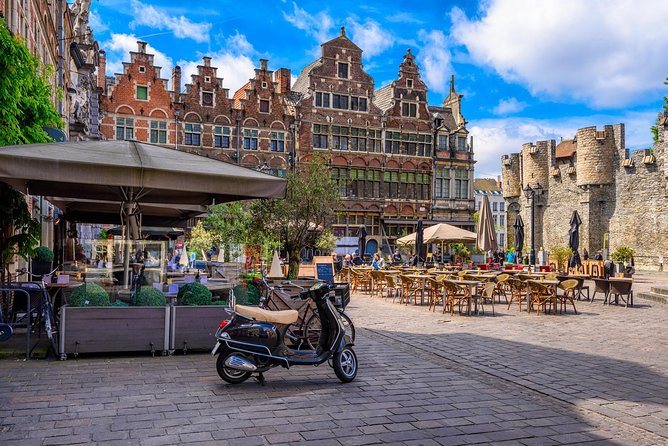
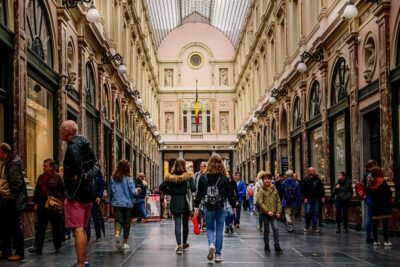
Bruges is the kind of city where you feel like you’re stepping into a model village. The tour leans into that by starting with scene-setting right away, then zooming into the medieval “why,” not just the medieval “what.”
From Bargeplein to Minnewater: the quick setup that helps you look smarter
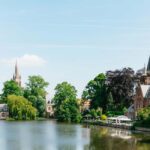
You’ll be dropped near Bargeplein (Katelijnparking) with a brief bathroom window. Then Minnewater Lake, also called the Lake of Love, becomes your first big visual moment. It’s a calm pause early in the day, and it helps you understand Bruges as more than just buildings—it’s also water, trade, and stories braided into the city’s layout.
From there, you’ll move through places that explain daily medieval life:
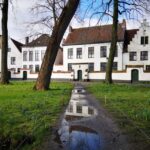
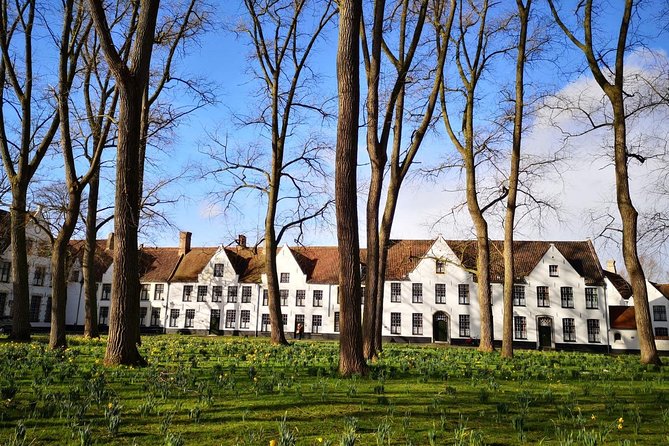
- Begijnhof (founded in 1245), where you’ll learn about a historic community of women and why the site matters
- Stoofstraat, where the guide points out how to recognize original medieval houses
- Walplein, with an explanation of Bruges beer history (a detail most self-guided walks skip)
You’ll notice a pattern: lots of stops last only minutes. That can feel rushed if you’re expecting a slow museum pace. But it works as a “map with stories” so your later free time feels less like wandering.
The Holy Blood zone and town squares: big landmarks without the confusion
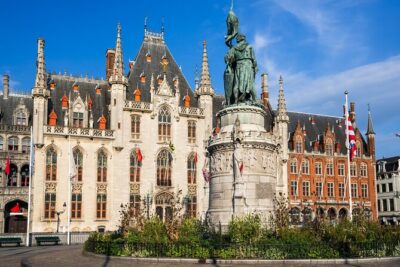
Bruges’ Burg Square area is where the city’s power shows. You’ll be pointed toward the Gothic town hall and key landmarks linked to the Basilica of the Holy Blood. This is one of those moments where the guide’s narrative pays off: the architecture and the symbolism land faster when you know what you’re looking at.
You’ll also reach the areas that Bruges photography is built on:
- Rozenhoedkaai, one of the most photographed waterfront spots, with local history explained
- Huidenvettersplein (Tanners Square), where you’ll learn how tanners worked in medieval Bruges
- St Bonifacius Bridge, including a legend tied to the bridge and a chance for photos
If you’re the type who likes to understand the “story behind the postcard,” this guided sequence will click.

Rozenhoedkaai, St Bonifacius, and the bridge-and-water photo plan
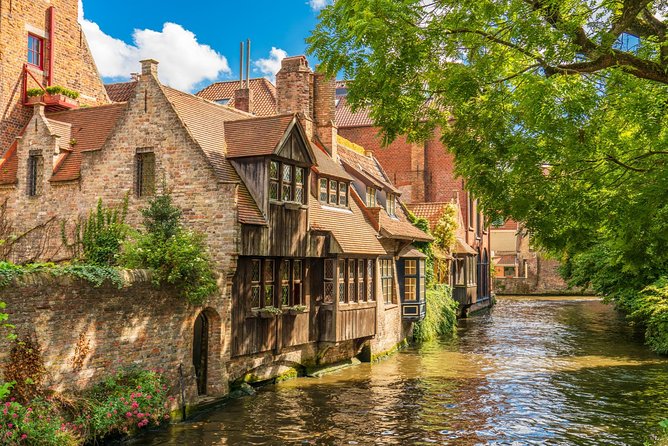
Bruges rewards good timing and good positioning. The tour gives you multiple short photo windows in spots that are both iconic and easy to miss if you’re just following your own route.
Here’s a practical way to handle it:
- Have your camera/phone ready before you reach the water edge, because the stops are short.
- Pick one “must-have” photo at each key water location (Rozenhoedkaai and the bridge stops), then enjoy the view without constantly aiming.
Stops like the small bridges and canals are also ideal because they frame Bruges’ medieval look from different angles. One bridge might show the water curve and rooftops; another might give you the backdrop for that classic skyline shot. That’s how you avoid the common day-trip problem: taking ten photos but liking none of them.
Begijnhof to Michelangelo’s Virgin and Child: what the guide adds
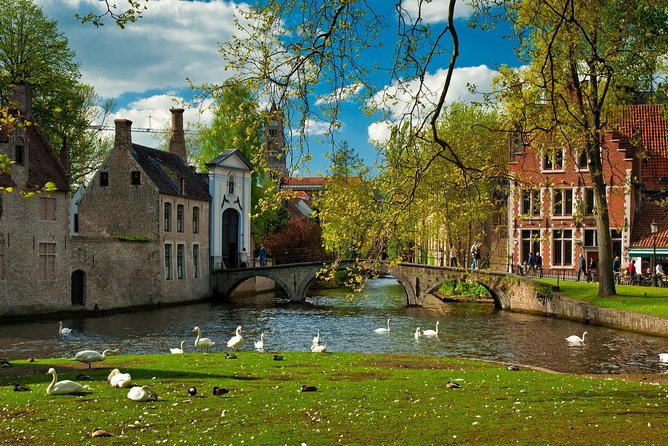
Most people come to Bruges for the look. What makes this tour work better is that it adds specific details you can carry with you as you wander.
One standout moment is Onze-Lieve-Vrouwekerk, where the guide points out curiosities of the white marble sculpture of the Virgin and Child created by Michelangelo, found inside the church. Even if you’re only seeing the exterior during the short stop, being told what’s inside changes how you look at the building afterward.
Another satisfying detail is the link between everyday life and the city’s structure:
- The guide talks about medieval health systems near Saint John’s Hospital
- You get context on the powerful Bruges family tied to Gruuthusemuseum, between the 17th and 18th centuries
These aren’t throwaway facts. They’re the kind you’ll notice later when you’re staring at a facade and wondering why it’s different.
Bruges free time plus Chocolalino: chocolate with a logic lesson
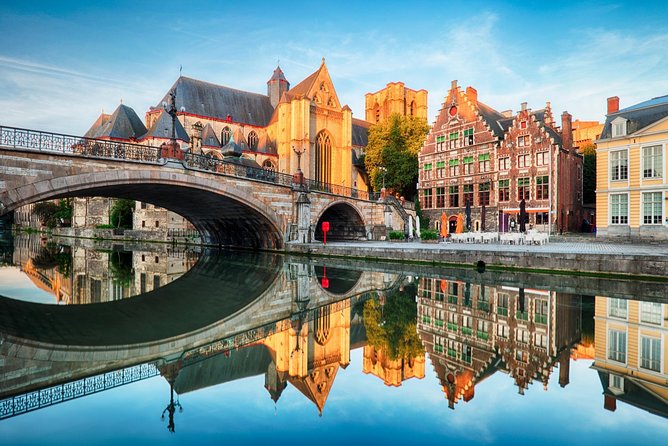
After the guided run, you’ll get about 1.5 hours of free time in Bruges (it can vary depending on traffic and group pace). This is your chance to do what the guide can’t: slow walking, shopping, and choosing a lunch place that fits your mood.
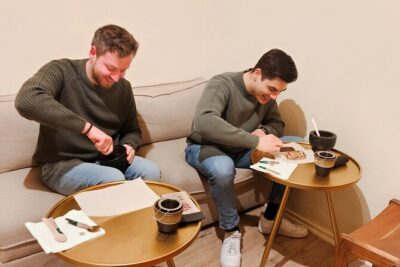
Then there’s a chocolate moment at Chocolalino, an artisan shop. You’ll have a chance to taste artisan chocolates and also get practical guidance on how Bruges chocolate is made and how to spot handmade versus industrial chocolate. That’s more useful than just buying something sweet.
If you want the best value from this stop, taste first, then buy only if you truly like it. A lot of people overspend on day trips when they’re tired and hungry. Build your decision around the flavor, not the hype.
Ghent: a slower-feeling city that still moves fast with the guide
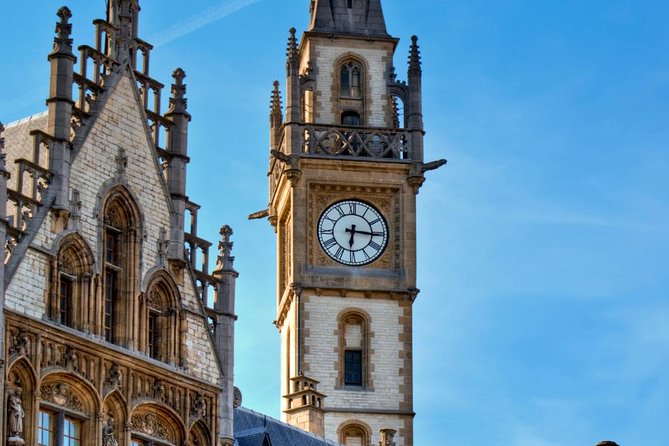
Once you switch to Ghent, the vibe changes. Bruges can feel like a maze of canals; Ghent feels bigger and more civic, with grand buildings and longer sightlines.
The tour arrives in Ghent and walks into the center to start the guided portion. You’ll pass through the main landmarks with enough time to understand what each one is for, not just what it looks like.
Stadhuis, Belfort, and St. Bavo’s Cathedral: the big three
You begin at Ghent Town Hall (Stadhuis), where the guide explains the building’s architectural styles. Then you’ll reach Het Belfort van Gent, the iconic tower with the history around its dragon.
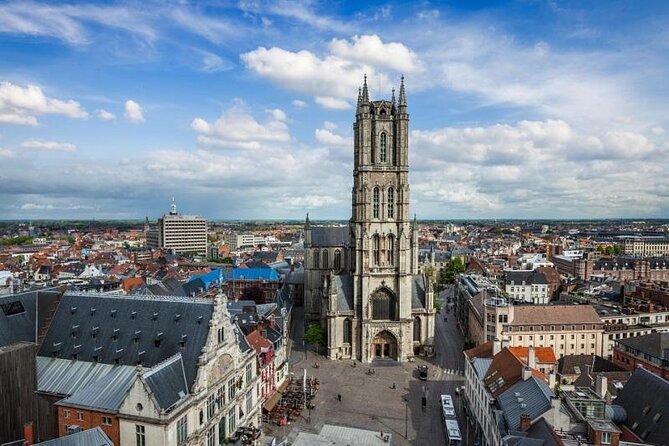
Finally, St. Bavo’s Cathedral becomes a highlight for many people. You’ll discover the cathedral’s exterior and interior, and you’ll learn that it houses the famous Van Eyck brothers painting The Adoration of the Mystic Lamb, described as the most stolen painting in history. That detail gives the cathedral weight. It’s not just a pretty church; it’s connected to centuries of meaning and drama.
Smaller stops that make the city feel alive
The Ghent walk includes several helpful “supporting characters”:
- Saint Nicholas Church, where you’ll hear that Belgian churches organize concerts and other events
- Masons’ Guild Hall, including what guild houses are and why they’re distinctive
- Korenmarkt, with the story behind the building where the post office used to be
- St Michael’s Bridge, where you’ll get incredible photo angles and a note on the tower history of the nearby church
These are the stops that stop Ghent from feeling like only Town Hall and cathedral photos. You start seeing the city as a system.
Graslei, Korenlei, OOOST, and the cuberdon street moment
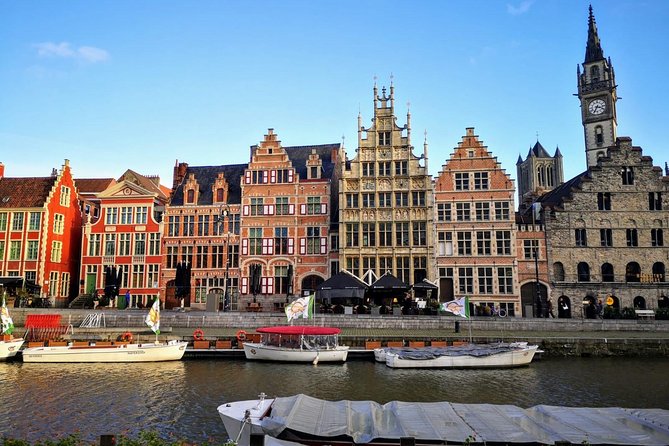
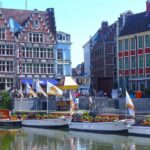
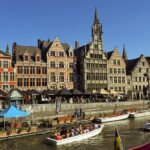
Now you’re in the riverbank zone. The tour follows the banks of the Lys River at Graslei and Korenlei, with time for photos. You’ll learn about the surrounding canal buildings such as a grain house and you’ll also be shown reference to the current Marriott Hotel.
Then comes OOOST, a meat house from the 15th century that was originally a covered market. It’s another “why is this building here?” stop. You’re getting a sense of Ghent as a trading city, not just a monument collection.
At Kleine Vismarkt, there’s a tiny street-stall stop. The seller tells you about the sweet cuberdon. It’s brief, but it’s memorable because you’re tasting the food culture in one small bite-sized moment.
Timing, walking, and the realistic day-trip fatigue factor
Even with a good guide, this is a marathon-style day. You’ll be walking in both cities, and many of the guided stops are short. That means two things:
- You need comfortable shoes.
- You need a “quick photo, then look” mindset.
One more timing reality: the day’s order and pacing can be sensitive. Some reports described the order changing, which led to less time in Bruges for those who wanted more. That doesn’t mean it always happens, but it’s a reason to treat free time as flexible rather than guaranteed.
If you care a lot about spending extra time in Bruges, aim to use the guided knowledge to get oriented fast during the bus-and-walk portion. Then you can spend your free time where you actually want it.
Price and value: does $54.45 make sense?
At $54.45 per person, you’re paying for two main things: transportation and a guided explanation in two UNESCO-listed medieval city centers. That’s the value equation.
You’re not just buying a bus seat. You’re getting:
- round-trip coach from central Brussels
- a Spanish-speaking guide
- guided walks in both Bruges and Ghent
- multiple landmark explanations that help you understand what you’re seeing
- about 1.5 hours free time in each city
- a chocolate tasting stop included during the Bruges portion
Food is not included, so plan to budget for lunch and any snacks. But you do get enough free time to find something you actually like without rushing back to the guide.
Where the value can feel weaker is when the day is slow or the group pace runs long. Since it’s a packed schedule, you may feel like you want more time in one city. Still, most people who love Bruges and also want to see Ghent get what they came for.
Who this tour suits best (and who should pick something else)
This is a strong fit if:
- you want a guided intro to both Bruges and Ghent in one day
- you like explanations tied to specific buildings and squares
- you’re okay with walking and short stops
- you want chocolate tasting and photo-friendly stops without planning every turn
It’s less ideal if:
- you want a slow, deep dive pace in only one city
- you get cranky when schedules shift and free time feels short
- you’re hoping for lots of optional add-ons, since meals and museum-style time are not built in
Should you book this Bruges and Ghent day trip?
I’d book it if your goal is clear: see Bruges and Ghent efficiently, get guided context at major landmarks, and still have time to wander on your own. The Spanish guidance, the mix of big names like St. Bavo’s Cathedral and the practical details (from medieval everyday life to chocolate know-how) make it feel more than “just a bus ride.”
But if your heart is set on spending lots of time in Bruges alone, consider whether a two-city format is right for you. This one moves quickly by design. Bring good shoes, eat before you get hungry, and use the free time intentionally.
If you want a well-organized, story-led day trip from Brussels with strong sightseeing value, this one is an easy yes.
FAQ
What time does the tour start, and where do I meet?
The tour starts at 8:30 am at Carrefour de l’Europe, 1000 Bruxelles. The activity ends back at the same meeting point.
How much free time do I get in Bruges and Ghent?
You’ll get about 1.5 hours of free time in Bruges and about 1.5 hours of free time in Ghent (timing can depend on traffic and the group’s pace).
Is lunch or food included?
No. Food and drink are not included, but your guide will be happy to point you toward places to eat.
Do I need headphones or a radio guide?
Sometimes, radio guides with headphones are used due to Belgian regulations. You can use wired headphones with a 3.5 mm jack (not wireless), or you can buy offered disposable headphones for €1 if you don’t have them.
How long is the full day tour?
The duration is approximately 10 hours 30 minutes.
What happens if I cancel, or if the weather is bad?
You can cancel for a full refund up to 24 hours before the start time. The tour requires good weather, and if it’s canceled due to poor weather you’ll be offered a different date or a full refund.