Brussels can feel like a puzzle at first, but this tour lays it out fast. In just about 2 hours, you walk from the city’s big landmarks to a few well-chosen corners that make the old center easier to navigate later. You’ll also get a live guide to translate what you’re seeing, from ornate squares to the power of the monarchy and commerce.
I love the way this route hits Grand-Place first, so you start with the most obvious landmark and then build connections from there. I also like the small group size (up to 15 per guide), which keeps the pace human and makes it easier to ask questions while you’re right up against the buildings.
One thing to consider: the quality of the commentary can swing a bit depending on the guide. Most guides are friendly and fun, but a few guest notes complained about commentary that was too brief or rushed, so bring a little flexibility for photos and pacing.
In This Review
- Key things that make this walk worth your time
- A smart 2-hour route that teaches you how Brussels works
- Grand-Place first: the square that explains everything
- Les Galeries Royales Saint-Hubert: a historic shopping arcade worth lingering in
- Bourse de Bruxelles: the money-and-stone side of the city
- Royal Palace area: monarchy in neoclassical form
- Éverard t’Serclaes monument: the “touch for luck” kind of history
- Manneken Pis and the final surprise moments
- Price and value: $38 for 2 hours is a fair deal, if the guide sings
- How to make the most of it (and avoid the common tour annoyances)
- Who this tour suits best
- Should you book this Brussels walking tour?
- FAQ
- How long is the Brussels walking tour?
- What’s the price per person?
- Is the tour offered in English?
- Do I need to pay admission at the stops?
- Where does the tour start?
- How large is the group?
- Is a mobile ticket provided?
- Does the tour return to the start?
- Is cancellation free?
Key things that make this walk worth your time
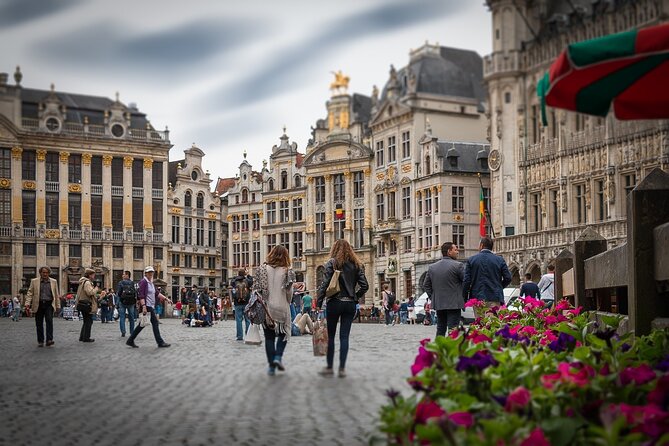
- Grand-Place, UNESCO-listed square as your easy starting anchor
- Les Galeries Royales Saint-Hubert (1847) with a glass-roof arcade feel and plenty of stops to spot local life
- Bourse de Bruxelles exterior views tied to Brussels’ financial legacy
- Royal Palace area and gardens for that monarchy-meets-city-center contrast
- Everard t’Serclaes monument lore and the legend behind the worn statue
- Manneken Pis photo stop, plus a couple more quick surprises along the way
A smart 2-hour route that teaches you how Brussels works
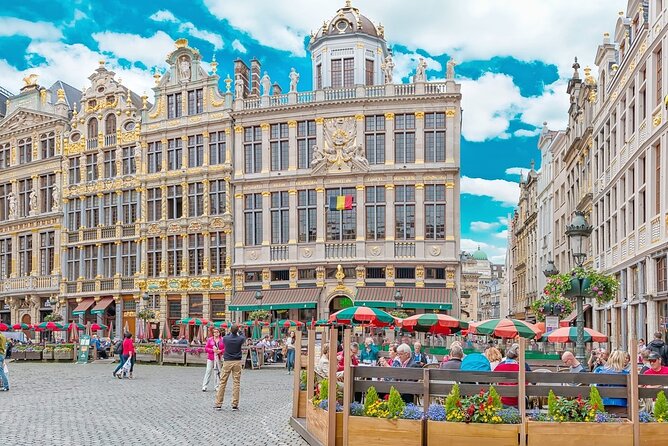
If you only have a short window, this is the kind of city walk that helps you get oriented quickly. You start at Grand Place (right where most first-time photos happen anyway), then you gradually move into the arcades, the finance side of town, and the monarchy side of town. By the time you circle back to the same area, the old center feels less random.
This tour is designed for real walking, not check-the-box bus sightseeing. With a duration of about 2 hours and multiple stops at roughly 20 minutes each, you get short bursts of attention at key spots, plus time to look up and take a few photos without feeling like you’re sprinting.
I also appreciate that it’s offered in English and capped fairly tightly. That matters in Brussels, where cobblestones can slow you down and crowds can make it hard to find the group.
You can also read our reviews of more walking tours in Brussels
Grand-Place first: the square that explains everything
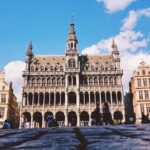
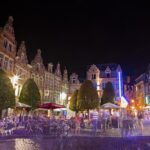
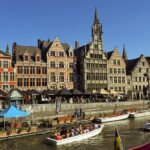
Grand-Place is the obvious starting point, and it’s also the best one. This UNESCO World Heritage square dates to the 15th century and is surrounded by opulent guildhalls, the Town Hall, and the King’s House. Even before you hear details, your eyes pick up the mix of styles—Gothic, Baroque, and Louis XIV—layered into one dramatic backdrop.
What I like about beginning here is that it sets a visual baseline for the rest of the walk. Once you understand what the “grand” center looks like, the later stops start to make more sense: commerce next, authority next, then smaller reminders of local history.
A practical tip: this square works best when you pause in place rather than trying to walk through too fast. Give yourself a moment to look at the façades across the way, then turn slowly. You’ll catch more detail that way than rushing along the perimeter.
Good to know: the stop is listed as free admission time-wise, so you’re not waiting around for ticketing or entry procedures.
Les Galeries Royales Saint-Hubert: a historic shopping arcade worth lingering in
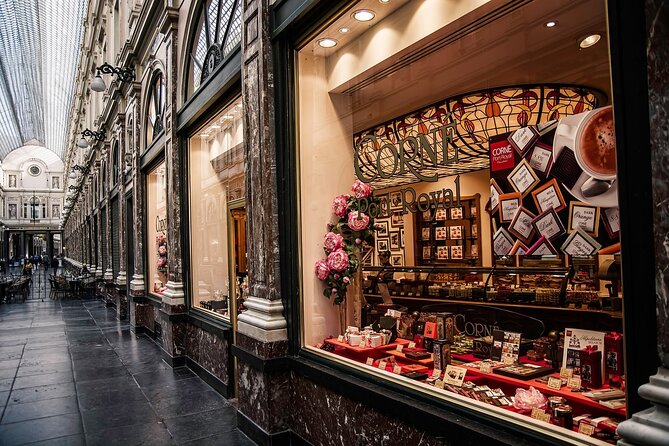
Next you move into a totally different vibe: Les Galeries Royales Saint-Hubert. This is one of the world’s oldest shopping galleries, founded in 1847. The highlight is the ornate glass roof, which turns the arcade into a bright indoor street. You’re not just passing it—you’re stopping long enough to notice the architecture and how the space still functions today.
If you like travel that mixes old and everyday, this is where that shows up. You’ll see a refined lineup of boutiques and chocolatiers, and the presence of theaters adds to that “this is still a living neighborhood” feel.
One small drawback: arcade spaces can be busy, and photos sometimes get blocked by foot traffic. The solution is simple. Take your shot first, then shift a few steps aside and look back up at the glass roof. That way you still get the main visual payoff even if people interrupt your angle.
And yes, this stop pairs well with your Brussels food cravings—chocolate is basically the city’s love language.
Bourse de Bruxelles: the money-and-stone side of the city
Then it’s on to La Bourse de Bruxelles, the Brussels Stock Exchange. The building is a mid-19th-century neoclassical masterpiece, and the architecture is meant to signal stability and authority. Expect an impressive façade and Corinthian columns that pull your eyes upward.
Even if you don’t care about finance, this is a great stop because it shows you Brussels isn’t only decorative. The city also has power structures in stone, and the guide’s job is to connect that look to the economic legacy behind it.
You’ll likely get a clearer sense of how the center developed when you see how art, design, and commerce share the same physical space. It’s a nice mental shift from the fairy-tale ornament of Grand-Place and the glass-roof elegance of the arcade.
The stop is also listed as free, so you’re mainly paying attention and walking, not dealing with entrance rules.
Royal Palace area: monarchy in neoclassical form
From finance to monarchy is a smooth mental jump on this route, and that contrast is part of the value. At Palais Royal de Bruxelles, you’ll see a neoclassical palace built in the early 20th century. It’s the official residence of the Belgian monarch and also plays a central role in ceremonial functions and state affairs.
What makes this stop memorable is the setting. The palace sits atop the city, and the gardens are part of the experience. You get a sense of scale: Brussels isn’t just flat streets and narrow lanes; there are places where the city feels elevated and formal.
A quick practical note: gardens can give you a bit of visual variety after several dense architectural stops. If you want a mental reset for photos, this is a good spot to take a longer look before continuing.
Also, this stop is listed with free admission ticket time. That means your guide can focus on interpretation rather than entry logistics.





Éverard t’Serclaes monument: the “touch for luck” kind of history
Near the Grand-Place area, you’ll pause at the Monument a Everard t’Serclaes. This one is smaller than the big buildings, but it’s exactly the kind of detail that makes a walking tour feel human.
The monument commemorates a medieval hero who defended Brussels in the 14th century: Éverard t’Serclaes. There’s also local legend tied to the statue—touching it is said to bring good fortune. Over time, the statue’s appearance has worn down from countless hands reaching for luck.
That small story does a lot for the feel of the city. It turns a statue into a living tradition rather than a fixed object, and it shows how residents use public space for hope, not just tourism photos.
One consideration: because this is a stop connected to legend, it can feel a little brief if your guide’s focus is more on buildings than on stories. If you care about folklore and small-town texture, this is where you’ll hope your guide spends a bit more time chatting.
Manneken Pis and the final surprise moments
Toward the end, you’ll reach Manneken Pis. After that, there are a few more stops along the way, kept as surprises. The idea is smart: it keeps the route from feeling fully scripted, and it can help you spot things you might otherwise pass without noticing.
Even if you already know the name, the value of this part of the walk is the pacing. You’ll see the stop in the flow of the tour, not as a standalone sprint. That’s the difference between ticking off a site and building a sense of how Brussels’ center connects.
Also, this is a good time to ask practical questions. I find that when you’re near a cluster of recognizable landmarks, the guide can answer “where should I go next” in a more useful way than earlier, when you’re still orienting.
From the guidance style on this tour, you can expect at least some tips. Several guides on this route were noted for offering suggestions on places to eat—think waffles, chocolate, and Belgian comfort food—as you walk. That’s not guaranteed for every guide, but it often shows up naturally when you pass the food-and-sweets areas.
Price and value: $38 for 2 hours is a fair deal, if the guide sings
At $38 per person for about 2 hours, this tour lands in the “worth it for orientation” range. Here’s why. You’re paying for a professional guide, guided walking, and a route that focuses on recognizable landmarks plus the smaller story-driven moment with Éverard t’Serclaes. You’re also benefiting from a structure that keeps you from building your own route blindly.
The other value point is that many stops are marked with free admission for the time you’re there. So you’re not spending your budget on attraction entry fees while your guide does the real work: connecting details, pointing out what to look for, and giving you context so the city feels less like a photo album.
Where value can drop is exactly what a few guests complained about: too little historical depth or too many short, surface-level sentences. This isn’t unusual across all walking tours—some guides are storytellers, some are more “point and move.” The best way to protect yourself is to treat the tour as an orientation tool and come ready to ask questions. If the guide gives you room to talk, you’ll likely leave happier.
How to make the most of it (and avoid the common tour annoyances)
Brussels is full of cobblestones, so wear shoes you trust for a real walk. I’d also suggest you bring the mindset of a street-level explorer. The guide can’t pause you for long, but if you slow yourself down at the best photo points, you’ll get more out of the 20-minute stop rhythm.
Also, the meeting area around Grand-Place can feel crowded with lots of tours at the same time. Don’t be shy about arriving early and scanning for your guide and group. With so many groups converging, being punctual matters more than usual.
Finally, pace. Some people felt the tour moved quickly or didn’t leave enough time for photos at every stop. That’s not a reason to skip—it’s a reason to plan for one or two “deep look” moments on your own (like Grand-Place or the palace area) while treating the other stops as quick, informative photo breaks.
Who this tour suits best
This walk is a strong fit if:
- You want a first-time orientation for Brussels’ historic center.
- You like architecture that changes style as you move from square to arcade to civic buildings.
- You enjoy practical city tips that can help with your next meal or self-guided route.
It might be less satisfying if you’re expecting a heavy lecture at each stop. Even when commentary is strong, the format is built for movement and short pauses, not long museum-style stories.
The good news is that the group size and the stop selection help a lot. When your guide is enthusiastic and answers questions well, the tour becomes more than sightseeing—it turns into a map made of context.
Should you book this Brussels walking tour?
Yes, I think you should book it—especially as your first Brussels walk. The combination of Grand-Place, a rare look inside the Saint-Hubert arcade, and the public architecture of finance and monarchy gives you a clear mental picture of the city’s center in just 2 hours.
My main advice: come with comfy shoes, accept the paced format, and be ready to ask questions. If you do that, you’ll get the value you’re paying for. If you’re only satisfied with very long, detailed storytelling at every stop, you might want to pair this with another day of slower wandering on your own.
If you’re trying to make the most of a tight schedule, this is a solid, budget-friendly way to see the highlights and understand what you’re looking at while you’re there.
FAQ
How long is the Brussels walking tour?
The tour lasts about 2 hours.
What’s the price per person?
It costs $38.00 per person.
Is the tour offered in English?
Yes, the tour is offered in English.
Do I need to pay admission at the stops?
Admission tickets are listed as free for the stops included in the tour.
Where does the tour start?
The meeting point is Grand Place 4, 1000 Bruxelles, Belgium.
How large is the group?
There’s a maximum of 15 participants per guide, and the tour has a maximum of 45 travelers overall.
Is a mobile ticket provided?
Yes, it includes a mobile ticket.
Does the tour return to the start?
Yes, the activity ends back at the meeting point.
Is cancellation free?
Yes. You can cancel up to 24 hours in advance for a full refund.