REVIEW · BRUSSELS
Brussels: 2-Hour Dark Side of Brussels Private Tour
Book on GetYourGuide →Operated by Legends Experiences · Bookable on GetYourGuide
Brussels has a second, darker face. This private, lantern-lit tour pairs classic Brussels landmarks with grim stories you rarely hear, from revolts and executions to the quiet corners where the city’s past lingers.
What I like most is the mix of big sights and street-level detail: you start at Grand-Place and then peel away from the usual path toward places like Anneessens Tower and Saint-Jean Square. I also like how the tour doesn’t just point at buildings; it gives you context for the mystery at places such as Notre-Dame du Sablon, and it ends with a strong payoff view from the Palace of Justice area.
One thing to plan for: it’s a walking tour with hills, and it runs rain or shine. Also, there’s no food included, so if you’re doing this after a long day of sightseeing, you may want to eat first.
In This Review
- Key things to know before you go
- Lanterns, Revolts, and Real Streets: Why This Tour Feels Different
- Where It Starts at Grand Place 8 (and How to Spot Your Guide)
- Stop-by-Stop: From Grand-Place to the Church of Our Lady of the Chapel
- Grand-Place: Splendor with a Warning in the Details
- Place du Grand Sablon: The Church Area that Feels Like a Secret
- Place Saint-Jean: A Corner You’ll Remember Later
- Anneessens Tower: When the “Second Brussels” Shows Up
- Rue de Rollebeek: Short Walk, Sharp Stories
- Church of Our Blessed Lady of the Sablon: Mystery in Stone and Symbol
- Palace of Justice: The Best View, and a Strong Ending Beat
- Place du Petit Sablon and Place du Jeu de Balle: Little Stops, Big Atmosphere
- Notre Dame de la Chapelle: A Quiet Finish
- What Your Guide Adds (and Why That Matters Here)
- Price and Value: Is $199 Per Group Worth It?
- Timing, Rain, and Your Feet: How to Prepare Like a Pro
- Who Should Book This Dark Side of Brussels Tour?
- Should You Book This Private Dark Side Tour?
- FAQ
- How long is the private Dark Side of Brussels tour?
- What does it cost?
- Where does the tour start?
- Where does the tour end?
- What languages are available?
- Is food included?
- Does it run in bad weather?
- Is the tour wheelchair accessible?
- Can I cancel, and what’s the payment option?
Key things to know before you go
- Lantern light storytelling: expect a darker, more atmospheric pacing than a daytime stroll
- Grand-Place, then off the main drag: you’ll see famous squares and then quieter pockets like Saint-Jean Square
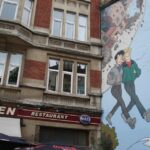
- Anneessens Tower and the Comic Wall: the tour connects different layers of Brussels culture
- Notre-Dame du Sablon on the route: mystery and history meet in the church area
- Palace of Justice views: the ending stretch gives you a memorable city overview
Lanterns, Revolts, and Real Streets: Why This Tour Feels Different
If you only know Brussels from chocolate shops and the postcard corners of the center, this tour reframes the whole city. In about two hours, you’ll walk through a sequence of squares and churches where stories of revolt, punishment, and forgotten people sit behind the elegant facades.
The best part is the tone. Evening light changes the mood, and your guide uses lantern-lit storytelling to tie together what you’re seeing with the darker events that shaped Brussels. It’s not about scaring you for fun. It’s about helping you understand how a modern capital can still carry older, harsher memories.
Because it’s a private group, you can keep a steady pace that works for you. One reviewer even noted that hills were manageable because they could slow down as needed for a parent with a knee issue—something that’s hard to do on crowded group tours.
There’s also a practical upside: short stops. You’ll spend about 10 minutes at most points along the walk, so you never feel stuck listening in one place too long.
You can also read our reviews of more private tours in Brussels


Where It Starts at Grand Place 8 (and How to Spot Your Guide)
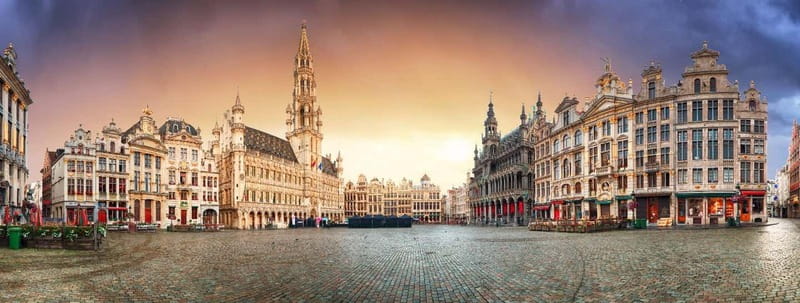
The tour starts at Grand Place 8, in front of the city hall. Look for the red umbrella—it’s your quickest way to find the guide at the busiest part of the day.
You’ll begin right in the center, with a brief orientation at Grand-Place. That first stop matters because it sets the tone for what comes next: the idea that Brussels’ splendor has a sharper underside, and that the city’s power and conflicts show up in architecture, squares, and street patterns.
Since this is an evening walk, I’d plan to arrive a few minutes early so you’re not rushing around the square. Comfortable shoes help a lot here—your guide will be moving you steadily through the route.
Stop-by-Stop: From Grand-Place to the Church of Our Lady of the Chapel
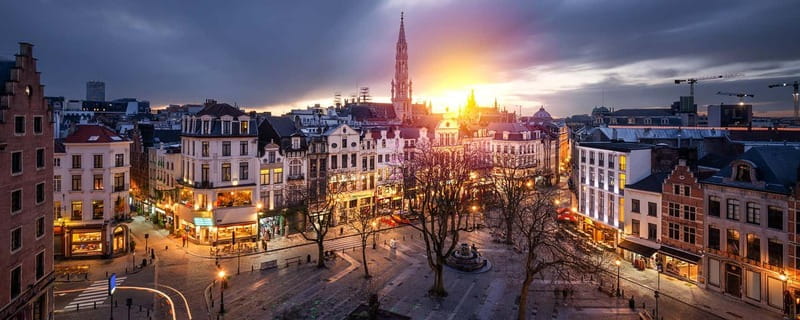
This tour is built like a story with chapters. Each stop gives you a visual anchor, then your guide connects it to revolts, punishments, and the people caught in the machinery of power.
Grand-Place: Splendor with a Warning in the Details
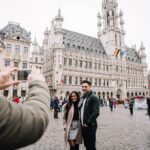
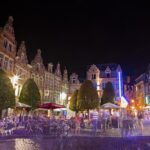
You start with Grand-Place, the big iconic square you’ll recognize instantly. You’ll get a guided walk that frames the area not just as beautiful stonework, but as a space shaped by authority and conflict.
Even if you’ve visited in daylight, it hits differently at night. The guide’s stories turn the square into a stage—helping you see how public spaces can become political, and how history leaves fingerprints on what looks “timeless.”
Place du Grand Sablon: The Church Area that Feels Like a Secret
Next you head to Place du Grand Sablon, where the atmosphere shifts from the central crush to a quieter, more contemplative zone. This stop is about setting up the Sablon theme—history, mystery, and symbolism all in one area.
Because the tour keeps you moving, you don’t get stuck in one view for too long. That short, guided timing works well if you’re the type who likes to keep walking and collecting impressions.
You can also read our reviews of more tours and experiences in Brussels

Place Saint-Jean: A Corner You’ll Remember Later
At Place Saint-Jean, you’re in a section of Brussels that feels less rehearsed for tourists. This is one of the places that helps you understand the city beyond its poster landmarks.
It’s also a key moment in the tour’s emotional arc: you go from the showpiece squares into streets and spaces where the city’s past feels closer to the ground.
Anneessens Tower: When the “Second Brussels” Shows Up
Then comes Anneessens Tower, a stop that’s both specific and memorable. The guide uses this area to talk about the darker side of Brussels that’s rarely discussed when you’re just browsing the center.
It’s a practical stop too. You get a sense of orientation—how the city is arranged, how neighborhoods connect, and where power and ordinary life intersected.
Rue de Rollebeek: Short Walk, Sharp Stories
You’ll make a stop on Rue de Rollebeek, where the tour keeps its momentum. This section is designed to show you how stories don’t only live in museums or big monuments—they also live in ordinary streets.
It’s also where your guide’s pacing matters. If you like banter and lively storytelling, this is the kind of stretch where it often clicks.
Church of Our Blessed Lady of the Sablon: Mystery in Stone and Symbol
Back near the Sablon zone, you’ll visit the Church of Our Blessed Lady of the Sablon. Expect a focused explanation and a sense that this church area has layers.
One of the tour’s selling points is the blend here: history doesn’t just sit in the past; it shows up in symbolism, architecture, and the way the square and church relate to the surrounding city.
Palace of Justice: The Best View, and a Strong Ending Beat
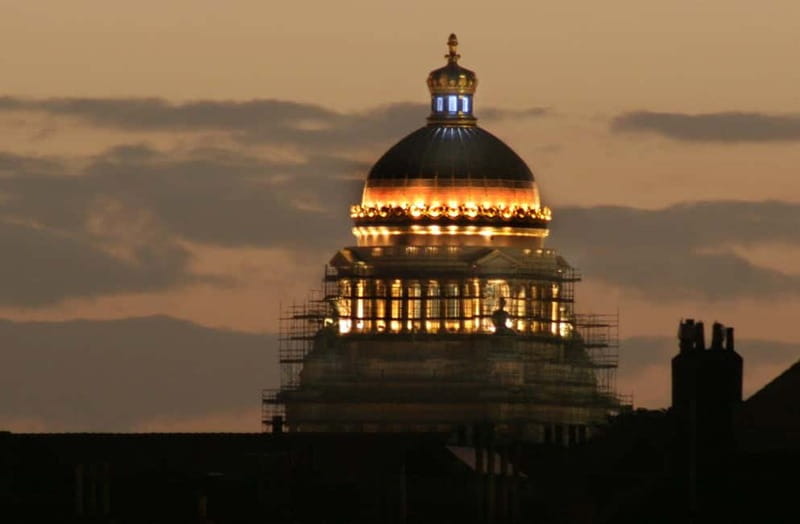
The walk leads you to the Palace of Justice, where you get a strong finale. The guide points you toward the best view of the city, turning the end stretch into more than just “we’re done.”
This stop works especially well after the grim stories earlier on. You end with perspective—Brussels as a place that moved on, but never erased what came before.
Place du Petit Sablon and Place du Jeu de Balle: Little Stops, Big Atmosphere
From the Palace of Justice area you continue through Place du Petit Sablon and then toward Place du Jeu de Balle. These brief visits keep the rhythm of the story moving forward.
You’ll get enough context to understand why these locations matter, without losing time to long, tiring detours. It’s a good way to see more of the center’s texture while still keeping the tour tight.
Notre Dame de la Chapelle: A Quiet Finish
The tour concludes near Notre Dame de la Chapelle and you finish at the Church of Our Lady of the Chapel area. It’s a calmer ending point that feels fitting after the more intense themes.
One note: the overall description says the tour ends back at the meeting point area, while the walking sequence ends at the chapel church. Either way, expect a final “settle in and wrap it up” moment at the end of the route.
What Your Guide Adds (and Why That Matters Here)
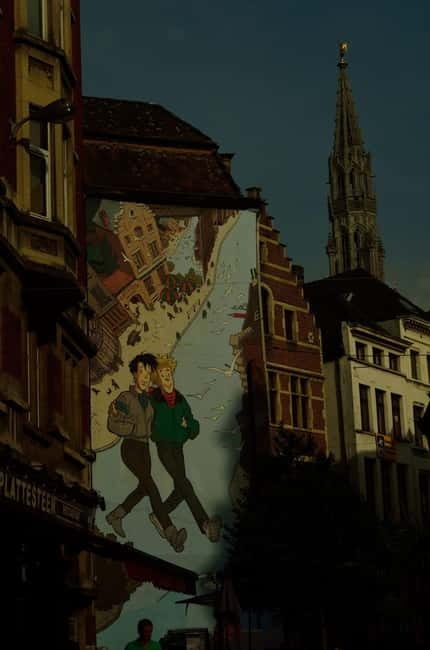
This is the kind of tour where the guide’s voice is half the product. The tour is led by a professional private guide and runs in English, Dutch, or French.
Some guides are known for mixing heavy topics with a sense of humor. For example, one guide named Sebastián has a reputation for keeping the stories engaging even when the subject matter turns somber. Another guide named Dan is known for being personable and friendly, giving context at iconic sites and also at quieter corners. Rahain is highlighted for fascinating “Grimm-style” Brussels tales and lots of banter.
You don’t need a background in European history to enjoy it. The best guides keep the explanations human—what people faced, what power looked like from the street, and why Brussels’ streets still feel charged when you slow down and listen.
Price and Value: Is $199 Per Group Worth It?
At $199 per group up to 2, the cost is about the price of a solid dinner plus a show. That’s not “cheap,” but it’s not trying to be.
Here’s the value math that works for me:
- You’re paying for privacy. You’re not competing for attention, and you can go at your pace on the hills.
- You’re paying for a focused night route. Two hours in the right areas with the right stories saves you the effort of piecing clues together on your own.
- You’re paying for professional context. The tour’s themes—revolts, executions, torture techniques, and forgotten heroes—are the sort of content that’s hard to assemble casually from guidebooks without missing the connections.
If you’re traveling as a pair, this price can feel fair. If you’re solo, it might feel steep. The upside is still real, though: the private format is the point, and Brussels at night is when the “dark side” concept actually makes sense.
Timing, Rain, and Your Feet: How to Prepare Like a Pro
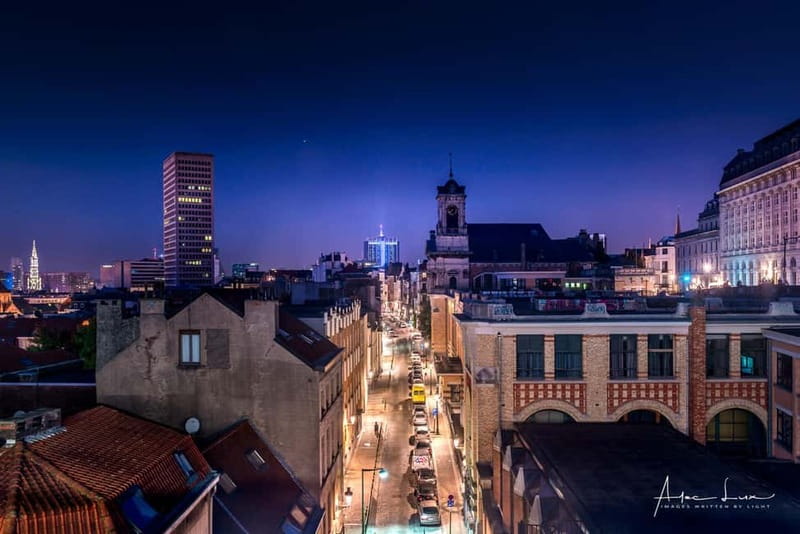
This is a rain or shine tour, and it’s an evening walk. So pack like a realist.
- Wear comfortable shoes. The route includes hills, and that’s part of the experience.
- Dress for cool evening weather. Even in mild months, lantern-lit walking can feel brisk.
- If you’re traveling with someone who has mobility limits, the good news is that the tour is wheelchair accessible. Just remember hills are part of the route, so ask your guide how they’ll handle pacing for your situation.
No food is included. If you’re tempted to wait until the end to eat, you’ll probably feel the clock. I’d eat beforehand and keep water on hand.
Who Should Book This Dark Side of Brussels Tour?
Book it if you want:
- A private night walk that mixes well-known places with lesser-visited corners
- A guide who can connect architecture to stories of power, punishment, and people
- A tour that includes Anneessens Tower and the Sablon area, not just the central postcard spots
Skip it or consider a lighter option if you:
- Hate walking or struggle with hills
- Want a purely upbeat evening (this is intentionally darker in tone)
- Are looking for food and drink as part of the experience (none is included)
Should You Book This Private Dark Side Tour?
Yes, if you like your Brussels with context and contrast. This tour turns iconic landmarks into story anchors and uses nighttime atmosphere to make the darker past feel real without turning it into shock value.
I’d also recommend it as a companion to a daytime history tour. When you see the daytime “why” first and then hear the nighttime “how it hurt people,” the city becomes easier to understand—and harder to forget.
One final tip: bring curiosity, not a checklist. The route works best when you let the guide connect the dots for you.
FAQ
How long is the private Dark Side of Brussels tour?
It lasts 2 hours.
What does it cost?
The price is $199 per group for up to 2 people.
Where does the tour start?
It starts at Grand Place 8, in front of the city hall. Look for the red umbrella.
Where does the tour end?
The activity ends back at the meeting point, and the walking route finishes at the Church of Our Lady of the Chapel.
What languages are available?
The live guide is available in English, Dutch, and French.
Is food included?
No. Food and other drinks are not included.
Does it run in bad weather?
Yes. The tour takes place rain or shine.
Is the tour wheelchair accessible?
Yes, it is wheelchair accessible.
Can I cancel, and what’s the payment option?
You get free cancellation up to 24 hours in advance for a full refund, and you can reserve now & pay later.