REVIEW · BRUGES
Explore Bruges in 60 minutes with a Local
Book on Viator →Operated by LocalBini - The go-to platform for Experiences by Locals in Europe · Bookable on Viator
Bruges clicks fast on this guided walk. In about an hour, you get a local 101 plus a smart route through Markt, Burg, Dijver, and Rozenhoedkaai, so you know where to look next. I also like the small group up to 8, which keeps it conversational and gives you room to ask questions. The trade-off: it’s short, so you won’t replace a longer day of museums or slow wandering.
I love that the walk finishes at Begijnhof Ten Wijngaerde, which feels like a calm exhale after the main squares and canals. You’ll also leave with personalised recommendations—people I’ve seen get guides like Patrick, Guy, and Mario often pick up local ideas for beer, plus where to find the best chocolate and waffles.
In This Review
- Key highlights worth knowing
- Why 60–90 minutes is the right length for Bruges
- Start at Eiermarkt and end at Begijnhof Ten Wijngaerde
- Markt Square: the easiest place to learn how the city works
- Burg Square and the City Hall area: government in medieval form
- Dijver canal stroll: art shops and that water-level perspective
- Rozenhoedkaai: the famous photo spot, explained
- Begijnhof Ten Wijngaerde: the quiet courtyard ending
- Local guide energy: conversation, not just facts
- Local recommendations that help you plan the rest of your day
- Price and what makes it good value
- Who should book this Bruges walk
- Should you book it?
- FAQ
- How long is the Bruges walk?
- What languages is the tour offered in?
- How many people are in the group?
- Where do we meet, and where does the tour end?
- What stops are included?
- What’s included in the price?
- What is not included?
- Is there free cancellation?
- Are service animals allowed, and is it suitable for mobility limitations?
Key highlights worth knowing
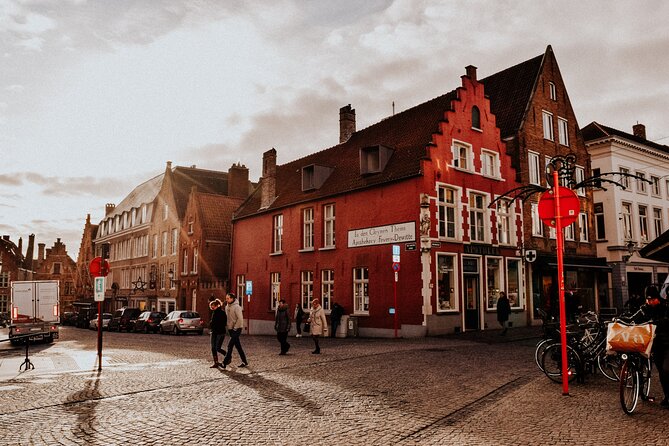
- A quick Bruges orientation that makes later self-guided exploring easier
- Small-group feel (up to 8 people) with an adaptable, conversation-style pace
- Rozenhoedkaai viewpoints plus canal-side sights in a single stretch
- Begijnhof Ten Wijngaerde as a quiet ending with whitewashed houses and a courtyard
- Local recommendations that can steer you toward classic sweets and local beer
Why 60–90 minutes is the right length for Bruges
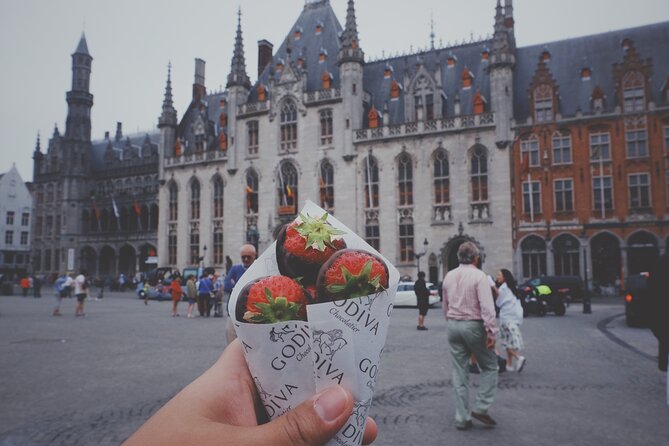
Bruges is compact, but it can still feel like sensory overload on day one. This walk gives you a clean “start here” map in real time, moving through the core sights you’ll want to return to later. You spend less effort figuring out geography and more effort noticing details.
Because it’s designed to fit in an hour to an hour and a half, the pacing stays focused. That means you get the big visual hits—squares, canal views, the famous photo spot—and enough context to make those sights mean something.
You can also read our reviews of more tours and experiences in Bruges
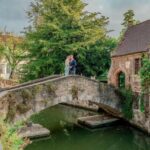
Start at Eiermarkt and end at Begijnhof Ten Wijngaerde
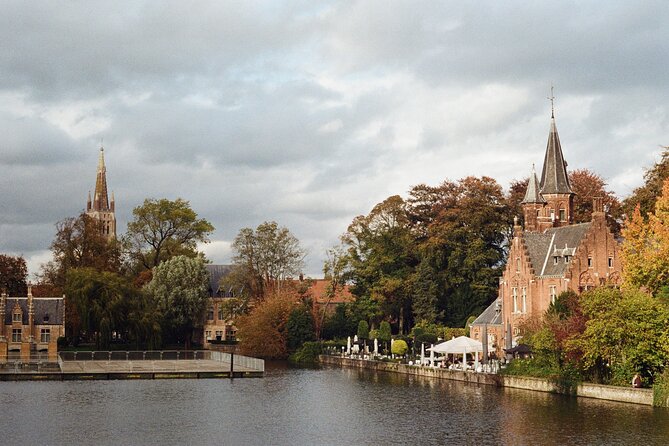
You’ll meet at Eiermarkt 3A, 8000 Brugge and finish at Beguinage Ten Wijngaerde, Begijnhof 30, 8000 Brugge. That end point matters. Ten Wijngaerde has that slower, quieter mood, so the route naturally shifts from “city center energy” to “rest-and-look” countryside-feel, even though you’re still in town.
It’s offered in English, and you get a mobile ticket, which is handy when you’re hopping between places in short gaps. The tour also runs near public transportation, so you’re not stuck crossing the whole city just to start.
Markt Square: the easiest place to learn how the city works
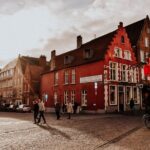
Markt is where the story of Bruges feels most obvious. You’ll stand in the heart of town, surrounded by historic architecture and streets that show how people moved and gathered here. This stop is about bearings: once you understand Markt’s role, the rest of your walk (and your later wander) gets simpler.
What I like about starting here is that it’s not just pretty scenery. You get the “why” behind what you’re seeing—enough background that you can spot patterns later, like how squares relate to civic buildings and walking routes.
Potential drawback: if you’ve already been to Bruges before and you’re craving more off-the-map corners, you might wish the tour spent slightly more time beyond the obvious center.
Burg Square and the City Hall area: government in medieval form
From Markt, the walk moves into Burg, where medieval and Renaissance influences show up in the buildings around the square. This is the part of Bruges that can feel most “power-focused”—historic governmental structures and the sense of civic importance built into the architecture.
If you enjoy stories tied to how a city organized itself, this stop pays off. You’ll get a framework for reading the buildings instead of just admiring façades. It’s also a good place to slow down a bit and look upward, because the details are easier to notice when you’re not rushing to the next canal view.
Dijver canal stroll: art shops and that water-level perspective
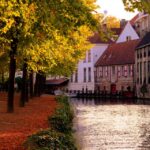
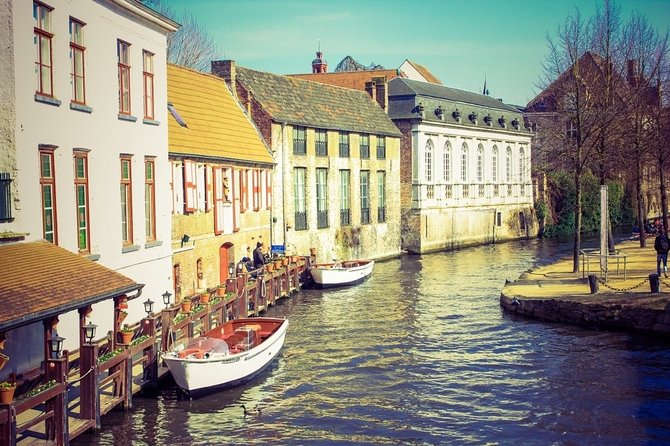
Next comes Dijver, the canal that defines so much of Bruges’ feel. You’ll walk along water views lined with spots like art galleries and antique shops, and you’ll get the kind of context that helps you understand why this city grew around canals, not just streets.
This section tends to be the most “glance-and-remember” part of the route. You can look left for views, right for shopfronts, and straight ahead for the canal line that pulls your eyes through the city. Even if you’re not shopping, it’s a scenic way to reset between the heavier-history squares.
What to consider: since canals and shop streets are part of the charm, weather can affect the mood. The tour may adjust stops depending on conditions, so it’s worth packing a light layer if the forecast looks iffy.

Rozenhoedkaai: the famous photo spot, explained
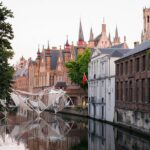
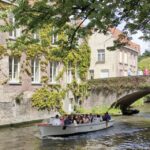
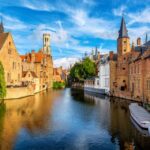
Rozenhoedkaai is the place most people picture when they think of Bruges. It’s one of the most photographed viewpoints, and your guide will help you get beyond the postcard view by pointing out what makes the angle and setting so special.
This is a stop where you’ll want to take your time, because Bruges rewards looking slowly. The canal, the buildings, and the classic composition combine into that romance-in-a-photo effect. Even if you don’t care about photos, you’ll still benefit from understanding why this spot became iconic.
The walk here is also where a good guide can make you notice details you’d miss on your own. Guides in past departures have shown different strengths—one guide focused heavily on storytelling around medieval periods, while another made the tour feel like a calm conversation rather than a lecture.
Begijnhof Ten Wijngaerde: the quiet courtyard ending
The final stop is Begijnhof Ten Wijngaerde, a historic complex built around a courtyard and surrounded by traditional whitewashed houses. It’s a powerful contrast to Bruges’ livelier center: fewer crowds, softer lighting, and the feeling that time slows down.
This is the part I’d plan as your “mental reset.” You’ve already seen the major sights, so now you can just enjoy the atmosphere and absorb the city from a different angle. If you like architecture, this courtyard layout is the kind of place where you see details in layers—walls, windows, the rhythm of the buildings around the open space.
Another practical point: because the tour ends here, it can be a smooth transition into later time in the area. If you want to keep going right after, check how you’ll get from Ten Wijngaerde back to wherever you’re staying.
Local guide energy: conversation, not just facts
The biggest difference between this kind of tour and a generic sightseeing walk is the local voice. The experience is hosted by an independent local, and the small group size (up to 8 people) helps your guide keep things personal instead of running through a script.
In past departures, guides such as Patrick have been described as warm and engaging, with stories that bring the city to life. Guy is noted for growing up in Bruges and keeping the tone more like a conversation than a barrage of information. Mario has stood out for connecting the medieval period with Flemish artists, which is great if art and cultural context are your thing.
Even if you don’t identify as an “history person,” you’ll likely find this style useful. You get quick context that makes what you see later feel less random.
Local recommendations that help you plan the rest of your day
A short walk should do more than point out landmarks. It should leave you with choices. This experience includes personalised recommendations, and guides have shared suggestions tied to food and drink—like local beer and places for classic chocolate and waffles.
You can use that immediately. If you’re mapping the rest of your time in Bruges, ask your guide what’s best based on your timing and preferences: sweet tooth now or later, casual lunch versus something more sit-down.
One thing I appreciate is that you can get advice without needing to commit to a tour-heavy schedule. With the city’s layout, a couple of smart recommendations can save you from wandering around hungry.
Price and what makes it good value
At $94.12 per person, this is not a budget-only option. But for Bruges, short guided time can be good value when you’re trying to maximize understanding, not just check boxes.
Here’s why it can feel worth it:
- You’re paying for a local guide who can explain what you’re seeing while walking, instead of you reading everything off a phone.
- The group stays small (up to 8 people), which usually means more interaction and less “watch from a distance” energy.
- You’re getting personalised recommendations, which can translate into better choices for food and sights later.
What’s not included also matters. You’ll need to cover personal expenses, and entry tickets for public transportation, museums, and monuments are not included. So if you’re planning to add museums afterward, budget separately. The tour is best seen as an orientation + highlights walk, not an all-in ticket bundle.
Who should book this Bruges walk
This experience is a strong fit if you:
- want a first-pass understanding of Bruges without committing to a full day
- prefer asking questions and learning from a local voice
- like the classic sights—squares, canals, Rozenhoedkaai—and want them explained
It may not be the best fit if you:
- need a fully mobility-friendly route, because it’s not recommended for guests with impaired mobility
- want long museum time or slow, deep exploring, since the format is designed for quick highlights
Most people can participate, but the tour’s walking nature still matters. If your day includes a lot of other physical activity, plan rest and keep your schedule realistic.
Should you book it?
Yes, I’d book it if you’re arriving with limited time and want Bruges to make sense fast. The biggest win is leaving with mental connections: which squares link to which stories, why the canal matters, and why Rozenhoedkaai became the signature view.
If you already know Bruges well and you’re mostly chasing specific niche interests, you might find this too short or too centered on the main highlights. But for most first-time visitors, a 60–90 minute local-guided start can turn a chaotic first day into a confident one.
FAQ
How long is the Bruges walk?
It runs about 1 hour to 1 hour 30 minutes.
What languages is the tour offered in?
It’s offered in English.
How many people are in the group?
The maximum group size is 8 people.
Where do we meet, and where does the tour end?
You meet at Eiermarkt 3A, 8000 Brugge, Belgium, and the walk ends at Beguinage Ten Wijngaerde, Begijnhof 30, 8000 Brugge, Belgium.
What stops are included?
The walk includes Markt, Burg, Dijver, Rozenhoedkaai, and Begijnhof Ten Wijngaerde.
What’s included in the price?
You get a local guide, a small group experience, and personalised recommendations.
What is not included?
Personal expenses are not included. Entry tickets for public transportation, museums, and monuments are also not included.
Is there free cancellation?
Yes. You can cancel for a full refund if you cancel at least 24 hours in advance of the experience start time.
Are service animals allowed, and is it suitable for mobility limitations?
Service animals are allowed. It is not recommended for guests with impaired mobility.