REVIEW · GHENT
Private Tour: The Dark Side of Gent
Book on Viator →Operated by Gent Free Walking Tour · Bookable on Viator
Ghent has a darker side, and it shows best at night. This private 1 hour 45 minute walk strings together famous sights and lesser known corners, with stories that turn stone, bridges, and towers into something you actually remember. You start with big medieval trading views and end in Patershol, a great place to keep the night going.
What I like most is the private pace. You skip the rush, move when you want, and your guide can slow down for questions without stopping the whole group. I also love how the tour mixes big-name landmarks with story stops, so you get both the visual Ghent and the why behind it.
One thing to consider: the price is premium for a walking tour. At $105.59 per person, it’s worth going in knowing you’re paying for storytelling and guide time, not museum entry. If your idea of a dark tour is mostly horror set pieces, you may find some stops more legend focused than scary set pieces.
In This Review
- Key things you should know before you go
- Why Ghent at night fits this Dark Side theme
- Private tour pacing: what you really get for the money
- Walking the route: from St Michael’s Bridge to Patershol
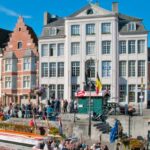
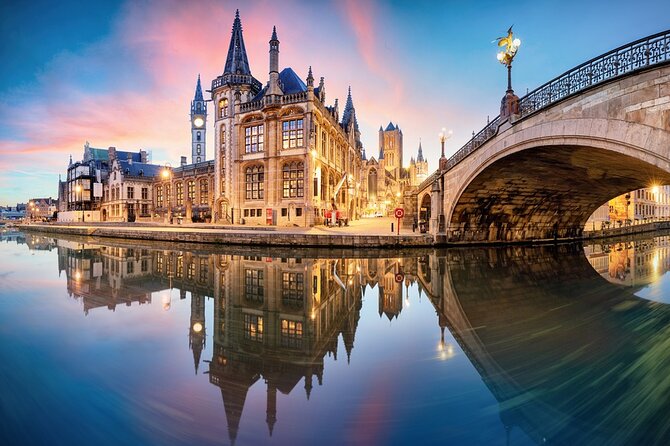
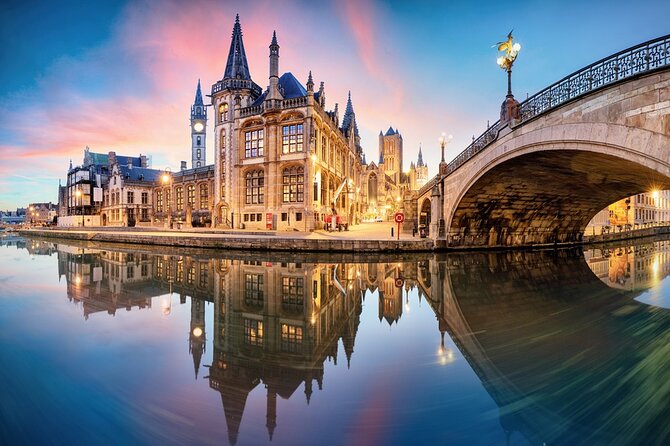
- Stop 1: St Michael’s Bridge and the Ghent skyline
- Stop 2: St. Bavo’s Cathedral and the Devil’s Tower label
- Stop 3: Graslei and Korenlei, medieval harbor power
- Stop 4: Appelbrugparkje and the father and son legend
- Stop 5: Gravensteen and how Vikings shaped defense
- Stop 6: Prinsenhof and imagining the Prince’s Court
- Stop 7: Rabot Sluice and a surviving tower of defense walls
- Stop 8: Keizer Karel V and Charles V’s sculptures
- Stop 9: Augustijnenklooster and the religious wars aftermath
- Stop 10: Patershol, Monk’s Hole, and industrial revival
- What to expect from the stories: legends with a clear purpose
- Timing, comfort, and how to get the most from it
- Price and value: what $105.59 per person is buying
- Where to go after: Patershol is a smart finish line
- Should you book The Dark Side of Gent?
- FAQ
- What is the duration of this private tour in Ghent?
- Where does the tour start and end?
- Is this a private tour?
- Is the tour offered in English?
- Do we enter St. Bavo’s Cathedral or other buildings during the tour?
- Do I need admission tickets for stops?
- Is it possible to cancel for a full refund?
Key things you should know before you go
- Evening timing: fewer crowds means quieter streets for legends and skyline views
- Private guide, private pace: your group walks together and keeps control of questions and timing
- Cathedral and palace exteriors only: key stops are outside, with most entries not included
- Medieval defense and trade theme: towers, harbors, and fortifications all connect to one story of power
- Charles V details + local executions legends: you’ll get names and myths tied to specific bridges
- Finish in Patershol: you end near bars and restaurants, not back at a hotel pickup spot
Why Ghent at night fits this Dark Side theme
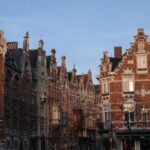
Evening changes Ghent in a practical way. The streets feel less crowded, the light softens the stonework, and you can actually hear a guide without competing with a weekend crush. That matters here because the tour is built on talk—history, legends, and cause-and-effect stories—so the atmosphere helps you absorb it.
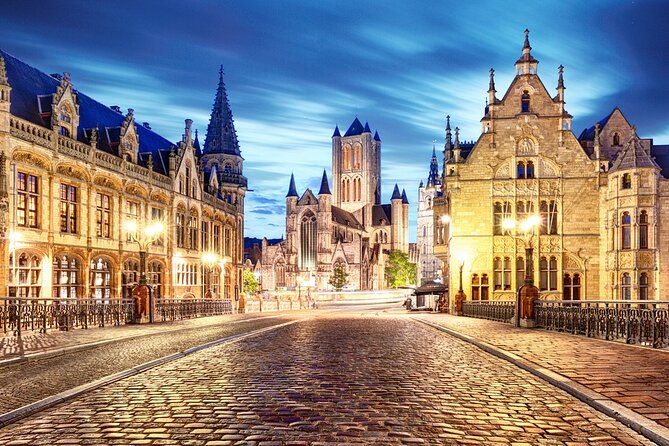
The route also makes sense for night walking. You’re not jumping across the city in big transfers. You stay in central areas, moving from bridge to bridge and landmark to landmark, so your “dark tour” doesn’t turn into a logistics tour. And because it ends in Patershol, you can roll straight into dinner nearby while the stories are still fresh.
You can also read our reviews of more private tours in Ghent

Private tour pacing: what you really get for the money
This is a private tour, meaning only your group participates. That sounds obvious, but it changes how a walking tour feels in the real world. If someone needs a moment to rest, or you want an extra minute at a viewpoint, you’re not negotiating with strangers.
You also get a guide who can shape the walk to your interests. The reviews highlight guides such as Jerke, Kenny, Isabelle, Sébastien, and Deborah, all praised for being engaging and willing to handle questions. That’s a big deal for a tour like this because the facts are more fun when your questions get answered on the spot.
Now the balanced part: at $105.59 per person, you’re paying for a higher-touch experience. If you’re the type who only wants a quick list of sights with minimal story, you might feel the cost. But if you enjoy hearing how a city became what it is—plus the darker legends that people repeat—this format tends to feel like good value.
Walking the route: from St Michael’s Bridge to Patershol
The whole walk is about 1 hour 45 minutes and is designed as a tight loop. Each stop is roughly 10–15 minutes, so you get time for a viewpoint, a story, and a short reset before moving on. The order matters too, because it builds from medieval power to city defense to religious and political conflict, then lands in the industrial revival of Patershol.
Stop 1: St Michael’s Bridge and the Ghent skyline
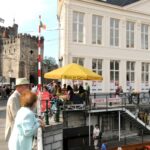
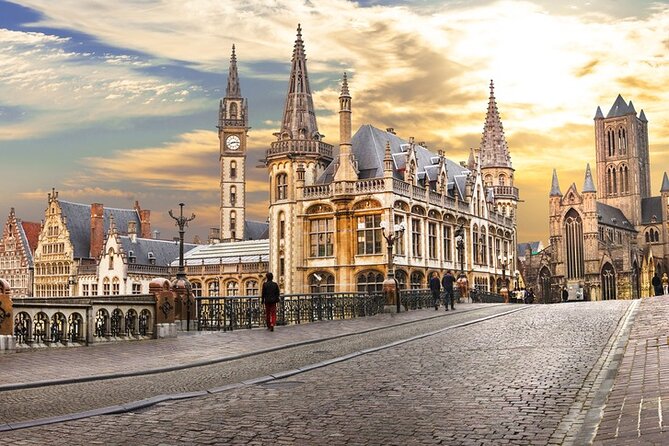
You start at St Michael’s Bridge with a quick intro to Ghent’s medieval trading role. It’s a good opener because this is where you can get your bearings and see the city’s skyline lines.
The guide also points out the three towers that form part of Ghent’s skyline view from here. Even if you don’t fully recognize every tower right away, you’ll start noticing them as the route goes on. The “free” admission note makes this an easy start with no ticket friction.
Tip for you: arrive ready to look up. On a night walk, details like tower silhouettes are often easier to spot than you expect.
Stop 2: St. Bavo’s Cathedral and the Devil’s Tower label
Next comes St. Bavo’s Cathedral, introduced through a dark story behind why it’s nicknamed the Devil’s Tower. Importantly, the tour story does not require you to go inside. The plan is for you to learn the background from the outside.
This stop is short—about 10 minutes—and you should expect no entrance here during the tour. That can be a plus if you want to keep moving, but it also means you won’t get the cathedral interior experience unless you add it separately on your own.
If you’re sensitive to gruesome legends, this is still in the “storytelling” lane rather than a guided walk through something visually graphic. It’s more about why the name stuck.




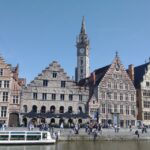
Stop 3: Graslei and Korenlei, medieval harbor power
Now you shift into the heart of the old harbor zone at Graslei and Korenlei. The tour frames these as the area where Gent’s economy grew, powered by trade.
This stop works well at night because you can stand in the open spaces without constant movement around you. The story focus is on the money side of medieval Ghent—who traded, what that power did to the city, and how it shaped what you see today.
Again, free and short, so it functions like a story chapter break. You’ll likely notice the way the water and buildings line up, even if you’ve never visited before.
Stop 4: Appelbrugparkje and the father and son legend
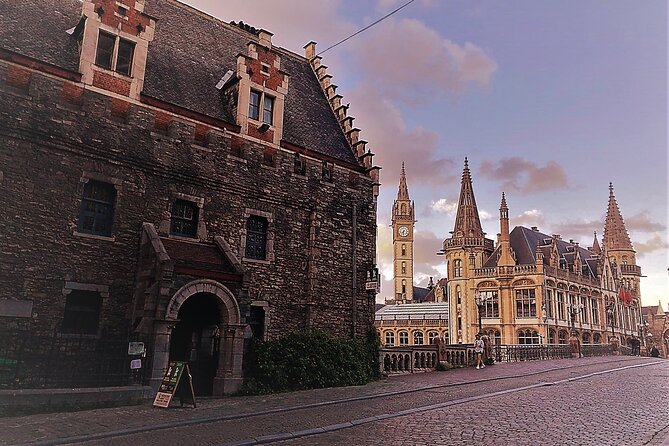
On Appelbrugparkje, the guide tells a legend tied to a bridge view over the giant Butchers’ Hall. The plot centers on an execution involving a father and a son, plus a miraculous event that saved them.
This is one of those stops that fits the tour title: it connects architecture with a legend that people still repeat. The Butchers’ Hall is a strong visual anchor, and the story gives it a sharper emotional context.
As with multiple stops, this is about listening and looking, not buying tickets. It’s free, and the timing stays tight.
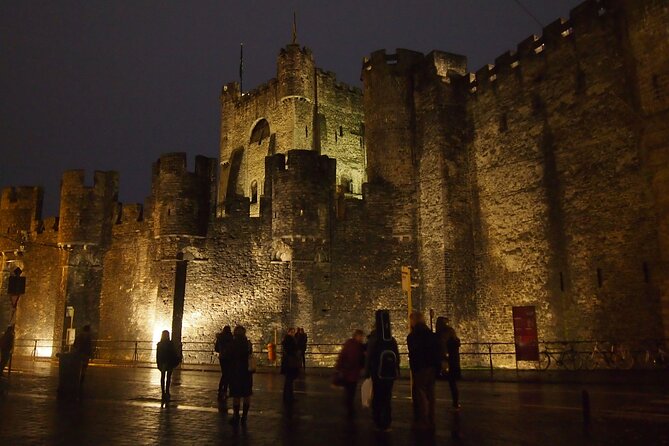
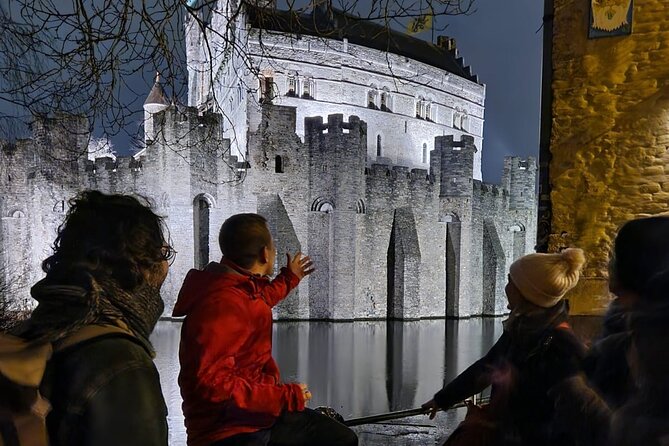
Stop 5: Gravensteen and how Vikings shaped defense
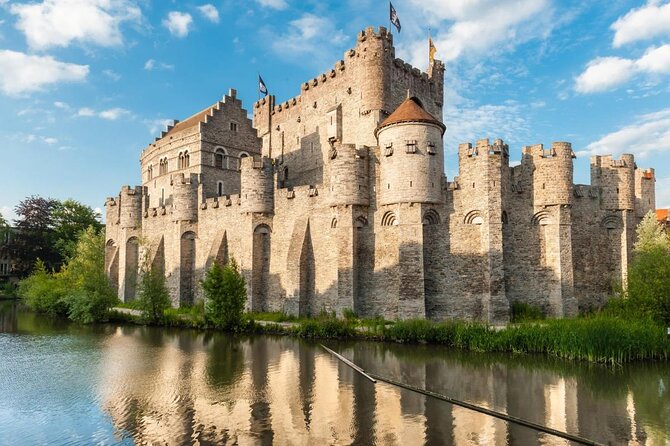
Then you move to Gravensteen, the castle built by Count Baldwin in the 9th century. The big theme here is protection from Viking raids, and the way a fortification can push a city to organize and expand.
The tour’s take is that Gravensteen is more than a pretty structure. It’s a clue to why Ghent grew where it grew. When the guide connects the castle to the city’s development, it helps the whole medieval story click together.
This is listed as a free stop, around 10 minutes. You’re not promised an interior visit here during the tour, so focus on the external form and the placement in the city.
Stop 6: Prinsenhof and imagining the Prince’s Court
At Prinsenhof, you’re pointed toward what once was a gigantic palace called the Prince’s Court. The catch is simple: the tour does not involve entering, so you’ll need some imagination.
If you like “visualizing history,” this stop can be fun. The guide helps you picture scale and purpose, even without stepping into rooms. If you prefer guaranteed indoor experiences, you may want to plan extra time elsewhere.
This is another not included entry style stop, lasting about 10 minutes.
Stop 7: Rabot Sluice and a surviving tower of defense walls
At Rabot Sluice, the guide points out the only remaining tower of Ghent’s 14 km defense wall built around the city in the Middle Ages. That detail gives this stop extra weight: you’re seeing what’s left of a system that once ringed the city.
This is one of the “nerd out” stops in the best way. Defense infrastructure is rarely explained on normal walking tours, but here it ties directly into the earlier castle story. You start to see Ghent as a place that prepared for threats, not just a place that looked pretty on postcards.
About 10 minutes, free, and focused.
Stop 8: Keizer Karel V and Charles V’s sculptures
Now you cross to the Bridge of Imperial Delights, flanked by four sculptures depicting legendary scenes from Charles V’s life. The guide explains the scenes, which turns the bridge from a crossing point into a mini-story gallery.
This stop is a nice balance after the darker legends. It brings power and politics into the mix, showing how rulers wanted their lives remembered in public art. It also gives you a clear “name to remember”: Charles V.
It’s another free stop, about 10 minutes.
Stop 9: Augustijnenklooster and the religious wars aftermath
The Augustijnenklooster stop focuses on the troubles of the Religious Wars and how Calvinist rule affected the city’s history. As with some other stops, you’re not entering buildings as part of this tour.
This is not just “religion talk.” The point is how political control and religious conflict changed Gent in real ways. When a guide connects that to what you can see in the street today, you leave with a more layered understanding of why certain landmarks and stories survived.
About 10 minutes, not included for entry.
Stop 10: Patershol, Monk’s Hole, and industrial revival
You finish in Patershol, also called Monk’s hole. The tour links it to the social impact of the Industrial Revolution and how it helped revive the city’s economy.
Ending here is smart. Patershol is a medieval-feeling quarter, and you’re finishing your “dark side” tour with a forward-looking angle: economic change, social shifts, and a city that adapted. Plus, you don’t have to plan your next move. The tour ends in a central area with lots of cozy bars and restaurants.
Free stop and about 10 minutes. You’ll probably want to stick around long enough to eat and compare what you’ve heard with what you’re seeing.
What to expect from the stories: legends with a clear purpose
The tour title sets an expectation for darker tales, and it delivers in a story-driven way. You’ll hear about why a cathedral has a Devil’s Tower nickname, an execution legend involving a father and son, and the heavy effects of religious and political conflict.
The best part is that these stories aren’t random. They attach to specific places you can point at. When the guide moves you from bridge to bridge, you’re not just learning isolated trivia. You’re building a “cause and effect” picture: trade brought wealth, defense shaped the city’s layout, conflict changed its institutions, and later economic shifts helped it recover.
If you’re someone who enjoys stories that are slightly scary but grounded in place, you’ll likely have a great time. If you want nonstop shock value, you may find a few stops more thoughtful than frightening.
Timing, comfort, and how to get the most from it
This is a walking tour, and the time adds up across 10 stops. The route is short and central, but you should still wear shoes you trust on uneven old-stone sidewalks, especially at night.
A few practical things I’d do if I were prepping you:
- Dress for cooler evening weather and bring a layer you can adjust.
- Plan for a slow pace. Even if you’re fit, the goal is to enjoy the stories, not “power walk.”
- Bring curiosity. This tour works best when you’re open to legends plus the history behind them.
The tour is also described as suitable for most travelers, and service animals are allowed. It’s near public transportation, which helps if you’re combining it with other plans in Ghent.
Price and value: what $105.59 per person is buying
Let’s talk value in plain terms. You’re paying $105.59 per person for a private, English guided night walk that lasts about 1 hour 45 minutes. That price can feel steep if you compare it to group tours that cost less.
But the value case here is the private format plus the structure of stops. You get:
- Your own group pace rather than fitting into a crowd
- A guide who can tailor conversation and questions
- A route that ends in the Patershol dining zone, so the night doesn’t lose momentum
Also, the tour gets booked fairly far ahead on average. That suggests demand for an evening experience in a popular city, which often means you’ll want to plan your timing rather than wait until the last minute.
The one caution is simple: check that your travel style matches a story-forward walking tour. If you want mostly sights with minimal talk, you may not feel the cost is justified.
Where to go after: Patershol is a smart finish line
You end in Patershol, right in the area known for bars and restaurants. That’s not a small detail. When a tour ends downtown and leaves you near food, you don’t waste time mapping your next step.
If you like to keep things spontaneous, this is a good finish point. You can grab a drink, eat something warm, and continue the night while your guide’s stories still make the streets feel more alive.
Should you book The Dark Side of Gent?
Book it if you want a private evening walk where you learn how Ghent became powerful and how conflict and legends shaped what you see today. It’s also a strong choice if you like your history told through specific characters, places, and names like Charles V and Count Baldwin.
Skip it or think twice if you’re mainly chasing big indoor attractions. Multiple key stops are set up for exterior viewing and story listening, so your personal satisfaction will depend on how much you enjoy talking history and local legends more than museums.
FAQ
What is the duration of this private tour in Ghent?
The tour is about 1 hour 45 minutes.
Where does the tour start and end?
It starts at Hostel Uppelink, Sint-Michielsplein 21, 9000 Gent, Belgium, and it ends in the Patershol area in central Ghent.
Is this a private tour?
Yes. It is a private tour, so only your group will participate.
Is the tour offered in English?
Yes, it is offered in English.
Do we enter St. Bavo’s Cathedral or other buildings during the tour?
Entering is not part of the tour for St. Bavo’s Cathedral, Prinsenhof, and Augustijnenklooster.
Do I need admission tickets for stops?
Some stops are free. St. Bavo’s Cathedral is listed as admission not included, and the cathedral and other non-entered stops are not included as part of this tour’s plan.
Is it possible to cancel for a full refund?
Yes. Free cancellation is available up to 24 hours in advance for a full refund. Canceling less than 24 hours before the start time is not refunded.