REVIEW · BRUSSELS
e-Scavenger hunt Brussels: Explore the city at your own pace
Book on Viator →Operated by Qula · Bookable on Viator
Brussels becomes a game with GPS clues. What makes this self-guided e-Scavenger hunt fun is that you can start whenever you want (it runs 24/7), and you can pause or stop without rushing. I also like that the GPS-led map helps you find your way spot-to-spot, so it feels like exploring with guardrails. One caution: it’s built as a game, not a traditional guide with deep explanations at each stop.
You’ll spend about 3 hours working through a route of classic Brussels sights, earning answers as you go. It’s great for groups and families because you can team up, compare answers, and chase a top score together, and the hunt supports multiple languages.
Just know what you’re signing up for: you’ll need your own smartphone and data. If you’re hoping for a guided lecture or lots of historical storytelling, this may feel a bit light on that front.
In This Review
- Key things that make this Brussels scavenger hunt work
- How a GPS city trail feels in Brussels
- The 3-hour route: from Warandepark to the center of town
- Stop-by-stop: what to notice at each landmark
- What you’re really doing: riddles, audio clips, and photo checks
- Price and value for groups (and why it can feel cheap or not)
- Logistics that matter: smartphone, data, and navigation sanity
- Who this scavenger hunt suits best
- When to skip it (or adjust your expectations)
- Tips to enjoy the hunt more and waste less time
- Should you book the e-Scavenger hunt Brussels?
- FAQ
- How long does the e-Scavenger hunt in Brussels take?
- Can we choose our own start time?
- Do we need a smartphone and internet/data?
- What’s the price, and how many people can go?
- Where do we start and end?
- What languages is the trail available in?
Key things that make this Brussels scavenger hunt work

- Start anytime, pause anytime: no fixed times, no time limit, and it runs all day
- GPS-led navigation between 17 named stops, with a clear flow through central sights
- Game-style tasks like riddles, photo identification, and short audio clips
- Built for groups up to 6 at about $37.29 per group, not per person
- Multi-language support (English, German, French, Dutch, Spanish, Italian, and more)
- Ends where you start, at Putterie 1 near public transport
How a GPS city trail feels in Brussels

This hunt is essentially a walking route you play on your phone. You get instructions by email, then you head to the starting point at Putterie 1, 1000 Brussels, and begin your quest when you’re ready.
Once you’re playing, the experience gives you direction using a map led by the route. That matters in Brussels because some landmarks are easy to spot while others require you to be looking in the right direction, down a side street, or at the edge of a square. The GPS guidance helps you keep moving without constantly stopping to figure things out.
It’s also designed to be flexible. The hunt is available 24/7, and there is no time limit. If your group wants a coffee break, you can take one. If a street is crowded, you can pause and regroup. That freedom turns the hunt into something you can fit into your day rather than something that eats your whole schedule.
You can also read our reviews of more city tours in Brussels

The 3-hour route: from Warandepark to the center of town
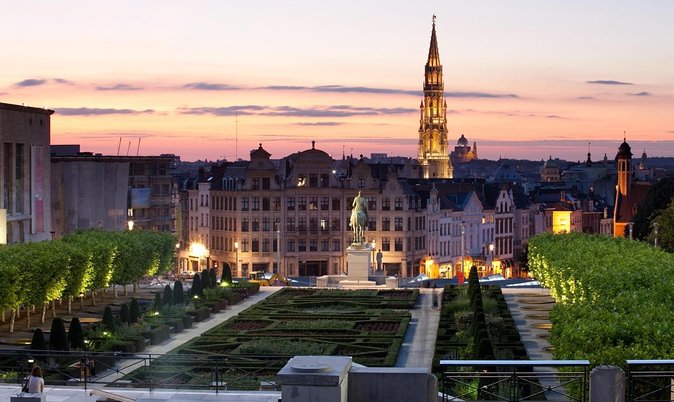
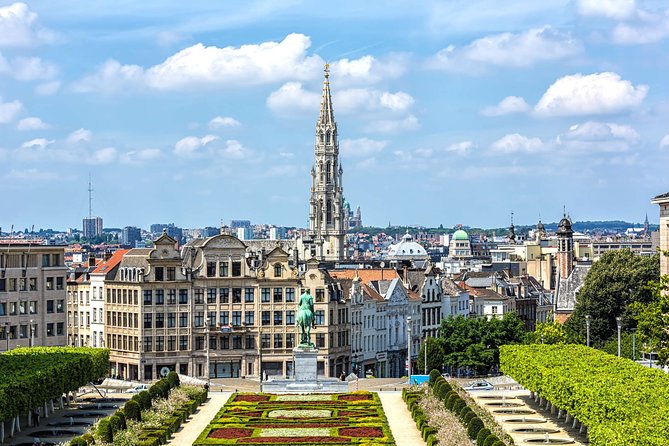
The trail’s stops read like a greatest-hits collection of Brussels, with a strong mix of royal-era grandeur, everyday icons, and museum culture. You’re moving through areas that many visitors hit in pieces—royal sights in one moment, the famous fountain icon in another, old town squares next—then you stitch it together as a single, playful loop.
The route takes you through:
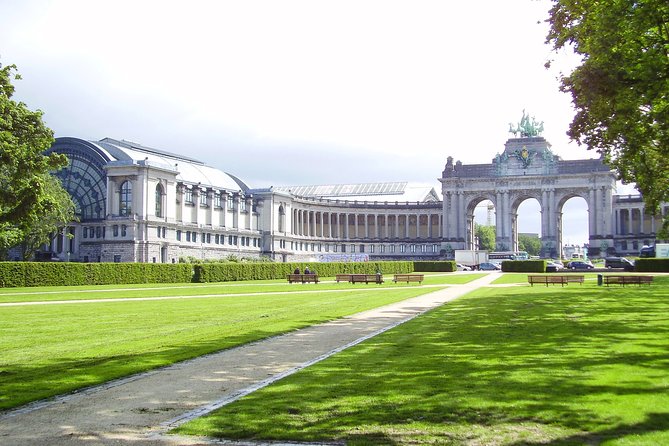
- Parc de Bruxelles (Warandepark)
- Brussels Central Station
- Royal Palace (Palais Royal)
- Hotel de Ville de Bruxelles
- Manneken Pis
- St. Michael and St. Gudula Cathedral
- Brussels Vintage Market
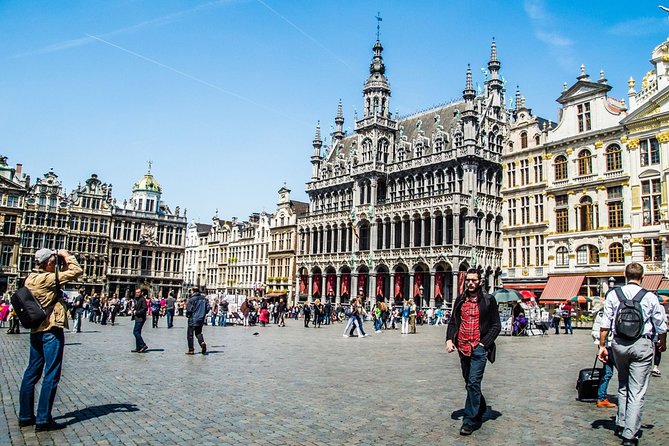
- Grand Place
- Guild Houses
- Koninklijke Serres Van Laken
- Les Galeries Royales Saint-Hubert
- Horta Museum (Musee Horta)
- Notre Dame des Victoires au Sablon
- La Mort Subite
- Comic Art Museum – Brussels
- Rue Neuve
- Quartier de l’Ilot Sacre
Even if you’ve never been to Brussels, the route gives you a natural storyline: you start with a green space and a major transport hub, move to royal power and classic city buildings, then swing into the compact old-center zones and museum streets.
If you’re traveling with kids, that mix helps. You can break the walk into small segments and treat each stop like a mini mission instead of a long march from landmark to landmark.
Stop-by-stop: what to notice at each landmark
Below is what you should expect at each major stop, and what to focus on while you’re answering the trail prompts. Some tasks are puzzle-like, so knowing what to look for saves time.
Stop 1: Parc de Bruxelles (Warandepark)
Start with a park setting. Even before you reach the tougher landmark zones, this is where your group can get into the rhythm of the game—slow down, check the phone instructions, and get used to the GPS-led movement.
Stop 2: Brussels Central Station
You’ll be walking near one of Brussels’ busiest transit spaces. Expect an “arrival” energy here—places like this can overwhelm you if you’re only sightseeing. As a game stop, it works because it gives you a reason to slow down and look at specific elements instead of just power-walking through.
Stop 3: Royal Palace (Palais Royal)
Royal architecture can feel intimidating when you’re just passing. The hunt format flips that. Instead of asking you to memorize details, it keeps you engaged by turning the palace area into an answer hunt—great for groups that want structure without a lecture.
Stop 4: Hotel de Ville de Bruxelles
This is the city hall zone where Brussels looks official and photogenic. Your phone prompts can push you to look at façade features and nearby landmarks closely, which is a better use of time than just snapping a few quick pictures.
Stop 5: Manneken Pis
This is a must-see icon, but it can be crowded. The game angle helps because you’re not just waiting for the right photo moment. You’re working toward an answer while you’re there, so the visit feels purposeful even if you have to squeeze through.
Stop 6: St. Michael and St. Gudula Cathedral (Cathedrale St-Michel et Ste-Gudule)
A cathedral stop gives you a reset from street-level chaos. Even if you don’t go inside (the data here doesn’t promise any entries), you can use this stop to slow the pace, read what you can from the exterior, and keep the team momentum.
Stop 7: Brussels Vintage Market
This part is more about neighborhood flavor. If you catch it when the market is active, you might get extra atmosphere, but even without a full market scene, it can feel like a “Brussels life” moment between major sights.
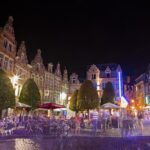
Stop 8: Grand Place
Grand Place is the headline. Here, you’re likely to have photo-and-detail style tasks, and it’s a good place to take your time. The key is not to rush the square just to finish the prompt—this is where you can score well if your team reads the space carefully.
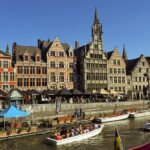
Stop 9: Guild Houses
Around Grand Place, Brussels’ old-town character is wrapped into the buildings. Guild House clues often make you look at details you’d otherwise ignore, which is one reason this hunt can feel more rewarding than a simple walk-through.
Stop 10: Koninklijke Serres Van Laken
Greenhouse areas add variety, especially after you’ve been in dense historic space. This can also be a “look for the right angle” kind of stop, so check your phone map and be ready to reposition rather than expecting a single obvious viewpoint.
Stop 11: Les Galeries Royales Saint-Hubert
This is one of those Brussels spaces that looks like it was built for strolling. The hunt makes the strolling purposeful. It’s a strong break for photos and a good place to keep the group talking while you follow the clues.
Stop 12: Horta Museum (Musee Horta)
An arts stop gives you a different type of cultural pause. Even if your interest in architecture or design varies, the hunt keeps it active with tasks instead of turning it into a long visit requirement.
Stop 13: Notre Dame Des Victoires Au Sablon
The Sablon area is full of small-scale beauty. This stop can work well for families because it’s a calmer moment where you can regroup and compare answers without a lot of extra walking pressure.
Stop 14: La Mort Subite
This is a bar stop that feels playful. If your team enjoys cultural icons, this one can be a memorable waypoint because it breaks the sightseeing rhythm with a more local, everyday stop.
Stop 15: Comic Art Museum – Brussels
Comics and Belgian culture go together, and this museum is a great thematic shift. In a scavenger hunt, a museum stop helps because the tasks often test recognition rather than requiring deep study.
Stop 16: Rue Neuve
A shopping street stop gives energy and practical city walking. It’s a good place to keep moving and not get “museum-tired,” especially if you’re traveling with kids who need a street-level change of pace.
Stop 17: Quartier de L’Ilot Sacre
The final stretch takes you into a neighborhood area, not just a famous postcard point. This can feel satisfying because you’re finishing with a sense of “I actually walked through real Brussels,” not only the big-ticket squares.
What you’re really doing: riddles, audio clips, and photo checks
This trail mixes riddles and assignments on your smartphone. Some tasks are map-and-answer style. Others can involve identifying the correct visuals at a location, including photos that are not taken exactly where you think they are—so you have to look carefully rather than guess.
Audio tasks can also appear. One example from the way the game works: you might be asked to listen to a short clip and identify the artist, with the clue tied to a famous figure connected to a specific square. That’s part of why the hunt can feel fun if your group enjoys pop-culture crossovers, and why it can feel odd if you were expecting pure history paragraphs.
So think of it like this: you’re not collecting facts the way you would in a museum. You’re collecting correct answers that force you to pay attention to what’s around you.
Price and value for groups (and why it can feel cheap or not)
The price is about $37.29 per group (up to 6 people) for roughly 3 hours. That pricing is the main reason this hunt works for families and friend groups: the cost scales with group size, not with the number of people you bring.
Is it worth it? Usually, yes, if you like:
- using your smartphone as part of the day
- walking a planned route without paying for a guide
- playing as a team and aiming for a score
But it can feel like poor value if you want a lot of interpretive info at every stop. The game format keeps you moving and answering, not reading long explanations on the phone. If your idea of a great Brussels day is guided storytelling and deep context, you might feel short-changed.
Still, the hunt’s strength is its structure. You get a route that you can do at your own pace, and you can keep it flexible if you’re traveling with kids or you just don’t like rigid tour schedules.






Logistics that matter: smartphone, data, and navigation sanity
This experience uses a mobile ticket. You’ll receive an email with instructions on how to play, and it’s compatible with Android or iPhone.
Two practical things to plan before you set out:
- You need your own smartphone.
- You also need data or connectivity since tasks and map functions are part of the trail experience.
If you want to avoid navigation stress, treat it like any modern city GPS game. Before you start, confirm you have enough battery, and consider having a backup map app open. Some people have found that the trail’s place labels don’t always match how Google Maps presents search terms, so having an additional way to search for the area can help you quickly locate the right streets.
Also, since it ends back at the meeting point, plan your snacks and bathroom breaks around the return flow. Nothing ruins a game like arriving late and rushing the finish.
Who this scavenger hunt suits best
This is a strong fit if you’re traveling with:
- families who do better with “tasks” than lectures
- friends who like friendly competition
- visitors who want to avoid big tour-group crowds by moving independently
- groups who enjoy learning through doing, even if the learning comes through puzzles
It’s also offered in multiple languages, which helps if your group isn’t fluent in English. And it’s described as user-friendly for hearing impaired, which is a meaningful plus for accessibility planning.
When to skip it (or adjust your expectations)
If you’re the type who wants a guide to explain why a building matters, and you want a lot of context on the spot, this might not hit the mark. This is first and foremost a game. Some people feel frustrated when they expected a guided city tour with lots of narrative information.
You might also feel annoyed if you dislike phone-based challenges. The hunt can include tasks like locating the correct photo or listening to a short audio clip and identifying an artist. That’s fun for many groups, but it’s not everyone’s idea of a relaxing day.
Finally, if you’re in a situation where you don’t have reliable data, you may spend energy troubleshooting instead of playing. The tour doesn’t include a smartphone, and data isn’t included either.
Tips to enjoy the hunt more and waste less time
Here’s how you can make the experience smoother and more fun, especially if you’re a first-time GPS trail player.
Bring a charged phone and a power plan.
If your battery drops, the game gets harder fast. Keep a portable charger in your day bag if you have one.
Use teamwork.
Assign roles: one person reads the map, another focuses on visuals, and someone else keeps an eye on answers. That turns the hunt into a group activity instead of everyone staring at the screen.
Trust the GPS, not your gut.
In dense central areas, street patterns can trick you. If the phone says you’re close, double-check your position and look around before you move on.
If a prompt feels weird, slow down.
Photo and audio tasks rely on small details. Standing still for 30 seconds can save a minute of walking in circles.
Take a short break when you hit the big squares.
Grand Place and the surrounding guild-house area can be overwhelming. Let your team reset there, then tackle the prompt with clear eyes.
Should you book the e-Scavenger hunt Brussels?
Book it if you want a flexible, team-based way to walk Brussels. The price per group makes it a bargain for families and friends, and the route strings together major sights into one manageable plan. I think it’s especially good for people who like learning by doing rather than sitting through explanations.
Skip it if your main goal is detailed history delivered by a human guide, or if you hate phone tasks like audio identification and visual checks. Also skip or reconsider if you know you won’t have usable data.
If you do book, go in with the right mindset: you’re playing a route game through Brussels. That’s when it turns into a day you’ll actually want to repeat—future you will remember the squares, the icons, and the funny moments of trying to solve it together.
FAQ
How long does the e-Scavenger hunt in Brussels take?
It lasts about 3 hours on average. There’s no time limit, so you can go slower or faster depending on your pace.
Can we choose our own start time?
Yes. There are no fixed starting times or reservations. You pick your day and time, and the trail runs 24/7.
Do we need a smartphone and internet/data?
You’ll need your own smartphone, and the activity does not include a smartphone or data. The trail is played on your smartphone using the provided instructions.
What’s the price, and how many people can go?
It costs about $37.29 per group for up to 6 people. It’s a private activity, so only your group participates.
Where do we start and end?
The start location is Putterie 1, 1000 Brussels, Belgium. The activity ends back at the meeting point.
What languages is the trail available in?
The trail is offered in multiple languages, including English, German, French, Dutch, Spanish, and Italian, plus more.